
Door Condensation Control: Stop Sweating Doors (India 2026)
Why metal and glass doors sweat in AC rooms and the monsoon, the mould risk it creates, and how thermal breaks, insulated cores and Low-E glazing stop it.
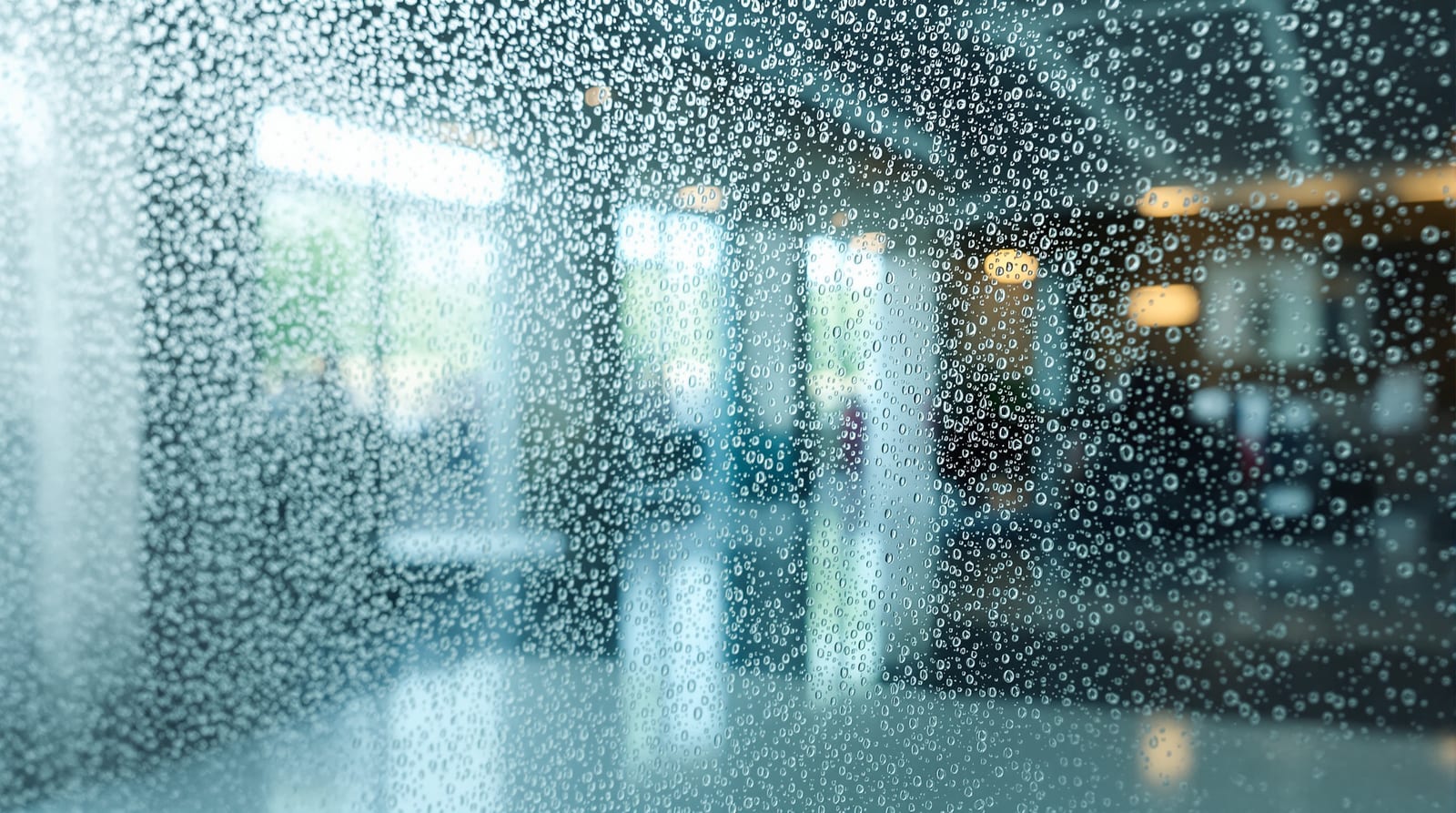
If your aluminium main door drips in the monsoon, or your glass balcony door fogs and beads with water every time the AC runs, you are watching door condensation control fail in real time. It is not a leak and it is not a manufacturing defect. It is basic building physics: warm, humid air touching a surface colder than its dew point. In India's warm-humid coastal belts and AC-heavy composite cities, this quietly rots door frames, blackens seals with mould, and stains the wall below. The good news is that it is predictable, measurable, and almost entirely preventable once you understand why a door sweats.
Why doors sweat: dew point in plain terms
Air always holds water vapour. The warmer and more humid the air, the more vapour it carries. Every parcel of air has a dew point — the temperature at which it can no longer hold that vapour, so the water condenses onto the nearest cold surface. When a metal or glass door surface drops below the surrounding air's dew point, the air touching it gives up its moisture and you get beads of water. This is the same effect as a cold soft-drink bottle sweating on a humid Mumbai afternoon.
Two classic Indian scenarios drive door condensation control failures:
- The AC scenario (summer, inside-out): A cold, conditioned room sits behind a glass or aluminium door. Outside, warm humid air (32 °C, 75% RH) presses against the cold outer face of the door. That outer face is below the outdoor dew point, so the outside of the glass or metal sweats.
- The monsoon scenario (inside-out and reversed): Outdoor air is saturated (28 °C, 90%+ RH). Any cooler indoor surface — a metal frame near an AC vent, a single-glazed pane — drops below dew point and condenses indoors.
The villain is almost never wood. Solid timber is a poor conductor and warm, so its surface rarely falls below dew point. The villains are aluminium and steel (excellent heat conductors) and single glazing (thin, cold on one face). They telegraph the cold straight to the surface that the humid air touches.
The damage: why a wet door is not harmless
Condensation that keeps returning is corrosive, literally and biologically:
- Mould and mildew colonise damp seals, gaskets and the timber sub-frame within days in warm-humid weather — a health and air-quality problem, not just a cosmetic one.
- Frame rot and swelling where water runs off metal and glass into a wooden lining or MDF architrave.
- Corrosion on hinges, locks, and unprotected steel; white salt blooming on poorly anodised aluminium.
- Wall staining and peeling paint below the door, and damp tracking into the floor.
- Slip risk from pooled water on stone or tile thresholds.
Treat persistent door sweating as a defect to fix, not a wipe-and-forget chore.
What actually stops condensation
There are only three levers, and good design pulls all three:
1. Keep the surface warmer than dew point — insulate the door so its room-side and outer faces never get cold enough to condense. This is where thermal breaks, insulated cores and Low-E glazing earn their keep.
2. Lower the humidity — ventilate, run exhaust fans, and de-humidify so the dew point itself drops.
3. Manage air movement — stop warm humid air from washing over a cold surface through gaps; but never seal so tightly that moisture has nowhere to escape.
Thermal breaks on aluminium
Bare aluminium is one of the best heat conductors used in doors, so an un-broken aluminium frame in an AC home is a guaranteed condensation magnet — the cold from inside reaches the outer face and the warm outdoor air sweats on it. A thermal break (a polyamide strip splitting the inner and outer aluminium profiles) interrupts that path, keeping each face nearer its own side's temperature. See our deep-dive on thermal break doors — for AC homes in warm-humid and composite zones it is the single most effective fix. The related problem of cold spots at frame junctions is covered in door thermal bridging: even a well-insulated door panel can sweat at a poorly detailed jamb or sill.
Insulated cores and better U-values
A door's resistance to heat flow is its U-value (W/m²K, lower is better). A foam-insulated core or thermally broken section keeps the surface warm and dry. Single-glazed doors (U ~5+) sweat readily; double-glazed/IGU and insulated cores (U ~1.0–1.8) rarely do. Our door U-value guide and the broader door thermal performance pillar explain how to read and compare these numbers.
Low-E glazing and double glazing
For glass doors, a Low-emissivity (Low-E) coating plus a double-glazed insulating unit keeps the room-side pane warm and the surface above dew point, while also cutting solar heat gain (lower SHGC) and AC load. Single-glazed glass doors are the worst offenders; an IGU with a warm-edge spacer is the cure. Our note on solar heat gain doors covers the daylight-vs-heat balance.
Seals, ventilation and humidity
Perimeter weatherstrips and threshold seals stop warm humid air from being driven across a cold surface — useful, but they must be paired with ventilation so trapped moisture can leave. Cross-ventilation, bathroom and kitchen exhaust fans, and a dehumidifier in extreme weeks all drop indoor humidity and therefore the dew point.
Condensation risk by climate zone
India's climate zones (Eco-Niwas Samhita 2018 framework) change the risk profile completely. As a rule of thumb:
| Climate zone | Example cities | Condensation risk | Priority fix |
|---|---|---|---|
| Warm-humid (coastal) | Mumbai, Chennai, Kochi, Goa | Very high (monsoon + AC) | Thermal-break aluminium, double glazing, ventilation |
| Composite | Delhi, Lucknow, Nagpur | High in monsoon, moderate in AC summer | Insulated cores, Low-E glass, dehumidify in monsoon |
| Hot-dry | Jaipur, Ahmedabad, Bikaner | Low (dry air, high dew-point gap) | Mainly heat/SHGC control, not condensation |
| Temperate | Bengaluru, Pune | Low to moderate | Basic insulation, ventilation |
| Cold | Shimla, Leh, Gangtok | High in winter (warm indoor air on cold glass) | Double glazing, thermal breaks, warm-edge spacers |
Hot-dry cities rarely have a door-condensation problem because the air is dry; warm-humid and cold zones have it the worst.
A practical specification matrix
Use this to decide how much condensation protection your door actually needs:
| Situation | Recommended door spec | Why it controls condensation |
|---|---|---|
| AC bedroom, coastal city, glass balcony door | Thermal-break aluminium + Low-E double glazing | Keeps both faces near their own side's temperature |
| Main door, non-AC, hot-dry city | Solid timber or insulated flush door | Warm surface; dry air means low risk anyway |
| AC living room, composite city | uPVC or insulated core door, double glazed | uPVC is a poor conductor; IGU stops glass sweating |
| Bathroom / utility door (high indoor humidity) | WPC/FRP door + exhaust ventilation | Rot-proof material + lowering source humidity |
| Cold-climate door (Shimla, Leh) | Thermal-break + double glazing + warm-edge spacer | Stops indoor warm air condensing on cold glass |
For material choices behind these picks, see the complete door guide, and our thermal insulated doors explainer.
How to read a sweating door (diagnose before you spend)
Before you replace a door, work out whether your sweating is outdoor-onto-cold-outer-face (AC summer) or indoor-onto-cold-inner-face (monsoon or cold climate) — the fix differs. Our free door condensation risk checker estimates whether your surface temperature is likely to fall below dew point for your city and AC setting, and the door U-value calculator helps you compare candidate doors on heat flow before buying.
For the broader weatherproofing picture — keeping driven rain and humid air out without trapping moisture — see weather-resistant doors.
Costs and payback (indicative bands)
As a rule of thumb (₹, GST 18% extra, prices vary by city and brand):
- Upgrading bare aluminium to a thermal-break aluminium door: a meaningful premium, often 25–50% over a standard section, justified in AC + warm-humid homes.
- Single glazing to Low-E double glazing: a clear premium per sq ft, but it cuts AC load and ends the sweating.
- A dehumidifier plus better exhaust ventilation: the cheapest first move, and sometimes enough on its own in milder zones.
Durability is part of the value: a door that never sweats also never rots, corrodes or grows mould, so the fix pays back in comfort, health and a longer service life.
Frequently asked questions
Why does my aluminium door sweat only when the AC is on?
Because the AC chills the indoor face of the conductive aluminium, dropping the outer face below the dew point of the warm humid air outside. The outside air then condenses on it. A thermal break stops the cold from reaching the outer face. See thermal break doors.
Will weatherstripping alone stop door condensation?
No. Seals reduce the warm humid air being driven across a cold surface, which helps, but they do not warm the surface or lower humidity. You also need a warmer surface (thermal break, insulated core, Low-E glazing) and ventilation, or trapped moisture can make mould worse.
Do wooden doors get condensation?
Rarely. Solid timber is a poor conductor and its surface stays warm, so it seldom falls below dew point. The classic sweating culprits are aluminium, steel and single glazing — see thermal insulated doors and the door U-value guide.
Is door condensation worse in coastal cities?
Yes. Warm-humid coastal zones (Mumbai, Chennai, Kochi, Goa) have high humidity year-round plus heavy AC use, which is the perfect recipe. Hot-dry cities like Jaipur rarely have the problem because the air is dry. Cold cities like Shimla get it in winter when warm indoor air meets cold glass.
My glass balcony door fogs between the panes — is that the same thing?
No. Fogging between the panes of a sealed double-glazed unit means the unit's seal has failed and moisture has entered the cavity — the IGU must be replaced. Condensation on the room-side or outer face is the dew-point issue this guide covers.
Can ventilation alone fix it?
Sometimes, in milder zones. Lowering indoor humidity with exhaust fans, cross-ventilation and a dehumidifier drops the dew point, so a borderline-cold surface stays dry. In severe warm-humid or AC conditions you usually also need an insulated or thermally broken door. Check your case with the door condensation risk checker.
Export this guide
Related Guides — Deep-dive reading
Thermal Break Doors in India: Stop Heat & Sweat (India 2026)
Why a polyamide thermal break transforms an aluminium door — cutting heat conduction and condensation in AC and coastal homes across India.
Home Doors & EntrancesDoor Thermal Bridging: Detailing It Out (India 2026)
Where heat short-circuits the envelope at door frames, jambs, thresholds and lintels — and how to detail thermal breaks, insulated reveals and continuous insulation to stop heat loss and condensation.
Home Doors & EntrancesDoor Thermal Performance: U-Value & Heat Loss (India 2026)
How doors gain and lose heat in Indian homes, what U-value really means, and what makes a door thermally good enough to cut your AC bill.
Home Doors & EntrancesRelated Tools — Try Free
Aluminium Door Cost Calculator
Estimate an aluminium door cost by opening size, profile grade, finish, glazing and type, with fitting and GST.
Door CalculatorDoor Material Comparison Tool
Compare 2–4 door materials on cost, durability, maintenance, security and moisture resistance.
Comparison ToolFull-Room BOQ — Living, Bedroom, Kitchen, Bath
Room-wise BOQ across living, bedrooms, kitchen, utility, and bathrooms with line-item pricing.
Full-Room BOQ