
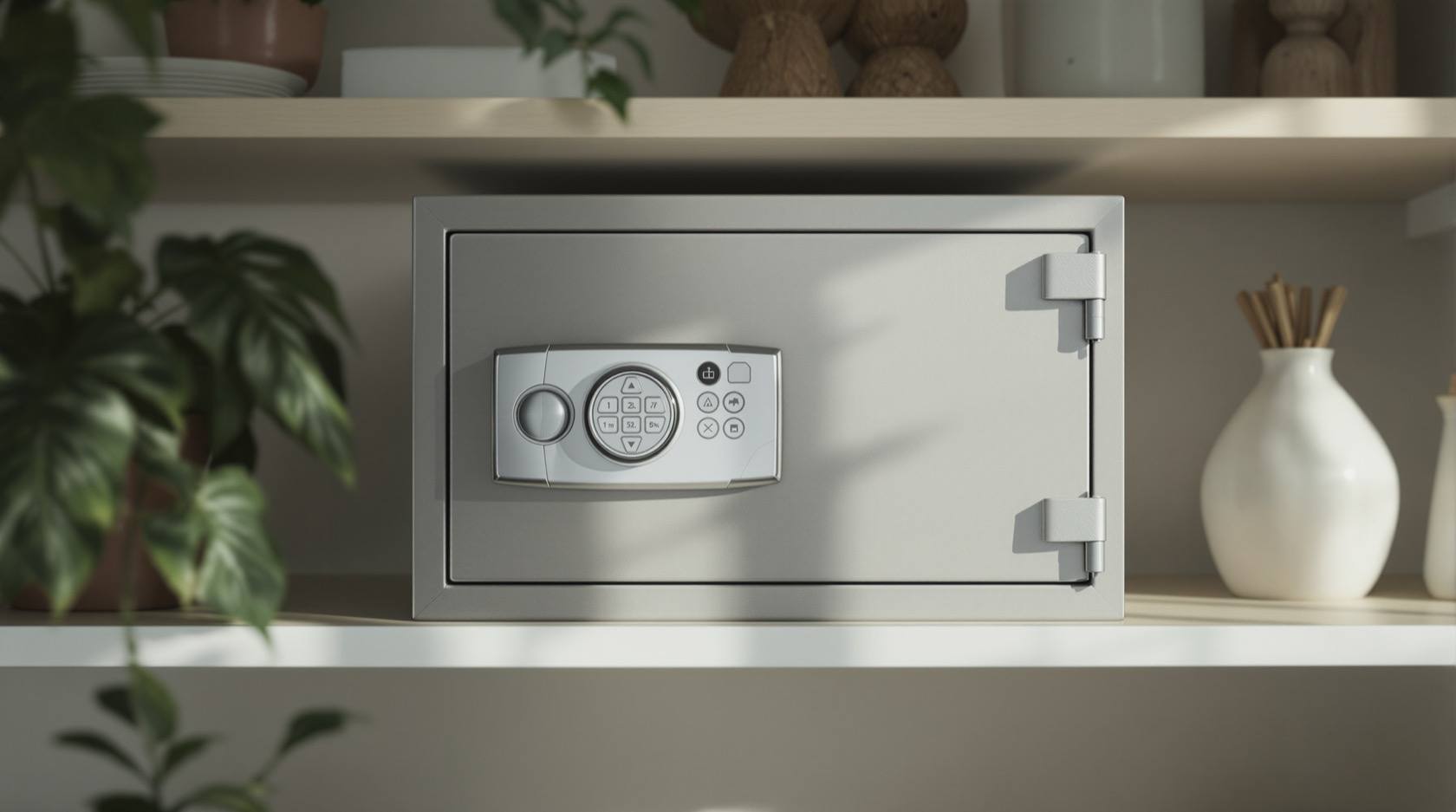
The Complete Guide to Home Safes in India (2026)
The definitive homeowner overview of home safes for Indian houses and flats: why you might want one, what a safe protects and what it does not, the main types and ratings, how to size and weigh one, why anchoring is non-negotiable, and how to buy honestly and layer it into your wider home security.
A home safe is one of the few security purchases that keeps working when nobody is watching. A locked door and an alarm deter someone at the boundary; a safe is the last line inside the home, the thing that still protects your passports, gold, cash and title deeds after a thief is already in the room or a fire is already in the building. For most Indian households the question is not whether valuables need protecting — they clearly do — but which safe, how big, where, and how honestly it will perform. This is the page to start from before you spend a rupee, and it feeds into the more detailed companions on how to choose a home safe and where to place one.
The single most important idea to carry through the whole decision is this: a home safe buys time and deters, it does not make your valuables un-takeable. No safe you can afford and lift into a flat is un-crackable given enough time and the right tools — the rating tells you roughly how much time and effort it resists, not that it is impregnable. That is not a reason to skip one; it is the reason to size the protection to what is actually at risk and to layer the safe inside a home that is otherwise reasonably secure, as covered in the ultimate guide to home security.
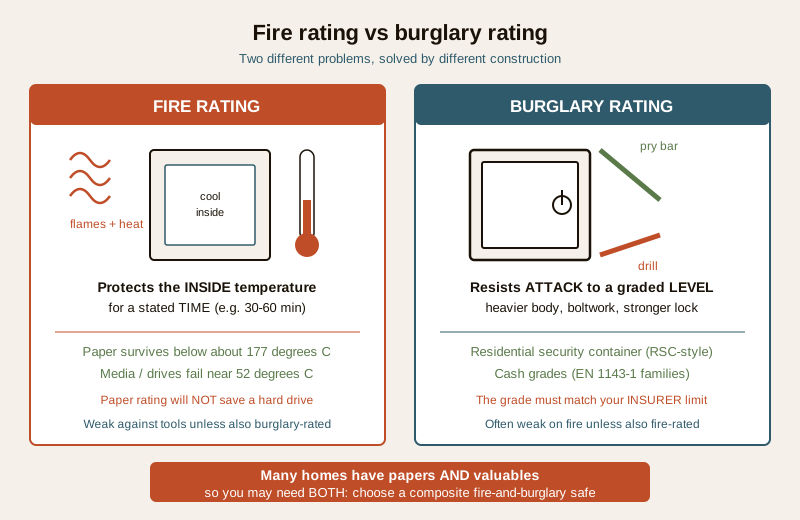
The two protections people most often confuse are fire and burglary, and they are genuinely different problems solved by different construction — which is why the choice between a fire-rated and a burglary-rated safe is the first fork in the road for most buyers.
Scope & how to read this. This is educational homeowner guidance for choosing, sizing, placing and specifying a home safe and coordinating a professional install — it is strictly defensive and never explains how to open, drill, force or defeat a safe. If you are locked out of your own safe, contact the manufacturer or a licensed locksmith or safe technician with proof of ownership. Ratings, prices and clauses vary by product and region; verify the certificate and your insurer's requirement, and get local quotes.
Why a home safe at all
Four everyday risks make a safe worth the cost and the floor space:
- Theft. A determined burglar has minutes, not hours, inside an occupied neighbourhood. A safe that resists hand tools and cannot simply be carried off turns "grab everything" into "give up and leave" — the deterrence is as valuable as the resistance.
- Fire. Household fires reach paper-charring temperatures within minutes. A fire-rated safe keeps its interior below the temperature that destroys paper (and, for a data-rated model, the much lower temperature that destroys drives and media) for a stated time, so your deeds and passports survive a blaze that gutted the room.
- Prying eyes. Not every risk is a break-in. Domestic staff, visitors, tradespeople, tenants and even curious family have casual access to most homes. A locked safe removes the everyday temptation and keeps sensitive documents genuinely private.
- Document survival and order. Original property papers, wills, insurance policies, PAN and passport, and the family gold are hard or slow to replace. A safe is also simply the one known place they all live, which matters in an emergency.
What a safe protects, and what it does not
A safe is a container with a rating, not a force field. Being honest about the boundary keeps your expectations — and your insurance claim — realistic.
| A home safe is good at | A home safe does NOT do |
|---|---|
| Resisting a smash-and-grab and casual tampering | Resist unlimited time with power tools (nothing at home scale does) |
| Keeping documents and cash away from casual access | Replace a bank locker for very high-value gold you rarely touch |
| Protecting paper (and, if rated, media) from fire heat | Guarantee media survival in a paper-only fire rating |
| Staying put if properly anchored | Stay put if it is light and left un-bolted — it walks out |
| Deterring and delaying an intruder | Make you safe on its own without doors, locks and alarms |
| Organising your critical documents in one place | Protect against damp on its own — you manage humidity inside it |
Read the two columns as a single instruction: buy the safe for what the left column promises, and cover the right column with a bank locker, a wider security layer, insurance and simple humidity control.
The main types of home safe
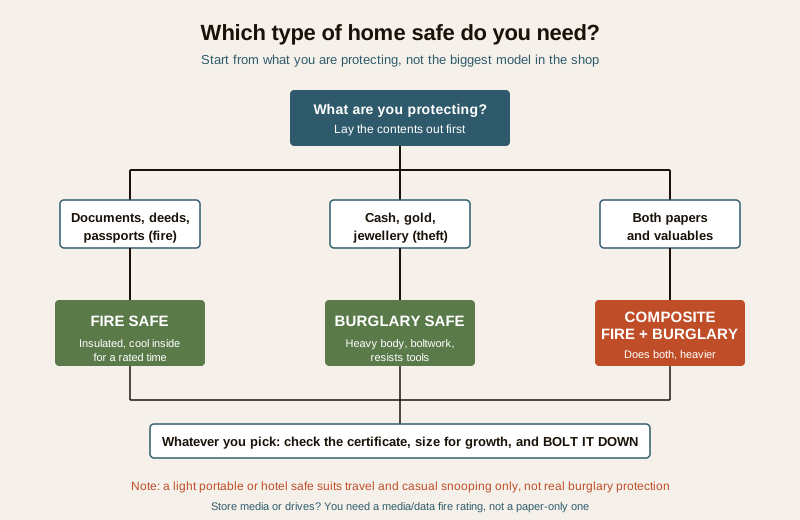
"Safe" covers several quite different products. Match the type to what you are protecting rather than to a showroom's biggest model.
By what they resist
- Fire safe. Built to keep the interior cool in a fire for a rated time. The walls are thick with an insulating fill, so a fire safe is bulky for its internal volume and is often only lightly burglary-resistant unless it also carries a burglary rating.
- Burglary or security safe. Built to resist attack — a heavier body, a thicker door, better boltwork and a stronger lock. A pure burglary safe may offer little real fire protection, because resisting tools and resisting heat are different jobs.
- Composite fire-and-burglary safe. Engineered to do both to a stated level. This is what most homeowners with mixed contents (papers plus jewellery plus cash) actually want, and it is heavier and costlier for the same internal volume.
By how they mount
- Freestanding safe. The common choice — sits on the floor or a wardrobe base and must be bolted down through pre-drilled anchor holes. Versatile and available across sizes.
- Wall safe. Recessed into a wall cavity between studs or into masonry, easy to conceal behind a frame or panel, but limited in depth and usually lighter-duty.
- Floor safe. Set into the floor slab and covered; excellent concealment and hard to attack or remove, but needs a proper install and suits new work or renovation better than a finished flat.
By how they lock
- Digital or electronic keypad. Fast, lets you change the code, and often has a physical key override. Depends on batteries — keep spares and know the low-battery behaviour.
- Key lock. Simple and battery-free, but you must control the keys; a copied or found key defeats it.
- Mechanical dial (combination). No batteries, very durable, slower to open. Popular where reliability over decades matters more than speed.
By size and duty
- Small drawer, hotel or portable safes. Handy for a passport and some cash in a hotel or a rental, but a light portable safe is a convenience against casual snooping, not real burglary protection — it can be carried away and opened elsewhere. Treat it accordingly.
An introduction to ratings
Ratings are the honest language of safes, but they are widely misread. Two different rating families exist, they measure different things, and a single safe may carry one, both or neither. Always verify the actual certificate on the model you buy — marketing words like "fireproof" or "anti-theft" without a rating mean little.
Fire ratings — a time and a temperature
A fire rating is a pair: how long the safe holds and how cool it keeps the inside during a standard furnace test.
- Paper chars and becomes unreadable at around 177 degrees C, so a paper-rated safe promises to keep the interior below roughly that temperature for the rated time (for example a stated number of minutes or an hour).
- Media and data — hard drives, tapes, some plastics — fail far lower, around 52 degrees C, so a data or media rating is a much harder promise. A safe rated only for paper will not save a hard drive.
So "one hour fire rated" always means one hour at the paper temperature unless it explicitly says media or data. If you store drives, look for that specific rating.
Burglary and cash ratings — a resistance grade
Burglary ratings describe how much attack a safe resists, expressed as a grade in a recognised scheme.
- Lighter constructions are often described as residential security containers (the common "RSC"-style label) — meaningful protection against hand tools for a short attack.
- Higher security safes are graded on cash-rating scales (the EN 1143-1 grade families used across Europe and by insurers) that map to an insured cash or valuables limit.
The practical point: a burglary grade is only as useful as the certificate behind it and the limit your insurer will accept. Before you assume a safe qualifies you for a given cover, ask your insurer what grade and what installation they require — the grade on the box and the sum they will insure are two different conversations.
Do not treat any rating as a guarantee. Ratings come from standard tests under controlled conditions. Real fires and real attacks vary. A rating is a good comparative measure and an insurer's yardstick — not a promise your contents survive every event.
Sizing a safe
Buyers almost always buy too small, then cannot fit the one item they bought it for. Size from a real inventory, not a guess.
1. List what goes in. Property papers and a will, passports and PAN, insurance policies, spare cash, the family gold and daily jewellery, backup drives, a spare set of keys. Lay it out physically.
2. Add growth. Allow at least 25 to 50 percent spare volume — documents and jewellery accumulate, and a fire safe loses usable space to thick insulated walls, so its internal litres are much less than its external bulk suggests.
3. Think in internal litres, not external size. Compare models on internal volume and internal shelf height, because two safes of the same outside footprint can differ sharply inside. Check that A4 document folders and your tallest item actually fit.
4. Do not oversize into un-anchorability. A bigger safe is only better if you can still bolt it to a sound floor or wall in a sensible place.
| What you own | Rough internal space to plan for | Notes |
|---|---|---|
| Documents and passports only | Small — a few litres, A4 height | Fire rating usually matters more than burglary here |
| Documents plus some cash and daily jewellery | Small to medium | A composite safe suits mixed contents |
| The above plus significant gold | Medium, with growth headroom | Consider a bank locker for gold you rarely touch |
| Documents, jewellery and backup drives | Medium, media-rated if drives matter | Paper-only rating will not save the drives |
| A larger household or a family collection | Medium to large, firmly anchored | Weight and anchoring become the deciding factors |
Weight and anchoring — the point people skip
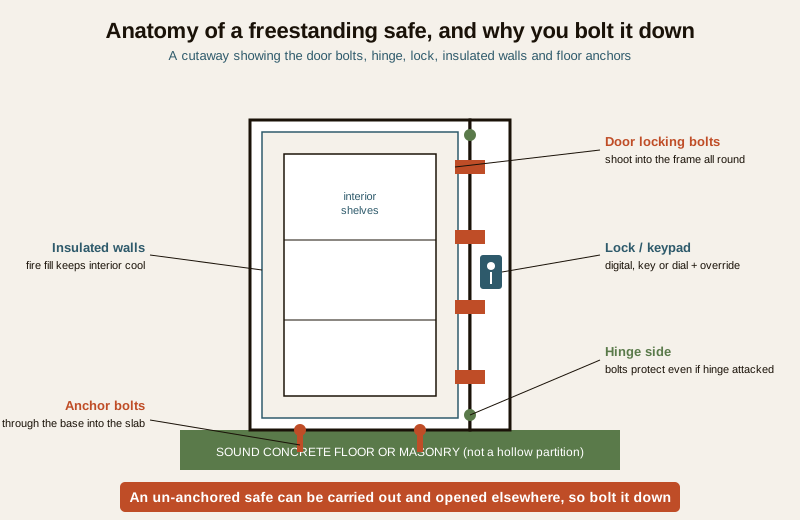
This is where most home-safe protection is quietly thrown away. A safe that is not fixed down is a portable strongbox: two people can walk a light safe out of the door and open it at leisure somewhere else, so its rating becomes irrelevant.
- Weight helps, but is not enough on its own. Heavier safes are harder to move, but a determined pair with a sack barrow can still shift a surprising amount. Weight buys resistance to a casual grab; it does not replace anchoring.
- Anchoring is the real fix. Almost every quality safe has pre-drilled holes in the base (and often the back) for exactly this. Bolting through those holes into a sound concrete floor or a masonry wall means the safe cannot be tipped, dragged or carried without defeating the bolts — which takes time and noise the intruder does not want.
- Anchor into something solid. A bolt into a hollow partition or a tiled surface with no structure behind it is theatre. The fixing must reach real concrete or masonry, and heavy safes raise floor-loading questions in upper-floor flats.
- Route the fixing to a professional. Correct anchor selection, drilling into a slab without hitting conduit or rebar, and not compromising the safe's fire seal or warranty are exactly why the physical install belongs with a safe technician or mason — see home safe installation and anchoring.
Placement, in brief
Placement is a topic of its own — covered fully in where to place a home safe — but the headline rules are simple. Put the safe somewhere it can be anchored to real structure, out of casual sight (not the obvious bedside cabinet a thief checks first), away from damp and direct heat, and convenient enough that you actually use it. Concealment and anchoring together beat either alone: a hidden safe that is also bolted down is far better than a visible one that is merely heavy.
The India context
A few things specific to Indian homes shape the decision.
- Humidity and the monsoon. Closed metal boxes trap moisture; jewellery tarnishes and papers cockle and spot in damp. Keep silica gel sachets inside and refresh or dry them periodically, avoid placing the safe against an external damp wall, and air the safe occasionally. This matters more in coastal and heavy-monsoon regions.
- The bank locker alternative. For high-value gold you seldom wear, a bank locker remains a sensible complement — off-site and professionally secured — while a home safe holds documents, daily-use jewellery and cash you need at hand. Many households use both. Note that bank lockers carry their own terms and limited liability, so read the agreement.
- Insurance. Household or jewellery insurance often specifies a minimum safe grade and a proper installation before it will cover contents to a given limit. Confirm the requirement before you buy, and keep the safe's certificate and install proof with your policy.
- Firearms. If you hold a licensed firearm, storage is governed by the Arms Act 1959 and your licence conditions — store it as the licence and the police require, which may mandate a specific kind of secure storage. Follow the legal requirement, not a generic safe spec.
The buying checklist
Take this to the showroom or the product page and refuse to be rushed past any row.
| What to check | Why it matters | What to confirm |
|---|---|---|
| Type matches contents | Fire, burglary or both are different products | Composite if you have mixed valuables |
| Fire rating (time and temperature) | Paper vs media survive at very different temperatures | Rated minutes or hour, and paper vs data/media |
| Burglary or cash grade | Determines real attack resistance and insurability | The certificate and the graded limit, in writing |
| Certificate, not just a claim | "Fireproof" without a rating is marketing | An independent test certificate for that model |
| Internal litres and shelf height | External size hides usable space | Your tallest item and A4 folders fit, with growth room |
| Lock type suits you | Digital, key and dial trade speed for battery-freedom | Override method and battery behaviour for digital |
| Pre-drilled anchor holes | Un-anchored safes walk out | Base (and ideally back) fixing points present |
| Weight vs your floor and access | Upper floors and stairs limit what you can install | Delivery access and floor loading are workable |
| Insurer's requirement | The grade you need is set by your cover, not the shop | Ask your insurer the grade and install they accept |
| Warranty and service | Locks and electronics do fail | Warranty terms and a local service or locksmith route |
| Humidity plan | Indian damp harms contents | Silica gel and a sensible placement decided |
The honest limits
Everything above is worth doing, and none of it makes a home safe absolute. Given unlimited time, the right tools and no interruption, a home-scale safe can be defeated — that is simply true, and any seller who denies it is overselling. What a good, correctly rated, properly anchored safe actually delivers is delay and deterrence: it makes your valuables slow and noisy to reach, unattractive to a time-pressured intruder, and resistant to fire heat for a stated window. That is genuinely valuable — but only as one layer. A safe behind an unlocked door, with no alarm and no wider security, is protecting the wrong link in the chain. Layer it: sound doors and locks, an alarm, good habits, insurance, and the safe as the hardened core.
How it connects
This overview is the front door to the Safes & Vaults cluster. Once you know the shape of the decision, go deeper: how to choose a home safe walks the full selection in detail; fire-rated vs burglary-rated safes unpacks the two rating families and when you need both; home safe installation and anchoring covers bolting it down safely; and where to place a home safe settles concealment and location. Zoom out to the whole-home picture with the ultimate guide to home security, and browse everything in the Safes & Vaults library.
Key takeaways
- A home safe buys time and deters — it is not un-crackable; size the protection to what is actually at risk and layer it inside a secure home.
- Fire and burglary are different problems; many households need a composite safe, and paper fire ratings do not save media or drives.
- A rating is only as good as its certificate and your insurer's requirement — verify both, and treat "fireproof" without a grade as marketing.
- Size from a real inventory plus growth, and compare internal litres, not external bulk.
- An un-anchored safe walks out — bolting it to real concrete or masonry is non-negotiable, and the physical install belongs with a professional.
- India specifics matter: silica gel for damp, a bank locker for gold you rarely touch, an insurer check before buying, and the Arms Act for any firearm.
References
- Bureau of Indian Standards catalogue — verify the current edition of any Indian standard referenced for safes and secure storage at https://www.services.bis.gov.in/
- Independent safe-testing and certification bodies (for example the schemes behind residential-security-container and EN 1143-1 cash-rating grades) — the source of the fire time-and-temperature and burglary grade claims; read the actual certificate for the model.
- Safe manufacturers' product specifications and installation manuals — the authoritative source for a given model's rating, internal volume, anchoring points and warranty; follow them over any generic guidance.
- Your household or jewellery insurer's policy wording and safe schedule — the source of the minimum grade and installation they require before covering contents to a limit.
- The Arms Act, 1959 and your firearm licence conditions — the legal source for how a licensed firearm must be stored; follow the licence and police requirement.
- A licensed locksmith or safe technician — the correct contact for installation, service and any lock-out (with proof of ownership); never a substitute for the manufacturer's guidance.
This is indicative, educational homeowner guidance, not a security guarantee. Verify the value at risk, the actual certificate on your chosen model and your insurer's requirement, get local quotes, and have a professional install and anchor the safe. It is strictly defensive — for any lock-out, contact the manufacturer or a licensed technician with proof of ownership.
Export this guide
Related Guides — Deep-dive reading
Document and Data Safes in India (2026): Protecting Papers and Digital Media from Fire, Water and Theft
Why a paper fire rating cooks a hard drive that its own certificate never promised to save, how to tell a document safe from a media/data safe, what to keep inside, how to index it, and why the safe is your originals store — not your backup.
SecurityFire-Rated vs Burglary-Rated Safes in India (2026)
The ratings explainer that clears up the single biggest safe-buying mistake — a fire safe is not a burglary safe and a burglary safe is not a fire safe — with how to read a certificate and match it to what your home actually needs.
SecurityJewellery and Valuables Safes in India (2026): Rating, Fitting and Placing a Safe for Gold, Watches and Heirlooms
How to choose, rate, fit and place a home safe for jewellery, gold, watches and high-value valuables in India — matching the burglary grade to the value your insurer will cover, adding fire protection for heirlooms and papers, keeping metal dry, and knowing when a bank locker is the better answer.
SecurityRelated Tools — Try Free
Interior Contract Clause Checklist
16 sections and 98 checkboxes covering scope, BOQ, milestones, penalties, warranty, and disputes.
Contract ChecklistAcoustic Privacy (STC) Visualizer
Indian healthcare acoustic visualizer — compare wall assemblies and noise sources, see received SPL after STC attenuation, and check FGI 2018 / IS 1950 / NABH speech-privacy compliance with live dual-canvas waveform.
Acoustic ToolRenovation vs New Build Calculator
Compare renovating vs building new interiors city-wise across 13 work scopes with GST and per-sqft rates.
Cost Comparison