
Home Safe Installation and Anchoring in India (2026)
Why bolting a home safe to the structure is the step most people skip and the one that matters most, with the anchor options, the fixings, floor loading and moisture to specify, and a clear line on when the job belongs to a safe technician, mason or structural engineer.
You can buy the right safe, put it in the right place and still lose everything in it, because the single step that turns a safe box into an actual deterrent is the one most people skip: bolting it to the building. A free-standing safe that is not fixed down is a portable safe. A thief does not need to open it in your home. Below roughly 1000 kg, two people and a trolley can walk a safe out of the door and open it somewhere quiet, with time, tools and no one watching. Anchoring removes that option — it forces any attack to happen where the safe stands, in your home, against the clock.
This is the practical companion to the complete guide to home safes and sits between choosing a safe and where to place it. It is about home safe installation and anchoring — the options for fixing a safe down, the hardware that does the holding, the floor it all depends on, and the moisture problems an Indian monsoon adds. It is written to help you specify a good install and know when to hand it to a professional, not to talk you into drilling a structural slab yourself.
Scope & how to read this. This is homeowner guidance on how to plan and specify a safe install, not a certified installation method; heavy safes, drilling into structural slabs and any doubt about floor strength are professional jobs — a safe technician, a mason and, for loading questions, a structural engineer.
The principle: bolt it down so it cannot be removed
Everything else in this guide serves one idea. A burglar working in a house has minutes, not hours, and wants to leave with the problem, not solve it on your floor. The two things that beat that are weight and anchoring, and for a home safe anchoring is the one you control. Even a heavy domestic safe — 60 to 150 kg is common — is well within what a couple of people can shift with a sack trolley, so weight alone is not the answer for anything you can lift into a flat.
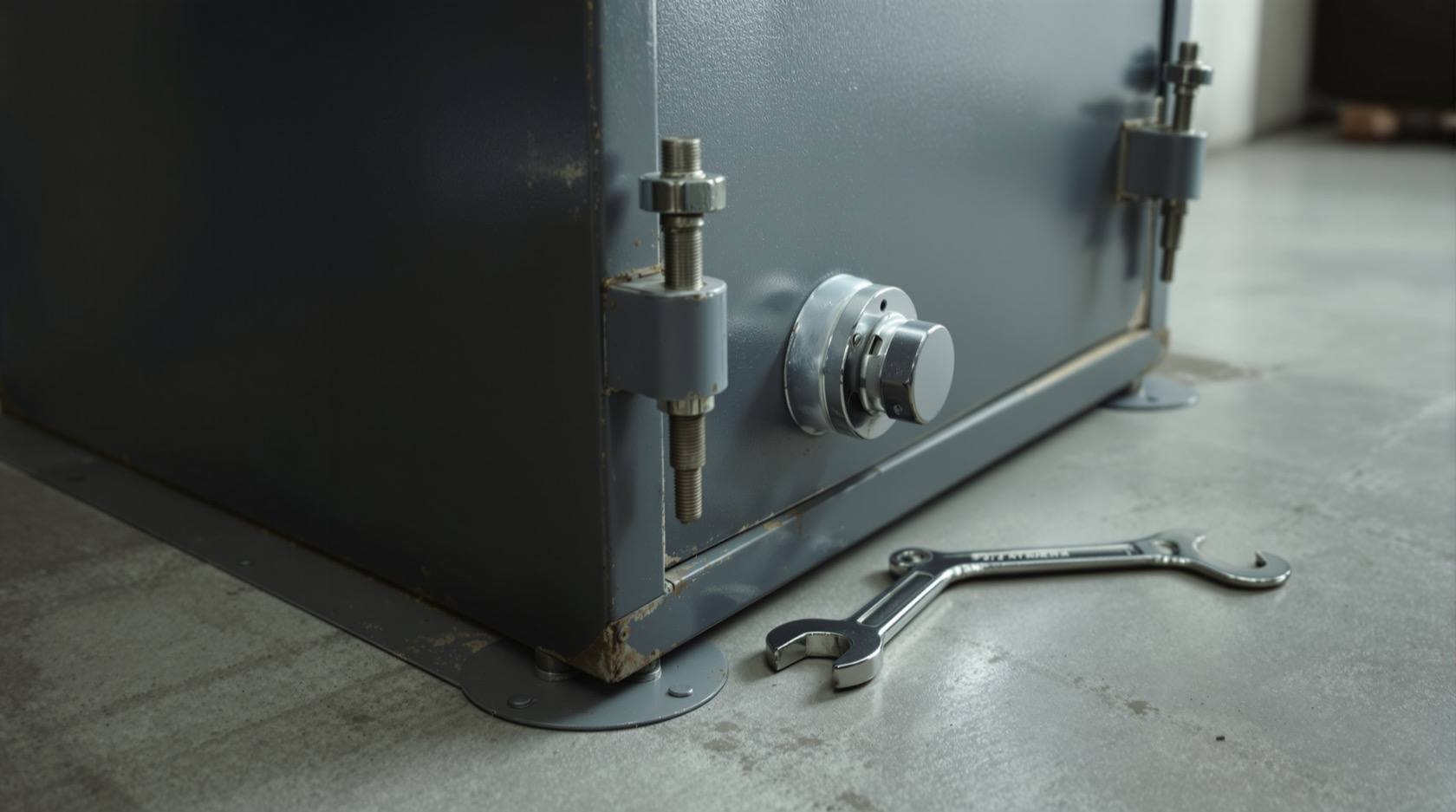
Anchoring converts the whole structure into part of the safe. A body bolted to a concrete slab cannot be tipped, slid or carried; the attack has to be on the door, the lock or the fixings, in place, which is exactly the fight the safe is built for and the burglar is not. This is why manufacturers pre-drill anchor holes in the base — and why a safe installed without using them is only half installed.
The corollary matters just as much: the fixings must be as strong as the safe. A high-grade body held down by two undersized screws into a tiled floor is defeated at the screws, not the steel. The chain is only as good as its weakest link, and on a badly anchored safe the weakest link is the anchor.
The anchor options
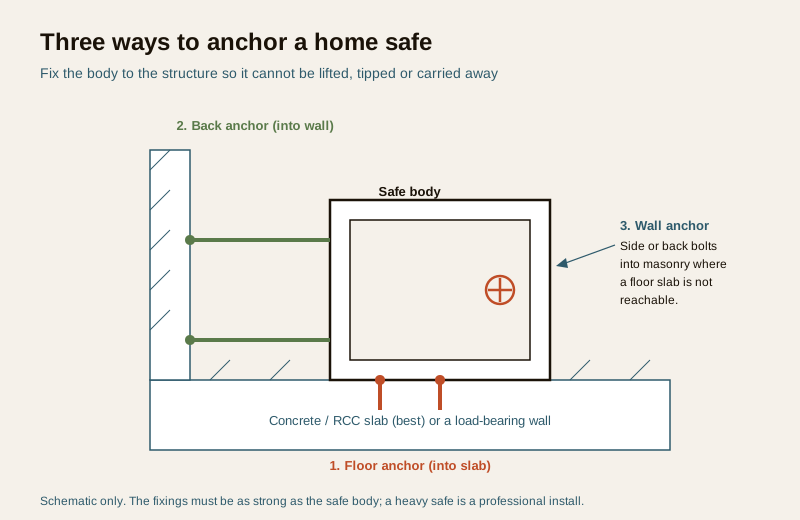
There are three places to fix a safe, and good installs often use more than one.
Floor anchor — into a concrete or RCC slab is best
Bolting down through the base into a concrete or reinforced-concrete (RCC) slab is the strongest, most common method for a home safe and the one manufacturers assume. A properly embedded anchor into sound concrete develops a pull-out resistance that comfortably exceeds anything a hand attack can apply. This is the default to aim for.
Not every floor is concrete you can bolt straight into, though:
- Tiled floors — the tile is a finish, not structure. You drill through the tile into the slab beneath, which needs a masonry bit, care not to crack the tile, and an anchor sized for the concrete depth below the screed, not the tile.
- Timber or plywood floors (some mezzanines, wooden-floored older homes) — a coach bolt into a joist is far weaker than concrete and is easy to lever up with the floorboard. Treat a wooden floor as a reason to add a back anchor or to get professional advice, not as a straightforward fix.
- Hollow, screeded or false floors — if there is a void under your feet, an anchor may grab only the thin topping. This is a case to check what is actually under the surface before you drill.
Wall anchor and back anchor
Where a floor slab is hard to reach — the safe sits on a raised or finished floor, or you want a second line — you can fix through the back or side of the safe into a masonry or concrete wall. Many safes have back anchor holes for exactly this. A back anchor into a solid load-bearing wall is excellent; into a hollow-block or drywall partition it is weak, because the partition itself pulls out. As with the floor, the question is always what the anchor is really biting into.
The strongest domestic installs combine a floor anchor with a back anchor, so the safe is tied down in two directions and cannot be worked loose by rocking.
The fixing hardware, and why it must be as strong as the safe
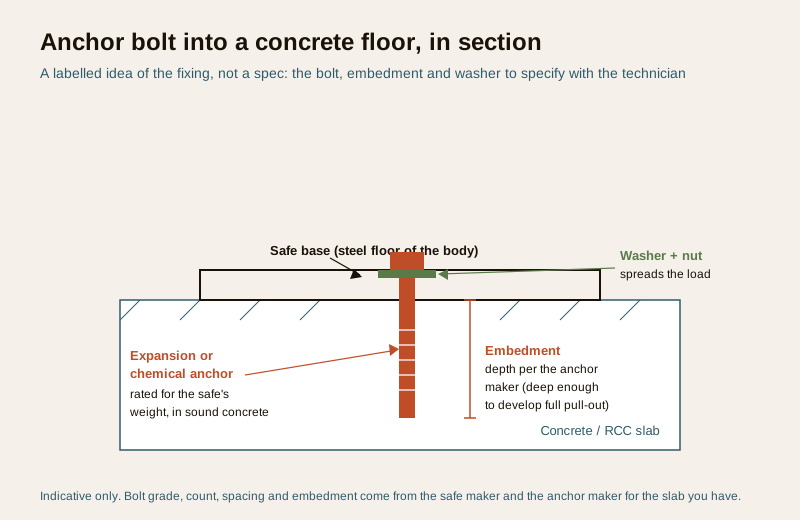
The anchor is the whole install. For fixing into concrete, the two families you will hear about are:
- Expansion (through-bolt / sleeve) anchors — a mechanical bolt that expands to grip the hole as it is tightened. Fast, common, and strong in sound concrete when the right size and embedment are used.
- Chemical (resin) anchors — a threaded stud set into the hole with an injected resin that bonds it. Often preferred where you want maximum pull-out in the concrete you have, or where edge distances are tight.
Which is right depends on the slab, the edge distances and the safe's weight, and it is exactly the kind of call an installer makes for the site rather than something to guess from a table. What matters for you as the owner is the specification discipline:
- Use anchors rated for the safe's weight with margin, in the number and pattern the safe maker specifies — usually all the pre-drilled holes, not one of them.
- Drill to the embedment depth the anchor maker states, in sound concrete, avoiding cables and pipes buried in the slab — a live risk in Indian homes where conduit runs in the floor.
- Fit the washer and nut the kit provides; the washer spreads the load so the bolt head does not simply pull through the base plate.
- Do not substitute a weaker screw because it is what is on hand. An anchor that is undersized, shallow or set in crumbly concrete is the failure point.
Floor loading: can the floor take it?
On the ground floor over a slab-on-grade, weight is rarely the issue. On an upper floor it can be. A heavy safe is a large point load in a small footprint, and a flat's floor slab is designed for distributed domestic loads, not a 150 kg-plus mass in one corner. Concentrated on two small feet, that load may be fine — or it may not, depending on the slab, the span and where in the room it sits.
This is not something to eyeball. If you are putting a heavy safe on any floor above the ground, or you are unsure what the floor is rated for, ask a structural engineer before it goes in. The cost of that check is trivial next to the safe and its contents, and it is the difference between a considered install and a guess about your own building's structure. Spreading the load over a steel plate can help, but whether it is needed and how big it should be is an engineering question, not a hardware-shop one.
Moisture: keep the contents dry through the monsoon
An anchored safe solves theft; it does nothing for the slower Indian problem, which is humidity. A metal box on a cool floor, in a country with a monsoon, is a small condensation trap. Papers foxing, jewellery tarnishing, documents sticking and rust blooming inside are all common in a safe that is never opened and never dried.
- Raise the safe off a floor that gets wet — a cellar, a ground-floor corner that seeps in the rains, a bathroom-adjacent wall. Even a small plinth or feet that lift the base clear of standing water helps, without compromising the anchor if it is designed in.
- Put a rechargeable silica-gel pack inside and recharge or replace it on a schedule; it is the cheapest insurance for the contents against damp.
- Open and air the safe periodically, especially at the end of the monsoon, and check for the first signs of rust or musty smell.
- Keep valuable paper in a sealed pouch inside the safe as a second barrier; a domestic burglary safe is not a sealed dry-box.
None of this changes the anchoring — it is about where you place the safe and what you keep inside it. Concealment versus everyday access is its own trade-off, covered in the placement guide; the short version is that the driest, best-anchored spot and the most convenient spot are not always the same, and dryness and anchoring should usually win.
What is a DIY-with-care job, and what is a professional one
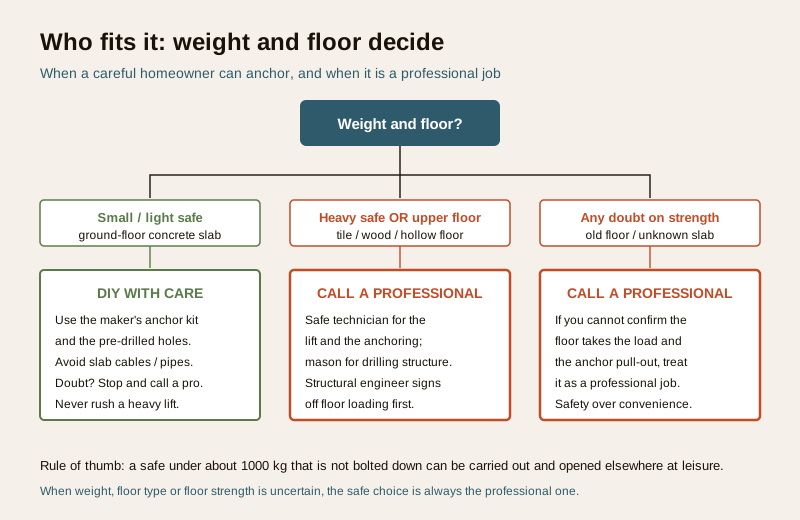
Not every safe install needs a professional, but the line is worth being honest about. A small, light safe going onto a sound ground-floor concrete slab, using the maker's own anchor kit and pre-drilled holes, is within reach of a careful, competent homeowner — provided you can drill accurately, avoid buried services and stop if anything is unclear.
Everything below is a professional's job, and treating it as one is the mature choice, not the timid one:
- Any heavy safe — the lift alone is a hazard, and a dropped safe damages the floor, the safe and possibly a person. A safe technician has the gear to move and place it.
- Drilling into a structural slab where you are unsure of embedded services or the concrete condition — a mason or technician who does this routinely.
- Any doubt about floor strength, or any upper-floor install of a heavy safe — a structural engineer signs off the loading first.
- Old, unknown or non-concrete floors where you cannot confirm what the anchor is biting into.
And one hard line that has nothing to do with installation: this guide never covers how to open, drill, force or defeat a safe. If you are locked out of your own safe, do not attempt to break in and do not follow any "how to crack a safe" content — contact the manufacturer or a licensed locksmith / safe technician with proof of ownership. They can open it without destroying it, and doing it that way is both safer and the only legitimate route.
What to specify — an install checklist
Use this to brief an installer or to sanity-check a DIY-with-care job. It is not a substitute for the safe maker's own instructions, which always take priority.
| Area | What to specify or check | Why it matters |
|---|---|---|
| Fix method | Floor anchor into concrete / RCC slab; add a back anchor into a load-bearing wall where possible | Ties the safe down so it cannot be lifted or carried out |
| Fixing count | Use all the pre-drilled anchor holes, not one | Spreads the hold; a single bolt is a single failure point |
| Anchor type | Expansion or chemical anchor rated for the safe weight, with margin | The fixing must be at least as strong as the safe body |
| Embedment | Drill to the anchor maker's stated depth, in sound concrete | Shallow or crumbly-concrete anchors pull out |
| Services | Confirm no buried cables or pipes on the drill line | Slab conduit is common in Indian homes; a hit is dangerous |
| Floor type | Concrete slab = best; tile = drill through to slab; wood / hollow = get advice | The anchor is only as good as what it grips |
| Floor loading | Upper-floor or heavy safe: structural engineer confirms the floor takes the point load | A heavy safe is a large load in a small footprint |
| Moisture | Raise off wet floors; silica gel inside; air after the monsoon | Humidity rusts the box and spoils the contents |
| Lock-out plan | Record where the keys / codes and ownership proof are kept | If locked out, call the maker or a licensed technician, never force it |
When to call a professional — a quick sort
| Situation | Who should do it |
|---|---|
| Small, light safe, ground-floor concrete slab, maker's kit | Careful homeowner (DIY with care) |
| Heavy safe of any kind | Safe technician (move, place, anchor) |
| Drilling a structural slab, unknown services | Mason / safe technician |
| Upper-floor install or any floor-strength doubt | Structural engineer, then the technician |
| Old, timber, hollow or unknown floor | Professional assessment first |
| Locked out of your own safe | Manufacturer or licensed locksmith, with proof of ownership |
How it connects
Anchoring is one link in the chain. Start with the complete guide to home safes for the whole picture, use how to choose a home safe to pick the right box and rating, and read where to place a home safe for the concealment-versus-access and dryness trade-offs that decide where this install actually happens. All of these sit in the Safes & Vaults library.
Key takeaways
- An unbolted safe is a portable safe; below about 1000 kg it can be carried out and opened elsewhere, so anchoring is the step that makes a safe a deterrent.
- Floor-anchoring into a concrete or RCC slab is best; back and wall anchors help, but only into solid, load-bearing structure — never a hollow partition.
- The fixings must be as strong as the safe — anchors rated for the weight, all the holes used, drilled to depth in sound concrete, avoiding buried services.
- Upper floors and heavy safes raise a floor-loading question — a structural engineer, not a guess, answers it.
- Moisture is the slow enemy — raise off wet floors, keep silica gel inside and air the safe after the monsoon.
- Heavy safes, structural drilling and any floor-strength doubt are professional jobs — a safe technician, mason or structural engineer.
- If you are locked out, never force it — call the manufacturer or a licensed technician with proof of ownership.
References
- Safe and lock manufacturers' installation instructions — the authoritative source for the anchor pattern, bolt count and fixing method for your specific model; always follow these over any generic guidance.
- Anchor and fixing manufacturers' technical data — expansion and chemical anchor selection, sizes and embedment depths for the concrete you have.
- Bureau of Indian Standards catalogue — verify the current edition of any structural or fixing standard referenced by your installer at https://www.services.bis.gov.in/
- A licensed structural engineer — the correct party to confirm floor loading for a heavy safe on any upper floor, and to specify a load-spreading plate if one is needed.
- Your household insurer — for any requirement on how a safe must be anchored or rated for cover to apply; check the policy before you rely on it.
- A licensed locksmith or safe technician — the only legitimate route to open a safe you are locked out of, with proof of ownership.
Indicative homeowner guidance only; verify the value at risk, your safe maker's instructions, any rating certificate and your insurer's requirements. Heavy safes, structural drilling and floor-loading questions are professional jobs — engage a safe technician, mason or structural engineer. Strictly defensive: this guide does not explain how to open or defeat a safe.
Export this guide
Related Guides — Deep-dive reading
Door Frame Security in India (2026): Anchoring the Chowkhat Break-Ins Actually Exploit
A homeowner's guide to the real weak point behind most forced entries: the frame, not the leaf or the lock, and how to anchor, pack and reinforce a chowkhat so a strong door genuinely stays in the wall.
SecurityReinforced Wooden Doors in India (2026): Making the Timber Main Door Actually Secure
A homeowner's decision guide to choosing or upgrading the wooden main or flat door most Indian homes actually have, so it genuinely resists a break-in, without pretending a hollow flush door is secure.
SecurityWhere to Place a Home Safe in India (2026): Concealment, Access and a Solid Anchor
A homeowner's guide to siting a domestic safe in an Indian house or flat — balancing concealment, daily access and a bolt-down anchor, while protecting valuables from the fire, flood and monsoon damp that catch most people out.
SecurityRelated Tools — Try Free
Access-Control Schedule Generator
Build the time schedules that decide when each access group can enter — an editable list for your integrator.
Time SchedulesMaterial Schedule Generator
Generate a room-wise finish schedule — walls, floors, ceilings, trim, and joinery by location.
Material ScheduleWindow Hardware Cost Calculator
Estimate window hardware cost — hinges, handles, locks, rollers and multipoint gears.
Window Calculator