
Where to Place a Home Safe in India (2026): Concealment, Access and a Solid Anchor
A homeowner's guide to siting a domestic safe in an Indian house or flat — balancing concealment, daily access and a bolt-down anchor, while protecting valuables from the fire, flood and monsoon damp that catch most people out.
Buying the safe is the easy part. Where you put it decides whether it actually protects anything. A good home safe in the wrong spot — sitting loose on a bedroom floor, tucked in the first wardrobe a thief opens, or resting on a ground-floor slab that floods every monsoon — gives you a false sense of security while doing very little. Placement is where a safe earns its keep, and it is almost entirely in your hands rather than the manufacturer's.
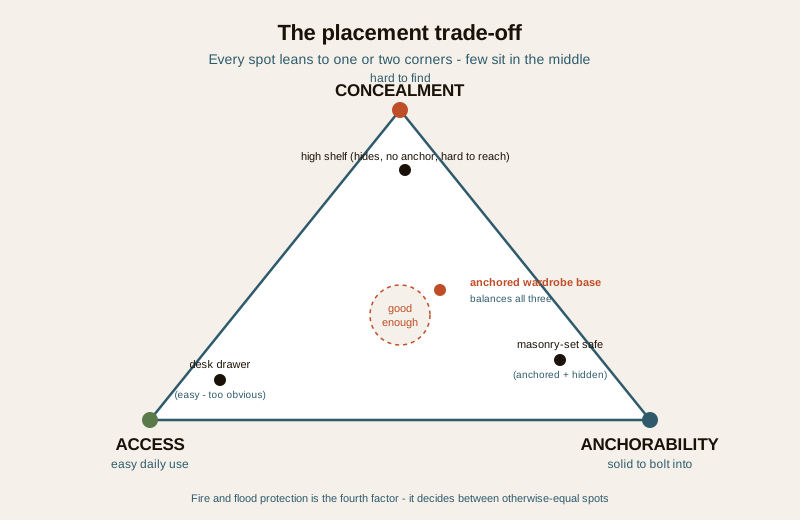
The right location is a balance of four things that pull against each other: concealment (hard to find), access (easy for you to use every day), anchorability (something solid to bolt it to) and protection from fire and flood. You rarely get all four perfectly, so this guide is about trading them sensibly for your home, your valuables and your risks. If you have not chosen the safe yet, start with the complete guide to home safes in India; once it is sited, the home safe installation and anchoring guide covers actually fixing it down.
Everything here is strictly about protecting your own property. This guide will not help anyone find or open someone else's safe — placement advice is worthless to a thief and essential to an owner.
Scope & how to read this. This is practical placement guidance for a homeowner, not a security audit of your specific home. Heavy fixing, floor-loading for a large safe, and anything built into structure should be done by a mason, carpenter or safe technician. What matters most depends on what you are protecting and the real risks where you live — think it through for your own house.
The four things you are balancing
Every candidate spot in your home scores differently on the four factors. A high shelf hides well but is a nuisance to open daily and impossible to bolt to structure. A study drawer is easy to reach but the first place anyone looks. The job is to find the spot that is good enough on all four, not perfect on one.
- Concealment — how long it stays unfound during a hurried break-in. Thieves work fast and check the obvious spots first; anything that delays discovery buys you protection.
- Access — how easily you can use it in daily life. A safe you find annoying to open is a safe you leave unlocked, or stop using. Access has to be honest about your real habits.
- Anchorability — whether there is a structural slab, a load-bearing wall or a solid masonry recess to bolt or set the safe into. A safe that can be carried away whole is barely a safe. This is the single most under-rated factor.
- Fire & flood protection — where the spot sits relative to heat, fuel load and water. Low and away from burnable clutter is better for fire; raised and off a ground-floor or basement slab is better for flood and monsoon damp.
The tension is real. The most concealed spot is often the least anchorable; the most accessible spot is often the most obvious. Score your options honestly rather than chasing a single virtue.
Avoid the spots thieves check first
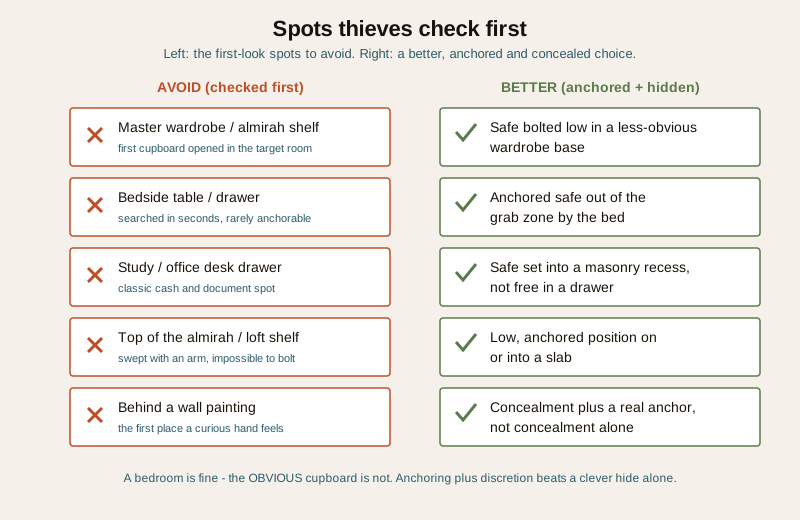
An opportunistic burglar is in and out fast and works from a mental checklist that barely changes house to house. The single biggest placement mistake is putting the safe exactly where that checklist starts. The master bedroom is searched first and hardest, because that is where people keep cash, jewellery and documents — so the master wardrobe, the bedside drawer and the top shelf of the almirah are the worst-kept "secrets" in the house.
| Obvious spot thieves check first | Why it is a poor choice | A better alternative |
|---|---|---|
| Master bedroom wardrobe / almirah shelf | The number-one target room and the first cupboard opened | A safe anchored low in the base of a less-obvious wardrobe, or another room entirely |
| Bedside table / drawer | Searched in seconds; often not anchorable at all | A bolted safe out of the "grab zone" beside the bed |
| Study or office desk drawer | Classic document and cash spot | A safe set into a masonry recess, not free in a drawer |
| Top of the wardrobe / above the loft door | Quick to sweep an arm across; impossible to bolt down | A low, anchored position on or into a slab |
| Under the mattress / behind a headboard | Checked first, holds nothing heavy or fixed | A properly anchored safe elsewhere |
| Kitchen tin / freezer / rice drum | Folk wisdom everyone already knows | Any anchored, concealed safe beats a "clever" unanchored hide |
| Behind a wall painting (the film cliché) | The first place a curious hand feels | Concealment plus a real anchor, not concealment alone |
The lesson is not that bedrooms are forbidden — it is that the obvious cupboard is. A safe can live in a bedroom perfectly well if it is anchored low, out of the first-look zone, and not simply resting on a shelf that lifts out.
What actually makes a good spot
A good location is discreet, low-traffic, gives you a solid anchor, and keeps daily access reasonable. In Indian homes and flats the strong candidates tend to be:
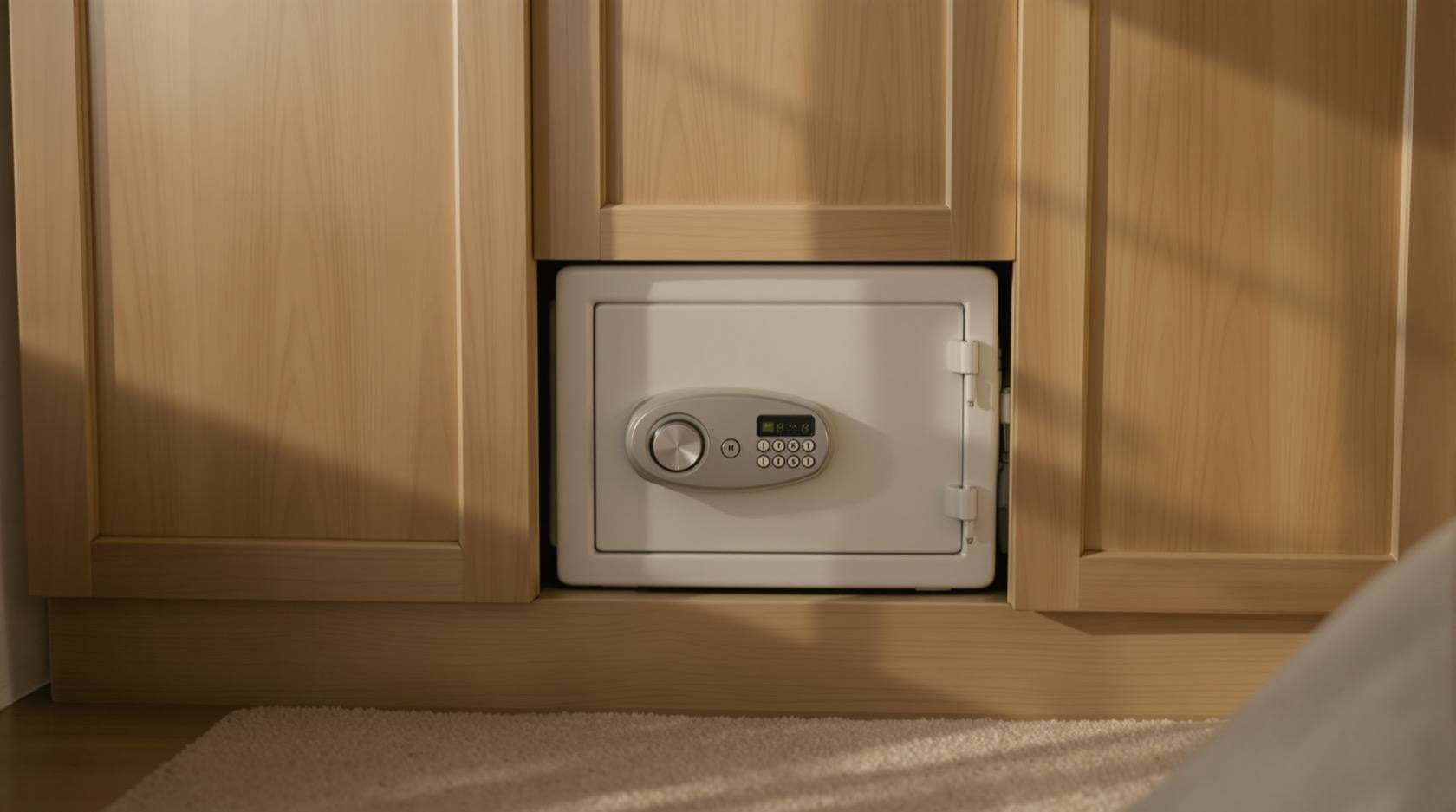
- The base of a wardrobe or built-in cupboard, where the safe can be bolted down through the cupboard floor into the slab and hidden behind hanging clothes or a false base. Concealment plus anchorability in one.
- A low corner of a store room, utility area or a spare/pooja room — low traffic, out of a burglar's first sweep, and usually a solid floor slab to bolt into.
- Built into masonry — a recessed safe set into a brick or concrete wall, or a floor safe cast into the slab, is both concealed and inherently anchored. This is a job for a mason and is best planned during construction or renovation.
- Under a staircase or in a built-in unit, provided there is real structure to fix to and it is not the first cupboard on show.
Anchoring must come first, not last
Wherever you lean, check one thing before you commit: can this safe be solidly anchored here? A domestic safe that is not bolted down can simply be picked up and carried away to be opened elsewhere at leisure — the lock never gets tested. That is why placement and anchoring are one decision, not two. A concealed spot with no slab or masonry to bolt into is weaker than a slightly-less-hidden spot with a proper anchor.
Ground-floor and flat homes usually have a reinforced-concrete slab underfoot that takes anchor bolts well. On an upper floor, or where you want a wall-set safe, you need genuine structural masonry or concrete — not a hollow partition or a plywood wardrobe back. The full method, fixings and the "what to bolt into" detail live in the installation and anchoring guide; site the safe only where that anchor is actually possible.
The concealment-versus-access trade-off
Concealment and daily access are the two factors that fight hardest. The more buried and disguised a safe is, the more of a chore it is to reach — and a safe that is a chore ends up left open or unused, which defeats the point.
Resolve it by matching the spot to how often you open it:
- Things you use often — everyday cash, the jewellery in weekly rotation, current documents — belong in a safe you can reach without dismantling a cupboard. Reasonable access wins here.
- Things you rarely touch — gold you wear a few times a year, property papers, backups — can go somewhere more concealed and more effort to reach, because the daily-use penalty barely applies.
Many households end up with this split naturally, and a bank locker remains the sensible home for the highest-value, rarely-needed items — the home safe is for what you genuinely need at hand. Whatever you choose, do not "solve" access by leaving the safe unlocked between uses; that turns an anchored safe back into an open drawer.
Fire: low, and away from the fuel load
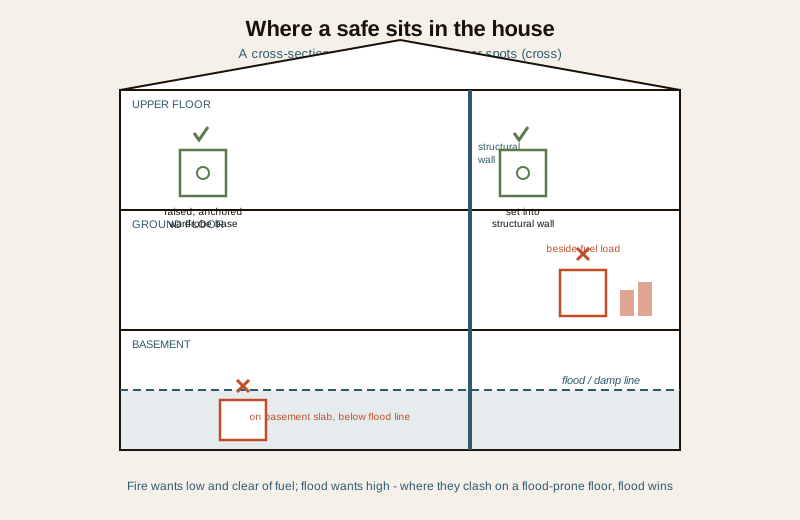
A safe survives a house fire better when it is low and away from heavy burnable clutter. Heat and smoke rise, so temperatures near the floor stay lower for longer, and a safe placed away from stacked paper, mattresses, curtains, stored fabric or LPG gives the fire less fuel to concentrate around it. A safe surrounded by combustible storage is sitting in the hottest, longest-burning part of the room.
Remember what a fire rating actually promises. Fire safes are rated by how long they hold their internal temperature below a threshold in a standard test — and the threshold depends on the contents. Paper chars around 177 degrees C, so paper-rated fire safes are tested to keep the inside below roughly that. But media and data — hard drives, SSDs, backup tapes, photographs — are ruined at far lower temperatures, around 52 degrees C, and need a media/data-rated safe, not an ordinary paper-fire safe. Check the certificate for the protection time and the internal-temperature class, and match it to what you actually store. Do not assume a burglary safe resists fire, or that a paper-fire safe protects a hard drive.
If you keep both documents and digital media, the media items may need their own data-rated safe or an internal media-rated box — placement follows the rating, so plan the spot around the more fragile contents.
Flood and monsoon damp: get it off the floor
Water is the risk Indian homeowners most often overlook, and it works on two timescales. Flooding is the acute one: in flood-prone areas and low-lying neighbourhoods, do not stand a safe directly on a ground-floor or basement floor where floodwater collects. Raise it on a bolted plinth, or better, site it on an upper floor, above the likely water line. A sealed safe can still let water seep in over hours of submersion, and a soaked interior ruins documents, corrodes fittings and rusts jewellery settings.
Monsoon damp is the slow one. Even without a flood, ground-floor and poorly ventilated spots hold humidity, and a metal safe with a warm interior sweats. Over months that means rust on the mechanism, mildew on documents and tarnish on silver. Manage it wherever the safe sits:
- Keep silica gel or a small rechargeable dehumidifier sachet inside, and recharge or replace it on a schedule.
- Leave a small air gap behind and under the safe rather than pressing it against a damp external wall.
- Avoid external walls that get direct monsoon rain, and basements that stay clammy.
- Air the contents occasionally in the dry season.
Fire wants low; flood wants high. Where the two conflict — a flood-prone ground floor — flood usually wins, because water is the far more likely event in most Indian homes than a serious house fire. Read your own risk: an upper-floor flat rarely floods, so fire and anchoring lead there.
Keep the location quiet — and consider a decoy
Placement is only as good as the secret around it. The best-sited safe is undone by telling people where it is. Keep the location to the household members who truly need it; avoid mentioning it to domestic staff, visitors, tradespeople and delivery agents; and be careful about posting home interiors on social media that reveal it. During renovation, the mason or carpenter who builds in a safe knows exactly where it is — factor that into whether a built-in spot is right for you, and change access codes afterward.
Some households add a decoy: a cheap, obvious safe or cash box in a findable spot holding a modest amount of cash, so a hurried intruder takes the bait and leaves before finding the real, well-hidden and anchored safe. A decoy is a supplement to good placement, never a substitute for it. Do not overthink it into a liability — the anchored, concealed main safe is what does the real work.
Putting it together: a placement checklist
Walk each candidate spot through these questions before you commit. If a spot fails the anchoring or the flood question, cross it off regardless of how well it hides.
| What to check | Aim for | Red flag |
|---|---|---|
| Is it the obvious first-look spot? | A discreet, low-traffic location | Master wardrobe, bedside, desk drawer |
| Can it be solidly anchored? | Slab or structural masonry to bolt / set into | Plywood base, hollow partition, loose shelf |
| Daily access vs concealment | Match effort to how often you open it | So buried you will leave it unlocked |
| Fire exposure | Low, away from paper / fabric / LPG | Surrounded by burnable storage |
| Flood exposure | Raised, or on an upper floor | Directly on a ground-floor / basement slab in a flood-prone area |
| Monsoon damp | Ventilated, silica gel inside | Pressed against a damp external wall |
| Contents match the rating | Data items in a media/data-rated safe | Hard drives in a paper-fire safe |
| Who knows where it is | Only those who must | Mentioned to staff, visitors, online |
How it connects
This placement guide sits between choosing and fixing. Decide what you are protecting and pick the right box in the complete guide to home safes in India; use this page to site it; then bolt it down properly with the home safe installation and anchoring guide — placement and anchoring are really one decision, so read them together. All three, with the rest of the cluster, live in the Safes & Vaults library.
Key takeaways
- Placement balances four factors — concealment, access, anchorability and protection from fire and flood — and you trade between them for your own home.
- Avoid the spots thieves check first: the master wardrobe, the bedside drawer and the desk drawer top every burglar's list.
- Good spots are discreet, low-traffic and — above all — offer a solid slab or masonry to bolt or set the safe into. Anchoring decides the location.
- Match access to how often you open it; a safe that is a chore to reach ends up left unlocked. High-value, rarely-needed items still belong in a bank locker.
- Fire favours a low spot away from the fuel load; a media/data safe has its own placement and much lower temperature limit than a paper-fire safe.
- Do not stand a safe on a ground-floor or basement floor in flood-prone areas — raise it or go upstairs — and manage monsoon damp with silica gel and airflow year-round.
- Keep the location quiet, be mindful of who saw it installed, and treat a decoy as a supplement, never a substitute.
References
- Bureau of Indian Standards catalogue — verify the current edition and rating of any safe standard referenced by a product at https://www.services.bis.gov.in/
- Safe manufacturers' placement and installation guidance — the authoritative source for the anchoring points, fixings and siting limits of your specific model; follow the manual over any generic advice.
- Fire-rating test systems (protection time and internal-temperature class; paper around 177 degrees C versus media/data around 52 degrees C) — check the certificate on your safe and match it to what you store.
- Household insurance policy terms — insurers often set conditions on how and where valuables must be secured; check what your policy requires before you rely on a home safe.
- Local flood-risk information for your area and municipal advisories — the basis for deciding whether a ground-floor location is viable.
This is indicative, educational guidance for a homeowner, not a security audit of your home; verify what you are protecting, the safe's certificate and your insurer's requirements, have heavy fixing and structural work done by a professional, and treat this as strictly defensive — it will not help anyone open a safe they do not own.
Export this guide
Related Guides — Deep-dive reading
Document and Data Safes in India (2026): Protecting Papers and Digital Media from Fire, Water and Theft
Why a paper fire rating cooks a hard drive that its own certificate never promised to save, how to tell a document safe from a media/data safe, what to keep inside, how to index it, and why the safe is your originals store — not your backup.
SecurityThe Complete Guide to Home Safes in India (2026)
The definitive homeowner overview of home safes for Indian houses and flats: why you might want one, what a safe protects and what it does not, the main types and ratings, how to size and weigh one, why anchoring is non-negotiable, and how to buy honestly and layer it into your wider home security.
SecurityJewellery and Valuables Safes in India (2026): Rating, Fitting and Placing a Safe for Gold, Watches and Heirlooms
How to choose, rate, fit and place a home safe for jewellery, gold, watches and high-value valuables in India — matching the burglary grade to the value your insurer will cover, adding fire protection for heirlooms and papers, keeping metal dry, and knowing when a bank locker is the better answer.
SecurityRelated Tools — Try Free
Cross-Ventilation Analyzer
Estimate airflow and air changes per hour (ACH) from room size, window areas, layout, and local wind — with NBC 2016 Part 8 compliance check.
Ventilation CalculatorLift Safety Audit Checklist
Interactive checklist that scores your home lift on safety devices, compliance and upkeep.
ChecklistMonsoon-Readiness Checklist
Pre-rain home audit across 9 categories — terrace, drains, waterproofing, electrical, HVAC, pest, vehicles, documents.
Seasonal Audit