
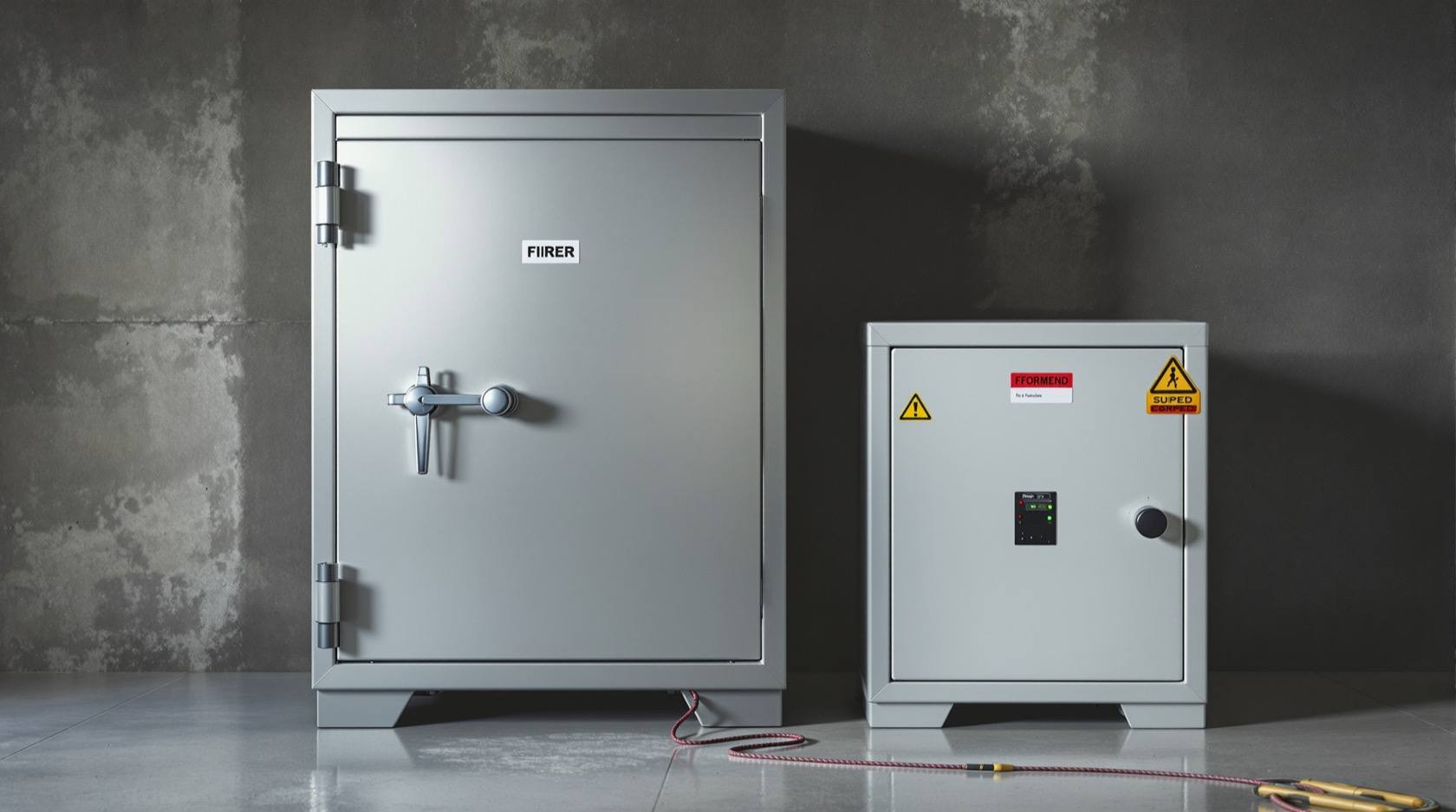
Fire-Rated vs Burglary-Rated Safes in India (2026)
The ratings explainer that clears up the single biggest safe-buying mistake — a fire safe is not a burglary safe and a burglary safe is not a fire safe — with how to read a certificate and match it to what your home actually needs.
Walk into any shop or scroll any listing and you will see two words used as if they mean the same thing: "fireproof" and "burglary-proof". They do not. A fire-rated safe is engineered to keep its contents cool while a fire burns around it; a burglary-rated safe is engineered to resist someone with tools trying to break in. These are different problems, solved with different materials, and a safe that is excellent at one is usually mediocre at the other. Buying the wrong one — or assuming a cheap "fire box" also stops a thief — is the single most common and most expensive mistake in home security.
This guide is the plain-language ratings explainer. It walks through how fire-rated vs burglary-rated safes are tested and rated, why a paper rating is not a data rating, what a burglary grade actually promises, when you need a composite safe that does both, and — most importantly — how to read the certificate on the door and match it to what your insurer will cover. If you are still deciding what to buy, start with the complete guide to home safes in India and the step-by-step how to choose a home safe; this page is the deep dive on the ratings themselves.
Scope & how to read this. This explains rating SYSTEMS generically so you can read a real certificate — it is not a rating in itself and does not quote firm grade numbers or rupee cover figures. Verify the actual certificate on the product and confirm the exact requirement with your own home insurer before you rely on any figure. Strictly defensive: this page helps you choose and specify, never defeat, a safe.
Two different jobs: heat versus force
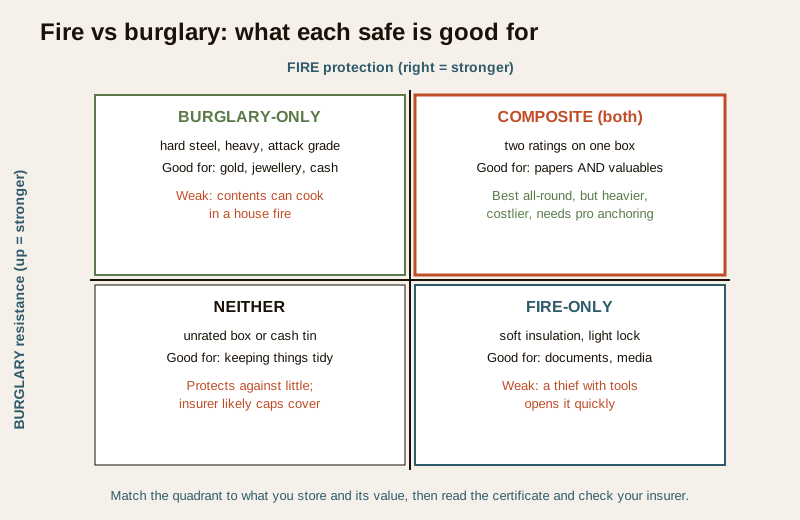
The reason one safe cannot easily do both jobs comes down to physics. A fire-rated safe protects by insulation — thick walls, often filled with a lightweight, moisture-bearing composite that absorbs and releases heat slowly. That insulation is soft. It is very good at slowing heat and almost useless against a crowbar or a drill. A burglary-rated safe protects by mass and hardness — a heavy steel body, a thick door, hardened plates and a relocking system that resists drilling, prying and cutting. That steel conducts heat quickly, so a pure burglary safe with thin or no insulation can let its contents cook in a house fire even though the door never opens.
So the two ratings answer two different questions:
- Fire rating answers: for how long, and up to what internal temperature, are the contents protected while a fire burns outside?
- Burglary rating answers: how much attack — which tools, for how long — does the safe resist, and therefore how much value will an insurer cover inside it?
A safe can be strong on one axis and weak on the other. Reading a certificate is really about reading both axes separately and not letting a big number on one fool you about the other.
How fire ratings work
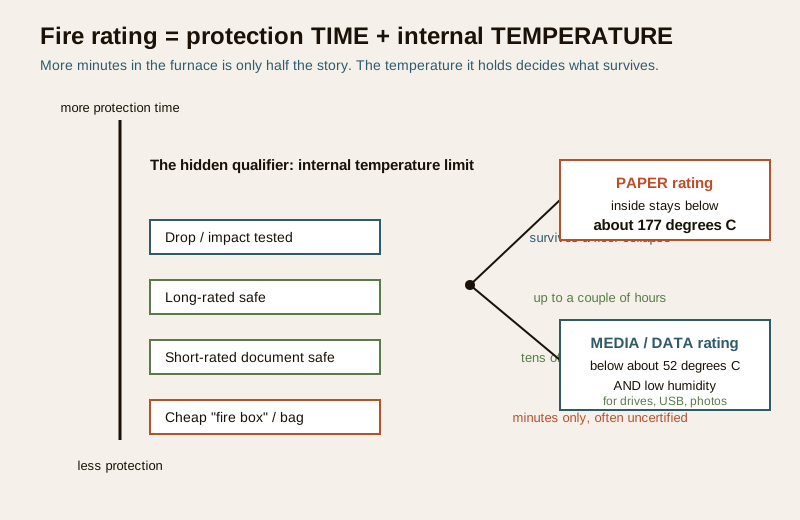
A fire rating is not a single "fireproof" pass or fail. It is measured on two things at once: how long the safe is in the furnace, and how cool it keeps the inside during that time. A safe is placed in a test furnace that follows a rising temperature curve — reaching several hundred degrees Celsius and higher over the test — and sensors inside record whether the interior stayed below a defined limit for the rated period. That period, typically expressed in a span of minutes to a couple of hours, is the number people mean when they say a safe is "rated" for a given time.
The number that matters: internal temperature limit
Here is the part almost every buyer misses. The protection time is only meaningful alongside the internal temperature limit it holds. And that limit is completely different depending on what you are protecting:
- Paper rating. Ordinary paper — cash, passports, property papers, wills, certificates — chars and ignites at high temperature. A paper-rated safe is tested to keep its interior below roughly 177 degrees C. That protects documents, but it is far too hot for anything electronic.
- Media or data rating. Hard drives, SSDs, USB sticks, memory cards, photographic film and photo prints are destroyed long before paper burns. A media/data rating is tested to a much tighter limit — the interior must stay below roughly 52 degrees C and, crucially, below a defined humidity ceiling, because the steam driven out of a fire safe's own insulation can ruin drives even if the temperature is fine.
That gap — 177 versus 52 degrees, plus humidity — is why a document fire safe will happily let your backup drive die inside it during a fire. If you want digital media to survive, you need a safe explicitly carrying a media/data rating, not just a paper rating, or a rated media insert inside the safe.
Impact and the fire-drop test
Good fire ratings also test survival of the fire itself as a physical event. In an impact/drop test, the heated safe is dropped from a height onto a hard surface — simulating a floor collapsing and the safe falling through to the storey below — and then reheated, to prove the door and seals stay shut and the contents stay protected after the shock. A safe that only passes a static furnace test but has never been drop-tested is protecting you against a gentler fire than a real house fire.
Why a cheap "fire box" only buys minutes
The light "fire boxes" and "fire-resistant document bags" sold cheaply are not the same as a rated fire safe. Many carry a very short protection time — sometimes only a matter of minutes — often to a paper limit only, and frequently with no independent certification at all, just a manufacturer claim. In a real, sustained house fire that a fire crew takes time to reach, a few minutes of protection is close to none. They are better than nothing on a desk, but do not mistake a fire box for a fire safe.
How burglary ratings work
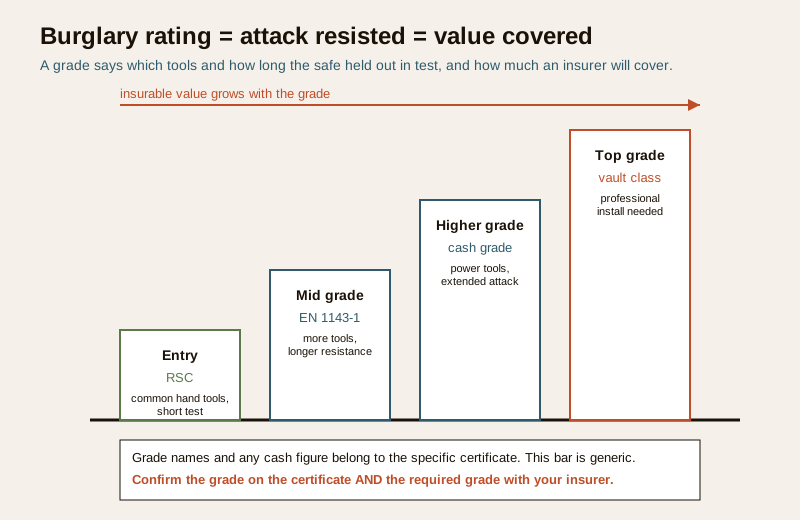
Burglary ratings describe attack resistance: how hard, with which tools, and for how long, the safe holds out. Different certification schemes exist and they use different names, but they share the same logic — a higher grade means the safe resisted a more determined, better-equipped attack for longer in a controlled test.
Two families of names you will meet on Indian-sold safes:
- The North American scheme labels an entry-level home safe as a Residential Security Container ("RSC") — a recognised baseline for a home safe that resists a defined set of common hand tools for a short test period. Higher tool-resistant grades sit above it.
- The European scheme, EN 1143-1, sorts safes into cash-rating grades (often written as grades, sometimes with a matching insurable cash figure). Each grade corresponds to a tested resistance level and, in the insurance world, to a suggested value the safe is considered good for.
Do not memorise the numbers — read the certificate. Grade names, the exact tools, the test duration and any suggested cash figure all belong to the specific certificate on the specific product. This guide deliberately does not quote firm grade numbers or rupee cover amounts. Treat any number a seller quotes as a claim to be checked on the certificate and confirmed with your insurer.
The rating is really an insurance language
The most useful way to think about a burglary grade is as the currency your insurer speaks. Household and valuables policies frequently tie the amount of cash and jewellery they will cover to the grade of the safe it is kept in — a higher-rated, properly installed safe supports a higher covered value. That is why the grade matters even more than the marketing: it is not just "how tough", it is "how much of my loss will actually be paid". Under-rate the safe and a genuine claim can be cut back to the low limit that applies to valuables kept loose or in a weak container.
Fire insulation is soft — so fire-only safes are weak against burglars
Circle back to the physics. The insulation that makes a document fire safe good in a fire is exactly what makes it a poor burglary safe: the walls are largely composite, not hardened steel, and the locking is often a simple mechanism meant to keep a door closed, not to survive an attack. A thief with common tools can defeat many pure fire safes quickly. So if your risk is theft — jewellery, gold, cash — a fire rating alone does not protect you, no matter how reassuring the word "safe" sounds.
Composite safes: doing both jobs
Because most homes face both risks — a fire could destroy documents, a burglar could take valuables — manufacturers make composite safes that carry both a fire rating and a burglary rating on the same box. These combine a hardened, attack-resistant body with a fire-insulating layer, and their certificate shows two things: a fire protection time and internal limit, and a separate burglary grade.
A composite safe is the right answer when:
- You are storing both irreplaceable documents (or media) and high-value theft targets like gold and jewellery in one place.
- You want a single unit rather than a fire safe for papers plus a separate burglary safe for valuables.
- Your insurer requires a burglary grade for the jewellery but you also want fire protection for the papers alongside it.
Two honest caveats. First, a composite safe carries a real fire number and a real burglary number — check that both are certified, not that one is certified and the other only claimed. Second, doing both jobs well makes composite safes heavier and more expensive, and a serious dual-rated unit needs professional anchoring and floor-loading checks; that install is a job for a safe technician, not a DIY afternoon. Get local quotes and budget for the fixing, not just the box.
How to read a certificate and match your insurer
Put the two axes together and reading a real safe becomes straightforward. On or inside the door there should be a certification label or a separate certificate. Look for both stories:
| What to look for | Fire axis | Burglary axis |
|---|---|---|
| Is it certified or just claimed? | An independent test house named, not only the maker | An independent grade named (RSC / EN 1143-1 style), not only the maker |
| The headline number | Protection TIME (minutes to hours) | Attack GRADE (RSC baseline or a cash grade) |
| The hidden qualifier | Internal TEMPERATURE limit — paper (~177 C) or media/data (~52 C + humidity) | The tools and test duration behind the grade |
| Was the shock tested? | An impact/drop test included | Anchoring/relocker features that resist attack |
| Does it match my contents? | Paper vs media/data for what you actually store | Grade high enough for the value you keep |
| Does my insurer accept it? | Fire cover is usually separate — confirm | Grade meets the policy's required grade for the sum insured |
Match it to your insurer before you buy
The order that saves money and heartache: decide what you are protecting and its value, ask your home or valuables insurer what safe grade they require for that sum insured and how the safe must be installed, and only then buy a safe whose certificate meets that requirement. Insurers commonly require a named burglary grade, professional anchoring and sometimes a specific installation for the cover to be valid. Buying first and asking later is how people discover their claim is capped.
Use this specify-and-verify checklist when you compare products or brief a supplier:
| Decide / specify | What to confirm | Verify with |
|---|---|---|
| What am I storing? | Documents, cash, jewellery/gold, digital media, or a mix | Your own inventory and its value |
| Fire need | Protection time AND paper vs media/data limit | The product certificate / test house |
| Burglary need | The grade (RSC / EN 1143-1 style) required for my value | Your insurer's policy wording |
| One safe or two? | Composite (both ratings) vs separate fire + burglary safes | The certificate shows BOTH numbers |
| Media protection | A media/data rating or a rated media insert for drives/USB | The certificate's temperature and humidity limits |
| Install | Anchoring, floor loading, position away from damp | A safe technician; structural advice for heavy units |
| Insurance validity | Required grade, anchoring and any conditions | Written confirmation from your insurer |
| Damp/monsoon | Silica gel inside; not against an external wet wall | Manufacturer guidance for Indian humidity |
A note on firearms, media and the Indian home
Two India-specific reminders. If you hold a licensed firearm, store it exactly as your licence and the police require under the Arms Act, 1959 — the storage condition is a legal obligation, separate from any fire or burglary grade, and you should follow the licence terms first. And for digital media — the family photos, the drives, the backups — remember that Indian humidity and the monsoon are a slow, constant threat even without a fire: keep silica gel inside any safe, choose a media/data rating if the contents are irreplaceable, and never place a heavy safe hard against an external wall that sweats in the rains.
Finally, if you are ever locked out of your own safe — lost combination, jammed lock, dead keypad battery — do not try to force or defeat it, and do not follow any guide that shows you how. Contact the manufacturer or a licensed locksmith or safe technician and be ready to show proof of ownership. Forcing it destroys the safe and, often, the contents.
How it connects
This ratings explainer is the companion to the two buying guides: the complete guide to home safes in India gives you the full landscape of safe types, sizes and placement, and how to choose a home safe in India walks the decision step by step. Once you understand fire and burglary ratings here, those guides help you turn the requirement into an actual purchase and a professional install. All three sit in the Safes & Vaults library, where you will find the rest of the safe and strongroom guidance.
Key takeaways
- A fire safe is not a burglary safe, and vice versa — they solve heat and force with different materials, and a great score on one usually means a weak score on the other.
- A fire rating means two numbers, not one: the protection time and the internal temperature limit — paper (below ~177 degrees C) versus media/data (below ~52 degrees C with low humidity).
- Digital media dies long before paper burns; protect drives and USB with a media/data rating or a rated insert, not a paper-only safe.
- A burglary grade (RSC or EN 1143-1 style) is really an insurance language — it describes attack resistance and drives how much your insurer will cover.
- Fire insulation is soft, so fire-only safes resist burglars poorly; if theft is your risk you need a burglary grade, not just the word "safe".
- Composite safes carry both ratings for homes that face both risks — confirm BOTH numbers are certified, and budget for professional anchoring.
- Read the certificate on both axes, then match it to your insurer's requirement before you buy — and never quote a seller's number without checking it.
References
- Independent safe test houses and certification schemes — the source of a real fire protection time, internal temperature limit and impact/drop result on a product certificate; verify the named test house, not just the maker's claim.
- North American RSC (Residential Security Container) and higher tool-resistant burglary grades — the entry baseline and tiers for home burglary resistance; read the specific grade on the certificate.
- European standard EN 1143-1 — the cash-rating grade system that sorts safes by tested attack resistance and suggested insurable value; confirm the grade and any cash figure on the certificate.
- Your home / valuables insurer's policy wording — the authoritative source for the safe grade, anchoring and conditions required for your sum insured; get written confirmation before you buy.
- Manufacturer specifications and O and M guidance — the definitive fire and burglary numbers, weight, and installation requirements for the specific safe, including anchoring and floor loading.
- Arms Act, 1959 and your firearm licence conditions — the legal storage requirement for a licensed firearm, separate from any fire or burglary grade; follow the licence and police requirement.
This is indicative educational guidance, not a rating, an insurance recommendation or a security assessment. Verify the value at risk, the actual certificate on the product and your insurer's exact requirement; a qualified safe technician sizes, places and installs a safe. Strictly defensive — this page helps you choose and specify a safe, never defeat one.
Export this guide
Related Guides — Deep-dive reading
Document and Data Safes in India (2026): Protecting Papers and Digital Media from Fire, Water and Theft
Why a paper fire rating cooks a hard drive that its own certificate never promised to save, how to tell a document safe from a media/data safe, what to keep inside, how to index it, and why the safe is your originals store — not your backup.
SecurityThe Complete Guide to Home Safes in India (2026)
The definitive homeowner overview of home safes for Indian houses and flats: why you might want one, what a safe protects and what it does not, the main types and ratings, how to size and weigh one, why anchoring is non-negotiable, and how to buy honestly and layer it into your wider home security.
SecurityJewellery and Valuables Safes in India (2026): Rating, Fitting and Placing a Safe for Gold, Watches and Heirlooms
How to choose, rate, fit and place a home safe for jewellery, gold, watches and high-value valuables in India — matching the burglary grade to the value your insurer will cover, adding fire protection for heirlooms and papers, keeping metal dry, and knowing when a bank locker is the better answer.
SecurityRelated Tools — Try Free
Interior Budget Allocation Map
How ₹5L / ₹10L / ₹20L budgets should be distributed across rooms with visual charts and tier breakdown.
Reference GuideStyle & Budget Compatibility Calculator
Check whether your target interior style fits your budget and get tier-appropriate recommendations.
Style CalculatorAccess-Control Battery-Backup Calculator
Size the standby battery so an access system keeps running through a power cut, with an egress life-safety note.
Battery Backup