
How to Choose a Home Safe in India (2026)
A practical, buyer-side decision guide that walks you from what you are protecting, through fire versus burglary, size, lock type, ratings and features, to an indicative budget and a shortlist checklist you can take to a local dealer.
A home safe is one of those purchases where a little planning saves years of quiet regret. Buy too small and your growing jewellery collection lives in a drawer again within two years. Buy a burglary box when what you actually needed was fire protection for your property papers, and a kitchen fire turns your deeds to ash inside a "safe" that survived the theft it was built for. This guide answers how to choose a home safe the way a careful buyer should — starting not with the product but with what you own, what threatens it, and what your insurer will actually recognise.
The honest headline: there is no single best home safe. The right one depends on the value at risk, the threat you are guarding against, the space you have, and your budget. What this page gives you is a decision path — a sequence of questions that narrows a bewildering catalogue down to a two or three model shortlist you can price locally. For the full technical background, pair this with the complete guide to home safes in India; to understand the single most misunderstood choice, read fire-rated versus burglary-rated safes; and once you have chosen, plan the install with where to place a home safe.
Scope & how to read this. This is buyer-side guidance to help you specify and shortlist a safe; it is strictly defensive and never covers opening, forcing or defeating a safe. If you are locked out of your own safe, contact the manufacturer or a licensed locksmith or safe technician with proof of ownership — never force it.
Step 1 — Decide what you are protecting
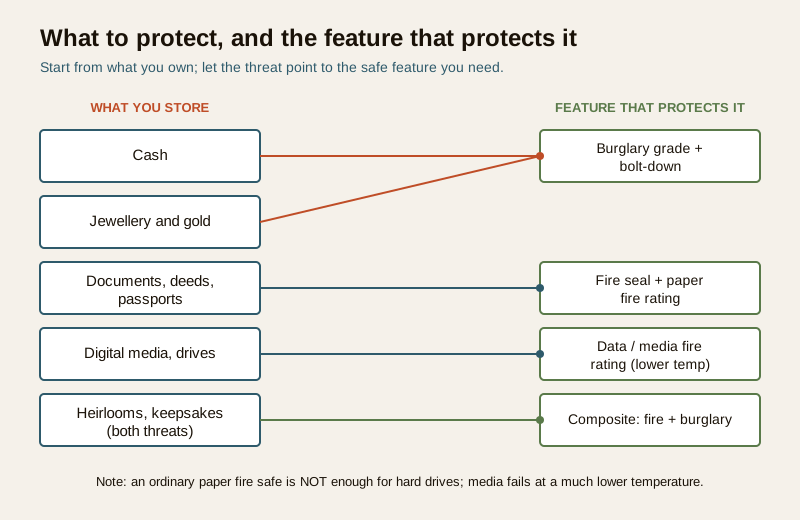
Everything else follows from this. Walk the house and list what you would want behind a locked steel door, then note two things for each item: roughly what it is worth, and whether its real enemy is theft, fire, or both.
- Cash — theft is the threat; fire matters if you keep large amounts. Insurers cap cash cover tightly, so a safe rating here is mostly about deterrence and grade.
- Jewellery and gold — high value in small volume; theft is the primary threat, and it is the category insurers care most about rating and often bolting down.
- Property documents, deeds, wills, passports — fire and water are the real enemies, not thieves. A burglar rarely wants your sale deed; a fire destroys it in minutes.
- Digital media — hard drives, USB, backup discs — fire again, but with a catch: electronic media is destroyed at a far lower internal temperature than paper, so an ordinary fire-paper safe is not enough.
- Sentimental and small heirlooms — value you cannot insure; usually both threats apply.
Write down the total value at risk. It anchors everything: how much safe you should buy, what grade an insurer will ask for, and whether a home safe is even the right home for an item — genuinely high-value pieces you rarely wear may belong in a bank locker, with only the everyday pieces at home.
Step 2 — Fire, burglary, or both
This is the choice most buyers get wrong, because "safe" sounds like it protects against everything. It does not. Fire protection and burglary protection are engineered against opposite problems, and a box optimised for one is usually weak at the other.
- A fire safe is built to keep its inside cool during a blaze — thick insulating walls, a heat-activated door seal, a lighter overall lock and body. It resists heat, not a determined pry bar.
- A burglary safe is built to resist attack — heavy steel, hardened plates, relocking devices, anchor points. It resists tools, not necessarily a long, hot fire.
- A composite (fire and burglary) safe aims for both. It is heavier and costs more, and no single box does both jobs as well as two specialists would — but for most homes it is the sensible compromise.
Pick by the dominant threat you listed in Step 1. Documents and drives point you to fire; cash and jewellery point you to burglary; a mixed hoard points you to composite. The detailed trade-offs, and why a fire rating and a burglary rating are not interchangeable, are in fire-rated versus burglary-rated safes.
Step 3 — Size it honestly
Under-sizing is the most common and most frustrating mistake. Do it with a worksheet, not a guess.
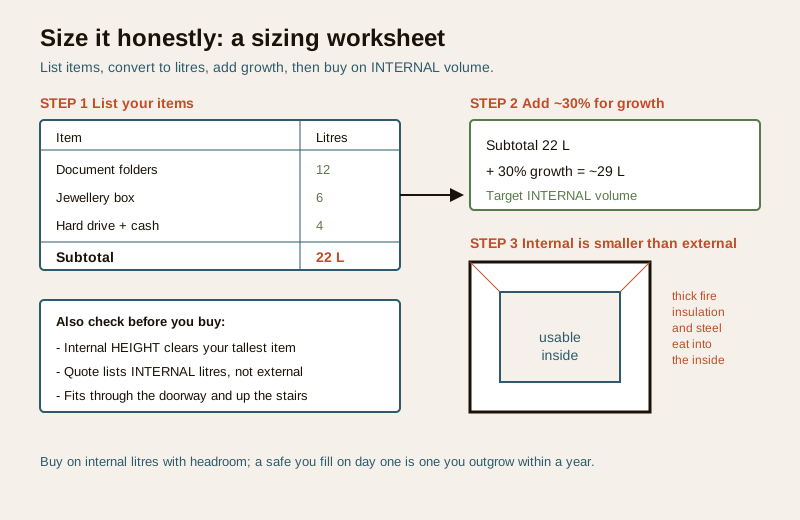
1. Inventory the items you decided to store. Include the bulky ones — document folders, a jewellery box, a camera, a hard-drive caddy — not just the small valuables.
2. Estimate the internal volume each needs, in litres. A stack of A4 folders, a standard jewellery organiser, a laptop — rough each one and add them up.
3. Add about 30 percent for growth. Collections grow; a safe you fill on day one is a safe you outgrow in a year.
4. Mind internal versus external dimensions. This is the trap: the thick fire insulation and steel that make a safe good eat into the inside. A safe that looks large outside can be surprisingly small inside, so always buy on the internal litres, and check the internal height clears your tallest item.
Also measure the doorway, stairs and the spot where it will live — a heavy safe that cannot be carried to the intended room is a costly lesson. Placement, floor loading and bolt-down are covered in where to place a home safe.
Step 4 — Choose the lock type
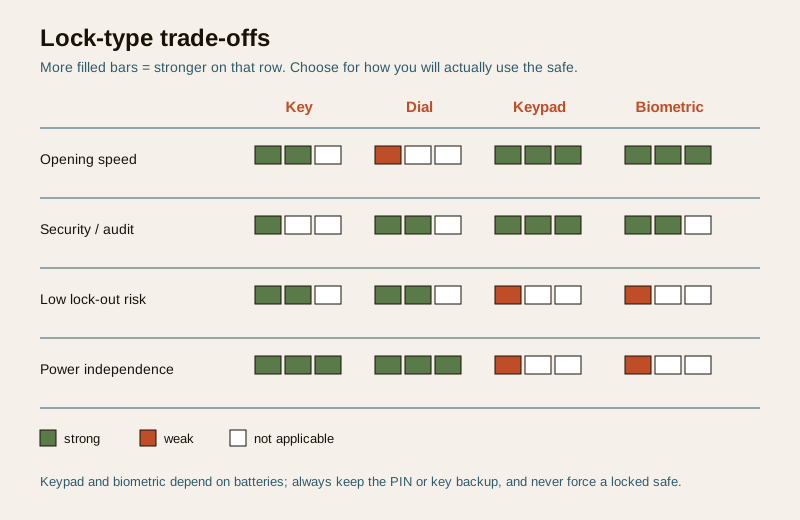
The lock is what you touch every day, so it has to suit how you will actually use the safe, not just how secure it sounds. Four main types are sold for home safes.
| Lock type | How it opens | Everyday feel | Lock-out risk | Power | Best when |
|---|---|---|---|---|---|
| Key | A physical key | Simple, instant, nothing to forget | Lost or copied key; keep spares off-site | None | You want zero fuss and can secure the keys well |
| Mechanical dial | A rotating combination dial | Slow, deliberate; no batteries ever | Forgotten combination; no audit trail | None | You value long-term reliability over speed |
| Digital keypad | A PIN on a keypad | Fast, code you can change | Flat battery, forgotten PIN | Battery | You want speed and to change access easily |
| Biometric | A fingerprint (usually with PIN backup) | Fastest; nothing to remember | Failed read, flat battery, enrolment limits | Battery | Quick repeated access; always keep the PIN or key backup |
A few buying rules that hold across all four:
- Batteries. Keypad and biometric locks run on batteries. A good one warns you before they die and lets you power the keypad externally to open it; confirm this before you buy, and change batteries on a schedule rather than waiting for the warning.
- Override. Many digital and biometric safes include an emergency key override. Understand where that key lives and secure it off-site — it is both your backup and, if careless, a weakness.
- Audit and users. Higher-end digital locks log openings and allow multiple user codes. Useful in a shared household; unnecessary for a simple document safe.
- If you are locked out — a flat battery, a forgotten code, a failed fingerprint — do not force the safe. Call the manufacturer's helpline or a licensed locksmith or safe technician and be ready to show proof of ownership. Forcing it destroys the safe and, often, the contents.
Step 5 — Read the rating and the certificate
Ratings are where marketing and reality diverge, so treat any single word like "fireproof" with suspicion — no safe is fireproof, only fire-resistant for a stated time. Look for a rating tied to an independent test standard, printed on a certificate or label, and read what it actually promises.
Fire ratings
A fire rating is a promise about time and internal temperature: how long the inside stays below a threshold in a standard test fire. The threshold matters as much as the time, because paper and electronic media fail at very different temperatures — paper chars around 177 degrees C, while digital media and film can be ruined near 52 degrees C. So a safe rated to keep paper safe is not automatically safe for a hard drive. If you are storing drives or discs, look specifically for a data or media fire rating, not just a paper rating.
Burglary and cash ratings
Burglary ratings describe resistance to attack, expressed through grading systems — you will see references to residential security container ("RSC") style ratings and to cash-rating grades under European attack-test standards ("EN 1143-1"). These grades are also what insurers use to set how much cash or valuables they will cover inside a given safe. The exact grade you need is a conversation with your insurer, not a number to assume.
Verify, do not assume. Rating names and grades here are described generally. Always read the actual certificate on the model you are buying, confirm the test standard it claims, and check it against your insurer's stated requirement for the sum you want covered — the insurer's requirement, not the brochure, is what pays out.
Step 6 — Check the features that matter
Beyond the headline rating, a handful of features separate a safe that does its job from one that merely looks the part.
- Bolt-down (anchor) holes — pre-drilled holes and bolts to fix the safe to the floor or wall. A small unanchored safe is simply carried away; for anything under roughly a person's carrying weight, bolting down is essential.
- Relockers — a passive device that permanently locks the bolts if the safe is attacked, so a forced lock does not open the door. A mark of a serious burglary safe.
- Fire seal (intumescent seal) — a door seal that expands in heat to keep smoke and hot gases out. The heart of a real fire safe; check the fire rating depends on it.
- Live-locking bolts on multiple sides and a solid door — resistance to prying at the hinge and edges.
- Interior fittings — jewellery trays, drawers, adjustable shelves, a felt lining to protect finishes, and ideally a small vent or space for a silica-gel pack, which matters in India's humidity and monsoon to keep rust and mildew off metal and paper.
Step 7 — Set an indicative budget, then get local quotes
Price tracks the three things that cost money to build: steel and mass (burglary resistance), insulation and seals (fire resistance), and the lock. Expect broad tiers rather than exact figures.
| Tier | Roughly what you get | Typical use |
|---|---|---|
| Entry | A small keypad or key box, light steel, basic or no independent fire rating | Passports, a little cash, low value at risk |
| Mid | A properly fire-rated document safe, or a modest burglary-rated box, with bolt-down | Documents plus everyday jewellery; most homes |
| Upper | A composite fire-and-burglary safe, heavier, better lock, relocker | Higher value at risk, mixed contents |
| Premium | Large composite or graded jewellery safe, data-rated option, quality lock | Substantial collections; insurer-graded needs |
Indian prices vary widely by brand, grade, size and city, so treat any figure you see online as indicative only and get two or three local quotes for the exact model, delivery and bolt-down install. Ask what the quote includes: delivery to the room, anchoring, and whether a technician sets the initial code. Heavy safes and any wall or floor anchoring should be installed by the dealer or a professional — do not improvise the fixing, which is what actually keeps the safe in your home.
Your shortlist checklist
Take this to the dealer. If a model cannot satisfy the rows you marked essential, it is off the list.
| What to confirm | Your answer / requirement | Essential? |
|---|---|---|
| Primary threat: fire, burglary, or both | ... | Yes |
| Fire rating — time and internal temperature (paper vs data) | ... | If storing docs / media |
| Burglary or cash grade, matched to insurer requirement | ... | If storing cash / jewellery |
| Internal volume in litres, with ~30% growth headroom | ... | Yes |
| Internal height clears your tallest item | ... | Yes |
| Lock type chosen for how you will use it | ... | Yes |
| Battery warning and external power option (if digital/biometric) | ... | If digital / biometric |
| Emergency override key location understood | ... | If applicable |
| Bolt-down holes and bolts included | ... | Yes for small safes |
| Relocker fitted | ... | For burglary safes |
| Interior fittings — trays, shelves, silica-gel space | ... | Preferred |
| Certificate present and standard verified | ... | Yes |
| Fits through doorway, stairs and into the chosen spot | ... | Yes |
| Delivery, anchoring and setup included in quote | ... | Yes |
How it connects
This buyer's guide is the decision layer of the Safes & Vaults library. For the full technical background on types, materials and ratings, read the complete guide to home safes in India. To settle the single choice this guide flags as most misunderstood, go deep on fire-rated versus burglary-rated safes. And once you have chosen a model, plan the install — floor loading, concealment and bolt-down — with where to place a home safe.
Key takeaways
- Start with what you are protecting and its value at risk; the safe follows from that, not the other way round.
- Fire and burglary protection are different jobs — pick by your dominant threat, and choose a composite only when you genuinely need both.
- Size on internal litres, add about 30 percent for growth, and remember the inside is much smaller than the outside.
- Match the lock to how you will use the safe; if it is digital or biometric, plan for batteries and a secure override, and never force a safe you are locked out of.
- Read the actual certificate: a fire rating is a time and a temperature, and a paper rating does not protect a hard drive.
- Bolt down small safes, and confirm the burglary or cash grade against your insurer's requirement, not the brochure.
- Treat online prices as indicative and get two or three local quotes with delivery and professional anchoring included.
References
- Bureau of Indian Standards catalogue — verify the current Indian standard and edition for safes and secure storage, and confirm any rating a product claims, at https://www.services.bis.gov.in/
- Underwriters Laboratories (UL) — publisher of residential security container and safe test standards; consult for what fire and burglary ratings actually test.
- EN 1143-1 attack-resistance framework (European Committee for Standardization) — the cash-rating and burglary-grade system many insurers reference; check the grade your insurer requires.
- Your household insurer's policy wording and safe-grade schedule — the authoritative source for how much cash or valuables are covered inside a given safe grade.
- Safe and locker manufacturers' product certificates and specification sheets — the certificate on the specific model, not the marketing copy, is what states the tested rating.
- Arms Act, 1959 and your firearm licence conditions — where a licensed firearm is stored, follow the storage the licence and the police require, over any generic advice here.
This is educational, indicative guidance, not a specification or a valuation. Verify the value at risk, the certificate and your insurer's requirement before buying, have a professional deliver and anchor the safe, and remember this guidance is strictly defensive — if you are ever locked out, contact the manufacturer or a licensed technician with proof of ownership.
Export this guide
Related Guides — Deep-dive reading
Document and Data Safes in India (2026): Protecting Papers and Digital Media from Fire, Water and Theft
Why a paper fire rating cooks a hard drive that its own certificate never promised to save, how to tell a document safe from a media/data safe, what to keep inside, how to index it, and why the safe is your originals store — not your backup.
SecurityThe Complete Guide to Home Safes in India (2026)
The definitive homeowner overview of home safes for Indian houses and flats: why you might want one, what a safe protects and what it does not, the main types and ratings, how to size and weigh one, why anchoring is non-negotiable, and how to buy honestly and layer it into your wider home security.
SecurityFire-Rated vs Burglary-Rated Safes in India (2026)
The ratings explainer that clears up the single biggest safe-buying mistake — a fire safe is not a burglary safe and a burglary safe is not a fire safe — with how to read a certificate and match it to what your home actually needs.
SecurityRelated Tools — Try Free
Before vs After — Cost Reality Check
Compare what you expected to pay vs what you actually paid, category by category.
Reality CheckMaterial Schedule Generator
Generate a room-wise finish schedule — walls, floors, ceilings, trim, and joinery by location.
Material ScheduleStamp Duty Calculator — All Indian States
Stamp duty + registration charges for all 28 states and 8 UTs — gender concessions, urban/rural variants, metro cess built in.
Stamp Duty