
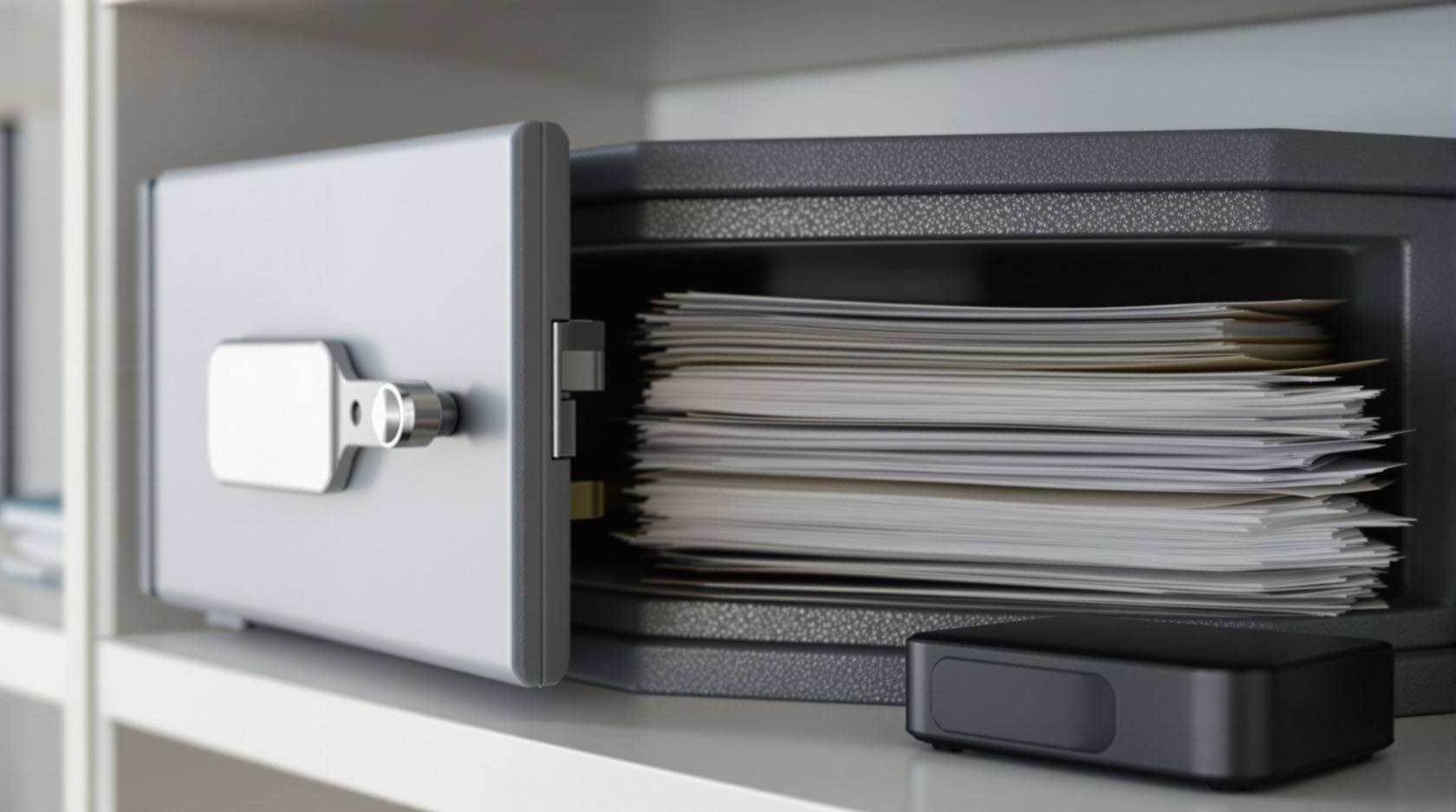
Document and Data Safes in India (2026): Protecting Papers and Digital Media from Fire, Water and Theft
Why a paper fire rating cooks a hard drive that its own certificate never promised to save, how to tell a document safe from a media/data safe, what to keep inside, how to index it, and why the safe is your originals store — not your backup.
Most Indian households keep their whole paper life — property deeds, the sale agreement, passports, PAN and Aadhaar copies, degree and birth certificates, the will, insurance policies — in one drawer or a cheap steel almirah, and increasingly they keep their whole digital life on one external drive or a shelf of memory cards beside it. A single fire, a monsoon flood or a burglary can erase all of it in an afternoon. A document and data safe is how you make that loss survivable — but only if you understand the one distinction that trips up almost every buyer: the fire rating that protects your papers will quietly cook your hard drive.
This guide is written for the homeowner deciding what to buy and what to put in it. It sits alongside the broader complete guide to home safes in India and the deeper explainer on fire-rated versus burglary-rated safes in India; once you have chosen a safe, where to place a home safe in India covers the anchoring and siting. Here the focus is narrower and more important than most people realise: papers and digital media do not survive the same conditions, so they do not always belong in the same box.
Scope and how to read this. This is educational buyer's guidance for protecting documents and digital media at home; it is strictly about choosing, sizing, filling and organising a safe and pairing it with a backup — never about opening one you are locked out of. Ratings, temperatures and prices vary by product and country; treat every number here as a system to check on the certificate, not a promise, and confirm cover with your insurer.
The one distinction that matters: paper versus media
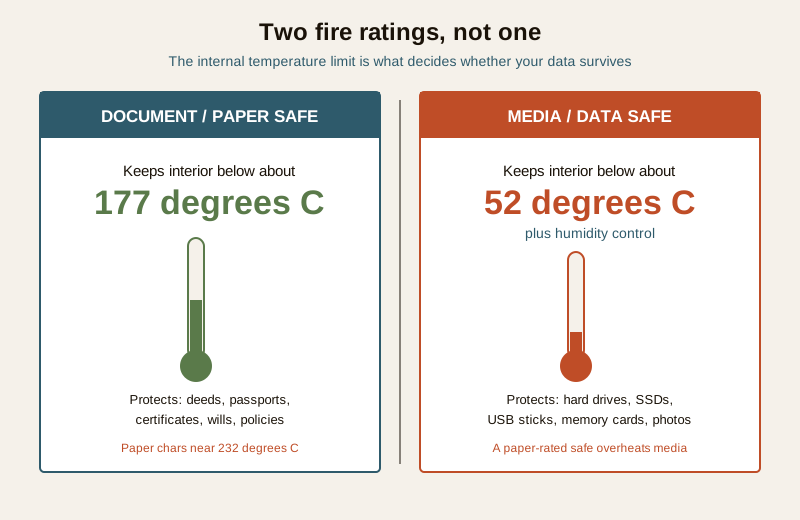
Fire safes are certified by two things: how long they hold out (a protection time) and how hot they let the inside get during that time (an internal temperature limit). The critical point is that there are two different internal temperature limits, because paper and digital media fail at wildly different temperatures.
Paper begins to char and scorch at roughly 232 degrees C. So a safe sold as a paper / document fire safe is certified to keep its interior below about 177 degrees C for the rated time — comfortably under the point where paper is damaged, but nowhere near cool enough to protect electronics. Digital media is far more fragile: hard drives, solid-state drives, USB sticks, memory cards and photographic prints start to degrade at around 52 degrees C, and magnetic media can be ruined by heat and humidity long before paper even yellows. A safe sold as a media / data safe is certified to a much tougher standard — it keeps its interior below roughly 52 degrees C and controls humidity, because moisture destroys drives and photos as surely as heat.
That is why the most common and most expensive mistake is buying a cheap fireproof document box, putting your only backup drive inside it, and assuming it is safe. In a real fire the box does exactly what its certificate promised — it keeps the paper under 177 degrees C — and your hard drive, which needed to stay under 52 degrees C, comes out cooked. The paper survives; the data does not. The certificate was never lying; you simply read the wrong rating.
What this means when you buy
- If you only need to protect papers, a document-rated fire safe with a genuine certificate is enough.
- If you need to protect drives, cards, photos or discs, you need a media / data rating (internal temperature to around 52 degrees C and humidity control) — not a paper rating.
- If you need both, either buy a media/data-rated safe (its lower temperature also protects paper), or use a paper-rated safe for documents and keep digital media in a separate media-rated safe or in a media insert designed to sit inside a fire safe. Do not assume a paper safe protects a drive.
- Always read the actual certificate — the protection time and the internal temperature (and humidity) it was tested to — rather than the word "fireproof" on the box.
Water is the second threat — and it is not automatic
Fire is only half the story. Two things soak a home safe: the water the fire brigade pours on the fire, and monsoon or flood water that rises from below. A fire rating says nothing about water resistance — they are separate tests — so if your papers and drives matter, look for a safe that is certified both fire-resistant and water-resistant (often stated as a submersion depth and time, or an ingress rating), and confirm it on the certificate rather than assuming.
Even a water-resistant safe benefits from a second line of defence inside: keep documents in a sealed zip-lock pouch or archival sleeve, and keep drives and cards in a small sealed box with a few sachets of silica gel to fight the humidity that Indian monsoons drive into everything. Refresh or recharge the silica gel periodically. If your area floods, siting matters as much as the safe — an anchored safe above likely flood level, covered in the placement guide, beats a better safe standing in water.
What to store — and where each thing belongs
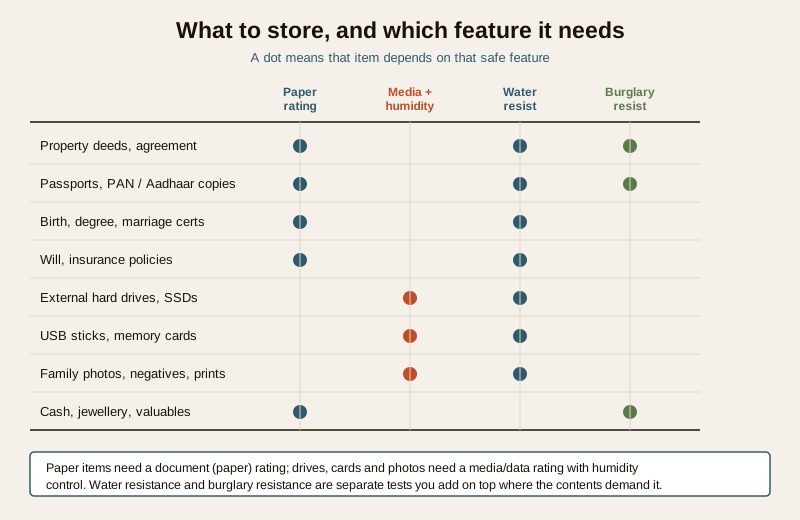
The value of a safe is decided before you close the door: by what you chose to put in it. Split your holdings into paper originals and digital media, because they may need different protection.
| What you own | Category | Fragile to | Best protection |
|---|---|---|---|
| Property deeds, sale agreement, khata | Paper original | Fire, water, theft | Fire + water-resistant document safe |
| Passports, PAN and Aadhaar copies | Paper original | Fire, water, theft | Document safe; keep only copies of ID where possible |
| Birth, marriage, degree certificates | Paper original | Fire, water | Document safe, in a sealed pouch |
| Will, nomination and succession papers | Paper original | Fire, water, loss | Document safe; a second copy with your lawyer |
| Insurance policies, warranty papers | Paper original | Fire, water | Document safe; scan and back up digitally too |
| External hard drives, SSDs | Digital media | Heat above ~52 C, humidity, shock | Media/data safe or media insert; part of a backup set |
| USB sticks, memory cards | Digital media | Heat, humidity, static | Media-rated storage, in a sealed anti-static box |
| Family photos, negatives, prints | Digital / photo media | Heat, humidity, light | Media-rated safe; scan and back up as well |
| Cash, jewellery, valuables | Valuables | Theft, fire | Anchored burglary-rated safe (see below) |
Two practical notes. First, prefer copies of Aadhaar, PAN and similar identity documents in the home safe and keep originals only where you must; a stolen ID document is worth more to a criminal than most cash. Second, if theft is a real concern alongside fire, the fire rating and the burglary rating are, again, two different things — the trade-off is set out in fire-rated versus burglary-rated safes, and a heavy or valuable-holding safe must be anchored so it cannot simply be carried away.
Organise it: a simple index makes the safe usable
A safe full of loose papers is a safe nobody can use in an emergency, and a nightmare for whoever has to settle your affairs. Spend an hour organising it once.
- Sort papers into a few labelled folders or wallets: Property, Identity, Financial and Insurance, Legal and Will, Education and Personal.
- Put one index sheet inside the door listing what is in the safe and where — folder by folder — plus who to contact (lawyer, insurer, bank) and where the off-site copies live. Keep a duplicate of the index with a trusted family member.
- Keep digital media in its own labelled, sealed box: what each drive holds, and the date it was last updated.
- Note the location of things that cannot live in the safe — the bank locker, the cloud account, the lawyer's copy of the will.
- Review the contents on a fixed date each year (renew expiring documents, refresh backups, recharge silica gel).
The index is what turns a box of paper into a system your family can actually operate on the worst day of their life.
A safe is not a backup: pair it with 3-2-1
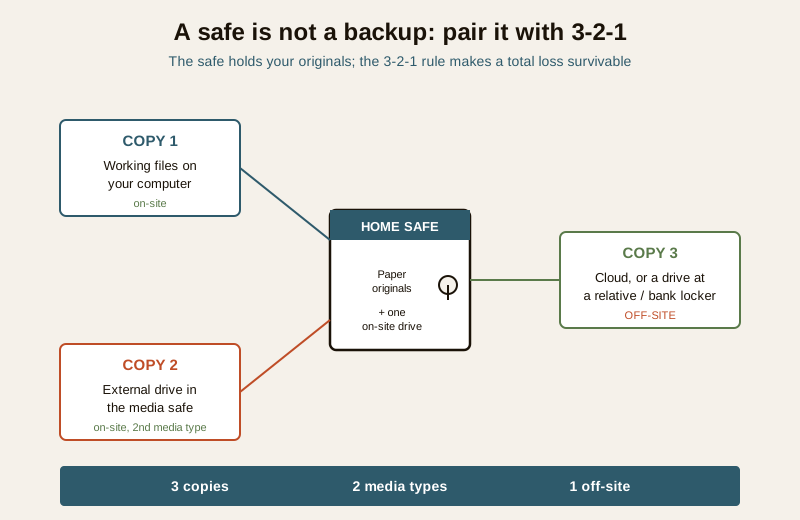
This is the point that saves people from total loss, and it is worth stating plainly: a safe is not a backup. A safe protects the originals and the media you put in it, in one place. If that one place is destroyed beyond even the safe's rating, or stolen with the safe, or if the single drive inside simply fails one day, everything is gone. Redundancy — not a stronger box — is what makes digital loss survivable.
For anything digital, follow the 3-2-1 rule, a long-standing data-protection convention:
- 3 copies of any file you cannot bear to lose.
- 2 different types of media (for example, the drive in the safe and a cloud service — not two drives that could burn together).
- 1 copy kept off-site (a cloud backup, or a drive at a relative's house or a bank locker), so a single house fire, flood or theft never takes every copy.
In practice: your working files live on your computer (copy 1); an external drive in the media safe holds a backup (copy 2, different media, on-site); and a cloud service or an off-site drive holds a third copy (copy 3, off-site). The safe holds your paper originals and one media copy; the off-site and cloud copies mean that even a total loss of the house leaves your data recoverable. Scan your important paper documents too, so that even the deeds and certificates have a digital copy inside the 3-2-1 set.
Choosing well: what to specify and check
Before you buy, work through this short specification checklist and verify each line on the product's certificate rather than the marketing box.
| What to specify | Why it matters | How to verify |
|---|---|---|
| Contents: paper only, media only, or both | Decides whether you need a paper or media rating | List what will go inside before you shop |
| Fire rating: protection time and internal temperature | Paper needs ~177 C limit; media needs ~52 C plus humidity | Read the certificate, not the word "fireproof" |
| Media/humidity protection (if storing drives/cards/photos) | Heat and moisture kill digital media well below paper's limit | Look for a media/data rating or a media insert |
| Water resistance (submersion depth and time) | Fire-brigade water and monsoon flooding are separate threats | Confirm a distinct water rating on the certificate |
| Burglary resistance (if storing valuables) | Fire rating does not mean theft resistance | Check a separate burglary/cash rating; plan to anchor |
| Internal size and layout | Must fit folders upright plus a sealed media box | Measure your folders; allow room to grow |
| Anchoring provision (bolt-down holes) | A safe that can be carried off is not secure | Confirm fixings; a heavy install goes to a professional |
| Insurer's requirement | Cover for cash/jewellery may need a specified rating | Ask your insurer what rating and value they require |
Two boundaries worth keeping. Heavy anchoring, floor loading and any built-in or in-wall installation are jobs for a professional — a safe technician or mason — and are covered in the placement and anchoring guide. And if you are ever locked out of your own safe, do not try to force or drill it: contact the manufacturer or a licensed safe technician or locksmith, with proof of ownership.
How it connects
This guide is one of a small family on home safes. Start with the complete guide to home safes in India for the overview of types, sizes and buying decisions. Read fire-rated versus burglary-rated safes in India to understand why fire protection and theft protection are separate ratings you may need to combine. When you have chosen a safe, where to place a home safe in India covers siting, anchoring and flood-aware positioning. All of these sit in the Safes and Vaults library.
Key takeaways
- There are two fire ratings, not one: a paper/document safe holds its inside below about 177 degrees C (paper chars near 232 C), while a media/data safe holds below about 52 degrees C and controls humidity — because drives, cards and photos are far more fragile than paper.
- A cheap fire box will cook your hard drive even as the paper survives; if you store digital media, buy a media/data rating or use a media insert, and never assume a paper safe protects a drive.
- Water resistance is a separate test from fire resistance — confirm a distinct water rating, and add sealed pouches and silica gel inside as a second defence against monsoon humidity.
- Store the right things: property deeds, passports, ID copies, certificates, wills and insurance papers as paper; drives, cards and photos as media; prefer copies of ID over originals.
- Organise with labelled folders and an index sheet inside the door, with a duplicate index held by a trusted family member; review contents once a year.
- A safe is not a backup. Pair it with the 3-2-1 rule — three copies, two media types, one off-site — so a total loss of the house still leaves your data recoverable.
- Verify every rating on the certificate and confirm required ratings and values with your insurer; a professional handles heavy anchoring, and a locked-out safe goes to the manufacturer or a licensed technician with proof of ownership.
References
- Safe and vault manufacturers' product certificates and specification sheets — the authoritative source for the fire protection time, the internal temperature limit (paper versus media/data), any humidity control and any water-resistance rating; read these rather than the marketing description.
- Independent safe testing and certification bodies (for example UL and EN 1143-1 type schemes) — the systems that define fire and burglary/cash ratings; use them to understand what a rating means and always check the specific certificate for the product.
- Bureau of Indian Standards catalogue — verify the current edition of any Indian standard cited for domestic safes or fire resistance at https://www.services.bis.gov.in/
- Data-protection and backup guidance (the widely used 3-2-1 backup convention) — the basis for keeping three copies on two media with one off-site; adapt it to a cloud service and an off-site drive.
- Your household insurance policy and insurer — the source of any required rating, valuation limit or storage condition for cash, jewellery and valuables kept at home; confirm cover before you rely on it.
- Manufacturer and licensed safe-technician guidance for installation and lock-out — the correct route for heavy anchoring and for regaining access with proof of ownership; never force a safe yourself.
This is educational, indicative guidance, not a product endorsement or a guarantee. Ratings, temperatures and prices vary by product and country and can change — verify the value at risk, the actual certificate and your insurer's requirement before you rely on any safe, have a professional handle heavy installation, and treat lock-out strictly as a manufacturer or licensed-technician job. Strictly for protecting your own property.
Export this guide
Related Guides — Deep-dive reading
The Complete Guide to Home Safes in India (2026)
The definitive homeowner overview of home safes for Indian houses and flats: why you might want one, what a safe protects and what it does not, the main types and ratings, how to size and weigh one, why anchoring is non-negotiable, and how to buy honestly and layer it into your wider home security.
SecurityFire-Rated vs Burglary-Rated Safes in India (2026)
The ratings explainer that clears up the single biggest safe-buying mistake — a fire safe is not a burglary safe and a burglary safe is not a fire safe — with how to read a certificate and match it to what your home actually needs.
SecurityAccess Control Testing Checklist for India (2026): Every Door Opens and Locks as Designed
A ready-to-adapt per-door and system checklist to verify an access-control installation at commissioning and as a periodic check, with the egress and fire-to-release life-safety tests that must always pass before sign-off.
SecurityRelated Tools — Try Free
Interior Contract Clause Checklist
16 sections and 98 checkboxes covering scope, BOQ, milestones, penalties, warranty, and disputes.
Contract ChecklistAccess-Control Battery-Backup Calculator
Size the standby battery so an access system keeps running through a power cut, with an egress life-safety note.
Battery BackupInterior Red Flag Checklist — Before Signing
54 red flags across 8 categories with a live risk score and personalised PDF.
Red Flag Checklist