
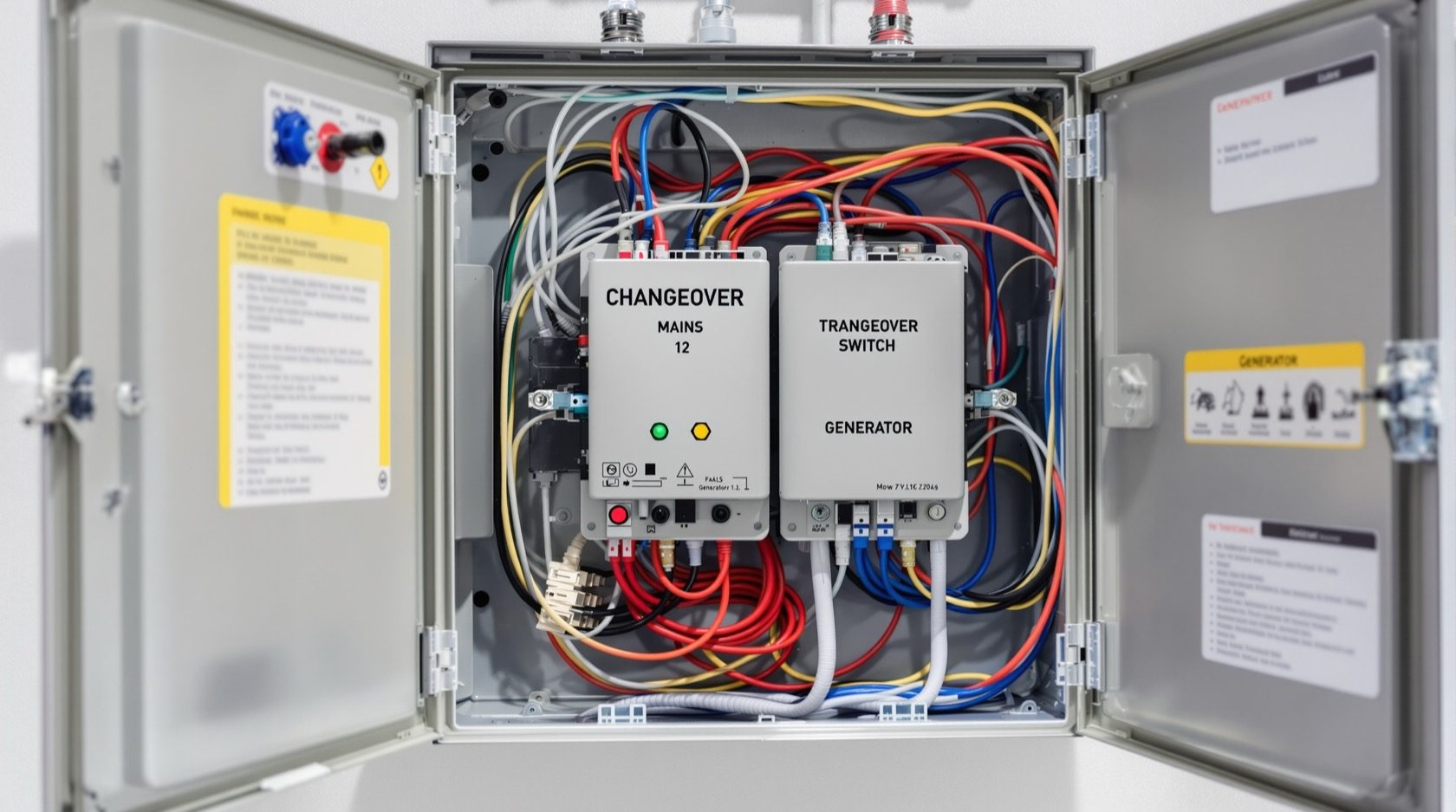
Automatic Transfer Switch (ATS): The Safety Device Backup Power Must Have
The switch that stands between your backup and the grid — why every generator or backup connection needs a changeover, how manual and automatic transfer switches work, what AMF adds, and the life-safety reason you must never connect backup without one.
Of all the parts of a backup system, the transfer switch is the least glamorous and the most important for safety. It is the device that decides whether your loads are fed by the grid or by your backup — and, critically, ensures the two are never connected at the same time. Skip it, or improvise it with a jumper or a reversed plug, and you create a genuine danger: your backup can feed electricity back into the grid and electrocute a lineman working on what they believe is a dead line. This guide explains transfer switches, from a simple manual changeover to a full automatic system, and why one is non-negotiable.
It sits under the home backup power guide and applies to generators and larger inverter installations alike.
The safety line — as serious as any in this hub. A transfer switch is a life-safety device, and its installation is strictly a licensed electrician's job. Never connect a generator or backup to your home wiring without a proper changeover — the "suicide cord" / reversed-plug method that some resort to is illegal and lethal, both to linemen and to you. This is not a place to improvise.
Why a transfer switch is essential
When your home runs on backup during an outage, the grid side is supposed to be dead. If your backup is connected in a way that lets power flow back toward the grid — called back-feeding — two lethal things can happen:
1. A lineman repairing the "dead" line can be electrocuted by your back-fed power, which the transformer can even step up to a much higher, deadlier voltage.
2. When the grid returns while your backup is still connected, the two sources clash — damaging equipment and creating a fire/shock hazard.
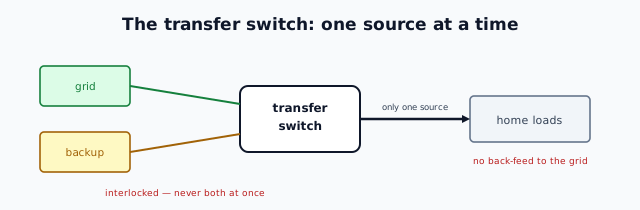
A transfer switch prevents both by physically ensuring only one source feeds the home at a time — grid or backup, never both. That is its whole, vital job.
Manual vs automatic
- Manual changeover switch — a physical switch (often a rotary or a manual transfer switch, MTS) that you operate by hand to select grid or backup. Cheap, simple, reliable, and the minimum acceptable connection for a generator. The catch: you must switch it, so backup isn't instant and needs someone present. Fine for a portable generator you start manually anyway.
- Automatic transfer switch (ATS) — senses a mains failure and switches to backup automatically, then switches back when the grid returns, with no one touching anything. Essential for unattended, self-starting backup and for continuity. Costlier, but automatic.
AMF: auto-start plus auto-transfer
For a standby generator, an AMF (Auto Mains Failure) panel goes a step further: on a power cut it automatically starts the generator, transfers the load to it (via the ATS), and on the grid's return, transfers back and shuts the generator down — all with no human involvement. This is what makes a fixed standby generator truly hands-off, and it's standard for essential-service and larger installations (see building electrical services).
| Manual changeover | ATS | AMF | |
|---|---|---|---|
| Transfers load | By hand | Automatically | Automatically |
| Starts generator | No (you start it) | No | Yes (auto-start) |
| Needs a person | Yes | No | No |
| Best for | Portable gen, budget | Auto backup | Standby gen, essential loads |
What an owner should insist on
- A proper changeover (at least manual) on any generator or backup connection — no exceptions, no improvised cords.
- Installation by a licensed electrician with correct interlocking so the sources can never parallel.
- The right type for the setup — manual for a portable set you attend; ATS/AMF for a standby generator meant to run unattended.
- Correct earthing and neutral handling across the transfer (a technical point the electrician must get right).
- For a flat, the building's DG and its transfer are the society's responsibility; for a house, it's yours to have done properly.
The one-line answer
A transfer switch ensures your home is fed by the grid or the backup, never both at once — which prevents your backup from back-feeding the grid and electrocuting a lineman, and prevents a clash when the grid returns. A manual changeover is the minimum acceptable connection for a generator; an ATS transfers automatically; and an AMF panel also auto-starts and stops a standby generator. It is a life-safety device, mandatory on any backup connection, installed only by a licensed electrician — never improvised with a jumper or reversed plug, which is illegal and lethal.
Where to go next
- The whole strategy: Home Backup Power Guide.
- The generator it switches: Generator Guide.
- The everyday backup: Inverters & Batteries Guide.
- Bigger buildings: Building Electrical Services.
References
- IS/ISO 8528 (Parts 1–12), Reciprocating Internal Combustion Engine Driven AC Generating Sets (incl. controlgear/switchgear), Bureau of Indian Standards.
- IS/IEC 60947 (Low-Voltage Switchgear and Controlgear) — for transfer switching equipment, BIS.
- Central Electricity Authority (Measures relating to Safety and Electric Supply) Regulations, CEA: https://cea.nic.in/
- IS 732 : 2019, Code of Practice for Electrical Wiring Installations; National Electrical Code SP 30 : 2023, BIS: https://www.bis.gov.in/
A transfer switch is a life-safety device that must be selected and installed by a licensed electrician. Never connect backup power to home wiring without a proper changeover. Verify any standard's status via the BIS catalogue before relying on it.
Export this guide
Related Guides — Deep-dive reading
Electrical Safety for Security Systems in India (2026): Powering It Without Peril
A homeowner's guide to the power side of home and RWA security systems, CCTV, alarms, gates, access control and NVRs, done so it protects you instead of quietly becoming a shock or fire hazard. What makes a supply safe, what to insist on, and why the mains work belongs to a licensed electrician.
SecurityHome Backup Power: Inverter, Generator or UPS?
How to keep the lights on when the grid goes down — the three backup options compared (inverter-battery, generator, UPS), how to decide which your home needs, the idea of 'essential loads' that makes backup affordable, and why a proper changeover switch is non-negotiable.
Electrical & WiringElectrical Fire Safety in India (2026): Overloads, Wiring and the Right Protection
Why electrical faults cause so many Indian building fires, and the fix: correct cable sizing and a properly designed board by a licensed electrician, MCB plus RCCB protection, no overloading, and never water on a live fire.
SecurityRelated Tools — Try Free
Electrical Safety & Load Audit
Home electrical audit — 10 categories, 65+ checkpoints across earthing, RCCB, MCB, wiring, switchboards, appliance circuits, DG/inverter backup.
Safety AuditInverter & Battery Calculator
Size a home inverter (VA) and battery (Ah) for the load you want to back up and the hours of backup you need.
Backup PowerAccess-Control Battery-Backup Calculator
Size the standby battery so an access system keeps running through a power cut, with an egress life-safety note.
Battery Backup