

Architecture & Interior Design Awards: The Complete India & Global Atlas
Who runs every major architecture and interior-design award in India and abroad, how often, on what criteria, when entries close, what they cost — and who has actually won. A clear-eyed map of genuine peer honours, pay-to-enter platforms and editorial lists, for practices deciding where to spend.
Why awards matter — and why most of what you've heard about them is wrong
For a practising architect or interior designer in India, an award is rarely about the trophy. It is about what the trophy unlocks: a line on the website that a hesitant client recognises, a press hit that lands in a prospect's inbox at the right moment, a recruiting edge when a talented graduate is choosing between you and a larger studio, and — quietly but really — leverage in the fee conversation. A practice that can say "Architect of the Year" or "shortlisted at the World Architecture Festival" is negotiating from a different position than one that cannot. Awards are social proof, and social proof moves money.
But here is the part the awards industry would rather you not dwell on. The world of design awards is not one thing. It is at least three different things wearing similar clothes. Some awards are genuine peer honours decided by juries you cannot pay your way past. Some are entry-based programmes where the fee is the business model and the "award" is, in part, a marketing product you are buying. And some are not awards at all — they are editorially curated lists drawn up by magazine editors, with no entry, no fee, and no submission you can make. Confusing these three is the single most expensive mistake a young practice makes, because it leads them to spend real money chasing prestige that the cheque can never buy, while ignoring the free, high-prestige routes that actually matter.
This atlas is built to fix that. It walks through the major architecture and interior-design awards in India and abroad, and for each one tells you who runs it, how often, on what basis, roughly what it costs to enter (if you even can), and who has actually won it. Treat it as a map, not a calendar: award cycles, fees, and categories shift every year, so every date here is a pattern to expect, not a fact to bank on. Before you commit a rupee or an evening, confirm the current cycle on the official site. We give those domains throughout.
How to read an award
Before you look at any specific award, learn to read the category. Every design award sits somewhere on a few simple axes, and once you can place it, you instantly know whether it is worth your time.
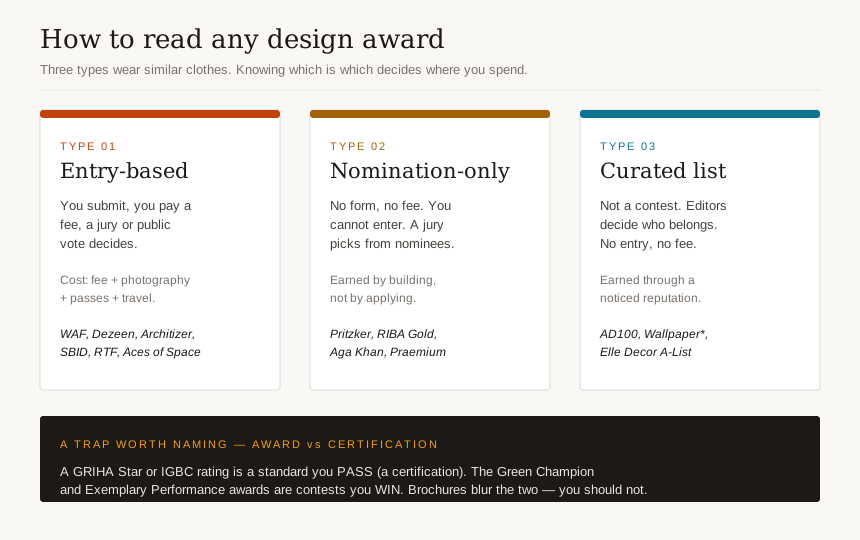
The three types
Entry-based awards. You submit your project, you pay a fee, a jury (or a public vote, or both) decides. This is the largest category and includes most of the awards you will realistically chase: Rethinking The Future, the World Architecture Festival, Dezeen, Architizer A+, SBID, World Interiors News, and many Indian programmes such as Aces of Space. The fee is normal and not in itself a red flag — running a serious jury and a ceremony costs money. The judgement you must make is whether the prestige and reach you get back is worth the full cost stack (more on that later). Some entry-based awards are excellent. Some are close to pay-to-play.
Nomination-only honours. You cannot enter these. There is no form, no fee, no submission. A confidential body of nominators puts names forward and a jury chooses. This is where the most prestigious prizes in the field live: the Pritzker Prize, the RIBA Royal Gold Medal, the AIA Gold Medal, the Aga Khan Award for Architecture, the UIA Gold Medal, the Praemium Imperiale, the Soane Medal, and the Wolf Prize. If anyone tells you they can "get you entered" for a Pritzker, they are either confused or selling something. These honours recognise a body of work or a single exceptional project over a career; you earn them by building, not by applying.
Editorially curated lists. These are not competitions at all. A magazine's editors decide who belongs and publish a list. The AD100 (in its US, India, and other editions), the Wallpaper* Design Awards, and the Elle Decor A-List all work this way: no entry, no fee, no submission. You get on them by being influential and well-connected enough that the editors already know your work. They are immensely valuable for visibility, but you cannot strategise your way onto them through a submission — only through the long game of building a reputation the editors notice.
Award versus certification — a trap worth naming
In the green-building world especially, people confuse certifications with awards. They are not the same. An IGBC rating or a GRIHA Star rating is a certification: any project that meets the published threshold gets certified. It is a standard you pass, not a contest you win. The genuinely competitive green honours are the IGBC Green Champion Awards and the GRIHA Exemplary Performance Awards, where projects and organisations compete against each other for leadership titles. When a brochure says "5-Star GRIHA rated," that is a certification; when it says "GRIHA Exemplary Performance Award," that is a win.
How the decision gets made
Awards also differ by who decides: a jury of peers, a public vote, or editorial selection. Many entry-based awards blend jury and public vote (Architizer A+ has both a Jury and a Popular Choice; SBID weights its result roughly 90% jury and 10% public). Public-vote awards reward your ability to mobilise a network as much as the design itself — useful to know before you celebrate or dismiss one. And a small number, like the World Architecture Festival, require you to present live to the judges, which rewards firms who can tell their story in a room, not just in a PDF.
What a strong submission needs
Regardless of type, a winning entry-based submission almost always rests on the same foundations: a project with a clear, defensible idea; professional photography that does the building justice (this is non-negotiable and often the largest hidden cost); a tightly written narrative that answers the specific judging criteria rather than rambling; and, increasingly, evidence of impact — environmental, social, or human. The jury is reading dozens or hundreds of entries. Clarity wins.
Indian architecture awards
India's architecture-awards landscape is unusually rich, ranging from a free, decades-old industry institution (JK Cement's programme) to globally-run, entry-based platforms founded on Indian soil (Rethinking The Future). The table below is your quick map; the prose that follows fills in the detail. As always, confirm fees and dates at source — several of these run free, which is itself a reason to prioritise them.
| Award | Agency | Frequency | Type | Entry fee |
|---|---|---|---|---|
| JK Cement Architect of the Year (JK AYA) | JK Cement Ltd | Annual | Entry-based | None (free) |
| IIA Awards for Excellence | Indian Institute of Architects | Biennial | Entry-based (members) | Not publicly confirmed |
| Rethinking The Future (RTF) Awards | RTF, New Delhi | Annual | Entry-based | ~US$250–350 |
| Trends Excellence Awards | Home & Design Trends magazine | Annual | Entry-based | None (verify) |
| HUDCO Design Awards | HUDCO (Govt of India PSU) | ~Annual | Entry-based | None stated |
| FOAID competitions | Coalesce Eventz | Annual | Entry-based | Free / varies |
| COA Thesis Award | Council of Architecture | Annual | Entry-based (students) | Free |
| IGBC Green Champion Awards | CII-IGBC | Annual | Entry-based | Check |
| GRIHA Exemplary Performance | GRIHA Council | Annual | Entry-based | Check |
| iGen Top 50 Under 40 | Architect and Interiors India | Annual | Entry/editorial | Check |
| AD100 India | Architectural Digest India | Annual | Curated list | None |
| Kohler Bold Design Awards | Kohler India + Elle Decor | Biennial | Entry-based | Check |
JK Cement Architect of the Year Awards (JK AYA). Running since 1990 and now past its 34th edition (held December 2025), this is the elder statesman of Indian architecture awards — and, crucially, it is free to enter. Run annually by JK Cement, it spans several families: the Indian Architecture Awards (Architect of the Year, Young Architect for those 35 and under, and Architecture Student of the Year), Indian State Architecture Awards, Foreign Countries' Architecture Awards (for South-Asian and African nations, notably excluding India), a Green Architecture Award, and the Great Master's Award, given only once every three years to architects aged 60 and above. The submission window typically opens around 1 January and closes near the end of April, with the ceremony in December — but verify the current cycle at aya.jkcement.com. The verified 34th-edition winners show the calibre: Ar. Manit Rastogi took Green Architecture for the Surat Diamond Bourse; Ar. Sanjay Nayak was Architect of the Year for the JSW Steel Coated Products Office in Vasind; Ar. Aroty Panyang won Young Architect for the Great Hornbill Gate in Itanagar; and Qazi Shadman Qureshi of BMS College of Architecture was Architecture Student of the Year. The Great Master was not awarded in 2025, in keeping with its three-year cycle. For a young practice, a free, prestigious, nationally-recognised award is close to a no-brainer.
IIA Awards (Indian Institute of Architects). The IIA, founded in 1917, is the country's oldest professional architecture body, and its National Awards for Excellence in Architecture are a peer honour with real institutional weight. They run on a biennial cycle (2021, 2023, 2025 — the 2025 edition ceremony was held in Rajkot in March), hosted on rotation by a state chapter. Alongside the biennial excellence awards, the IIA runs an annual Architecture Thesis of the Year and bestows lifetime medals such as the Baburao Mhatre Gold Medal and the Madhav Achwal Gold Medal. Entry is open to IIA members. Fees and deadlines are not publicly confirmed in a way we can state as fact, so check directly at indianinstituteofarchitects.com — but if you are an IIA member, this is one to track.
Rethinking The Future (RTF) Awards. Founded in New Delhi but global in scope, RTF runs its annual "Global Architecture & Design Awards" with 50-plus categories, each judged in Built or Concept tracks, for projects completed within a rolling window of roughly the last five years. This is an entry-based award, with fees in the region of US$250 early-bird, $300 standard, and $350 late, and results typically announced around September. The roster of recent winners — including Zaha Hadid Architects, Dominique Coulon & Associés, James Corner Field Operations, and DP Architects across 2024–2025 — signals that this is a platform serious international firms engage with. Confirm categories and the current fee at awards.re-thinkingthefuture.com.
Trends Excellence Awards for Architecture & Design. Run annually by Home & Design Trends magazine (Worldwide Media), now past its 9th edition (2024), this award requires the entering firm to be India-based, though the projects themselves can be anywhere. Real photography is required (no CGI except for unbuilt work), and judging weighs Engagement, Innovation, Appeal, Human Experience, and Aesthetics. Older official material indicates there is no entry fee — a strong reason to consider it — but confirm that at trendsawards.in, as such terms change.
HUDCO Design Awards. Run by the Housing & Urban Development Corporation, a Government of India PSU, this effectively annual programme is distinctive for its public-interest focus. Its five categories — Cost-Effective Rural/Urban Housing, Innovative Town/City Design, Heritage Conservation, Green Buildings, and Landscape Planning & Design — reward exactly the kind of socially-grounded work that commercial awards often overlook. It is open to architects, engineers, and planners for projects of the last seven years, no entry fee is stated, and prizes run to Rs 2 lakh (first) and Rs 1 lakh (second) per category. Entries typically close around late January. The verified 2022-23 winners illustrate the spirit: Rohan Chavan of RC Architects for "House with Different Roofs" in Kolhapur; Abha Narain Lambah Associates for the Byculla Station restoration; Anupama Mohanram of Green Evolution for KFI "The School" in Chennai; and Oasis Designs Inc. for the Eight Lakes Eco-Restoration in Coimbatore. Details at hudco.org.in.
FOAID (Festival of Architecture & Interior Designing). Run annually by Coalesce Eventz across two editions — Delhi (November) and Mumbai (December/January) — FOAID is a festival that hosts a set of open competitions rather than a single award. These include VOX Architecture Ideas (for emerging practitioners, free to enter), ICA Creative Minds Next (for senior professionals), and Expressions (for students). In 2024, SPAN Architects took the VOX Architecture Ideas Grand Prize, while ICA Creative Minds Next Platinum honorees included Jayesh Hariyani, INI Design Studio, UNIIFYY, and Arris. The free emerging-practitioner track is worth a look for younger studios. See foaidindia.in.
COA Thesis Award. A clarification matters here: the Council of Architecture is the statutory regulator of the profession, not a building-of-the-year awarding body. It does, however, run the COA Awards for Excellence in Architectural Thesis for final-year B.Arch students, in association with JK Cement, and entry is free. If you teach or mentor students, point them here. Details at coa.gov.in.
Green-building awards — IGBC Green Champion and GRIHA Exemplary Performance. As noted earlier, do not mistake a rating for an award. The competitive green honours are the IGBC Green Champion Awards, given annually at the CII-IGBC Green Building Congress (typically September to November) for leadership titles — recent recipients include Godrej Enterprises and NTPC in 2025 — and the GRIHA Exemplary Performance Awards, given annually at the GRIHA Summit (November/December) in categories such as Passive Architecture and Energy/Water Management. Confirm current categories at igbc.in and grihaindia.org.
iGen — India's Top 50 Architects & Designers Under 40. Run annually by Architect and Interiors India (ITP Media) and now in its 14th edition (2025), iGen is arguably the strongest India-run under-40 recognition programme. For a younger practice building a name, it is a high-value target. See architectandinteriorsindia.com.
AD100 India. This is an editorially curated list — no entry, no fee — published by Architectural Digest India (Condé Nast) of the 100 most influential architects and designers, alongside Excellence Awards and a Lifetime Achievement Award, typically around February. You cannot submit; you earn your place through influence. The verified 2025 honours: Lifetime Achievement to Sunita Kohli, with Excellence Awards to Field Architects, Opolis (recognised with Fumihiko Maki for the Bihar Museum), and Matthew & Ghosh. See architecturaldigest.in.
Kohler Bold Design Awards (KBDA). A biennial programme run by Kohler India with Elle Decor India, now reaching its 5th edition (2026). Confirm categories and entry terms at kbda.asia.
Indian interior design awards
India's interior-design awards range from the long-established institutional (the IIID Awards, run by the country's main interior-design body) to product-leaning magazine awards (EDIDA India) and student competitions that are easy to misclassify (SIDCA). A recurring caution: do not confuse India's IIID (Institute of Indian Interior Designers) with the US IIDA (International Interior Design Association) — they are entirely separate organisations covered in different sections of this atlas.
| Award | Agency | Frequency | Type | Entry fee |
|---|---|---|---|---|
| IIID Anchor Awards | Institute of Indian Interior Designers | Annual | Entry-based | Not publicly confirmed |
| EDIDA India | Elle Decor India | Annual | Entry-based | Check |
| SIDCA | Society Interiors & Design magazine | Annual | Entry-based (students) | ~Rs 2,500/head |
| Trends Excellence (Interiors) | Home & Design Trends magazine | Annual | Entry-based | None (verify) |
| India Design ID / ID Honours | India Design ID + AD India | Annual | Jury-selected | No open paid entry |
| GoodHomes Awards | GoodHomes India magazine | Annual | Entry-based | Check |
| Aces of Space | ITP Media India | Annual | Entry-based | ~Rs 11,800 incl GST |
| Asia Pacific Property Awards | International Property Media (UK) | Annual | Entry-based | From ~£699 |
| WADE Young Interior Designer | WADE ASIA | Annual | Entry-based (women) | Free |
IIID Awards / IIID Anchor Awards. The Institute of Indian Interior Designers, founded in 1972 with around 10,000 members, runs the country's flagship interior-design awards annually, moving from zonal rounds to a national finale (the 2025 national finale was held in Mumbai in June). The title sponsor has historically been Anchor by Panasonic, hence the "Anchor Awards" name. Categories span residential, commercial, hospitality and more, plus a Young Designer track. Fees and deadlines are not publicly confirmed, so check iiid.in. Again — this is India's IIID, not the US IIDA, and not the unrelated Vienna "IIID Award."
EDIDA India (Elle Deco International Design Awards). Run annually by Elle Decor India with a ceremony around November, EDIDA leans toward product design but spans 16 categories including Designer of the Year, Interior Designer of the Year, Young Talent (under 40), and Student of the Year. The verified 2024 winners give a sense of its standing: Designer of the Year went to Vikram Goyal (Viya); Interior Designer of the Year to Shabnam Gupta (The Orange Lane); Young Talent to Ricky Sudey and Vipul Sachdeva (EITRI); and Student of the Year to Priyadarshani Kakade (NID). See elledecor.in/edida-india.
SIDCA (Society Interiors Design Competition & Awards). This is the one most likely to be misunderstood. Run annually since 2003 by Society Interiors & Design magazine (Magnate Publishing), with its event in the first quarter, SIDCA is primarily a student competition — the winners are colleges and student teams, not established practices. The entry fee is around Rs 2,500 per head, with registration around December and submission in early January. The verified 2026 results: in Residential, LS Raheja School of Architecture placed first; in Commercial, NIF Global Indore placed first. Valuable for institutions and students, but not the professional credential a practising studio might assume from the name. See societyinteriorsdesign.com.
Trends Excellence Awards (Interior Design stream). The same Home & Design Trends programme covered under architecture also runs interior sub-categories — Residential, Bar/Restaurant, Leisure, Workspace, Retail, and Public. The entering firm must be India-based, and there is reportedly no entry fee, though you should verify that at trendsawards.in.
India Design ID / ID Honours. India Design ID, in association with AD India, is both a design fair and a juried awards programme. The fair runs across Delhi (around February) and Mumbai (around October). The ID Honours are jury-selected, not an open paid-entry competition — you do not buy your way in. The verified honours are a who's-who: in 2024, Architect of the Year went to Verendra Wakhloo (Matra) and Interior Design of the Year to Rajiv Saini; in 2023, Architect of the Year went to Vinu Daniel (Wallmakers) and Interior Design of the Year to Vaishali Kamdar. See indiadesignid.com.
GoodHomes Awards. Run annually by GoodHomes India magazine (Worldwide Media / Times Group), with the flagship event around March. The verified 2025 results: Architecture went to TaP Design Inc.; Project of the Year to rED; and Practice of the Year was shared by Thomas Parambil Architects and Design Doodle. See goodhomes.co.in.
Aces of Space Design Awards. Run annually (around December) by ITP Media India, publishers of Architect and Interiors India, with two streams — Architecture and Interior Design — across many categories. This is entry-based, with a fee in the region of Rs 11,800 including GST per entrant. Budget for it accordingly and confirm at itpindia.events.
Asia Pacific Property Awards (India interiors). Run annually by the UK's International Property Media, with the Asia Pacific gala around May, this award's interiors sub-categories include Residential Interior (Private Residence, Apartment, Show Home), Kitchen, and Bathroom. It is entry-based, with tiered fees starting from around £699 standard — so this is a meaningful spend in rupee terms. The verified Indian win: na architects took Private Residence Interior in 2025 for "NR House." See propertyawards.net.
WADE ASIA — Young Interior Designer of the Year. Run by WADE ASIA (Women in Design and Architecture), this award is specifically for Indian women interior designers, with a maximum age of 40 and a minimum of two years' experience, judged in person by a jury in New Delhi — and it is free to enter. The verified 2025 winner was Ar. Geethu Gangadharan of Fellow Yellow Design Studio, Hyderabad. For eligible designers, a free, focused award like this is excellent value. See wadeasia.com.
International architecture awards
This is where the entry-type distinction becomes most financially important. The most prestigious international architecture honours — Pritzker, RIBA Royal Gold Medal, AIA Gold Medal, Aga Khan, UIA Gold Medal, Praemium Imperiale, Soane Medal, Wolf Prize — are nomination-only and free; you cannot enter them. The platforms you can actually enter — WAF, Dezeen, Architizer A+, The Plan, RTF (covered above) — are entry-based and cost real money once you add up fees, photography, and travel. ArchDaily's Building of the Year is a free public vote. Knowing which is which tells you exactly where to spend and where to simply keep building.
| Award | Agency | Frequency | Type | Entry fee |
|---|---|---|---|---|
| Pritzker Prize | Hyatt Foundation (USA) | Annual | Nomination-only | None |
| RIBA Royal Gold Medal | RIBA (UK) | Annual | Nomination-only | None |
| RIBA Stirling Prize | RIBA (UK) | Annual | Entry-based (UK only) | From ~£99 |
| RIBA International Prize | RIBA (UK) | Biennial | Nomination/entry | Check |
| AIA Gold Medal / Honor Awards | AIA (USA) | Annual | Nomination / entry | Honor ~$450 |
| Aga Khan Award | Aga Khan Trust for Culture | Triennial | Nomination-only | None |
| EU Mies van der Rohe Award | Fundació Mies + EC | Biennial | Nomination-only (EU only) | None |
| World Architecture Festival (WAF) | EMAP/Metropolis (UK) | Annual | Entry-based | From ~€899 |
| Dezeen Awards | Dezeen (UK) | Annual | Entry-based | From ~£120 |
| Architizer A+Awards | Architizer (USA) | Annual | Entry-based | ~$275–425 |
| The Plan Award | THE PLAN magazine (Italy) | Annual | Entry-based | ~€195–295 |
| ArchDaily Building of the Year | ArchDaily | Annual | Free public vote | None |
| UIA Gold Medal | UIA (Paris) | Triennial | Nomination-only | None |
| Praemium Imperiale | Japan Art Association | Annual | Nomination-only | None |
| Soane Medal | Sir John Soane's Museum | Annual | Nomination-only | None |
| Wolf Prize (Architecture) | Wolf Foundation (Israel) | ~Every 3–4 yrs | Nomination-only | None |
Pritzker Architecture Prize. The field's most prestigious honour, run annually by the Hyatt Foundation, the Pritzker carries US$100,000 and a medallion, with the laureate announced around March. It is nomination-based and free — you cannot pay to enter — and recognises a living architect for a body of built work. Recent laureates: Smiljan Radić (2026), Liu Jiakun (2025), Riken Yamamoto (2024), David Chipperfield (2023), Francis Kéré (2022), and Lacaton & Vassal (2021). For India, the towering fact: B.V. Doshi remains the only South Asian Pritzker laureate, honoured in 2018. See pritzkerprize.com.
RIBA Royal Gold Medal. Run annually by the RIBA, this is a lifetime-achievement medal, nomination-only and free, with the recipient announced around January or February. Recent recipients: Niall McLaughlin (2026), SANAA (2025), Lesley Lokko (2024), Yasmeen Lari of Pakistan (2023), and B.V. Doshi (2022). South Asia has a proud history here: Charles Correa was the first Indian recipient in 1984, followed by Doshi in 2022 and Pakistan's Yasmeen Lari in 2023. See riba.org.
RIBA Stirling Prize. Run annually by the RIBA for the best building contributing to British architecture, this is entry-based (tiered fees from around £99) — but note the building must be in the UK, which puts it out of reach for India-located projects. Recent winners: the Appleby Blue Almshouse by Witherford Watson Mann (2025), the Elizabeth Line (2024), and the John Morden Centre (2023). No South Asian has won, by the nature of the eligibility rules.
RIBA International Prize. The RIBA's biennial award for the best building globally, outside the UK. The 2024 winner was the 85 Social Housing Units in Cornellà, Spain, by Peris+Toral. Confirm the current entry route at riba.org, as eligibility and process differ from the domestic Stirling.
AIA Gold Medal and Honor Awards. The American Institute of Architects runs both. The Gold Medal is nomination-based with no project fee; the Honor Awards are entry-based (around $450 for a first program). Recent Gold Medalists: Shigeru Ban (2026), Deborah Berke (2025), and Lake|Flato (2024). Worth recording: no South Asian has won the AIA Gold Medal. See aia.org.
Aga Khan Award for Architecture. Run on a triennial cycle by the Aga Khan Trust for Culture in Geneva, this award shares US$1 million among winning projects that serve societies with significant Muslim populations, and it is nomination-based and free. The 2025 winners were announced in Bishkek in September 2025. India's history here is rich: six Indian projects have won historically — the Mughal Sheraton Hotel in Agra (1980), the Entrepreneurship Development Institute in Ahmedabad (1992), Aranya Community Housing in Indore by B.V. Doshi (1995), and in 1998 the Lepers Hospital at Lasur, the Slum Networking project in Indore, and Vidhan Bhavan in Bhopal by Charles Correa. Recent momentum in the region has shifted to Bangladesh and Pakistan, with Marina Tabassum's Khudi Bari winning in 2025; India was shortlisted but did not win in either 2022 or 2025. See the.akdn.
EU Mies van der Rohe Award (EUmies). Run biennially by the Fundació Mies van der Rohe with the European Commission, this nomination-only, free award is restricted to works built in Creative Europe territory — which means India is ineligible. The 2026 winner was the Charleroi Palais des Expositions renovation in Belgium. Use the official eumiesawards.com, not the old hijacked miesarch.com domain.
World Architecture Festival (WAF). A travelling festival run annually (usually November) by EMAP/Metropolis, WAF is distinctive in that entrants present live to the judges — it rewards firms who can argue their case in a room. It is entry-based, with early-bird fees around €899, and culminates in the super-prize, World Building of the Year. No Indian firm has won the overall World Building of the Year, but Indian category wins are real: Morphogenesis took a category for the Surat Diamond Bourse in 2023, with earlier and later Indian category recognition (Pearl Academy Jaipur in 2009; Gayathri & Namith Architects in 2025). See worldarchitecturefestival.com.
Dezeen Awards. Run annually by Dezeen for completed projects, judged on whether work is Beautiful, Innovative, and Beneficial. It is entry-based, with standard fees around £120 for a small studio and £240 for a large one, entries closing around early June and winners announced around November. The verified Indian win: Earthscape Studio of Tamil Nadu was named Emerging Architect of the Year in 2025. See dezeen.com/awards.
Architizer A+Awards. Run annually by Architizer (USA) with both a Jury track and a Popular Choice public vote, this is entry-based (around $275 early to $425 extended), with winners announced around June. Indian wins are accumulating: in 2026, Vortex 21 by Neelesh Chopda Architecture won Popular Choice in Façades; in 2025, The Purple Ink Studio of Manipal won Jury in Community Centers, and Sanjay Puri Architects was recognised for the Nokha Village Community Centre. See awards.architizer.com.
The Plan Award. Run annually (around November in Milan) by THE PLAN magazine in Italy, with 20 contests each in Completed and Future tracks. It is entry-based (around €195 early to €295 late). Indian participation is confirmed — Sanjay Puri and a Spasm Design finalist among them — though a specific Indian first-place win is not something we can verify, so do not claim one. See theplan.it.
ArchDaily Building of the Year. Run annually by ArchDaily as a free public vote — there is no fee — with winners announced around mid-February. Because it is a public vote, network mobilisation matters. The verified Indian 2026 result: the Raj Sabhagruh Discourse Hall by Serie Architects won Religious Architecture. See archdaily.com.
UIA Gold Medal. Run triennially by the Union Internationale des Architectes in Paris, tied to the UIA World Congress, this is nomination-only and free. Recent recipients: Eduardo Souto de Moura (2026), Paulo Mendes da Rocha (2021), and I.M. Pei (2014). For South Asia: Charles Correa won in 1990 — and is the only South Asian to have done so; B.V. Doshi did not win this particular medal. See uia-architectes.org.
Praemium Imperiale (Architecture). Run annually by the Japan Art Association, this honour carries ¥15 million and is nomination/honour-only, announced around September with the ceremony around November. Recent architecture laureates: Eduardo Souto de Moura (2025), Shigeru Ban (2024), Francis Kéré (2023), and SANAA (2022). For India: Charles Correa won in 1994 — the only Indian laureate; Doshi did not win this. See praemiumimperiale.org.
Soane Medal. Established in 2017 by Sir John Soane's Museum in London, this annual honour is nomination-only with no fee. Recent recipients: Madelon Vriesendorp (2025), Hanif Kara (2024), and Marina Tabassum of Bangladesh (2021) — the only South Asian recipient. See soane.org.
Wolf Prize in Architecture. Run by the Wolf Foundation in Israel, the architecture slot recurs roughly every three to four years; it is nomination-only and free, carrying US$100,000. Recent architecture recipients: Xu Tiantian (2025), Elizabeth Diller and Atelier Bow-Wow (2022), and Moshe Safdie (2019). No South Asian has won — Pakistan's Yasmeen Lari was a 2025 co-recipient but declined the prize. See wolffund.org.il.
International interior design awards
The international interiors scene mirrors the architecture one: a few editorially curated lists you cannot enter (Wallpaper*, AD100, Elle Decor A-List), and a larger field of entry-based competitions of varying value. Two practical cautions throughout: the US IIDA is not India's IIID, and the NYCxDESIGN Awards carry a tri-state geographic requirement that effectively rules out India-located projects. We flag below which awards have the strongest verified Indian wins, because that is the best signal of where an Indian practice's effort actually converts.
| Award | Agency | Frequency | Type | Entry fee |
|---|---|---|---|---|
| INSIDE / WAF Interiors | WAF (UK) | Annual | Entry-based | ~£645–845 |
| FRAME Awards | Frame magazine (NL) | Annual | Entry-based | ~€195–395 |
| SBID International Design Awards | SBID (UK) | Annual | Entry-based (jury+vote) | ~£250–325 |
| IIDA (US) | IIDA, Chicago | Annual | Entry-based | Tiered |
| Dezeen Awards (Interiors) | Dezeen (UK) | Annual | Entry-based | From ~£120 |
| Andrew Martin IDOTY | Andrew Martin Intl (UK) | Annual | Entry-based | Check |
| Wallpaper Design Awards | Wallpaper (UK) | Annual | Curated list | None |
| AD100 / Elle Decor A-List | Condé Nast / Hearst | Annual | Curated lists | None |
| design et al Awards | design et al (UK) | Annual | Shortlist + public vote | Free to apply |
| Restaurant & Bar Design Awards | UK | Annual | Entry-based | ~£330–420 |
| World Interiors News (WIN) | Haymarket Media (UK) | Annual | Entry-based | ~£585 + VAT |
| NYCxDESIGN Awards | Interior Design mag (USA) | Annual | Entry-based (tri-state) | Check |
| INDE.Awards | Indesign Media (Australia) | Annual | Entry-based | Check |
| Best of Year Awards | Interior Design mag (USA) | Annual | Entry-based | Check |
| FX International Awards | FX (UK) | Annual | Entry-based | Check |
INSIDE — World Festival of Interiors (now WAF Interiors). The interiors counterpart to WAF, run annually (November), culminating in World Interior of the Year across 9 categories, with a two-stage process that ends in a live in-person jury. It is entry-based, with fees around £645–£845 plus delegate passes. The verified Indian 2025 category winners: tHE gRID Architects for "Satah" (Temporary/Meanwhile Uses) and ADND LLP (India category winner). No Indian project has won the overall title. See worldarchitecturefestival.com.
FRAME Awards. Run annually by Frame magazine in the Netherlands for realised interiors, spatial, and product work; entry-based at around €195 early to €395 late. Winners skew toward Korea, Japan, and China, and we have no verified Indian winner — useful to weigh before committing the fee. See frameweb.com/awards.
SBID International Design Awards. Run annually by the Society of British and International Interior Design, with a hybrid result weighted roughly 90% jury and 10% public vote. It is entry-based (around £250–£325 plus a £50 admin fee). Verified Indian results: Balan + Nambisan Architects won the Office Design Asia regional category for "SNN Estates Felicity" in 2024, and Design Factory India was recognised for the Smritivan Earthquake Museum in Bhuj in 2023. See sbidawards.com.
IIDA (International Interior Design Association, USA). Headquartered in Chicago, the US IIDA runs several annual programmes — the Interior Design Competition (IDC), Will Ching (for small firms), Global Excellence Awards, and Best of Asia Pacific — open worldwide, with membership not required and tiered entry fees behind the portal. India-relevant: M Moser's Diageo Workplace in Gurgaon won Corporate Space Large at the 2025 Best of Asia Pacific (M Moser being a global firm). To repeat the trap: this is the US IIDA, not India's IIID. See iida.org.
Dezeen Awards (Interiors). The interiors side of Dezeen carries small- and large-studio categories. The verified Indian win: Multitude of Sins of Bengaluru won Sustainable Interior of the Year in 2022 for "The Circus Canteen." Note that most other Indian interiors appearances have been shortlists or highly-commended rather than wins — for example, Andblack's "Cocoon" was Highly Commended in 2024, which is not a win. Honesty about that distinction matters in your own marketing.
Andrew Martin Interior Designer of the Year Award. Run annually by Andrew Martin International (UK, since 1996, and styled the "Oscars of the design world"), this publishes a top-100 in its Interior Design Review book and names one overall winner chosen by a celebrity panel, with entries closing around December. Recent winners: Xu Jinglei of China (2025) and Matthew Williamson (2024). There is no verified Indian winner. See andrewmartin.co.uk.
Wallpaper Design Awards. An editorially curated list — no entry, no fee — published annually around January by Wallpaper magazine, leaning toward product, furniture, and architecture. Do not confuse these with the separate, entry-based Wallpaper* Smart Space Awards. And a factual caution worth flagging: India Mahdavi, sometimes mistaken for an Indian designer, is French-Iranian, not Indian. See wallpaper.com.
AD100 (US/international) and Elle Decor A-List. Both are editorially curated lists with no entry and no fee. AD100 runs US, India, Middle East, and other editions; the Elle Decor A-List is a US list, while Elle Decor India runs EDIDA instead (covered above). You earn these through reputation, not submission.
design et al — The International Design & Architecture Awards. Run annually (around September in London) by the UK trade magazine design et al, with an editorial shortlist followed largely by public/industry online voting. Application is free, but shortlisted entrants pay an admin fee and buy tickets. This is distinct from the LA-based International Design Awards (IDA) — a common confusion. See thedesignawards.co.uk.
Restaurant & Bar Design Awards. A UK award since 2008, run annually with regional and global winners; entry-based at around £330–£420. The verified Indian win is historic: The Tote in Mumbai (Serie Architects) won in 2010. Worth debunking a persistent myth: the claim that "Sumessh Menon / Masala Bar won this UK award around 2020" is false. See restaurantandbardesignawards.com.
World Interiors News (WIN) Awards. Run annually by Haymarket Media (UK), active, with around 27 categories; final entry around August and winners around November; entry-based at roughly £585 plus VAT. The verified Indian 2025 results are strong: A L V A architects of Mumbai won Gold in One-Off Homes over £1M, and Haarsha architects of Bengaluru were finalists. See worldinteriorsnewsawards.com.
NYCxDESIGN Awards. Run annually (around May) by Interior Design magazine with NYCxDESIGN. Critical eligibility note: projects must be in New York, New Jersey, or Connecticut — the tri-state requirement effectively puts this off-limits to India-located projects. See nycxdesign.org.
INDE.Awards. Run annually by Indesign Media in Australia, this is the best-fit Indo-Pacific award and has notably strong verified Indian wins: Sanjay Puri Architects for "Zen Spaces, Jaipur" (2024), Made In Earth Collective for "The Prodigy" (2023), and Honourable Mentions for Morphogenesis and MuseLAB in 2024. If you want a regional award where Indian work demonstrably converts, this is a leading candidate. See indeawards.com.
Best of Year Awards. Run annually (December) by Interior Design magazine (USA). Verified Indian win: Sanjay Puri Architects won Museum/Art Gallery for "Aatma Manthan Museum" in 2024. See interiordesign.net.
FX International Interior Design Awards. A UK award, run annually and active; M Moser's Diageo Gurgaon won Workplace Environment Large in 2025. See fxdesignawards.co.uk.
India on the world stage
It is easy, scrolling through fee schedules, to lose sight of what is actually possible. So here is the honour roll — strictly the verified milestones, nothing embroidered. Two figures tower over it: Charles Correa and B.V. Doshi, whose recognition across the Pritzker, the RIBA Royal Gold Medal, the UIA Gold Medal, the Praemium Imperiale, and the Aga Khan Award maps the high points of Indian architecture's global standing. Around them, a new generation — Morphogenesis, Sanjay Puri Architects, Earthscape Studio, Serie Architects, Multitude of Sins, Purple Ink Studio — is now winning category prizes at the major international entry-based platforms.
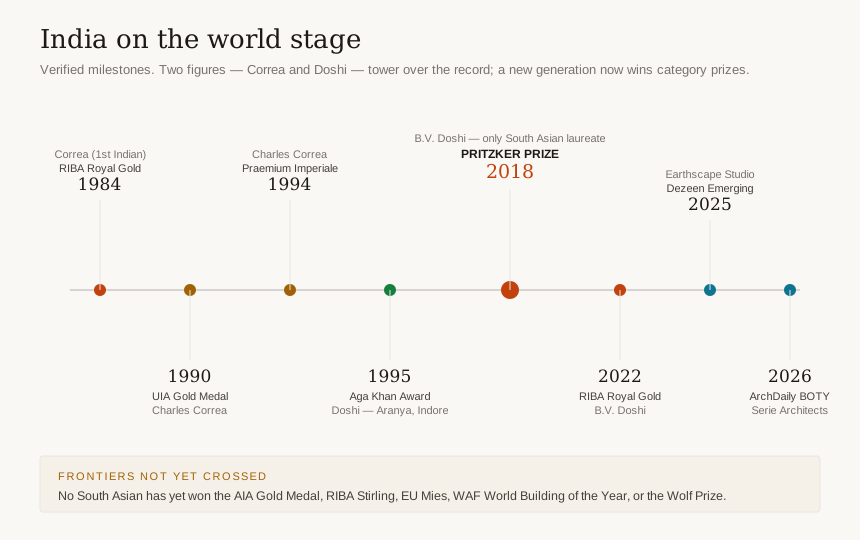
| Year | Honour | Recipient / Project |
|---|---|---|
| 1980 | Aga Khan Award | Mughal Sheraton Hotel, Agra |
| 1984 | RIBA Royal Gold Medal | Charles Correa (first Indian) |
| 1990 | UIA Gold Medal | Charles Correa |
| 1992 | Aga Khan Award | Entrepreneurship Development Institute, Ahmedabad |
| 1994 | Praemium Imperiale (Architecture) | Charles Correa |
| 1995 | Aga Khan Award | Aranya Community Housing, Indore (B.V. Doshi) |
| 1998 | Aga Khan Award | Vidhan Bhavan, Bhopal (Charles Correa); Lepers Hospital, Lasur; Slum Networking, Indore |
| 2010 | Restaurant & Bar Design Award | The Tote, Mumbai (Serie Architects) |
| 2018 | Pritzker Prize | B.V. Doshi (only South Asian laureate) |
| 2022 | Dezeen Sustainable Interior of the Year | Multitude of Sins ("The Circus Canteen") |
| 2022 | RIBA Royal Gold Medal | B.V. Doshi |
| 2023 | WAF category win | Morphogenesis (Surat Diamond Bourse) |
| 2024 | INDE.Awards / Best of Year | Sanjay Puri Architects |
| 2025 | Dezeen Emerging Architect of the Year | Earthscape Studio |
| 2025 | Architizer / WIN / SBID Indian wins | Purple Ink Studio; A L V A architects; and others |
| 2026 | ArchDaily Building of the Year (Religious) | Serie Architects (Raj Sabhagruh) |
For honest context, it is worth naming the frontiers India has not yet crossed: no South Asian has ever won the AIA Gold Medal, the RIBA Stirling Prize, the EU Mies van der Rohe Award, the overall WAF World Building of the Year, or the Wolf Prize in Architecture. Several of those (Stirling, EU Mies) are closed to Indian projects by their eligibility rules; others simply remain open challenges. Naming them is not pessimism — it is the map of where the next milestones lie.
Choosing which awards to enter
If you take one decision-making principle from this atlas, make it this: match the award to a specific goal, then run the numbers honestly before you enter. Prestige you cannot use is an expense, not an investment.
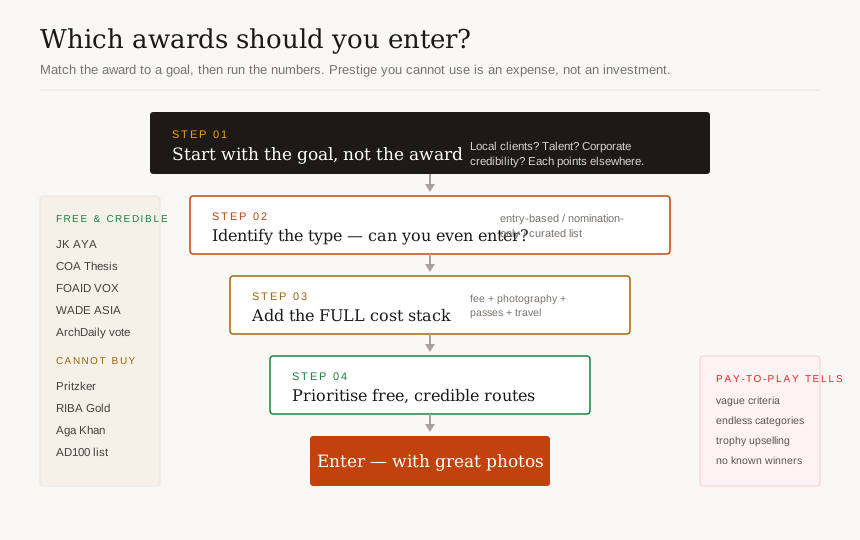
Start with the goal, not the award. Are you trying to win residential clients in your city? A national award with local press pickup (GoodHomes, Trends Excellence, an IIID title) may do more for you than an obscure international certificate. Recruiting young talent? An under-40 programme like iGen or a globally-visible platform like Dezeen carries weight with graduates. Building credibility with corporate or institutional clients? Category wins at WAF, Architizer, or the IIDA Best of Asia Pacific speak that language. Different goals point to different awards, and the most expensive award is rarely the most useful one.
Beware pure pay-to-play. Some entry-based awards are genuine and selective; some are, in effect, marketing products where the fee is the point and almost everyone who pays gets something. The tells: vague judging criteria, an enormous number of categories and "winners," heavy upselling of trophies, gala tickets, and "feature" placements after you win, and no recognisable jury or verifiable past winners. Before entering any unfamiliar award, look up its verified past winners (as this atlas does) — if you cannot find credible names, be cautious.
Add up the full cost stack — not just the entry fee. This is where practices get hurt. A single serious international entry can involve: the entry fee (anywhere from £100 to £900-plus, or US$250–425), professional photography of the project (often the largest line and frequently mandatory — many awards reject CGI), delegate or gala passes (WAF and INSIDE in particular bundle in-person attendance), and travel and accommodation if the festival requires you to present live. A "£120 entry" can become a £3,000–5,000 commitment by the time you have photographed the project well and flown someone to the ceremony. Decide whether that total is justified by the goal before you start.
Prioritise the free, high-prestige routes. This is the strategic gift hiding in plain sight. The nomination-only honours cost nothing because you cannot enter them — but several genuinely excellent awards are also free to enter: JK Cement's Architect of the Year, the COA Thesis Award, FOAID's VOX Architecture Ideas, WADE ASIA's Young Interior Designer, and ArchDaily's free public vote. Editorially curated lists (AD100, Wallpaper*) cost nothing too — you earn them by building a public body of work the editors notice. A smart early-stage strategy leans heavily on these free, credible routes before spending on the paid international circuit.
Build the submission with care. When you do enter, treat the submission as a design project in itself. Answer the specific judging criteria. Lead with a single clear idea. Use professional photography — it is the difference between a project that reads as considered and one that reads as ordinary, and jurors decide fast. Write tightly. If the award includes a public-vote component (Architizer Popular Choice, SBID, design et al), plan your network mobilisation in advance rather than scrambling.
Be honest about ROI. Awards compound — a credible win begets press, which begets clients, which begets better projects worth entering. But the first win is the hardest and the cheapest to chase through free routes. If you treat awards as one channel within a broader practice-building effort — alongside the work covered in winning clients as an architect in India and the resources in the pro tools hub — rather than as an end in themselves, the spend pays back. If you treat a trophy as the goal, it usually does not.
The awards calendar
The view below maps the major awards onto a typical year, so you can plan entries, photography, and budget ahead of the rush. Every entry here is a pattern, not a fixed date — cycles, fees, and even frequencies shift year to year, and several of these awards run biennially or triennially rather than annually. Use this to know roughly when to start preparing; confirm the exact current-cycle dates and fees on each official site before you rely on them.
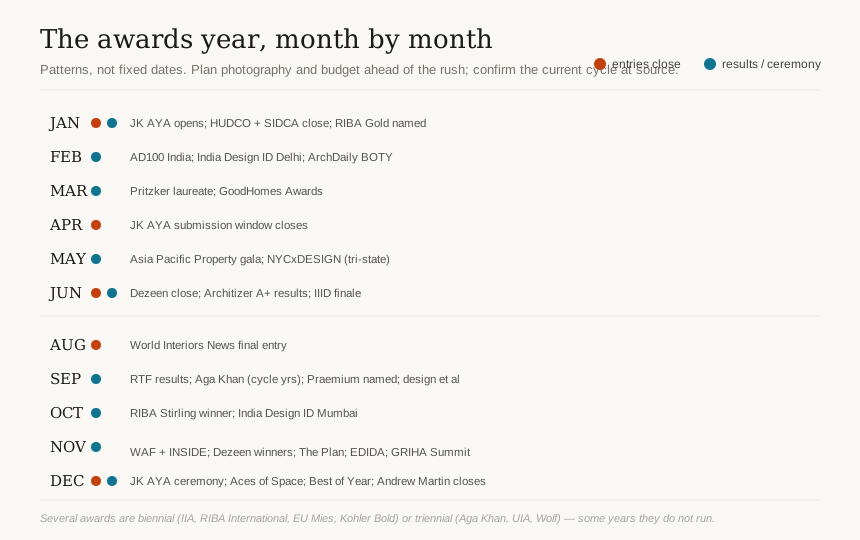
| Month (typical) | What tends to happen |
|---|---|
| January | JK Cement AYA submission window opens (~1 Jan); HUDCO entries close (~late Jan); SIDCA submission (~early Jan); Wallpaper* Design Awards list published; RIBA Royal Gold Medal recipient announced (~Jan/Feb) |
| February | AD100 India list published (~Feb); India Design ID Delhi fair (~Feb); ArchDaily Building of the Year winners (~mid-Feb) |
| March | Pritzker laureate announced (~March); GoodHomes Awards (~March); IIA biennial ceremony has fallen in March (edition years) |
| April | JK Cement AYA submission window closes (~30 Apr) |
| May | Asia Pacific Property Awards gala (~May); NYCxDESIGN Awards (~May, tri-state only) |
| June | Dezeen entries close (~early June); Architizer A+ winners (~June); IIID national finale has fallen in June |
| August | World Interiors News final entry (~Aug) |
| September | RTF results (~Sep); Aga Khan Award announced in cycle years (~Sep); Praemium Imperiale announced (~Sep); design et al awards (~Sep, London) |
| October | RIBA Stirling Prize winner (~Oct); India Design ID Mumbai fair (~Oct) |
| November | WAF and INSIDE/WAF Interiors festival (~Nov); Dezeen winners (~Nov); The Plan Award (~Nov, Milan); World Interiors News winners (~Nov); EDIDA India ceremony (~Nov); Praemium Imperiale ceremony (~Nov); GRIHA Summit / Exemplary Performance Awards (~Nov–Dec); IGBC Green Champion at the Green Building Congress (~Sep–Nov) |
| December | JK Cement AYA ceremony (~Dec); Aces of Space (~Dec); FOAID Mumbai edition (~Dec/Jan); FOAID Delhi edition (~Nov); Best of Year Awards (~Dec); Andrew Martin entries close (~Dec) |
Standing caveat: several of these awards are biennial (IIA Excellence, RIBA International, EU Mies, Kohler Bold Design) or triennial (Aga Khan, UIA Gold Medal, and the roughly three-to-four-year Wolf Prize architecture slot), so in any given year some may not run at all. Always verify the current edition at source.
Sources and how this was verified
This atlas was compiled from official award pages and verified records in mid-2026. Award cycles, entry fees, category structures, and even frequencies change from year to year, and some awards pause, rebrand, or restructure. Treat every date as a pattern and every fee as approximate, and confirm the current cycle on the official site before entering. Where a detail could not be verified, we have either omitted it or hedged it explicitly rather than presenting it as fact.
Key official domains referenced:
- Indian architecture: aya.jkcement.com, indianinstituteofarchitects.com, awards.re-thinkingthefuture.com, trendsawards.in, hudco.org.in, foaidindia.in, coa.gov.in, igbc.in, grihaindia.org, architectandinteriorsindia.com, architecturaldigest.in, kbda.asia
- Indian interiors: iiid.in, elledecor.in/edida-india, societyinteriorsdesign.com, indiadesignid.com, goodhomes.co.in, itpindia.events, propertyawards.net, wadeasia.com
- International architecture: pritzkerprize.com, riba.org, aia.org, the.akdn, eumiesawards.com, worldarchitecturefestival.com, dezeen.com/awards, awards.architizer.com, theplan.it, archdaily.com, uia-architectes.org, praemiumimperiale.org, soane.org, wolffund.org.il
- International interiors: frameweb.com/awards, sbidawards.com, iida.org, andrewmartin.co.uk, wallpaper.com, thedesignawards.co.uk, restaurantandbardesignawards.com, worldinteriorsnewsawards.com, nycxdesign.org, indeawards.com, interiordesign.net, fxdesignawards.co.uk
A free award you can enter — the Studio Matrx awards
This atlas would be incomplete without the awards on this very platform — a free, annual tribute to Amogh N P that honours sustainable, contextually rooted architecture in India. There are two each year, for an emerging and an established voice:
Instituted as a living tribute to Amogh N P — two free awards every year, each with a Certificate of Honour and a commemorative memento, presented at the ceremony.
Projects, theses or studio work that demonstrate genuine sustainable design thinking — rooted in climate, place and community.
Built or in-progress work that exemplifies environmental responsibility and contextual sensitivity in the Indian landscape.
Entry is free and refreshingly simple: a single PDF portfolio, emailed in, judged on sustainability, contextual sensitivity, design merit and communication — and you retain full copyright throughout. See the full eligibility, exactly what to submit, and the terms on the Studio Matrx Awards page. If you teach or mentor students, point them to the Student Award too, since it welcomes academic, thesis and studio work that need not be built.
Where Studio Matrx fits
If awards are one channel in a larger effort to build a credible, sought-after practice, the groundwork is the design itself and the clients who trust it. DesignAI helps you explore and present design ideas quickly enough to make award-worthy projects more achievable, while the pro tools hub gathers the resources — from architect fee structures in India to client-winning guidance — that turn recognition into a sustainable practice. And when a homeowner is ready to act on the work they admire, they can find an architect here. Awards open the door; good work, well-supported, keeps it open.
Export this guide
Related Guides — Deep-dive reading
A Master's in Interior Design in India: Degrees, Entrance, Institutions & Cost (2026)
An honest, India-first guide to the confusingly-named degree landscape, the entrance methods (CEED, NID DAT and institute tests), a real institution shortlist, and what it all actually costs — in a field that has no statutory licence.
Student FoundationsHow to Choose a CCTV Camera (2026): The Homeowner's Decision Guide for India
Cut through the spec-sheet noise and choose the right CCTV camera for each spot around an Indian home. What actually matters — sensor and low-light performance, lens and field of view, form factor, IP and IK ratings, honest smart features — and the marketing claims to ignore.
SecurityITC Green Centre, Gurugram: The Building That Turned Sustainability into a Number
When ITC's corporate campus in Gurugram was certified LEED Platinum in 2004 — reported at the time as the world's largest Platinum-rated green building — it changed what a green building could prove. This study reads its L-shaped plan, its daylit atrium, its deep stone fins and its 51% modelled energy cut, and asks what it means that architecture is now judged by a score.
The Future of ArchitectureRelated Tools — Try Free
Cross-Ventilation Analyzer
Estimate airflow and air changes per hour (ACH) from room size, window areas, layout, and local wind — with NBC 2016 Part 8 compliance check.
Ventilation CalculatorStamp Duty Calculator — All Indian States
Stamp duty + registration charges for all 28 states and 8 UTs — gender concessions, urban/rural variants, metro cess built in.
Stamp DutyApartment Video Door System Planner
Enter flats, entrances, floors and guard desk for a first-pass building intercom plan — door stations, indoor monitors, guard station, the right architecture and an indicative cost band.
Building Planner