
B.Arch CurriculumFree, forever
A tribute to Amogh N P
History of Architecture III
The European thread, a thousand years of it. From the massive round-arched abbeys and Norman keeps of the Romanesque, through the soaring stone-and-glass cages of the Gothic, to the rebirth of antiquity in the Italian Renaissance — Brunelleschi's dome, Bramante's Tempietto, Palladio's villas — its journey north to the England of Inigo Jones and Christopher Wren, and finally the movement, drama and gilded grandeur of the Baroque, from St Paul's to Versailles to the Winter Palace.
Course byAmogh N P· Architect & interior designer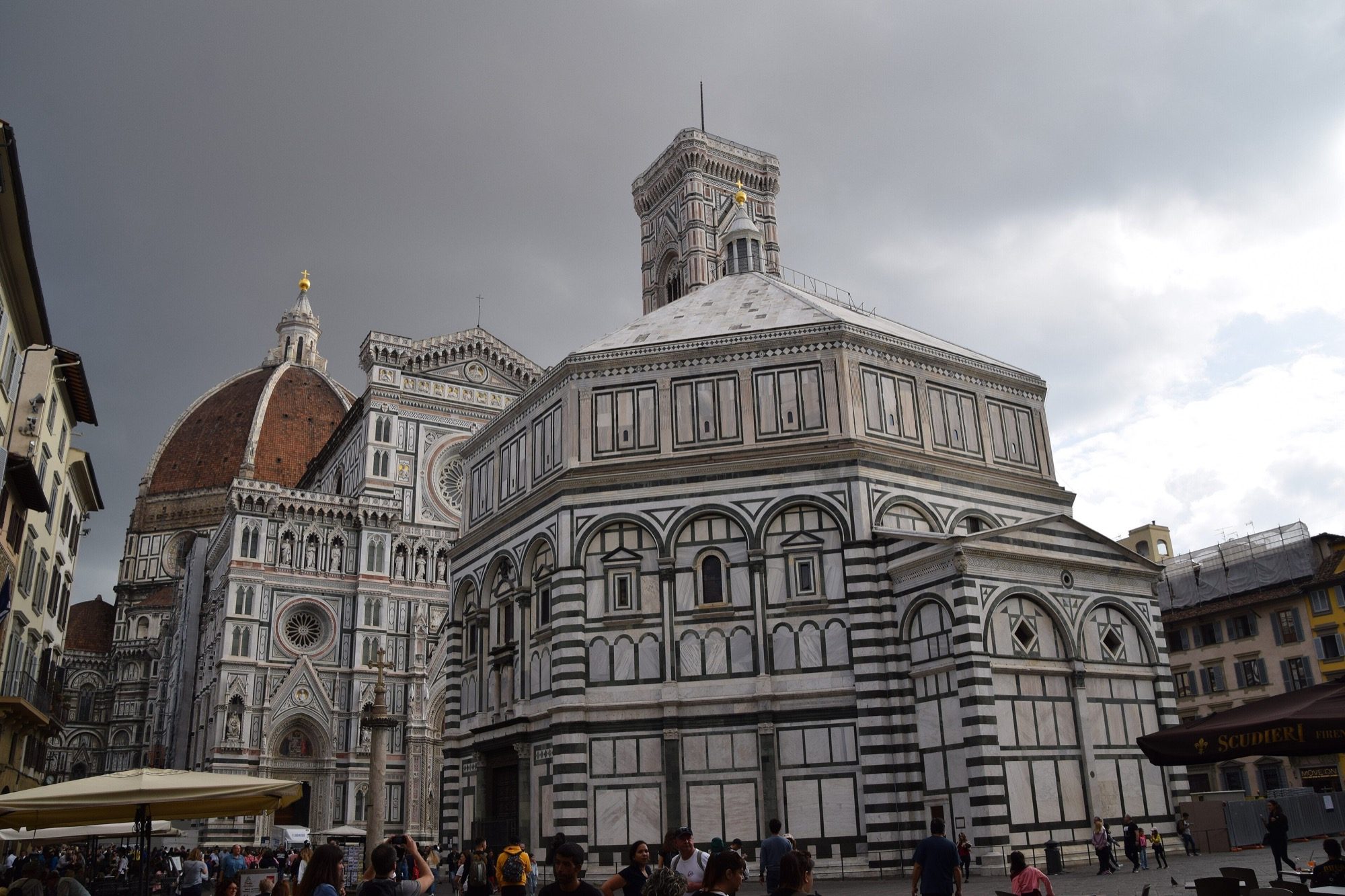
Five units, from the Romanesque round arch to the Baroque.
5 units · 5 liveTranscribed from the official B.Arch syllabus. All 5 units are live as full interactive lessons, each with original diagrams, a self-assessment quiz and a study task.
Unit 1 — Romanesque
LiveFactors influencing architecture and the Romanesque building system — the round arch, barrel and groin vault, columns, piers, buttresses and roofs. The architectural character of Italy, France and England, with examples: the Pisa complex (Italy), the Abbaye aux Hommes at Caen (France), and the Tower of London (England).
Unit 2 — Gothic
LiveThe architectural character of Gothic, the evolution of vaulting and the development of structural systems — the pointed arch, ribbed vault and flying buttress. Examples: Notre-Dame de Paris, Westminster Abbey, Hampton Court Palace (London), the Doge's Palace (Venice) and Milan Cathedral.
Unit 3 — Italian Renaissance
LiveThe Renaissance and its three phases — Early Renaissance (Alberti's Sant'Andrea; Brunelleschi's Florence dome, Pazzi Chapel and San Lorenzo), High Renaissance (Bramante's Santa Maria delle Grazie and Tempietto) and Late Renaissance (Michelangelo and Palladio — St Peter's Basilica, the Villa Capra 'La Rotonda').
Unit 4 — Northern Renaissance
LiveThe spread of the Renaissance north of the Alps and the character of the English Renaissance — the works of Inigo Jones (the Queen's House, the Banqueting House) and Sir Christopher Wren (the City churches, the Sheldonian Theatre, and the rebuilding of London).
Unit 5 — Baroque
LiveThe features and elements of Baroque — movement, drama, the oval plan, the undulating façade, theatrical light and the union of the arts — through St Paul's Cathedral (London), the Palace of Versailles (France) and the Winter Palace in Saint Petersburg.
Course outcomes
What you will be able to doUnderstand the principles of Romanesque architecture — the round arch and vault — and identify its key examples in Italy, France and England.
Analyse the development and structural systems of Gothic architecture through examples such as Notre-Dame de Paris and Westminster Abbey.
Describe the three phases of Italian Renaissance architecture and the contributions of architects such as Alberti, Brunelleschi, Bramante, Michelangelo and Palladio.
Evaluate the characteristics of Northern (English) Renaissance architecture and the works of Inigo Jones and Sir Christopher Wren.
Analyse the features and elements of Baroque architecture through significant structures such as St Paul's, Versailles and the Winter Palace.
Create a comparative analysis of architectural styles and their influences across different periods and regions of Europe.
Image credits
Every photograph is a verified Creative-Commons or Public-Domain work from Wikimedia Commons, used with attribution. The hand-drawn diagrams are original Studio Matrx work.
- Views of Piazza dei Miracoli from the Leaning Tower 20150811 — Suicasmo, CC BY-SA 4.0
- View of the Cathedral facade from the Baptistry (Pisa) — PaestumPaestum, CC BY 4.0
- Caen (Calvados) - Abbaye aux Hommes - Eglise Saint-Étienne - Façade occidentale (48640264238) — Patrick from Compiègne, France, CC BY-SA 2.0
- La Torre, Londres, Inglaterra, 2022-11-26, DD 140 — Diego Delso, CC BY-SA 4.0
- Frères Bisson, Paris - Opposite Notre Dame, ca. 1858–60 — Frères Bisson, Public domain
- Milano Cattedrale di Santa Maria Nascente Dach Fassadenabschluss 1 — Zairon, CC BY-SA 4.0
- Doge's Palace (Venice) and St. Mark's Basilica — dconvertini, CC BY-SA 2.0
- Westminster Abbey West Front Facade by Nicholas Hawkmoor, London — The New Athens, CC BY-SA 2.0
- Florence, Duomo di Firenze — George M. Groutas, CC BY 2.0
- El templete de San Pietro in Montorio, obra de Bramante. Real Academia de España en Roma. Italia — CARLOS TEIXIDOR CADENAS, CC BY-SA 4.0
- Villa Almerico Capra Andrea Palladio Vicenza giugno 2017 — Valentina Sardone, CC0
- Saint Peter's Dome — Serenapairia, CC BY-SA 4.0
- Greenwich - ICE Fisheye View on Queen's House 1617 by Inigo Jones & National Maritime Museum — Txllxt TxllxT, CC BY-SA 4.0
- Banqueting House in London. (15987242674) — traveljunction, CC BY-SA 2.0
- Sheldonian Theatre, Oxford University — The New Athens, CC BY-SA 2.0
- St Paul's Cathedral Dome from One New Change — Colin, CC BY-SA 4.0
- Water reflection of the Orangerie garden and Palace of Versailles with blue sky in France — Basile Morin, CC BY-SA 4.0
- Chateau Versailles Galerie des Glaces — Myrabella, CC BY-SA 3.0
- Russia - St. Petersburg, Hermitage Museum - panoramio — randreu, CC BY 3.0
- St Bride's Church, Fleet Street 2025-01-07 — Andy Li, CC0
The author
Amogh N P
Architect, interior designer, and creative polymath. Studio Matrx began in his notebooks — his vision of design made honest, useful, and open to everyone. Its Academy is written and taught in his memory, and free, forever.
More about Amogh →The arch, the vault, the dome.
A thousand years of European building, from the Romanesque round arch to the gilt of the Baroque. Read the five units top to bottom, study the diagrams, then test yourself.
The curriculum is free, forever