
The Brief, Site & Programme
Understand the problem before you draw the answer.
The temptation is to start drawing. Resist it. The best schemes come from designers who first understood the problem — the brief, the people, the site. As Peña & Parshall put it, “programming is problem seeking; design is problem solving.”
Learning objectives
By the end of this lesson, you will be able to — mapped to the course outcomes for Building Materials & Construction I:
Read and interrogate a design brief — givens, opportunities and constraints.
Programme a building: a schedule of spaces, users and adjacencies.
Turn a programme into bubble and adjacency diagrams.
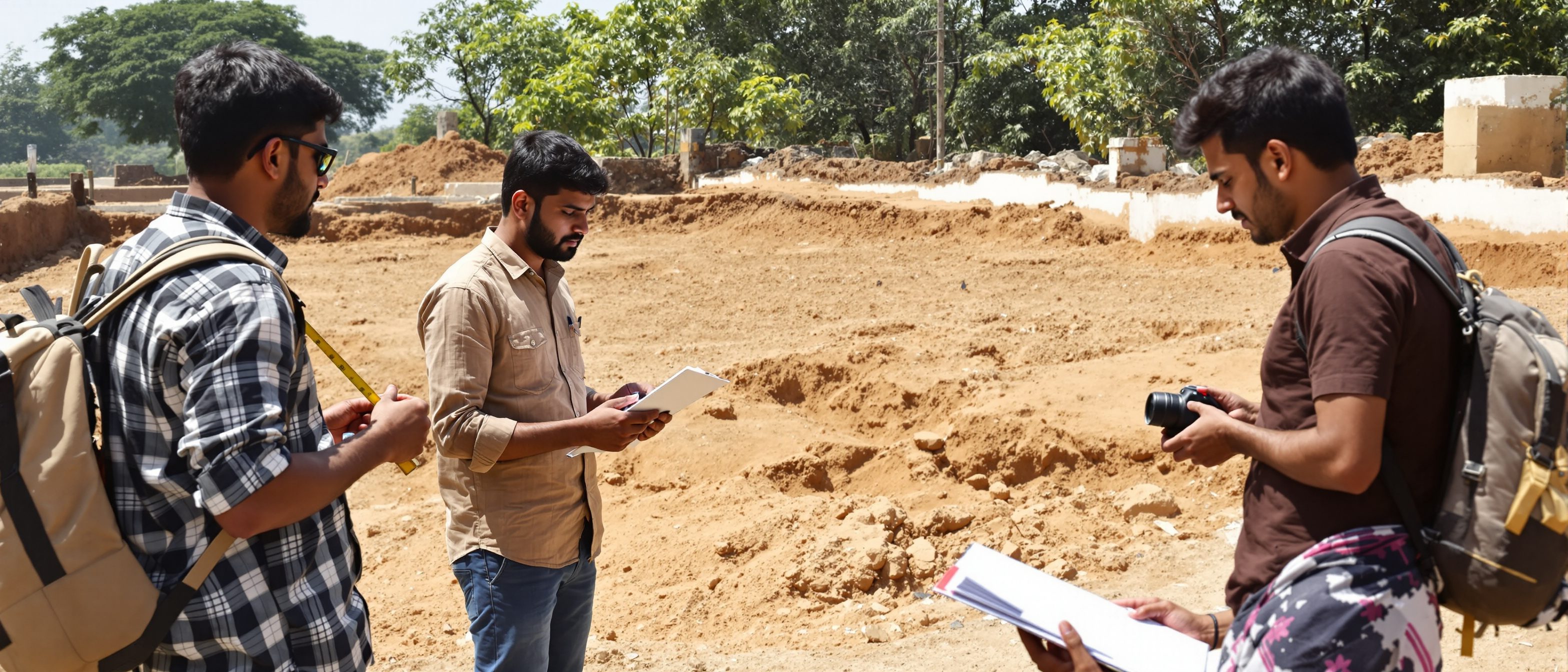
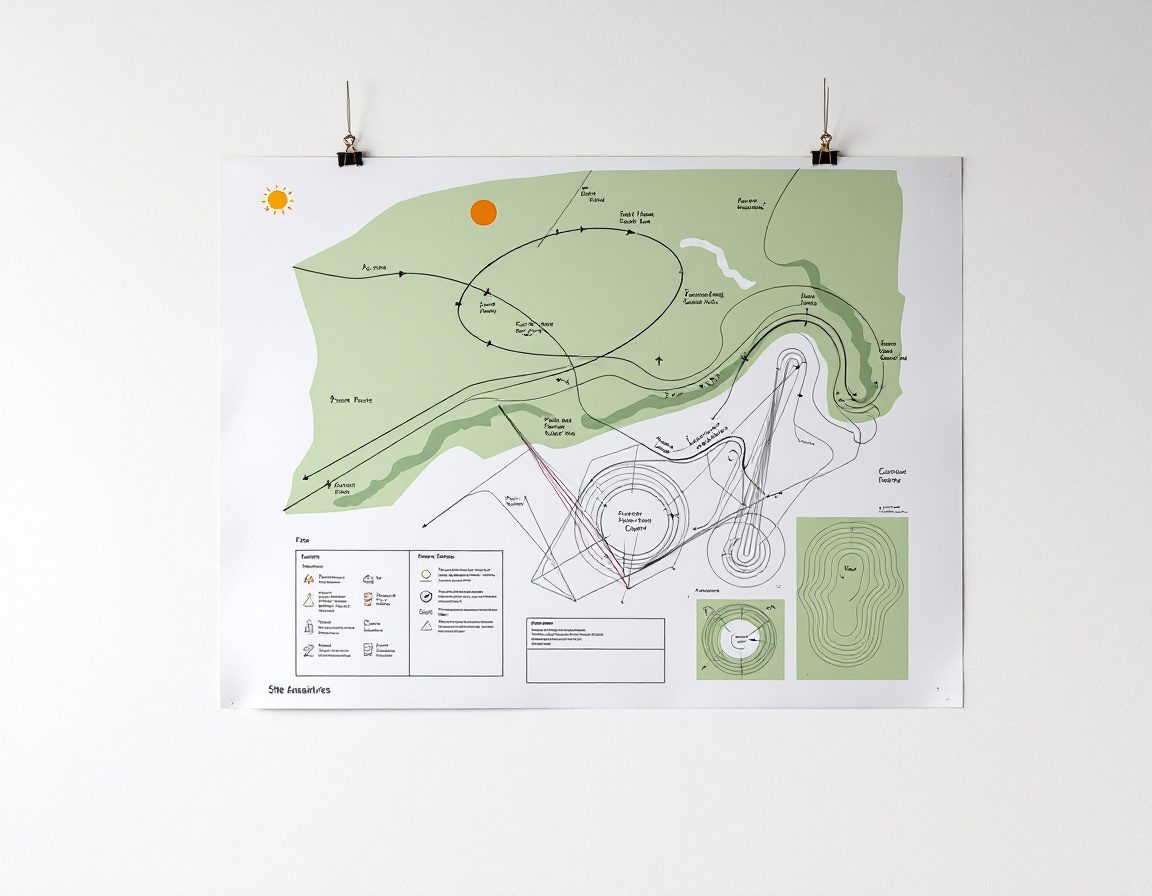
Analyse a site — sun, wind, access, views, context, constraints.
The brief & the programme
Interrogate the brief, then programme: list the spaces, who uses them, how big, and what must be near what. Turn that into bubble and adjacency diagrams before you commit to a plan.[1, 2]
Reading the brief
A brief states needs, goals, users, site and budget. Interrogate it: separate the givens from the assumptions, the needs from the wants, the opportunities from the constraints.[1]
Two more ways to organise space
The bubble diagram is the start. An adjacency matrix records the same relationships more rigorously — which spaces must adjoin, sit near, or stay apart — while the classic nine-square grid exercise teaches you to organise space, structure and circulation within a simple order.
Analyse the site
Inventory the site systematically — sun, wind, access, views, contours, trees, context and bylaws — then read it for opportunities and constraints that will shape your design (Edward T. White).[4]



Self-assessment
1. Peña & Parshall famously summarised programming as:
2. A bubble diagram primarily shows:
3. Which belongs in a site analysis?
Recap
References & further reading
- [1]Reading and writing an architectural design brief. Archisoup; First In Architecture checklist. https://www.archisoup.com/the-architecture-design-brief
- [2]Peña, W. & Parshall, S. Problem Seeking: An Architectural Programming Primer (5th ed., Wiley) — the five-step method. https://www.wiley.com/en-us/Problem+Seeking:+An+Architectural+Programming+Primer,+5th+Edition-p-9781118084144
- [3]Bubble diagrams and adjacency in architectural planning. Archisoup. https://www.archisoup.com/architecture-bubble-diagrams
- [4]White, E.T. Site Analysis: Diagramming Information for Architectural Design. Architectural Media. https://www.re-thinkingthefuture.com/rtf-architectural-reviews/a4981-book-in-focus-site-analysis-diagramming-information-for-architectural-design-by-edward-t-white/
- [5]SWOT and site inventory in architecture. Learn Architecture; Archisoup site-analysis presentation. https://www.archisoup.com/architecture-site-analysis-presentation
Further reading
- Peña, W.M. & Parshall, S.A. (2012). Problem Seeking: An Architectural Programming Primer (5th ed.). Hoboken, NJ: Wiley.
- White, E.T. (1983). Site Analysis: Diagramming Information for Architectural Design. Tucson, AZ: Architectural Media.
Sources gathered and fact-checked June 2026. Published values vary by source, sample and method — treat as indicative and confirm against the cited standard before structural use.
The author
Amogh N P
Architect, interior designer, and creative polymath. Studio Matrx began in his notebooks — his vision of design made honest, useful, and open to everyone. Its Academy is written and taught in his memory, and free, forever.
More about Amogh →