
Window Screens and Meshes Guide for India
The full mesh catalogue — fibreglass to SS304 to nano-fibre PM2.5 — with weave density, frame formats, real costs and the airflow trade-off
A window screen is the quietest decision in your whole window order, and the one most people get wrong. Choose the mesh badly and you trade away half your breeze for an insect barrier that rusts in two monsoons, sags off its frame, and still lets dust through. Choose it well and the same opening keeps mosquitoes, lizards, pigeons, pollen and city PM2.5 out while you sleep with the window open. This is the mesh catalogue — every material, every weave density, every frame format sold in India, with honest costs and the airflow trade-off spelt out.
This guide is about what the mesh is made of. For the airflow ranking of window types, see our pillar, Best Windows for Airflow in India. For mosquito-specific product solutions chosen by window format — magnetic, pleated, retractable — see Mosquito-Proof Window Solutions. For designing the whole window to keep dust out, see Dust Control Through Window Design.
A mesh is a compromise made visible: every fibre you add to stop an insect is a fibre that slows the breeze. The skill is choosing the coarsest mesh that still does the job.
Mesh materials: the catalogue
The material decides cost, lifespan, rust resistance and how hard it is to clean. Five families cover almost every Indian window.
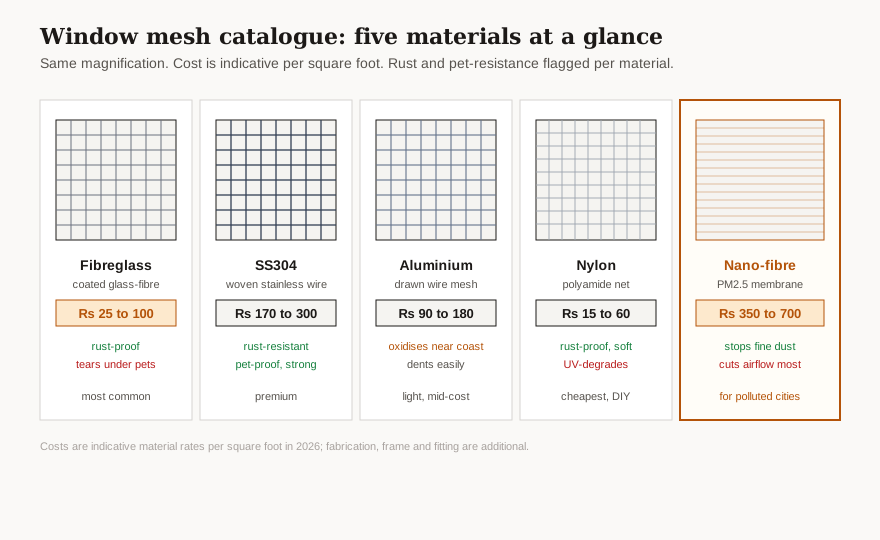
- Fibreglass — coated glass-fibre yarn. Cheap, never rusts, flexes without creasing, and is the default Indian insect screen. Slight give means it tolerates being pushed without permanent dents. The everyday choice.
- SS304 stainless steel — woven metal wire. Premium, rigid, and the only mesh a determined cat, squirrel or rodent cannot chew or claw through. Resists UV and heat, lasts decades. The grade matters: SS304 resists coastal salt far better than cheaper SS202.
- Aluminium — light, rust-free, holds a crisp flat plane. A mid-tier metal mesh; can corrode (white powder) in heavy salt air, so inland rather than seafront.
- Nylon / polyester — soft, very cheap, used for DIY magnetic and Velcro retrofit nets. Lowest durability; UV makes it brittle in a couple of years.
- Nano-fibre PM2.5 / pollen — a fine polymer membrane (Nasofilters-type) that traps fine particles and pollen, not just insects. Sold as panels around Rs 400 each. Real air-quality benefit, real airflow penalty — reserve for the bedroom of an allergy or asthma sufferer, or a Delhi-NCR winter.
| Mesh material | Indicative cost (per sqft) | Rust / corrosion | Pet and rodent proof | Typical life | Best for |
|---|---|---|---|---|---|
| Fibreglass | Rs 25 to 100 | None (rust-free) | No | 5 to 8 years | Default insect screen, most rooms |
| SS304 stainless | Rs 170 to 300 | Excellent | Yes | 15 years plus | Pets, rodents, balconies, coast |
| Aluminium | Rs 60 to 150 | Good (inland) | Partly | 8 to 12 years | Mid-tier, dry inland homes |
| Nylon / polyester | Rs 20 to 60 | None | No | 2 to 4 years | DIY magnetic / Velcro retrofit |
| Nano-fibre PM2.5 | ~Rs 400 per panel | None | No | Replace yearly | Allergy / asthma rooms, polluted cities |
Costs are indicative and exclude the frame and fitting.
Weave density: the airflow trade-off
Material is half the story; how tightly the mesh is woven is the other half. Density is described two ways: by mesh count (strands per inch — higher is finer) and by gsm (grams per square metre — heavier is denser and stronger). A standard insect screen is roughly 18 by 16 strands per inch. Pollen and fine-dust screens go far finer and visibly cut the breeze.
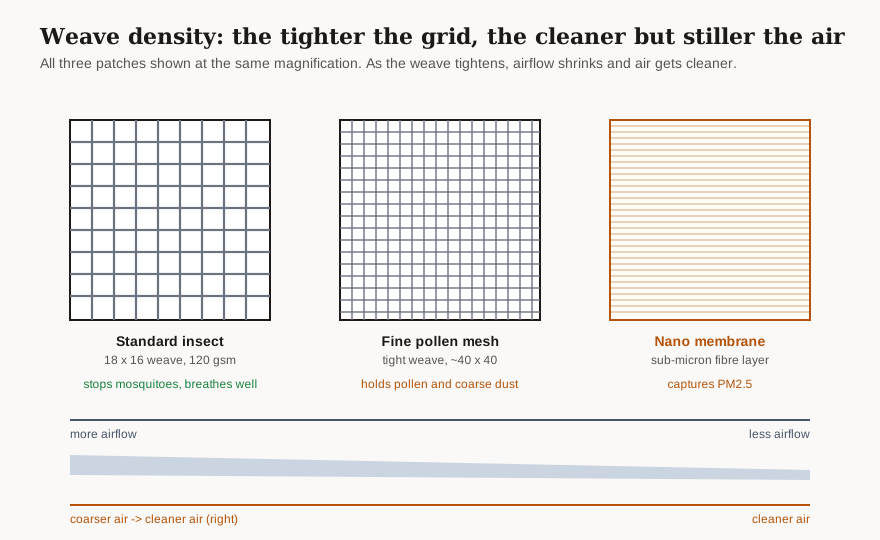
The rule worth tattooing on your order form: the finer the mesh, the cleaner the air and the weaker the breeze. A 120 gsm fibreglass insect mesh is the sweet spot for most homes — dense enough to stop mosquitoes and stiff enough not to sag, open enough to barely slow airflow. Go finer only where you must.
| Mesh density | Stops | Airflow loss | Use where |
|---|---|---|---|
| Standard insect (about 18x16, ~120 gsm fibreglass) | Mosquitoes, flies, lizards | Low | Most rooms — the default |
| Fine / "no-see-um" | Small midges, sandflies, coarse dust | Moderate | Coast, gardens, monsoon midges |
| Pollen / anti-dust | Pollen, larger PM | Noticeable | Allergy sufferers, dusty streets |
| Nano-fibre PM2.5 | Fine particulate (PM2.5) | High | Delhi-NCR winter, asthma rooms |
Because a fine mesh chokes airflow, never blanket a whole house in pollen mesh. Put the coarsest mesh that does the job on every opening, and reserve the fine stuff for the one or two windows that need it. The NBC 2016 expectation that openable area be at least about 10 per cent of floor area assumes air actually moves through it — a too-fine mesh quietly defeats that. This restraint matters most on the windows you chose precisely for breeze (see Best Windows for Airflow).
Frame formats: how the mesh is held
The same fibreglass behaves completely differently depending on the frame that carries it. The format decides whether you can open the window, whether it suits a balcony or a French door, and how much it costs.
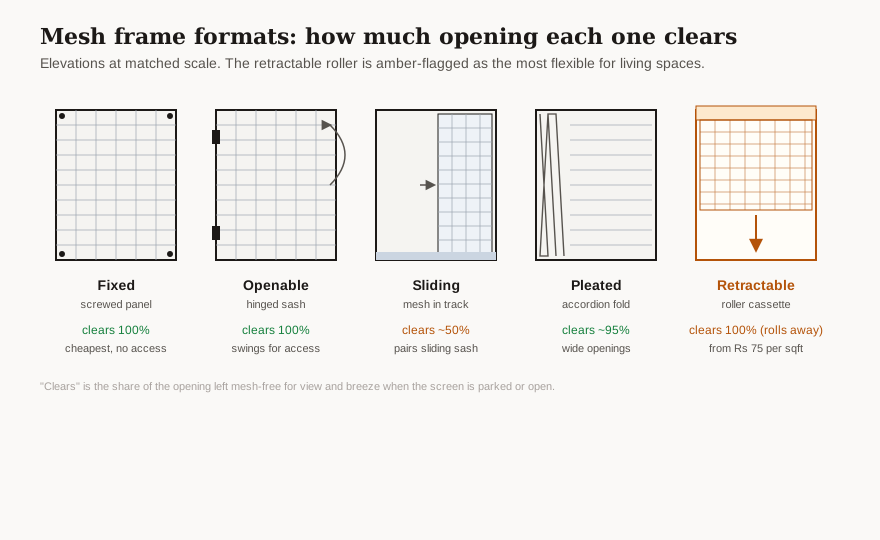
- Fixed mesh frame — a flat panel screwed permanently over the opening. Cheapest, most airtight, but you cannot clean the glass behind it without unscrewing it. Good for windows you rarely open.
- Openable / hinged — the mesh sits in its own hinged sash beside the glass, so you reach the glass by opening the screen. Standard for casement and grilled windows.
- Sliding mesh — a mesh panel runs in its own track alongside sliding glass shutters. The Indian default for aluminium and uPVC sliding windows; remember sliding glass only ever opens about 50 per cent, and the mesh track collects dust.
- Pleated / accordion — the mesh folds like a concertina and parks to one side, clearing the entire opening when not needed. The format for large openings, French doors and balconies where a fixed frame would be ugly or block the view.
- Retractable roller — the mesh winds into a slim cassette like a roller blind and pulls across only when wanted. From about Rs 75 per sqft, neat and out of sight; premium and motorised versions cost more.
| Format | Indicative cost (per sqft) | Clears the opening | Best for |
|---|---|---|---|
| Fixed frame | Lowest | No | Rarely-opened windows |
| Openable / hinged | Low to mid | When opened | Casement, grilled windows |
| Sliding mesh | Low to mid | Half | Sliding glass windows |
| Pleated / accordion | Mid to high | Fully | French doors, balconies, wide openings |
| Retractable roller | From Rs 75; motorised dearer | Fully | Clean look, occasional use, premium |
For choosing a specific format to mosquito-proof a particular window, the companion Mosquito-Proof Window Solutions goes format by format. To see how each underlying window type pairs with a mesh, start at Types of Home Windows in India.
Choosing by need
Match the mesh to the actual problem rather than over-specifying.
| Your need | Material | Density | Format |
|---|---|---|---|
| Just mosquitoes and flies | Fibreglass, 120 gsm | Standard insect | Sliding or hinged |
| Cat, dog, squirrel or rats | SS304 stainless | Standard | Fixed or hinged |
| Balcony or French door | Fibreglass or SS304 | Standard | Pleated / retractable |
| Coastal salt air | SS304 (not aluminium) | Standard or fine | Hinged |
| Pollen / allergy bedroom | Nano-fibre panel | Nano PM2.5 | Fixed (one window) |
| Dusty street, easy cleaning | Fibreglass | Fine | Pleated (lifts out) |
Care and maintenance
A mesh fails from neglect long before it fails from age. Three habits keep it working.
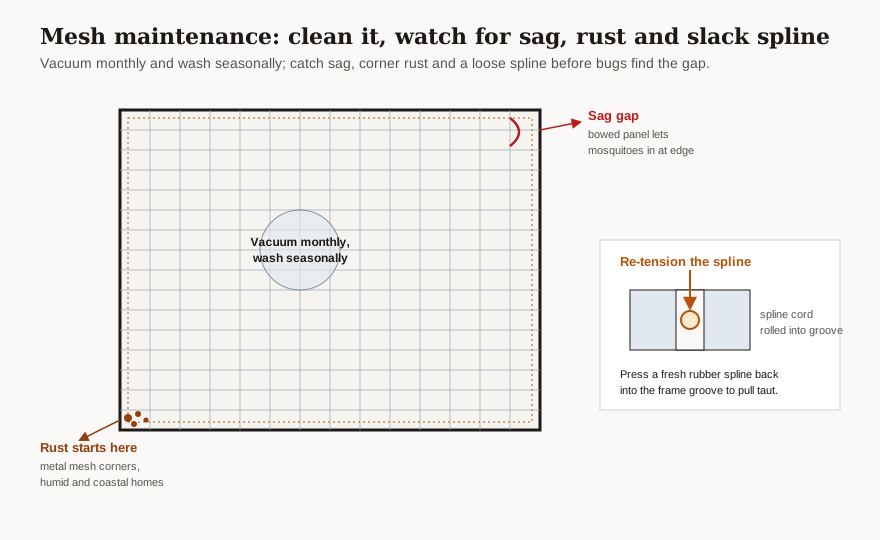
- Clean it. Vacuum with a brush attachment monthly; wash with mild soapy water and a soft brush each season. Sliding-track meshes clog fastest — dust plus monsoon damp turns to grime. Never pressure-wash a fibreglass mesh; it stretches the weave.
- Stop the rust. This is why material choice matters: cheap galvanised-iron mesh streaks rust within a year, especially near the coast. Fibreglass and SS304 sidestep it entirely. If a metal mesh starts to spot, it is near the end of its life.
- Re-tension before it sags. Fibreglass loosens over years and bows in the middle, opening gaps at the edges where mosquitoes slip in. Re-tensioning or re-splining the mesh into its frame groove is a cheap fix; a fully torn panel is a quick, inexpensive replacement. Inspect the spline and the frame corners each pre-monsoon check.
Do and avoid
| Do | Avoid |
|---|---|
| Default to 120 gsm fibreglass for most rooms | Galvanised-iron mesh — it rusts and streaks |
| Use SS304 where pets, rodents or salt air bite | Fine pollen mesh on every window — it chokes airflow |
| Reserve nano-fibre PM2.5 for one allergy room | Leaving sliding mesh tracks unwashed through monsoon |
| Pick pleated / retractable for balconies and wide doors | A sagging, untensioned mesh that gaps at the edges |
| Match mesh fineness to the actual pest or particle | Over-specifying SS304 everywhere "to be safe" |
The honest summary: most Indian homes need exactly one thing — 120 gsm fibreglass in a sliding or hinged frame — and should spend the extra money only on the specific windows with a specific problem. A cat on the balcony earns SS304; an asthmatic in the bedroom earns a nano-fibre panel; a wide French door earns a pleated screen. Everywhere else, the cheap rust-free mesh is also the right one.
References
- National Building Code of India 2016 (ventilation and openable-area provisions) — https://www.bis.gov.in/standards/technical-department/national-building-code/
- Bureau of Indian Standards (IS standards portal) — https://www.bis.gov.in/
- Nasofilters / nano-fibre air filtration research, IIT Delhi — https://www.iitd.ac.in/
Export this guide
Related Guides — Deep-dive reading
Dust Control Through Window Design
Seal the gaps, pick the right window type and the right mesh to keep PM2.5, pollen and road dust out of Indian homes
Windows & GlazingMosquito Mesh Doors in India (2026): Types, Mesh Materials, Cost & Fitting Guide
Hinged, sliding, pleated and magnetic insect-screen doors for Indian homes — choosing the right mesh and frame for dengue, monsoon and pets.
Home Doors & EntrancesMosquito-Proof Window Solutions for Indian Homes
Mesh frames, sliding, pleated, retractable and magnetic DIY screens — the cheapest dengue defence, matched to your window type
Windows & GlazingRelated Tools — Try Free
Cross-Ventilation Analyzer
Estimate airflow and air changes per hour (ACH) from room size, window areas, layout, and local wind — with NBC 2016 Part 8 compliance check.
Ventilation CalculatorWindow Grill Design Selector
Pick a window grille style and material by priority — security, looks, budget, view — and estimate cost.
Window ToolWindow Material Comparison Tool
Compare uPVC, aluminium, wood, steel and composite windows on cost, life, upkeep and insulation.
Compare