
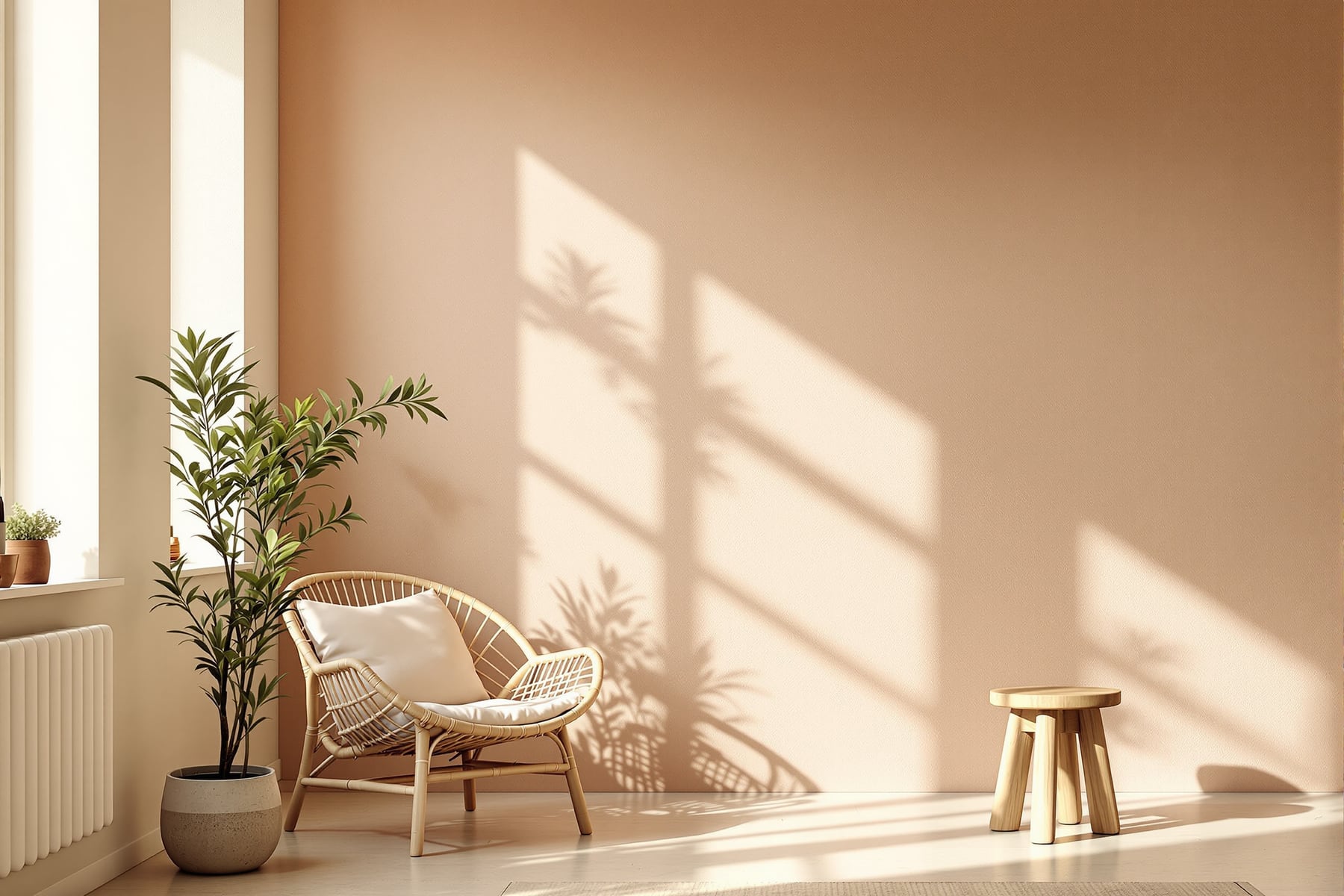
Lime Wash Walls: The Complete Guide for Indian Homes
The breathable mineral wash with a soft cloudy matte — what lime wash is, its weathered look, how it's brushed on, where it works indoors and out, and its honest cost, care and trade-offs.
Lime wash is the oldest wall finish still in fashion — the chalky, cloudy, sun-washed surface you see on old courtyards, Mediterranean villages and, increasingly, the most tasteful modern interiors. It is not paint in the usual sense: instead of laying a plastic film over the wall, lime wash soaks into a porous surface and becomes part of it, drying to a soft mineral matte with a living, cloudy depth that shifts through the day. It is breathable, naturally mould-resistant, genuinely eco-friendly, and among the cheapest ways to give a wall real character.
This is the complete guide to lime wash walls for Indian homes — a deep dive under the decorative wall finishes guide and the master wall-finishes guide into the breathable mineral finish. We will explain what lime wash actually is, show its weathered cloudy look, walk through how it is brushed on, map where it works (it loves exteriors), and be honest about the cost, the care and the real trade-offs — chief among them that it needs the right kind of wall to bond to.
What lime wash is
The key to understanding lime wash — and to not being disappointed by it — is that it behaves nothing like ordinary emulsion.
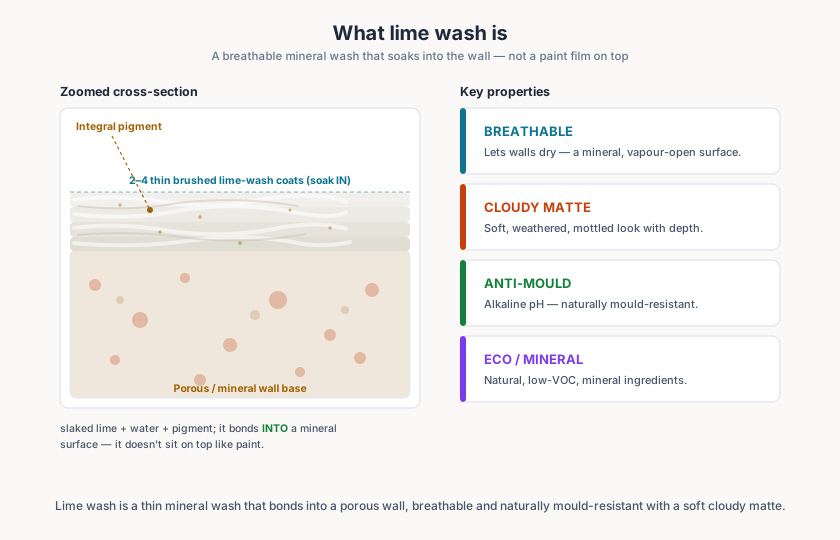
Lime wash is slaked lime, water and pigment — a thin wash that bonds into a porous mineral wall rather than forming a film on top of it. That single fact drives everything: because it is mineral and open, it is breathable (it lets a wall release moisture instead of trapping it), it dries to a cloudy matte with soft tonal movement, it is naturally mould-resistant (lime is alkaline), and it is eco-friendly and low-VOC. It is the wash cousin of the Venetian and lime plasters — the same lime chemistry, in its simplest, thinnest form.
The lime-wash look
Lime wash does not give you a flat, even colour, and that is entirely the point. Its beauty is in the cloudy, weathered depth that builds coat by coat.
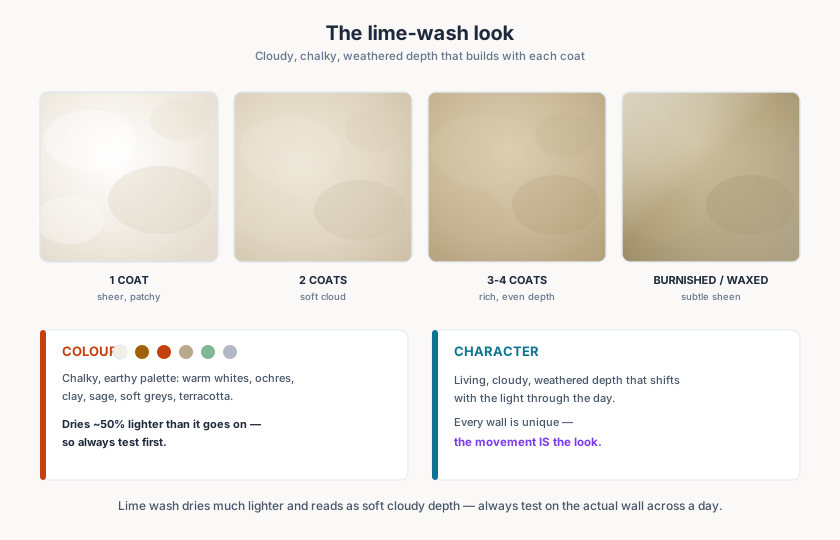
A single coat is sheer and patchy; two coats give a soft cloud; three to four coats build a rich, even depth; and a burnished or waxed finish adds a subtle sheen. Its colour palette is chalky and earthy — warm whites, ochres, clay, sage, soft greys and terracotta — and, crucially, lime wash dries roughly half as intense as it goes on, so you must test it on the actual wall. In character it is a living finish: cloudy, weathered depth that shifts with the light, unique on every wall. The movement is the look, not a flaw to be evened out.
How lime wash is applied
Lime wash is unusually forgiving to apply — it is a brush-and-build finish — but it depends completely on the wall beneath it and on a loose, deliberate technique.
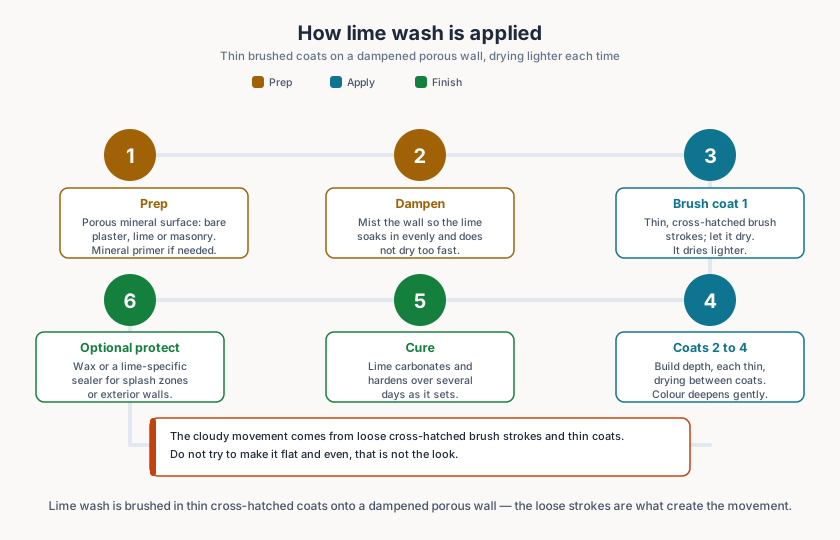
The sequence: start with a porous mineral surface (bare plaster, lime or masonry — a mineral primer if the wall is not naturally porous); dampen the wall so the lime soaks in evenly; brush the first coat in thin, loose cross-hatched strokes and let it dry (it will lighten dramatically); build two to four coats for depth, each thin and dry before the next; let it cure as the lime carbonates and hardens over days; and, for splash zones or exteriors, add an optional wax or lime-specific sealer. The cloudy movement comes precisely from those loose, cross-hatched strokes and thin coats — trying to make it flat and even fights the finish.
Where lime wash works
Lime wash is wonderful on the right wall and a disappointment on the wrong one, and the deciding factor is almost always porosity.
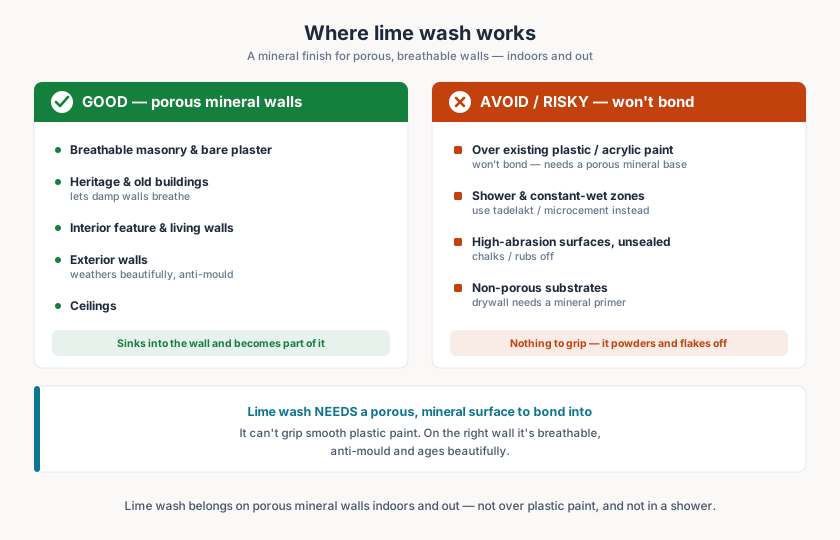
It is at its best on breathable masonry and bare plaster, on heritage and older buildings (where letting damp walls breathe actually helps), on interior feature and living walls, and — a real strength — on exterior walls, where it weathers beautifully and resists mould. It struggles or fails over existing plastic/acrylic paint (it cannot bond to a non-porous film without a mineral primer), in showers and constant-wet zones (choose tadelakt or microcement there), and on high-abrasion surfaces left unsealed (where it can chalk or rub off). The single rule: lime wash needs a porous, mineral surface to bond into — give it that and it rewards you indoors and out.
Cost, care and trade-offs
Lime wash is one of the most affordable and forgiving finishes to own, but it asks for a clear-eyed view of a few limits.
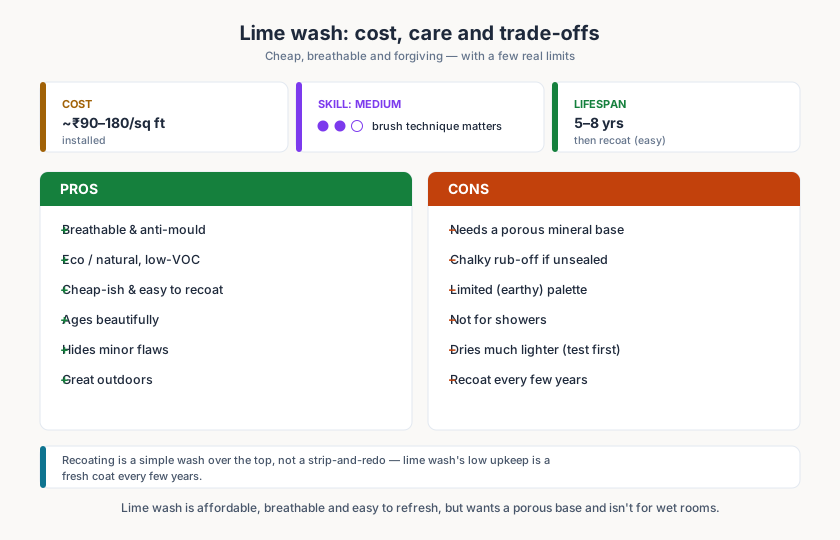
Expect roughly ₹90–180/sq ft installed, at medium skill (the brush technique matters), with a five-to-eight-year life before a refresh. Its pros are considerable: breathable and anti-mould, eco and low-VOC, cheap-ish and easy to recoat, ages beautifully, hides minor flaws, and excels outdoors. Its cons are real too: it needs a porous mineral base, can chalk or rub off if unsealed, offers a limited earthy palette, is not for showers, and dries much lighter than it looks wet. The upkeep is genuinely light, though — recoating is a simple wash over the top, not a strip-and-redo.
Lime wash is the finish that makes a wall feel like it has always been there — breathable, mineral, cloudy and calm, and among the greenest and cheapest ways to real character. Give it a porous wall and a loose hand, and it ages into something better every year. For its richer, glossier plaster relatives, return to Venetian plaster and the decorative wall finishes guide.
Export this guide
Related Guides — Deep-dive reading
Venetian Plaster Walls: The Complete Guide for Indian Homes
The luxury lime-and-marble finish burnished to a stone-like glow — what Venetian plaster is, the matte-to-mirror look, how it's applied, where it belongs, and the cost, skill and care it demands.
Wall FinishesInterior Wall Paint: The Complete Guide for Indian Homes
Everything under the colour — the layers beneath the paint, the five types to choose from, why sheen matters more than you think, how much you actually need, and the order of work that separates a job that lasts from one that peels.
Wall FinishesUltimate Guide to Wall Finishes for Indian Homes
Paint, wallpaper, panels, stone, plaster, microcement and more — the whole family of wall finishes, a five-question way to choose, and the real cost, climate and maintenance trade-offs.
Wall FinishesRelated Tools — Try Free
Cross-Ventilation Analyzer
Estimate airflow and air changes per hour (ACH) from room size, window areas, layout, and local wind — with NBC 2016 Part 8 compliance check.
Ventilation CalculatorDoor Paint Calculator
Estimate paint and primer litres and cost to paint your doors by size, number of doors, coats and paint type.
Door CalculatorHome Colour Studio
Colour every room — living, bedroom, dining, kitchen, bathroom — surface by surface in any HEX/RGB/CMYK colour, or from 80+ curated Indian shades.
Colour Studio