
Types of Swimming Pools: Which Is Right for Your Home?
Concrete, fibreglass, vinyl and above-ground pools, plus skimmer versus overflow and the main shapes — the pros, cons, cost order and right fit for Indian homes.
A swimming pool is one of the biggest decisions you will make about your home, and the very first choice is not the shape or the tile colour. It is the type of pool itself. Before anyone shows you a glossy render, you need to understand that "pool" is not one product. It is a family of very different things, built in different ways, costing very different amounts, and suited to very different homes and plots.
In India, the gap between the cheapest and the dearest pool you could put in the same backyard is enormous, and most of that gap is decided by which type you pick. A neighbour's pool that looks similar to the one you want might have cost a third of the quote you are holding, simply because they chose a different construction method. So this guide walks you through every common type, what each is genuinely good and bad at, and how to match one to your budget, plot and patience. For the bigger picture, read the complete home pool guide; for money specifically, swimming pool cost in India goes deeper.
Two ways to classify a pool
People get confused because pools are described in two completely different vocabularies at once, and showrooms mix them freely.
The first vocabulary is by construction material: how the pool shell is actually built. The main families are concrete (also called RCC, gunite or shotcrete), fibreglass, vinyl-liner and above-ground. This is the choice that drives cost, build time, durability and how custom your pool can be. It is the decision that matters most.
The second vocabulary is by use and shape: an infinity pool, a lap pool, a plunge pool, a natural pool, an indoor pool. These describe what the pool is for and what it looks like, not how it is built. An infinity pool, for example, is almost always a concrete pool underneath, because the construction method has to support that dramatic edge.
A useful way to think about it: construction is the engine, use and shape is the body style. You pick an engine first because it sets your budget and your limits, then you decide what shape to wrap around it. The rest of this guide treats them in that order.
By construction material
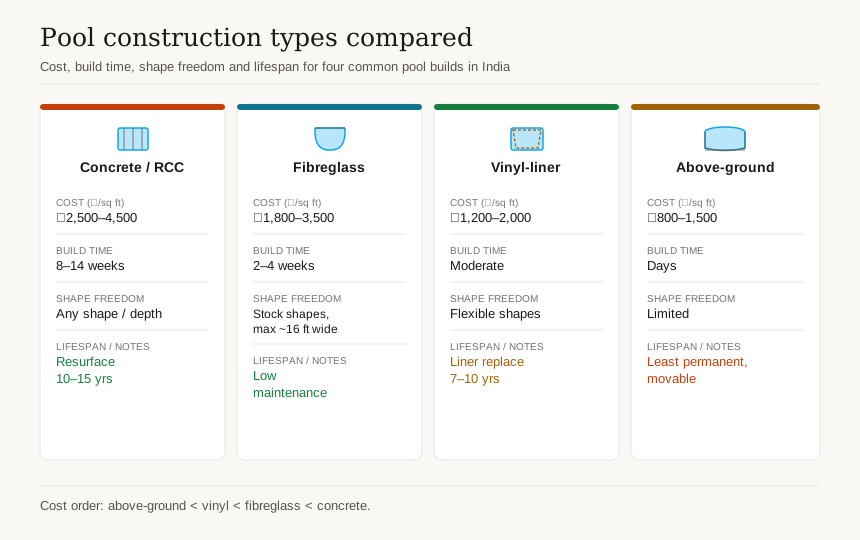
This is where the real differences live. Here is the comparison, then the detail.
Concrete / RCC (gunite or shotcrete). Indicative cost in 2026: ₹2,500 to ₹4,500 per square foot. Build time: roughly 8 to 14 weeks. Lifespan before resurfacing: about 10 to 15 years. Shape and depth: unlimited. Maintenance: highest.
Fibreglass / FRP. Indicative cost: ₹1,800 to ₹3,500 per square foot. Build time: roughly 2 to 4 weeks. Shape: stock moulds only, maximum width about 16 feet. Maintenance: lowest.
Vinyl-liner. Indicative cost: ₹1,200 to ₹2,000 per square foot. Build time: a few weeks. Liner is a wear part, replaced about every 7 to 10 years. Shape: flexible.
Above-ground. Indicative cost: ₹800 to ₹1,500 per square foot. Build time: days. Movable, least permanent.
Treat every one of those numbers as an indicative 2026 range that varies a lot with size, depth, site access, finish, equipment and city. Two pools of the same type can land far apart. To get a figure tuned to your actual plot, use the Pool Cost Calculator.
Concrete is the gold standard and the most common premium choice in India. The shell is built by spraying concrete, either dry-mix (gunite, where water is added at the nozzle) or wet-mix (shotcrete, pre-mixed), over a steel reinforcement cage. Both are forms of sprayed concrete and both let you build literally any shape and any depth. This is the only practical base for a custom infinity edge, an attached spa, a free-form lagoon shape, or beach-entry steps. The trade-offs are real: it is the slowest to build, the surface is porous so it needs more chemicals and brushing, you should expect to resurface every 10 to 15 years, and it is the dearest of the four. If you want something bespoke and permanent and you can wait, concrete is usually the answer.
Fibreglass is a factory-moulded one-piece shell. The pool arrives on a truck as a single gel-coat fibreglass unit and is lowered into a prepared excavation in a day. Because the gel-coat surface is non-porous and smooth, algae struggle to take hold, so chemical use and cleaning are noticeably lower than concrete over the years. Installation is the fastest of the in-ground options, often 2 to 4 weeks start to finish. The catch is the truck itself: a one-piece shell has to fit on a road, so you are limited to the manufacturer's stock shapes and a maximum width of roughly 16 feet. Site access matters too, since a crane has to swing a large shell over your house or fence. If a standard rectangle or kidney shape suits you and you value low maintenance and speed, fibreglass is excellent value.
Vinyl-liner is the most affordable in-ground type. A supporting wall structure and floor are built, then a flexible vinyl sheet is fitted inside to hold the water, like a fitted bedsheet. It allows flexible custom shapes at a lower cost than concrete, and the water feels smooth. The honest limitation is that the liner is a wear part: it fades, can tear, and typically needs replacing every 7 to 10 years, which is a recurring cost concrete and fibreglass do not have in the same way. Vinyl is less common in Indian residential work than concrete or fibreglass but is worth knowing as the budget in-ground option.
Above-ground is the cheapest overall and the least permanent. The pool sits on the ground rather than in it, supported by a steel or resin frame, and can often be dismantled or moved. It goes up in days and is the easiest to remove if you change your mind or move house. It will never look or feel like a built-in pool, the depth is limited, and it suits a temporary, budget or rental situation more than a forever home. But for a family that wants water this summer without a major project, it is a legitimate choice.
By how the water sits: skimmer vs overflow
Independent of the material, there is a second design decision that quietly changes both the look and the price: where the water sits relative to the pool edge. There are two systems, and the difference is one of the biggest reasons two concrete pools can be quoted very differently.
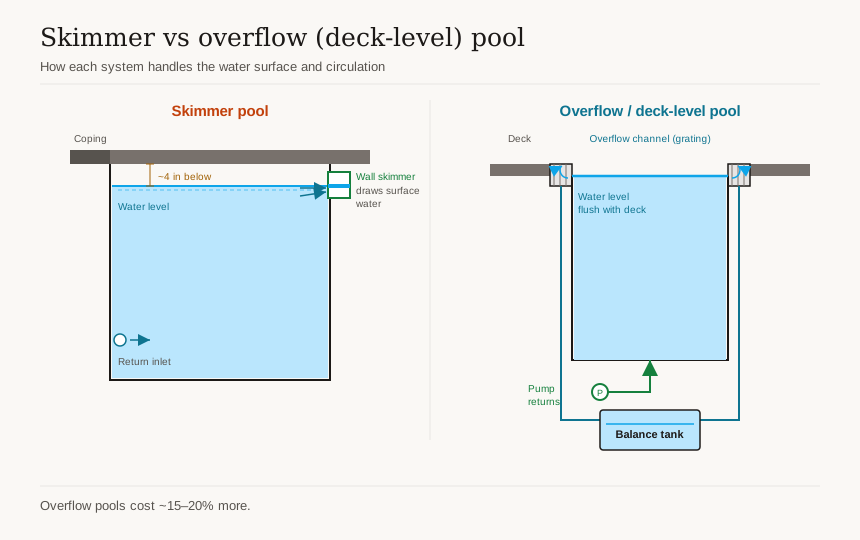
A skimmer pool is the conventional setup. The water sits about four inches below the coping, and one or more wall-mounted skimmers draw surface water in, catching leaves and debris before sending it to the filter. It is simpler, cheaper, and perfectly good. The visible water line a few inches down is the tell-tale sign of a skimmer pool.
An overflow pool, also called a deck-level pool, keeps the water exactly level with the deck so it spills over the entire perimeter. That overflowing water runs into a slot or channel around the edge, down to a balance tank, and then through the filtration system before being pumped back in. The result is the seamless, edgeless, mirror-like surface you see in luxury homes and resorts, and because the dirtiest water is at the surface and the surface is constantly skimmed across the whole perimeter, the water tends to look cleaner. The cost of that effect is real plumbing: the perimeter channel, the balance tank and the extra pump work add roughly 15 to 20 percent to the price over an equivalent skimmer pool. An infinity edge is essentially a deck-level system applied to one side only, where the water spills over a single viewing edge.
If your priority is value and function, a skimmer pool is the sensible default. If the seamless look is the whole point of the project, budget for overflow from the start, because retrofitting it later is not practical.
By use and shape
Once material and water system are settled, the shape is about how you will actually use the pool.
An infinity or negative-edge pool spills over one edge to create the illusion of water meeting the horizon, ideal for sloping plots and a view. These are almost always concrete with an overflow-style edge. If this is your dream, read infinity pools for what they really involve.
A lap pool is long and narrow, around 50 feet or more, built for swimming exercise rather than lounging. It suits a fitness-focused household and a long, slim strip of land down the side of a plot.
A plunge pool is the smallest type, designed for cooling off and relaxing rather than swimming, which makes it perfect for compact Indian plots and courtyards. If your space is tight, small swimming pools covers plunge and compact options in detail.
A natural pool uses a separate planted regeneration zone, a biofilter, to clean the water through aquatic plants instead of chlorine, giving a chemical-free, pond-like swim. It needs more space and a different mindset but appeals to ecologically minded owners.
An indoor pool sits inside or under the home, usable year-round and private, but it demands serious ventilation and dehumidification to manage moisture, which adds cost and complexity.
For inspiration across all of these, browse pool design ideas.
Which type suits which home
Start with budget. If money is the hard constraint, the order from cheapest is above-ground, then vinyl-liner, then fibreglass, then concrete. Many families who think they cannot afford a pool can afford a fibreglass or vinyl one.
Look at your plot and access. A tight site hemmed in by the house may not allow a crane to swing a one-piece fibreglass shell over it, which pushes you toward concrete that is built in place. A large, open, sloping plot with a view is made for a concrete infinity pool.
Consider soil and water table. Difficult or expansive soils and a high water table affect any pool but are generally managed more predictably with engineered concrete. Have a local engineer assess before you commit.
Think about custom shape. If you have a specific free-form shape, an attached spa, beach entry or an infinity edge in mind, concrete is effectively your only choice. If a standard rectangle works, fibreglass gives you most of the quality for less money and far less hassle.
Finally, weigh time and disruption. Concrete is an 8 to 14 week construction project on your property. Fibreglass can be swimmable in 2 to 4 weeks. Above-ground is ready in days. If you are racing a season or cannot live with a long building site, that alone may decide it.
Cost order at a glance
From least to most expensive, the construction types rank: above-ground, then vinyl-liner, then fibreglass, then concrete. Layer the overflow or deck-level system on top of any in-ground type and add roughly 15 to 20 percent for that edgeless look. Every figure here is an indicative 2026 range that varies widely by size, depth, finish, equipment, site access and city, so use them to understand relative order, not as a quote.
How to decide
The clean way to decide is to settle the questions in order. First, fix your honest budget. Second, pick the construction material that fits that budget and your plot. Third, choose skimmer or overflow. Fourth, choose the shape and use. By the time you talk to a contractor, you will be steering the conversation instead of being sold to.
When you are ready to put real numbers against your own plot size, depth and finish, run the Pool Cost Calculator. Pair it with swimming pool cost in India for a full breakdown, and keep the complete home pool guide open as your reference through the whole journey.
Export this guide
Related Guides — Deep-dive reading
Modular & Prefab Homes in India: An Honest Guide
What prefab, precast, LGSF and 3D-printing really mean for an Indian home — the speed, the trade-offs, and where they actually make sense.
Future-Ready HomesCustom vs Ready-Made Doors: Buyer's Guide India 2026
Factory ready-made, made-to-order from a brand, or carpenter-built on site — costs, lead times, fit and warranty compared for Indian homes.
Home Doors & EntrancesThe Trade-Offs Every Homeowner Has to Make
No one gets everything — every home is a stack of compromises. This is about the sacrifices: the cost-quality-time triangle, the recurring homeowner trades, and how to make your cuts on purpose instead of having them forced by a blown budget.
Planning Your ProjectRelated Tools — Try Free
Swimming Pool Cost Calculator
Estimate a home pool's build cost by type, size and finish, with an indicative range and a build breakdown.
Pool CalculatorPool Water Calculator
Chlorine, shock and salt doses plus top-up water for your pool — an indicative balancing guide.
Pool CalculatorRainwater Tank Sizer
How big should your rainwater tank be? Computes annual harvest, recommended tank capacity in litres, water-bill savings, and payback — for 10 Indian cities.
RWH Calculator