
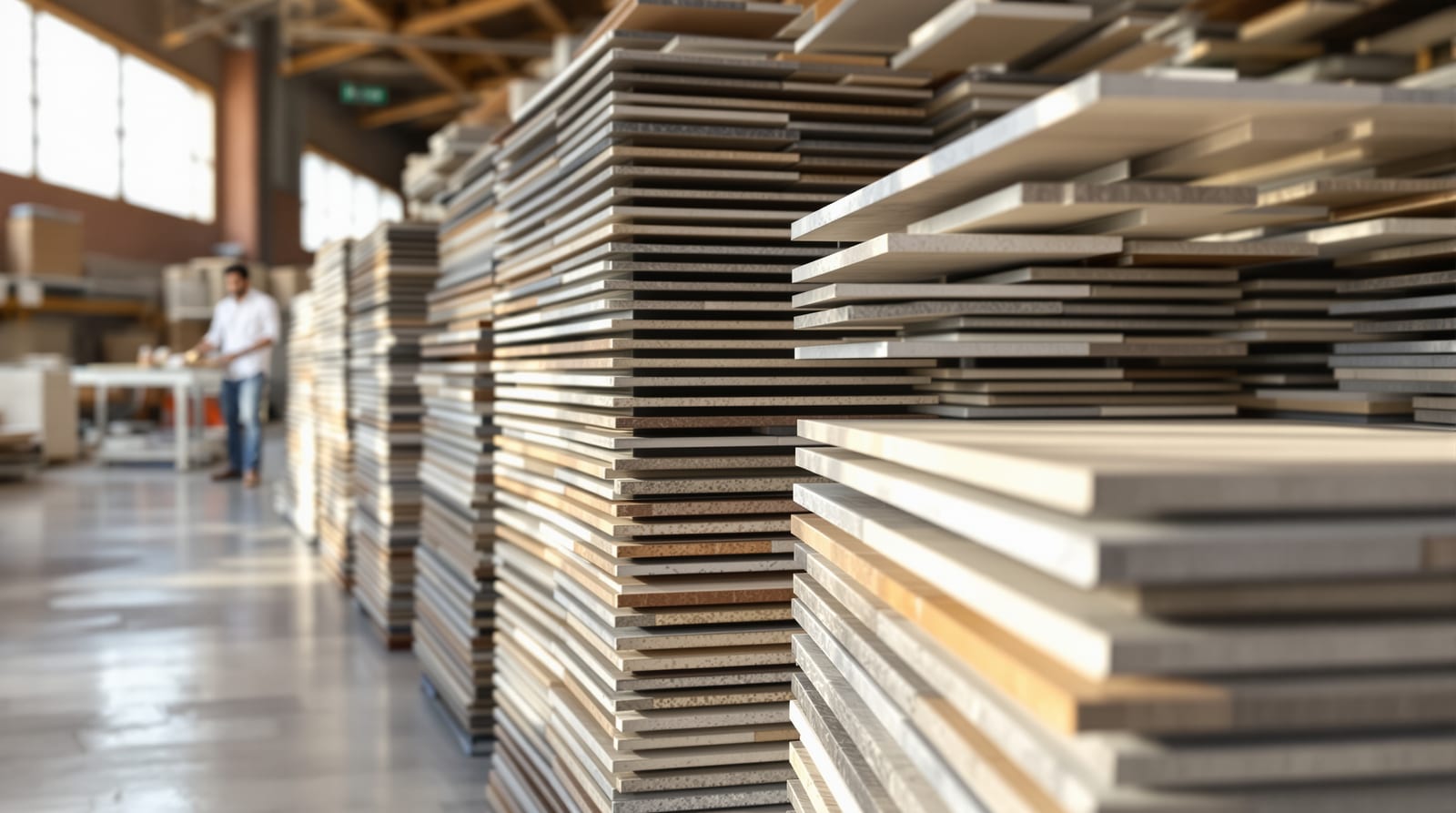
Tile Grades, Calibre, Shade and Lot in India: The Factory Sorting System Explained
Why the same tile model varies between boxes, and how to read grade, calibre, shade and lot markings before you buy.
Two boxes of the "same" tile can lay up looking like two different products: one box a hair larger, the next a shade darker, the edges of one set sitting proud of its neighbour. None of this is bad luck. Tiles are a fired-clay product that comes out of the kiln with natural variation, so every factory sorts its output into grades, size batches and colour batches before it ships. If you understand that sorting system, you buy the right grade, you match the right batch, and your floor looks like one continuous surface. If you ignore it, you get lippage, patchy shading and a floor you notice for the wrong reasons.
This guide explains the four things printed on every tile box in India, what they mean, how to read them, and exactly how to order so the boxes you receive lay up as one floor.
Why "the same model" is never identical
A pressed ceramic or vitrified tile is clay and minerals fired at over 1,000 C. During firing the body shrinks, and the shrinkage is never perfectly uniform across a kiln load or across production runs months apart. Glaze and pigment also vary slightly batch to batch. So a single nominal size, say 600x600 mm, actually comes out anywhere from roughly 597 to 603 mm, and a single colour comes out in subtly different tones.
Rather than throw away anything off the nominal, the factory sorts. Tiles are graded for quality, then within a grade they are sorted into size batches (calibre) and colour batches (shade or lot). The box you buy is a snapshot of one combination: one grade, one calibre, one shade lot. Mix combinations on the same floor and the mismatch shows. This is true of Morbi tiles, which make the bulk of India's ceramic and vitrified output, and of every major brand, Kajaria, Somany, Nitco, Johnson, Orient Bell, Simpolo, Varmora alike.
The four things on every box
There are four sorting attributes you must read and match. Get all four right and the floor is seamless.
| Marking | What it means | Why it matters | What to do |
|---|---|---|---|
| Grade | Quality classification (Premium, Standard, Commercial, Economy, Seconds) | Sets defect rate, edge quality, surface consistency | Buy Premium or Standard for living areas; never Seconds for main floors |
| Calibre | The actual size batch number (e.g. C1, C2 or a mm figure) | Mixing calibres of differing real size causes lippage and uneven joints | Buy ALL tiles in ONE calibre |
| Shade / Lot | The dye or colour batch (e.g. S1, Lot 23A, a batch date) | Different shade lots tile up patchy under daylight | Buy ONE shade lot plus spares |
| Thickness | Body thickness in mm (8, 9, 10 mm common) | Different thickness on one floor needs varying adhesive, risks lippage | Keep one thickness per area |
Tile quality grades: what each one means
"Grade" is the factory's quality sort. It is not a national legal scale, so a Premium from one factory is not identical to Premium from another, but the ladder is consistent across India.
| Grade | Typical defect level | Edge & surface | Best use | Price feel |
|---|---|---|---|---|
| Premium (AAA / first) | Lowest, tightly sorted | Sharpest edges, most consistent shade | Living rooms, formal areas, large open floors where the eye reads the whole surface | Highest |
| Standard (first quality) | Low, minor variation | Good edges, good consistency | Bedrooms, general home floors, most projects | Mid |
| Commercial | Slightly higher, built for traffic | Sound but less cosmetically fussy | Shops, offices, back-of-house, utility | Mid, value for wear |
| Economy | Visible minor variation | Acceptable, more shade/size spread | Budget rooms, service yards, rentals | Low |
| Seconds / defective lots | High, mixed batches | Chips, pinholes, warps, mixed shades | NEVER for main living floors; only rough utility, sheds, dog runs | Cheapest |
Seconds are the trap. They are sold cheap precisely because they are the rejects, often a mix of calibres and shades in one pile. They can be fine for a storeroom or an outdoor wash area, but laying them in a hall guarantees lippage and patchiness. If a deal looks too cheap to be true, ask whether it is seconds, and ask in writing.
Grade interacts with the technical specs covered in our companion guides: confirm the water-absorption group and the PEI wear rating regardless of grade, because a "Premium" wall tile is still only fit for walls. See how to read those specs in our tile testing and quality guide.
Calibre: the single most missed number
Calibre is the actual measured size batch. Because fired tiles vary in size, the factory measures and sorts them into narrow size bands and stamps each band with a calibre code, often C1, C2, C3, or sometimes the real dimension in mm. Every tile in one box shares a calibre. The nominal printed size (say 600x600) is just the marketing size; the calibre is the truth.
Here is why it is the number people regret missing. If you lay calibre C1 (say a true 598 mm) next to calibre C2 (a true 600 mm) with the same spacers, the joints will not line up and one tile sits proud of the next. That step at the joint is lippage, the most common DIY and even contractor flooring complaint in India. It feels like a small ledge underfoot and catches light and dirt.
Rectified tiles, which are mechanically ground to an exact size after firing, have far less calibre spread and let you lay very thin joints. Non-rectified (pressed-edge) tiles have a wider size spread, which is why they need bigger grout joints, two to three millimetres or more, to absorb the variation. Either way, you still match calibre. Rectified does not mean "any box mixes".
The rule is blunt: buy your whole floor in ONE calibre. When you place the order, tell the dealer the area is one continuous floor and you need single-calibre supply. If they have to pull from two calibres to make your quantity, lay the calibres in separate rooms, never blended in one room.
Shade and lot: the colour batch
Shade (also written as the dye lot or simply the lot) is the colour batch. Pigment, glaze and firing vary just enough between production runs that the factory groups output into shade lots and codes them, S1, S2, or a batch number and date. Marble-look and wood-look tiles, which deliberately carry pattern variation, still have a controlling shade lot for overall tone.
A shade-lot mismatch does not cause a physical step like lippage, but it is just as visible. Under daylight from a window, one patch of floor reads warmer or darker than the rest, and once you see it you cannot unsee it. This is most obvious in large unbroken floors and in plain, single-colour tiles where there is no pattern to hide the shift.
So you buy a single shade lot for the whole area, and crucially you buy your spare tiles from that same lot at the same time. Spares matter: if a tile cracks in five years and you go back to the dealer, the factory will be on a completely different shade lot and the repair will stand out. Keep four to six spare tiles per room, boxed and labelled with the lot, in storage. Our cracked tile replacement guide explains why same-lot spares are the difference between an invisible repair and an obvious patch.
Reading the box markings
Every box carries a printed or stamped label. Learn to scan it before you accept delivery.
- Brand and model / design name, plus nominal size (e.g. 600x600 mm).
- Grade or quality (Premium, Standard, AAA, first quality; "seconds" if it is rejects).
- Calibre: a code like C1 or a mm figure. Some brands print "CAL" then a number.
- Shade / lot: S1, S2, a batch number, or a batch date. Sometimes labelled "tono" on imported boxes.
- Thickness in mm, pieces per box, and coverage in sq ft or sq m per box.
- The ISI / BIS mark and the IS number (IS 15622 for pressed ceramic and vitrified tiles). Insist on it; tiles fall under a mandatory Quality Control Order, so the ISI mark should be present on genuine, compliant stock, imports included.
When the truck arrives, do not just count boxes. Spot-check that the grade, calibre, shade lot and thickness on the delivered boxes all match what you ordered, and match each other. It takes two minutes and it is the cheapest insurance in the whole project. If even a few boxes carry a different calibre or lot, set them aside and call the dealer before opening them.
Why the same model varies between factories and over time
Two further realities catch buyers out. First, a popular design is often made by several factories in the Morbi belt under licence or as look-alikes, and a "600x600 carrara" from factory A is not dimensionally or tonally identical to factory B's. Buy your whole floor from one source and one production. Second, the same factory's same model re-ordered months later will be a new calibre and a new shade lot. There is no "topping up" later and getting a match. This is exactly why the order quantity and the spare allowance have to be right the first time.
Ordering to avoid mismatches
Putting it together, here is how to order so the boxes lay up as one floor.
- Calculate area, then add wastage: 5 to 8% for straight-laid square rooms, 10 to 15% for diagonal or patterned layouts and cut-heavy rooms. Use our tile quantity calculator to size it correctly.
- Order grade, calibre and shade lot all in one go, in one purchase, from one dealer, so the whole quantity comes from the same batches.
- Specify in the written quote: brand, model, size, grade, calibre, shade lot, thickness, pieces, total sq ft and the wastage percentage included. This is part of a proper vendor comparison; see how to structure quotes in how to buy floor tiles in India.
- Demand the ISI/BIS mark and a GST invoice, and confirm the breakage and shortage policy in writing before you pay.
- Keep labelled same-lot spares for future repairs.
- Be alert to counterfeits and relabelled seconds sold as first quality; our guide on spotting fake tiles in India covers the tells, and the Morbi tiles buying guide explains sourcing direct from the manufacturing belt.
Frequently asked questions
What is calibre on a tile box, in plain words?
It is the tile's real measured size batch, because fired tiles never come out exactly the nominal size. The factory sorts them into narrow size bands and codes each band (C1, C2, etc.). All tiles in one box share a calibre. Lay two different calibres together and the joints will not align and one tile will sit higher than its neighbour, which is lippage.
Can I mix two shade lots if they look the same in the showroom?
No. Showroom light hides subtle tone differences that daylight from a window will reveal once the floor is down. Always buy a single shade lot for one continuous area, plus spares from that same lot. If you genuinely must use two lots, separate them by room so the change happens at a doorway, never in the middle of a floor.
Are "seconds" tiles ever worth buying?
Only for rough utility spaces, sheds, outdoor wash areas or temporary use where looks do not matter. Seconds are the factory rejects, usually mixed in calibre and shade with chips and warps, so they will lay up uneven and patchy. Never use them for living rooms, bedrooms or any floor you will look at every day.
What does rectified mean and does it remove the need to match calibre?
Rectified tiles are mechanically ground to an exact size after firing, so they have very little size spread and can be laid with thin joints. Non-rectified tiles vary more and need wider grout lines. Rectified reduces calibre spread but does not abolish it; you still buy and lay your floor in one calibre.
How many spare tiles should I keep, and why?
Keep about four to six tiles per room, ideally a few percent over your wastage allowance, boxed and labelled with the grade, calibre and shade lot. Future production runs of the same model will be a different calibre and shade lot, so a same-lot spare is the only way a future crack repair will be invisible.
Export this guide
Related Guides — Deep-dive reading
How to Buy Floor Tiles in India: The Complete Buyer's Playbook for Size, Spec, Grade, Quote & Delivery (2026)
From deciding size, finish, PEI and water-absorption group for each room to reading the box spec and ISI mark, matching calibre and lot, spotting seconds, and getting an honest all-in quote.
Flooring & SurfacesFlooring Buying Mistakes in India: 12 Costly Purchase Errors and How to Avoid Them (2026)
From ordering the exact area with no spare and losing the dye-lot, to mixing calibre, buying seconds for living rooms, skipping the ISI mark, paying full advance and ignoring transport and loading charges, here are the purchase mistakes that quietly inflate a floor's true cost.
Flooring & SurfacesHow to Choose Bathroom Tiles India: A Buyer's Spec-by-Spec Guide (2026)
A buying decision guide for bathroom tiles — floor vs wall selection, the specs to check before you pay (water absorption, PEI, R-rating, shade batch, thickness), good/better/best rupee tiers, how much to buy, and how to spot seconds and off-shade lots.
BathroomsRelated Tools — Try Free
Cross-Ventilation Analyzer
Estimate airflow and air changes per hour (ACH) from room size, window areas, layout, and local wind — with NBC 2016 Part 8 compliance check.
Ventilation CalculatorTile Quantity Calculator
Work out how many tiles and boxes to buy for a floor, by tile size and area, with wastage and skirting.
Flooring ToolFlooring Cost Calculator
Estimate the all-in cost of a floor — material, laying, wastage, skirting and GST — by area and material.
Flooring Calculator