
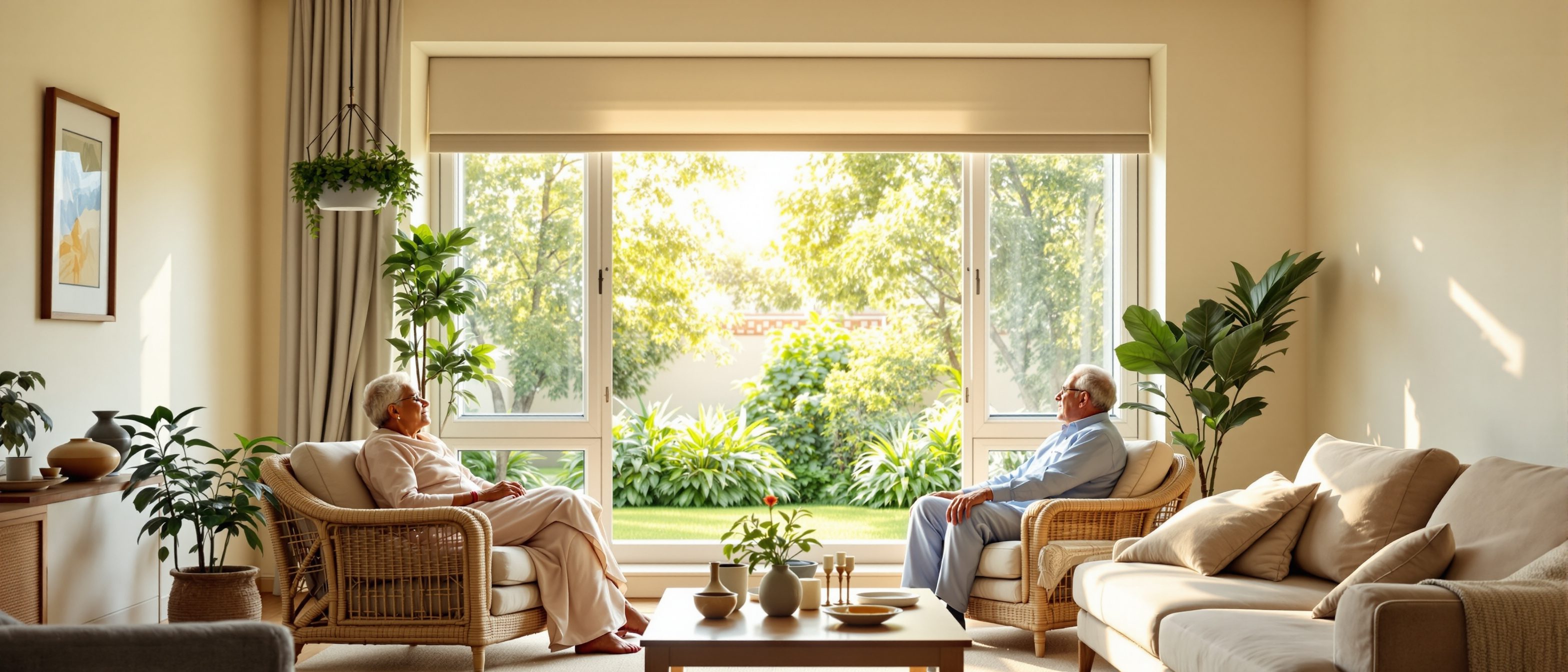
Window Planning for Senior-Friendly Homes (India): Easy, Safe, Bright
Lower sills for a seated view, low-effort lever and motorised hardware, brighter glare-controlled daylight, and safe glass with fall restrictors for ageing residents.
A window that suits a 35-year-old can quietly fail a 70-year-old. The same opening that once felt fine becomes too high to see through from a chair, too stiff to crank open, too dim for ageing eyes, and too dangerous if the glass breaks on a fall. As more Indian families plan homes for parents and grandparents to live in for decades, the window needs to be re-examined through the lens of ageing: lower, easier, brighter, and safer.
This guide is the senior and ageing lens on window design. For the broader all-abilities principles (seated wheelchair reach, low vision, the seven universal-design rules), read the companion guide on universal-design windows. For the whole-home picture (ramps, grab bars, bathroom safety), see accessible home design in India. Here we stay narrowly on the window itself, for older residents.
Ageing changes four things at the window: how high you can see, how hard you can pull, how much light you need, and how badly a fall or a broken pane can hurt. Design for all four.
What changes with age
By the late sixties and beyond, several shifts matter for fenestration. Vision dims: the ageing eye typically needs roughly 2 to 3 times more light than a young eye to read or work comfortably, while also becoming more sensitive to glare. Grip and shoulder strength fall, so stiff sliders and twist knobs become genuinely hard. Balance is poorer, so a trip at a low window or a hand thrust through glass carries real injury risk. Many seniors also spend long hours seated, so a view out matters for mood and orientation. Good window planning answers each of these.
Lower the sill for a seated view
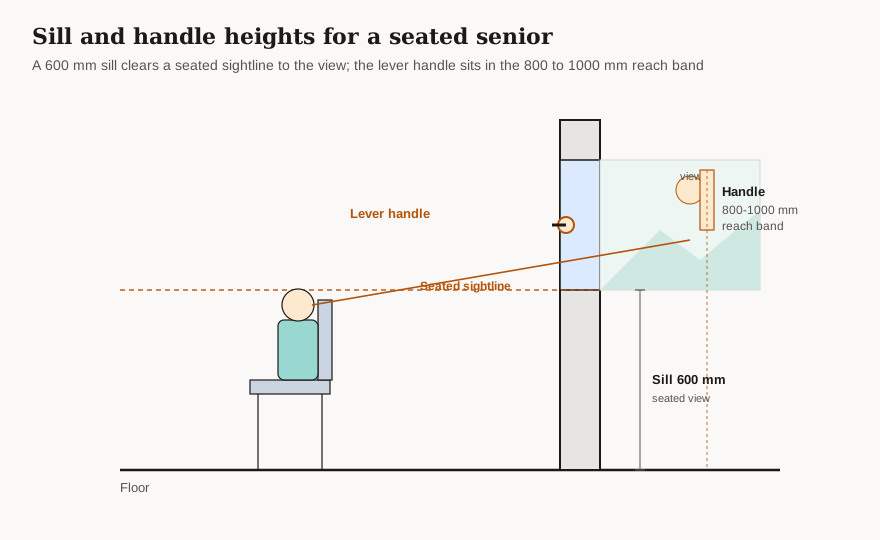
A standard living-room or bedroom sill in India sits at 600 to 750 mm (2 to 2.5 ft), which already allows a seated view. For senior-occupied rooms, plan to the lower end, around 600 mm, so that someone in an armchair or wheelchair sees the garden, the gate, and the street rather than a blank wall. A view out is not a luxury for someone who is at home all day; it anchors the day and the seasons.
Keep kitchen windows above the counter (1050 to 1200 mm) and bathroom windows high for privacy (around 1500 mm) as usual, but never make a low senior sill without safe glazing and a fall restrictor (below). The general window planning logic for every room lives in the pillar guide, window placement guide for India.
| Room (senior-occupied) | Sill height (indicative) | Why |
|---|---|---|
| Living, sit-out | 600 mm | Seated sightline to garden, gate, street |
| Bedroom | 600 to 750 mm | View from bed and chair; morning light |
| Kitchen | 1050 to 1200 mm | Above counter; keeps worktop free |
| Bathroom | 1500 mm | Privacy; high awning or louvre for air |
Reachable, low-effort hardware
This is where senior design departs most sharply from a normal window. The handle should fall in the 800 to 1000 mm reach band, within easy arm's range from standing or sitting, and it should open with little force.
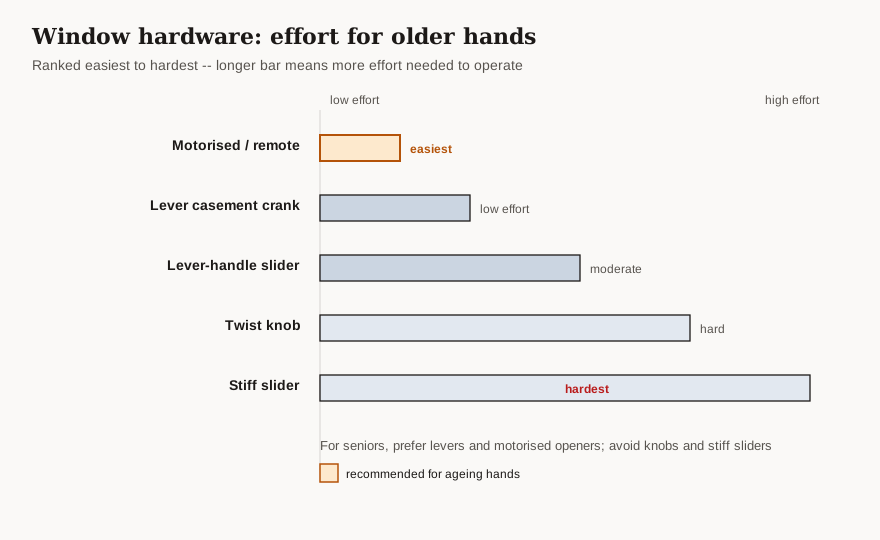
- Lever handles, never knobs. A lever works with a closed fist, an elbow, or arthritic fingers; a round knob needs a pinch-and-twist that many older hands cannot manage.
- Light casement cranks with a long handle and good gearing open a whole sash with one easy turn, far easier than wrestling a heavy sliding sash on a gritty track.
- Motorised or remote-operated openers (chain actuators, remote louvres, or smart-controlled casements) remove effort entirely for high or hard-to-reach windows, ventilators, and clerestories, and let a seated person open a window across the room.
- Avoid stiff sliders. A standard slider also only opens about half its width, so it gives less air for more effort, a poor trade for a senior.
| Operation | Effort for older hands | Verdict for seniors |
|---|---|---|
| Motorised / remote | None (button or remote) | Best for high or distant windows |
| Lever casement crank | Low, one-handed | Recommended default |
| Lever-handle slider on good rollers | Moderate | Acceptable if rollers stay smooth |
| Twist knob | Hard (pinch and twist) | Avoid |
| Stiff slider on gritty track | Hard, two-handed | Avoid |
More daylight, less glare
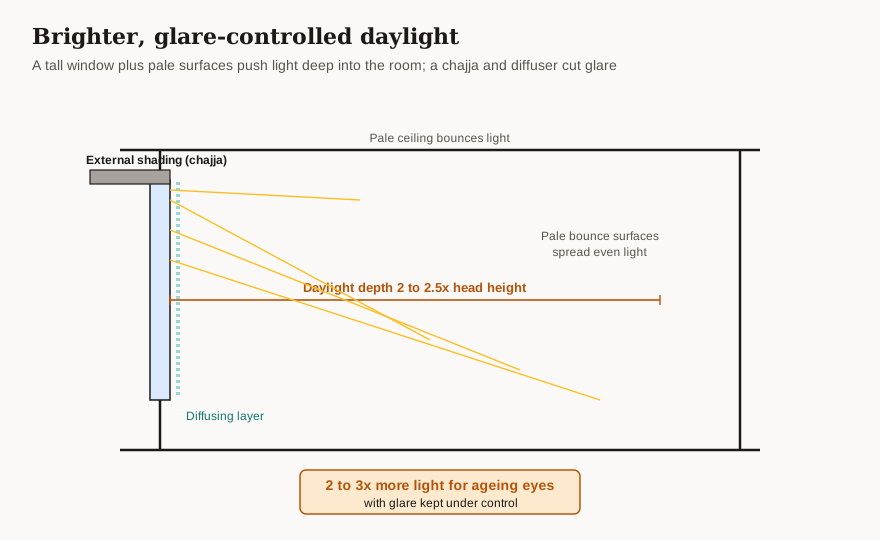
Because ageing eyes need roughly 2 to 3 times more light, senior rooms should be planned bright. North windows give soft, even, glare-free daylight all day and are the safest large glazing for ageing eyes; east windows give a gentle morning lift good for bedrooms. Tall windows push daylight deeper into a room (light reaches roughly 2 to 2.5 times the window head height), and pale walls and ceilings bounce it around so the room is evenly lit rather than patchy.
But more light must not become more glare, which is doubly disabling for older eyes. Control it with external shading (chajja, overhang, louvres) sized to the sun, light-diffusing glass or sheer layers on west and harsh-sun windows, and by avoiding a single bright window against a dark wall. The deeper science sits in natural light planning for Indian homes; this guide simply tilts those choices toward brighter, glare-managed rooms for seniors. Daylight also supports the body clock and mood, which matters for residents who are indoors most of the day.
Safety: glass, falls and a clear approach
A low sill plus an older resident plus a possible loss of balance is exactly the combination that demands safety glazing. Use toughened (tempered) glass, which is four to five times stronger and breaks into blunt granules, or laminated glass, which holds together on its PVB interlayer so the pane stays in the frame if struck. Both are the right call for any large or low senior window.
Where a window sits low or above ground level, fit fall restrictors or opening limiters so a sash cannot open wide enough for a person to fall through, while still allowing ventilation. The approach to the window matters as much as the window: keep a trip-free, clear path to it, with no loose rugs, no trailing cords, no low furniture or thresholds underfoot, and good even lighting along the route. India's accessibility framework, the CPWD Harmonised Guidelines (2016) and the Rights of Persons with Disabilities (RPwD) Act, 2016, set the barrier-free intent these choices serve; the all-abilities reach and contrast detail is expanded in the universal-design windows guide.
Ventilation and emergency egress
Fresh air is a health issue for older residents, who are more vulnerable to stuffy, polluted, or damp indoor air. Keep the NBC rule of thumb, openable area of at least 10 per cent of the room's carpet area, and plan cross ventilation with an inlet and an outlet on different walls so air actually moves. Casement, awning, and louvred windows are easy to operate and ventilate well; awning and louvre types also let air in during the monsoon without rain coming through, useful when a senior cannot dash to close windows in a sudden shower.
At least one window in a senior's bedroom should double as an emergency egress route or rescue access, openable easily from inside without a key, wide enough for help to reach in, and not blocked by heavy grilles that cannot be opened in a fire.
The senior-window checklist
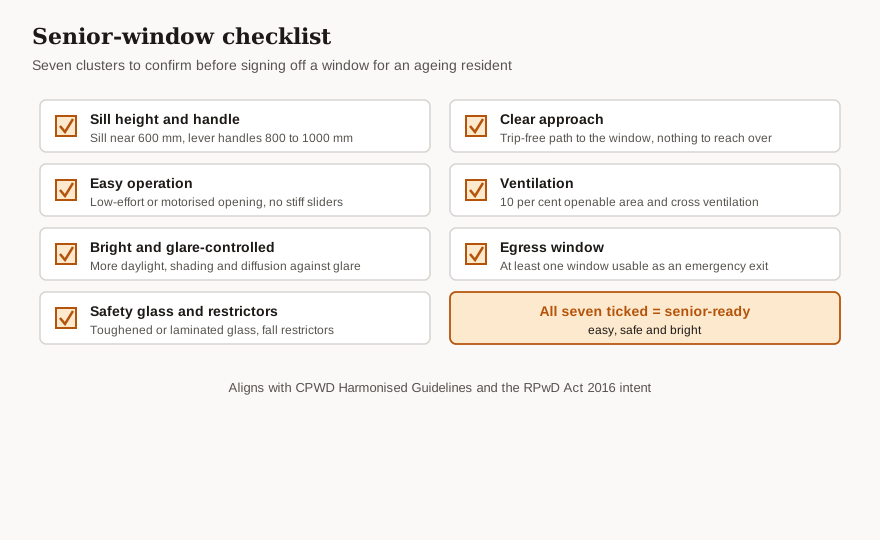
- Sill near 600 mm in living and bedroom for a seated view.
- Handles at 800 to 1000 mm, lever type, not knobs.
- Light casement cranks or motorised/remote openers; avoid stiff sliders.
- Bright rooms (north and east light, tall windows, pale surfaces) for eyes needing 2 to 3 times more light.
- Glare controlled with external shading and diffusing layers.
- Toughened or laminated safety glass on low and large panes.
- Fall restrictors / opening limiters on low or upper-floor windows.
- Clear, trip-free, well-lit approach to every window.
- At least 10 per cent openable area and real cross ventilation for health.
- One easy-to-open egress window in the bedroom, no key needed.
Plan these from the start. Retrofitting a lower sill or motorised opener later costs far more than specifying it once, and the small premium buys an older resident years of an easier, brighter, safer home.
References
- CPWD Harmonised Guidelines (barrier-free built environment): https://www.cpwd.gov.in/Publication/Harmonisedguidelinesdreleasedon23rdMarch2016.pdf
- Rights of Persons with Disabilities (RPwD) Act, 2016: https://ssepd.odisha.gov.in/sites/default/files/2024-01/RPWD%20ACT.pdf
- BIS Guide for Using NBC 2016 (light and ventilation): https://www.bis.gov.in/wp-content/uploads/2022/08/Booklet-Guide-for-Using-NBC-2016.pdf
- IS 3362 (natural ventilation of residential buildings): https://law.resource.org/pub/in/bis/S03/is.3362.1977.pdf
- Standard window sizes by room (CiviConcepts): https://civiconcepts.com/blog/standard-window-size
Export this guide
Related Guides — Deep-dive reading
Universal Design and Windows (India): Openings That Work for Every Age and Ability
The seven Universal Design principles applied to windows — reach, sill height, operating force, glare and safe glazing — tied to the RPwD Act 2016 and CPWD Harmonised Guidelines.
Windows & GlazingWindow Design for Natural Light (India): A Brighter, Evenly Lit Home
How to size, place and glaze windows so every room is bright and evenly lit, without glare or gloom
Windows & GlazingUniversal Design Doors for Indian Homes: Inclusive Doors That Work for Everyone (2026)
How to design and specify doors that serve children, the elderly, pregnant women, the injured and wheelchair users by default - generous width, lever handles, near-flush thresholds, low-force closing, contrast and good lighting - without your home ever looking medical.
Home Doors & EntrancesRelated Tools — Try Free
Cross-Ventilation Analyzer
Estimate airflow and air changes per hour (ACH) from room size, window areas, layout, and local wind — with NBC 2016 Part 8 compliance check.
Ventilation CalculatorBrise-Soleil Visualizer
Interactive horizontal-louvre cut-off angle calculator — sun altitude, louvre depth, and spacing inputs with a live shadow preview. Computes θ = arctan(spacing/depth) for façade shading, ECBC envelope compliance, hospital daylight design, and tropical sun-control detailing.
Sun Shading ToolWindow Size Calculator
Get the right window size, glazing area and openable area for any room using NBC daylight rules.
Window Tool