
Universal Design and Windows (India): Openings That Work for Every Age and Ability
The seven Universal Design principles applied to windows — reach, sill height, operating force, glare and safe glazing — tied to the RPwD Act 2016 and CPWD Harmonised Guidelines.
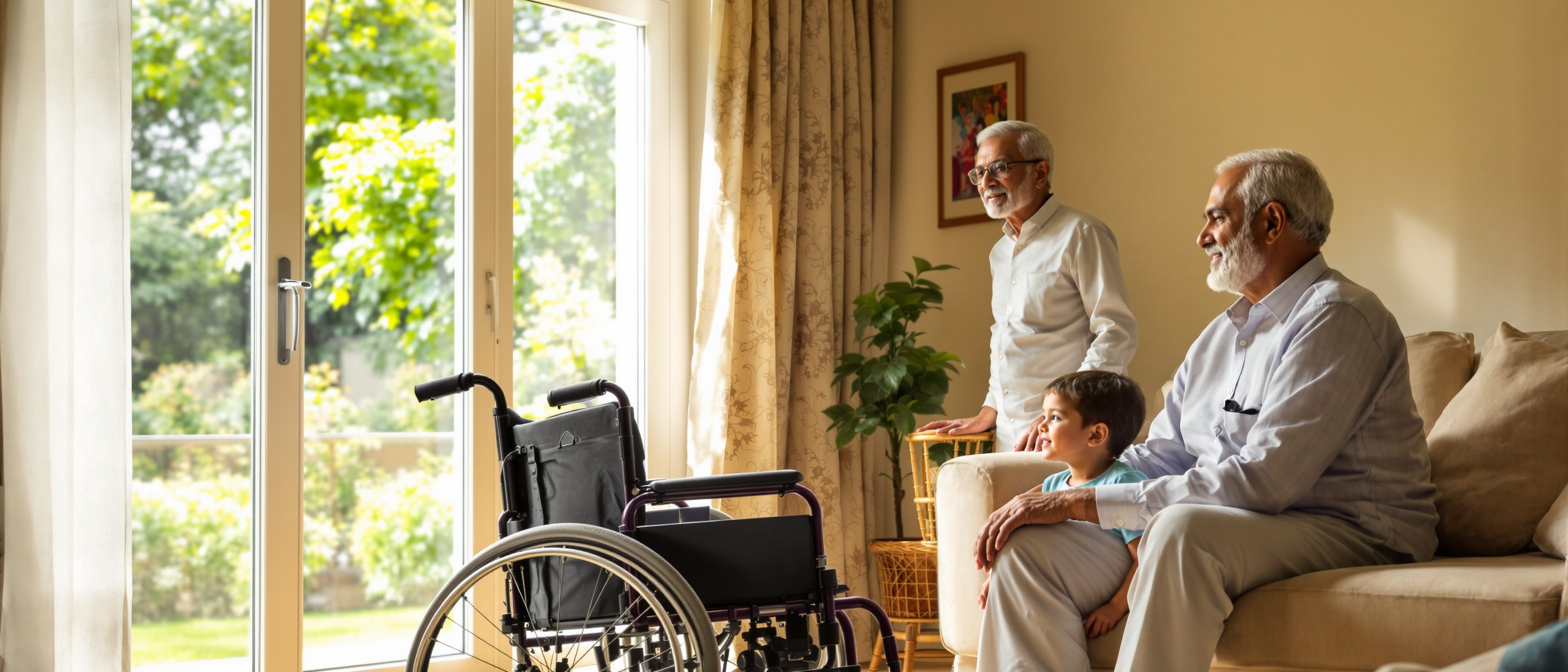
A window that a six-year-old can reach, a grandparent can open without straining, and a wheelchair user can see through while seated is not a special window. It is simply a well-designed one. Universal Design (UD) is the discipline of designing things that work for the widest possible range of people without adaptation or special fitting. Applied to windows, it asks a single demanding question of every opening: can everyone in this home, at every age and ability, use it safely and easily?
This guide takes the seven Universal Design principles and translates each one into concrete window decisions for Indian homes — sill heights, handle types, operating force, glare, contrast and safe glazing — and ties them to the Rights of Persons with Disabilities (RPwD) Act 2016 and the CPWD Harmonised Guidelines for barrier-free design.
Universal Design is not designing for the few. It is designing once, so that a child, a wheelchair user, an elderly parent and a fully able adult all use the same window with equal ease.
How this differs from the related guides
This is the all-abilities, principles-led lens. It is deliberately distinct from its cousins, so read it alongside them rather than instead of them:
- /guides/senior-friendly-window-design-india is the ageing lens — windows tuned to the specific changes of older age (eyes needing more light, reduced grip, fall risk). It and this guide share many fixes but ask different questions.
- /guides/universal-design-adaptable-homes-india and /guides/accessible-home-design-india are the whole-home views — every room, doorway, threshold and bathroom. This guide zooms into the window alone.
- The planning pillar /guides/window-placement-guide-india sets the where-and-how-big logic that UD then refines.
The seven UD principles, applied to windows
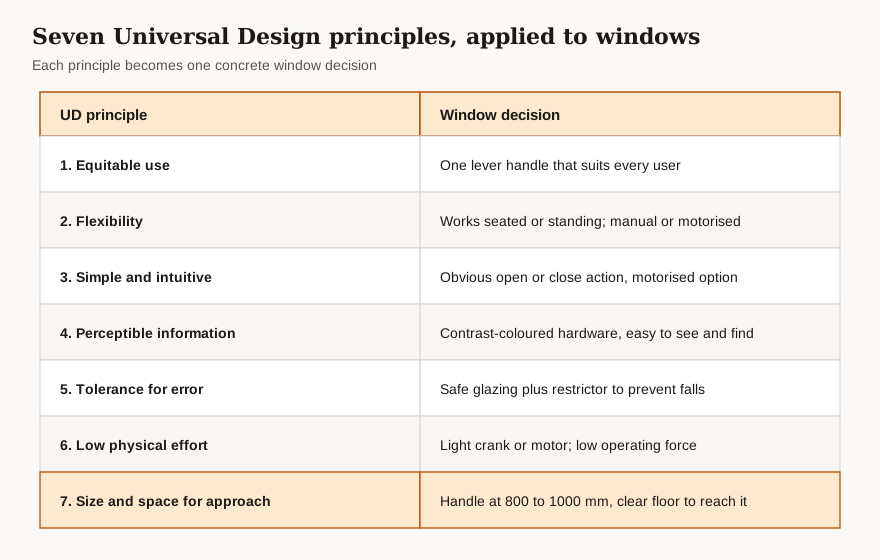
Universal Design has seven principles (Center for Universal Design). Here is what each one demands of a window.
| UD principle | What it means | Applied to the window |
|---|---|---|
| 1. Equitable use | Useful to people of diverse abilities; same means where possible | One window everyone can operate — no "abled" and "disabled" versions; lever handles all reach |
| 2. Flexibility in use | Accommodates a range of preferences and abilities | Operable while seated OR standing; manual crank OR motorised option |
| 3. Simple and intuitive | Easy to understand regardless of experience | Obvious open/close action; clear lever direction; no hidden catches |
| 4. Perceptible information | Communicates effectively regardless of sensory ability | Contrasting handle colour, tactile lever, latched-position you can feel |
| 5. Tolerance for error | Minimises hazards of accidental action | Safe (toughened/laminated) glazing; restrictors stop falls; no sharp edges |
| 6. Low physical effort | Usable efficiently with minimum fatigue | Low operating force; light casement cranks; motorised for the frail |
| 7. Size and space for approach | Right size and space to reach and use, any body size or mobility | Handle 800 to 1000 mm high; clear, trip-free floor approach for a wheelchair |
Reachable and operable — from seated or standing (principles 2, 6, 7)
The single biggest barrier is a handle you cannot reach or a force you cannot apply. UD windows are designed to be worked from a seated wheelchair position as readily as standing.
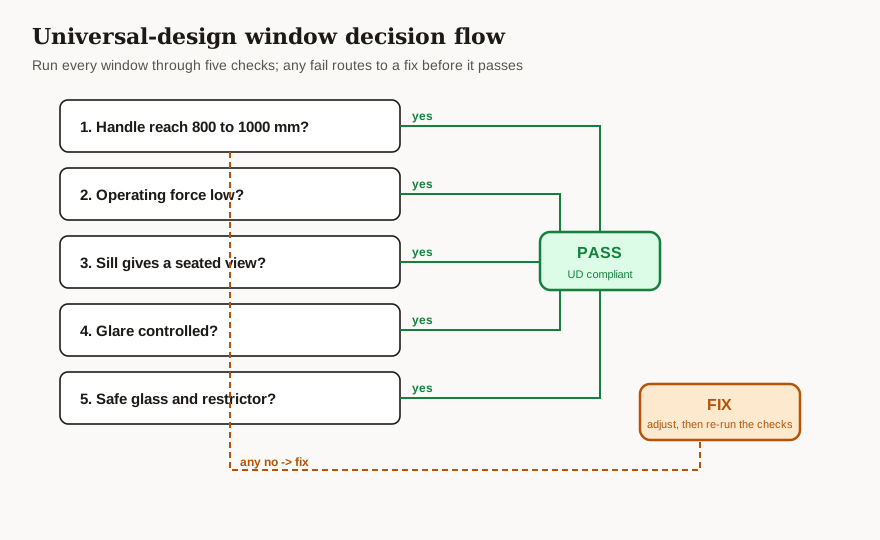
- Handle height: place operating hardware at roughly 800 to 1000 mm above the floor — within the comfortable forward reach of a seated wheelchair user and a standing adult alike. The CPWD Harmonised Guidelines anchor reachable controls in this band.
- Lever, not knob: a lever handle can be worked by a closed fist, an elbow or a limited grip; a round knob demands fine pinch and rotation that arthritis or a small child's hand cannot manage. This is the most important single substitution.
- Low operating force: specify light casement cranks or easy-glide sliders. A window that needs both hands and a heave fails principle 6.
- Motorised and remote options: for high clerestory windows, large panes, or users with very limited strength, motorised or remote-controlled operators make the otherwise-unreachable usable. This is flexibility (principle 2), not luxury.
- Clear approach: leave a level, trip-free floor zone in front of the window so a wheelchair, a walker or a toddler can get to it (principle 7) — keep furniture, deep sills and rugs out of the path.
Sill height — a view for the seated user (principles 1, 3, 7)
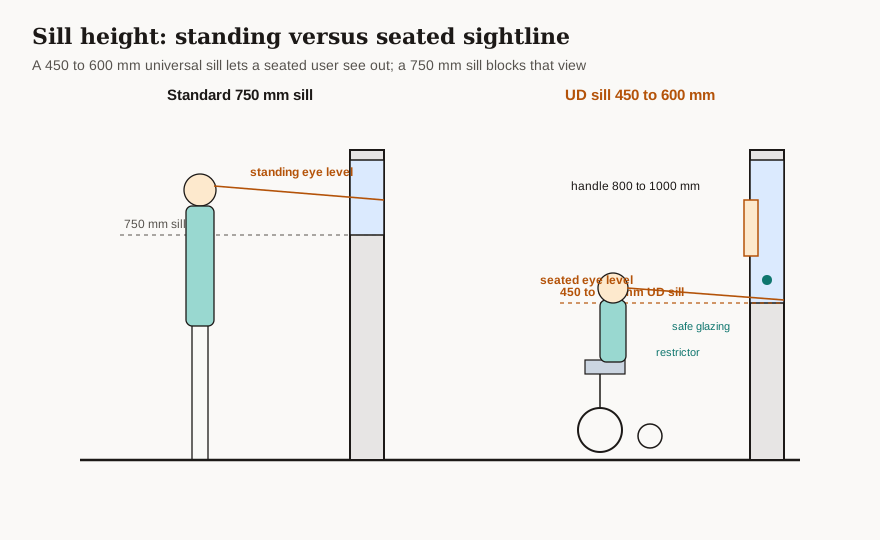
The Indian default living and bedroom sill of 600 to 750 mm already gives a fair seated view. Universal Design pushes the lower bound: a sill of about 450 to 600 mm lets a person seated in a wheelchair — whose eye level is lower than a standing adult's — actually see out to the street, garden or play area, not just at a blank wall.
The trade-off is safety: a low sill is a fall risk, so it must be paired with safe glazing and a guard. This is where principle 5 (tolerance for error) becomes non-negotiable.
| Room | Conventional sill | UD-adjusted sill | Reason |
|---|---|---|---|
| Living / family | 600 to 750 mm | 450 to 600 mm + safe glass | Seated view to garden or street |
| Bedroom | 600 to 750 mm | 450 to 600 mm + safe glass | View and daylight from the bed and chair |
| Kitchen | 1050 to 1200 mm (above counter) | Keep, but handle within seated reach | Counter fixes sill; reach is the UD lever |
| Bathroom | about 1500 mm (privacy) | Keep; ensure operable from seated | Privacy overrides low view here |
Note that not every sill should drop — the kitchen sill is set by the counter and the bathroom sill by privacy. UD adjusts where a low view adds value and keeps height where function demands it.
Glare, contrast and low vision (principle 4)
Low vision is common across ages — from elderly cataract to congenital conditions — and the window is both the cure and the cause. It floods a room with the daylight low-vision eyes need, but unmanaged it becomes a blinding glare source.
- Control glare, keep light: use glazing with good VLT (visible light transmittance) so the room stays bright, but soften direct sun with external shading, light shelves or diffusing blinds. A north-facing window gives soft, even, glare-free light and suits a low-vision user best.
- Contrast the frame and handle: a window frame and operating lever that contrast against the wall are far easier to locate for someone with low vision (principle 4). Avoid white hardware on a white frame on a white wall.
- Tactile and audible cues: a lever whose latched position you can feel, and a sash that seats with a clear click, tell a blind or low-vision user the window is shut.
- Bounce, do not blast: pale walls and ceilings spread daylight evenly and cut the harsh bright-spot-and-shadow contrast that low-vision eyes struggle with.
Safe glazing and tolerance for error (principle 5)
A universal window forgives mistakes — the toddler who leans, the elderly hand that slips, the wheelchair that bumps the frame.
- Safety glass where people can fall or strike it: specify toughened (tempered) glass — four to five times stronger, shattering into blunt granules — or laminated glass, which holds together on a PVB interlayer when broken. Both are essential for low sills and full-height panes.
- Restrictors and guards: opening restrictors stop a window opening far enough for a child or a seated user to fall; a guard rail or balustrade backs up a low sill.
- No sharp edges or trip hazards: round off sill edges; keep the floor approach flush.
Safe glazing is the price of a low sill. Never trade the view of the seated user against the safety of the standing child — Universal Design buys both, with toughened or laminated glass plus a restrictor.
How one window serves everyone
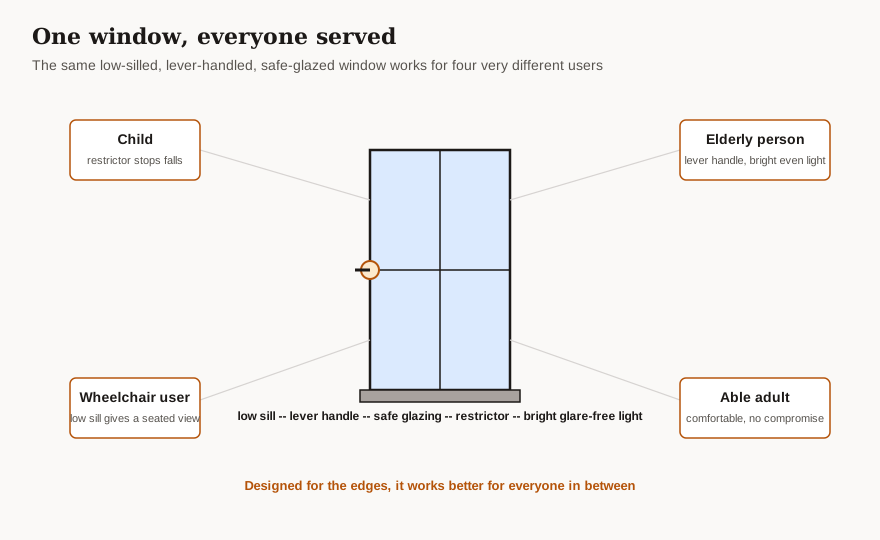
The beauty of UD is that a single set of decisions quietly serves four very different users at once.
| Feature | Child | Wheelchair user | Elderly person | Able adult |
|---|---|---|---|---|
| Low sill (450 to 600 mm) | Sees out, supervised | Sees out while seated | View from the chair | View from sofa |
| Lever handle at 800 to 1000 mm | Small hand can work it | Within seated reach | Easy on weak grip | Effortless |
| Low operating force / motorised | Light enough | Usable seated | No straining | Convenient |
| Safe glazing + restrictor | Cannot fall through | Cannot fall | Fall protection | Peace of mind |
| Glare-controlled bright light | Reads safely | Sees clearly | Ageing eyes get more light | Comfortable |
The legal and code backing
Universal Design in India is not only good practice — it is anchored in law and standards.
- The RPwD Act 2016 establishes the right of persons with disabilities to a barrier-free, accessible built environment, making accessible homes and public buildings a statutory expectation rather than a favour.
- The CPWD Harmonised Guidelines (the harmonised barrier-free standard) set the practical dimensions — reachable controls in the roughly 800 to 1000 mm band, clear floor space for approach, and non-slip, trip-free circulation — that translate the Act into buildable numbers.
- Day-to-day window sizing still follows NBC 2016 (openable area at least about 10 per cent of carpet area) and energy code Eco-Niwas Samhita 2018; UD layers reach, force, sill and safety on top of these, it does not replace them.
Quick do and avoid
| Do | Avoid |
|---|---|
| Lever handles at 800 to 1000 mm | Round knobs, or handles above 1200 mm |
| Sill 450 to 600 mm where a seated view helps | Low sill with no safe glass or restrictor |
| Light cranks or motorised for high or large windows | Stiff windows needing two-handed force |
| Toughened or laminated glass at low and large panes | Plain annealed glass where people can strike it |
| Contrasting, tactile hardware; glare-controlled daylight | White-on-white hardware; unshaded glare |
| Clear, level, trip-free approach | Furniture or rugs blocking the window |
Design the window for the person with the least reach, the lightest grip and the lowest eye level, and you will have designed it for everyone. That is the whole of Universal Design in a single opening.
Related reading
- /guides/window-placement-guide-india — the planning pillar: where and how big windows go.
- /guides/senior-friendly-window-design-india — the ageing lens; the senior counterpart to this all-abilities guide.
- /guides/universal-design-adaptable-homes-india — Universal Design across the whole home.
- /guides/accessible-home-design-india — barrier-free design for every room.
- /guides/types-of-home-windows-india — the window-types pillar (casement, sliding, clerestory and more).
References
- CPWD Harmonised Guidelines (barrier-free built environment): https://www.cpwd.gov.in/Publication/Harmonisedguidelinesdreleasedon23rdMarch2016.pdf
- Rights of Persons with Disabilities (RPwD) Act 2016: https://ssepd.odisha.gov.in/sites/default/files/2024-01/RPWD%20ACT.pdf
- BIS Guide for Using NBC 2016: https://www.bis.gov.in/wp-content/uploads/2022/08/Booklet-Guide-for-Using-NBC-2016.pdf
- Eco-Niwas Samhita 2018 (BEE/ECBC): https://ecbc.in/econiwas.html
- Standard window size by room (CiviConcepts): https://civiconcepts.com/blog/standard-window-size
Export this guide
Related Guides — Deep-dive reading
Window Planning for Senior-Friendly Homes (India): Easy, Safe, Bright
Lower sills for a seated view, low-effort lever and motorised hardware, brighter glare-controlled daylight, and safe glass with fall restrictors for ageing residents.
Windows & GlazingUniversal Design Doors for Indian Homes: Inclusive Doors That Work for Everyone (2026)
How to design and specify doors that serve children, the elderly, pregnant women, the injured and wheelchair users by default - generous width, lever handles, near-flush thresholds, low-force closing, contrast and good lighting - without your home ever looking medical.
Home Doors & EntrancesDesigning Adaptable & Universal-Design Homes
Accessibility, Aging-in-Place, and the Multi-Stage Family — Code, Anthropometrics, and Plan-Stage Discipline for Indian Residential Architects
Room PlanningRelated Tools — Try Free
Cross-Ventilation Analyzer
Estimate airflow and air changes per hour (ACH) from room size, window areas, layout, and local wind — with NBC 2016 Part 8 compliance check.
Ventilation CalculatorApartment Furniture Size Chart
Standard furniture dimensions for Indian apartments — sofas, beds, tables, dining, storage.
Reference ChartChild & Elder Home-Safety Audit
Room-by-room safety audit for households with children or seniors — 10 categories, 70+ checkpoints tagged by audience.
Safety Audit