

Security Maintenance Log for India (2026): The Record That Keeps the System Alive
A ready-to-adapt running record of every service, test, repair and check on your security and fire systems — with a worked example, a blank copy-ready template, and how it proves upkeep to the owner, the insurer and the fire officer.
A security system does not fail on the day it is installed. It fails months later — a camera fogs over, a backup battery dies quietly, a fire-alarm detector clogs with dust — and nobody notices until the moment it was supposed to work. The security maintenance log is the one document that stands between a handed-over system and that slow, invisible decline. It is the running record of every service, test, repair and check done on the security and fire systems, kept for the life of the installation, so upkeep is proven, planned and never quietly missed.
This is the last template in Studio Matrx's professional security resources toolkit, and it sits at the very end of the project lifecycle — the operate stage. The brief, the design, the procurement, the install, the commissioning and the handover are all behind you. What remains is the long life of the system, and the maintenance log is how you keep that life healthy. For the wider story of how these documents fit together, start with the professional security resources guide.
Scope & how to read this. This is a ready-to-adapt professional template, not authoritative, legal or contractual wording. Get professional or legal review before you rely on any record for a claim or a statutory submission. Maintenance frequencies, test methods and pass criteria for fire and life-safety systems come from the code (the National Building Code, SP 7:2026), the equipment manufacturer and the fire officer, or Authority Having Jurisdiction — verify them for your building. This template does not set the standard; it proves you followed it. Where a record holds personal data, such as who accessed footage, handle it per the Digital Personal Data Protection Act, 2023.
What it is, and where it sits
Commissioning and handover prove a system works on day one. The maintenance log proves it keeps working. It is a living document, opened the day the system is handed over and closed only when the system is decommissioned. Every visit — whether a routine service by the annual maintenance contract, or AMC, vendor, a statutory fire-alarm test, a repair after a fault, or a quick in-house check — earns one row.
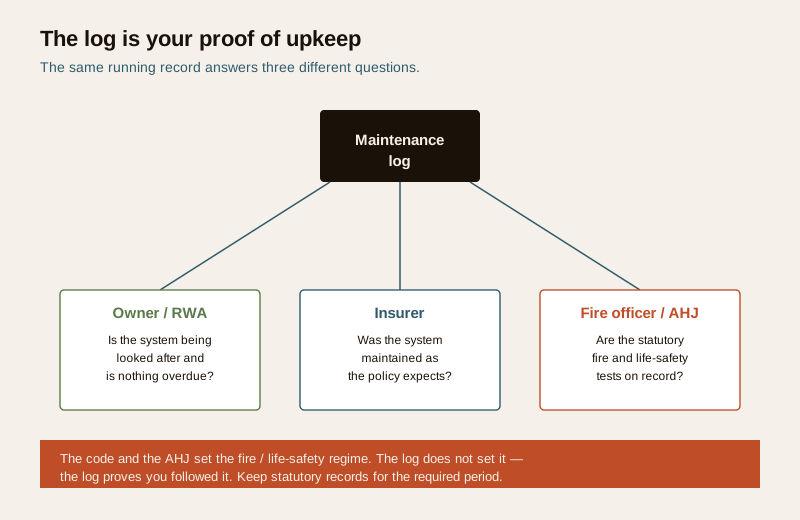
Three parties will one day ask to see it. The owner or RWA wants to know the system is being looked after and that nothing is overdue. The insurer may ask, after a loss, whether the system was maintained as the policy expects. And for fire and life-safety systems, the fire officer wants the statutory test records on file. The same running log answers all three.
The columns
Each row is one activity. The columns capture what was done, to what, by whom, with what result, and when the next one is due. Keep them lean enough that people actually fill them in.
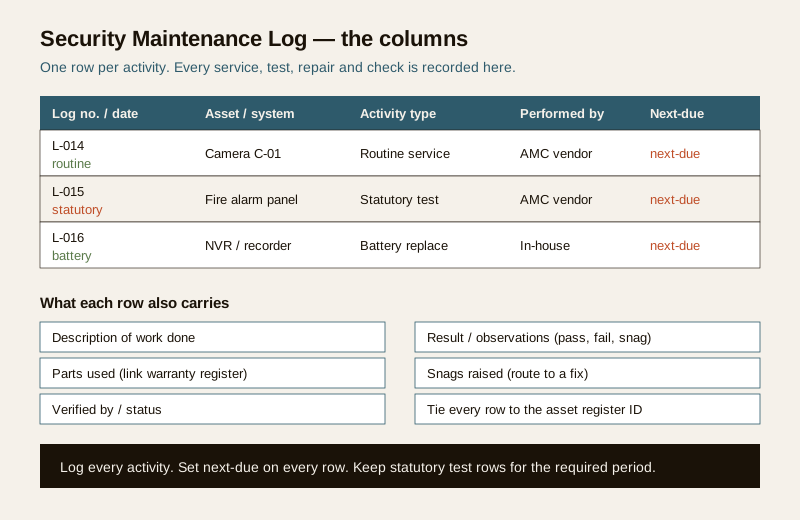
- Log no. / date — a running number and the date of the activity.
- Asset / system — which item this row is about; tie it to the ID in your security asset register so a row always points at a real, identified asset.
- Activity type — routine service, statutory test, repair, inspection, or battery replace. This one word lets you filter the log later.
- Description of work — plainly, what was actually done.
- Performed by — the person and whether they are in-house or the AMC vendor.
- Result / observations — pass, fail, reading taken, or condition noted.
- Parts used — any consumable or spare fitted; cross-reference the warranty register so parts stay under warranty.
- Next-due date — when this activity should happen again. This single column is what keeps nothing from slipping.
- Snags raised — any fault or defect found, and its reference so it can be chased to a fix.
- Verified by / status — who checked and signed off the entry, and whether it is closed or open.
Worked example
Example only — adapt to your project. Values below are illustrative. Dates are shown as placeholders because the real intervals come from the code, the AMC and the manufacturer for your specific equipment. Do not copy these as facts.
| Log no. / date | Asset / system | Activity type | Description of work | Performed by | Result / observations | Parts used | Next-due | Snags raised | Verified by / status |
|---|---|---|---|---|---|---|---|---|---|
| L-014 / (date) | Camera C-01 (main gate) | Routine service | Cleaned lens and housing, checked focus, confirmed recording | AMC vendor | Image clear, day and night OK | None | (per schedule) | None | FM / closed |
| L-015 / (date) | Fire alarm panel FA-01 | Statutory test | Functional test to code and AMC scope; logged panel response | AMC vendor | Passed; one detector slow | e.g. cleaning kit | (per code / AHJ) | S-07: replace detector D-12 | FM + AMC / open |
| L-016 / (date) | NVR-01 (recorder) | Battery replace | Replaced recorder backup battery; confirmed hold-up | In-house | Backup verified | e.g. UPS battery | (per maker) | None | FM / closed |
Notice how the fire-alarm row raises a snag rather than hiding a slow detector, and how each row still names its next-due even when the work passed. That is the log doing its job.
Blank template
Copy this into a spreadsheet, a printed register or your facility software. Keep one continuous log per site so the whole history lives in one place.
| Log no. / date | Asset / system | Activity type | Description of work | Performed by | Result / observations | Parts used | Next-due | Snags raised | Verified by / status |
|---|---|---|---|---|---|---|---|---|---|
| ... | ... | ... | ... | ... | ... | ... | ... | ... | ... |
| ... | ... | ... | ... | ... | ... | ... | ... | ... | ... |
| ... | ... | ... | ... | ... | ... | ... | ... | ... | ... |
Field guide: how to keep it well
Log every activity. If it was serviced, tested, repaired or checked, it gets a row — even a five-minute in-house look. A log with gaps is worse than useless, because it looks complete while hiding the visits nobody recorded.
Tie every row to the asset register. The Asset / system column should carry the same ID as your asset register. Then any asset's full service history is one filter away, and no row floats free of a real, identified item.
Work from the AMC schedule. The log records what happened; the maintenance schedule says what should happen and when. Read the two together. For the discipline of building and running that schedule, see the maintenance logbook and schedule guide.
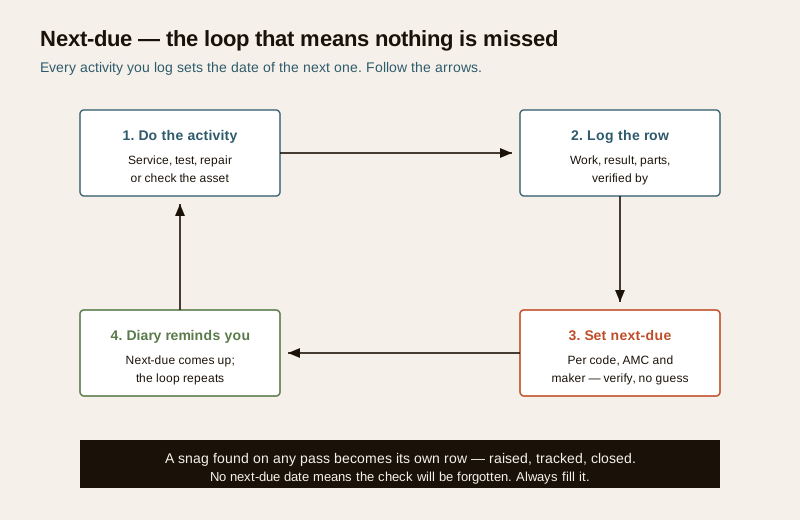
Always set next-due. The single most useful column. When you finish an activity, write the date of the next one — driven by the code, the AMC scope and the manufacturer, not a guess. Put those dates into a diary or reminder so the system tells you, rather than you having to remember.
Keep statutory records for the required period. Fire and life-safety test rows are not just good housekeeping — they are a legal and insurance requirement. The regime is set by the code and the fire officer; the log is your proof that you met it. Keep those records for the period the AHJ and your insurer require, and never let a statutory test go undocumented. Your fire-alarm testing checklist feeds its results straight into these rows.
Raise snags, then close them. A fault found on any visit becomes its own entry with a reference, so it is chased to a repair rather than forgotten. An open snag on a life-safety system is a priority, not a note for later.
Common mistakes
- No log at all — maintenance may happen, but nothing proves it, so upkeep is invisible to the owner, insurer and fire officer alike.
- Statutory tests undocumented — the test was done but never written down, which for fire and life-safety can be as serious as not testing.
- Next-due not tracked — checks quietly lapse because nothing scheduled the next one.
- The log lost — kept in one person's notebook or phone, it leaves with them. Keep it in site records, backed up, so the next facility manager or committee inherits it whole.
How it connects to the other documents
The maintenance log is the hub the operate-stage documents feed into and out of:
- The asset register gives every row its asset ID, so the log records history against real items.
- The warranty register tells you which parts and repairs are still under cover before you pay for them.
- The fire-alarm testing checklist and other testing aids produce the results you record as statutory-test rows.
- The maintenance audit guide uses this log as its primary evidence — an audit checks that the log is complete, current and honest.
- And the maintenance logbook and schedule guide sets the schedule that tells you what to log and when.
A word to close the toolkit
This is the last page of the professional security resources toolkit, and it is a fitting place to end — because a maintenance log is where all the earlier documents finally come to rest and start to work. The toolkit took a project from a blank brief, through design, procurement, installation, commissioning and handover, to a living, well-kept system. The register names every asset, the warranties protect them, the tests prove them safe, and this log keeps the whole thing breathing year after year.
It is easy to see paperwork as bureaucracy — a tax on the real work of cameras and cabling and alarms. It is not. Good security is designed, documented, verified and maintained, and each of those verbs leaves a record. Those records are how care is made real and handed on: from the consultant to the installer, from the installer to the owner, from this year's committee to the next, from a system that merely works today to one that will still work on the night it is needed. Fill the log in. That is the whole point.
References
- National Building Code of India (SP 7:2026), Bureau of Indian Standards — the source for fire and life-safety maintenance and testing requirements; verify the current edition and clauses for your building at https://www.services.bis.gov.in/
- Manufacturer maintenance documentation for your specific cameras, recorders, alarm and fire panels — the authoritative source for service intervals, test methods and parts; follow it over any generic schedule.
- Digital Personal Data Protection Act, 2023 — where a maintenance record holds personal data, such as who accessed footage, keep access controlled and retention limited.
- Your fire officer or Authority Having Jurisdiction, and your insurer, for the statutory test regime and the period for which records must be retained.
This is an educational, ready-to-adapt template, not legal, contractual or engineering advice. Fire and life-safety maintenance is a qualified professional task governed by the code and the AHJ — engage licensed professionals and verify all requirements for your specific building.
Export this guide
Related Guides — Deep-dive reading
Professional Security Resources for India (2026): The Documents Behind a Secure Project
The overview and map of the whole professional-deliverable toolkit — the brief, schedules, BOQ, checklists, handover pack and logs a consultant, designer, PMC or facility manager produces across a security project, and how each document connects to the next.
SecurityAccess Control Testing Checklist for India (2026): Every Door Opens and Locks as Designed
A ready-to-adapt per-door and system checklist to verify an access-control installation at commissioning and as a periodic check, with the egress and fire-to-release life-safety tests that must always pass before sign-off.
SecuritySecurity Maintenance Logbook in India (2026): The Record That Proves It Was Done
How to keep a simple security maintenance logbook at home or in an apartment building in India: the one record that proves the system is maintained, supports warranty, AMC and insurance claims, satisfies statutory fire-testing rules, catches the device that keeps failing, and survives a change of vendor or resident.
SecurityRelated Tools — Try Free
Interior Contract Clause Checklist
16 sections and 98 checkboxes covering scope, BOQ, milestones, penalties, warranty, and disputes.
Contract ChecklistAccess-Control Battery-Backup Calculator
Size the standby battery so an access system keeps running through a power cut, with an egress life-safety note.
Battery BackupSecurity Vendor Evaluation Scorecard
Rate a CCTV/security installer or guarding agency across eight weighted criteria for a hire / negotiate / walk-away verdict.
Vendor Scorecard