
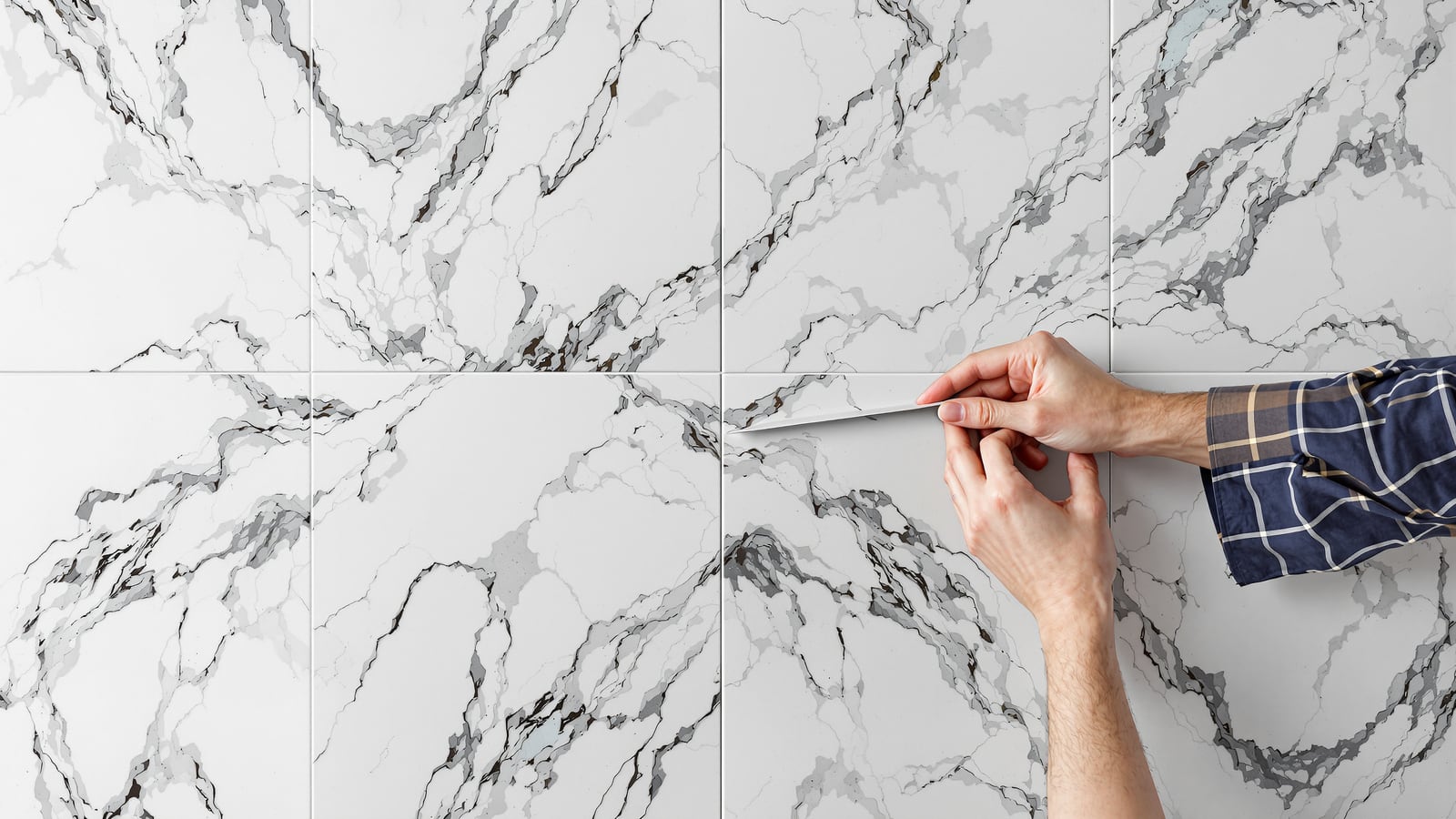
PVC Wall Panels for Bathrooms in India: Waterproof Dry-Fix Cladding Over Old Walls
A brand-neutral guide to PVC wall panels and cladding for Indian bathrooms — how they dry-fix over existing tiles, hollow-core vs foam-core, the look vs real tiles, durability and heat limits, ₹/sq ft cost, install and where they beat (and lose to) WPC and tiles.
There is one bathroom upgrade that needs no water shut-off, no chipping hammer, no rubble bags on the landing and no three-week wait: PVC wall panels. They dry-fix straight over your existing tiles or plaster, hide cracked grout and dated tiles behind a clean waterproof surface, and a competent fitter can wrap an average bathroom in a single day. For renters who cannot chip walls, for a resale flat you want to freshen cheaply, or for a quick renovation between tenants, they are often the smartest ₹ you will spend.
They are also widely oversold. A PVC panel is a plastic cladding, not a stone, and it behaves like plastic — it dents, it can bow near heat, and a bad install traps damp behind it. This guide is the honest version: what the panels actually are, hollow-core versus foam-core, how the look really compares to tiles, the durability and heat limits nobody mentions on the shop floor, real ₹/sq ft numbers, the install sequence, and a clear-eyed comparison against WPC panels and against genuine ceramic. If you are choosing between panels and re-tiling, read this alongside our bathroom wall tiles guide.
What a "PVC wall panel" actually is
The material is rigid polyvinyl chloride — the same polymer family as your drainage pipes and window profiles — extruded into flat boards typically 250–300 mm wide, 5–10 mm thick and 2.4–3.0 m long, with a tongue-and-groove edge so panels lock side to side into a continuous face. The decorative surface is a printed and laminated film (marble, wood, plain matt or high-gloss) protected by a clear top layer.
PVC is a closed-cell, non-absorbent plastic: water does not soak into it the way it wicks into a cement board or an unglazed tile edge. That is the whole appeal — the panel face is genuinely waterproof and wipes clean. The vulnerability is never the panel itself; it is the joints, the edges and whatever is trapped behind it.
There are two constructions you must be able to tell apart, because shops sell both as "PVC panel" at very different prices and lifespans.
| Type | Core structure | Thickness | Feel & strength | Best for |
|---|---|---|---|---|
| Hollow-core | Extruded with internal ribs/air channels (like a mini box-section) | 5–8 mm | Light, flexes; ribs can telegraph; dents on knocks | Ceilings, low-traffic walls, tight budgets |
| Foam-core (WPVC board) | Solid PVC-foam board, no hollows | 5–18 mm | Rigid, screw-holdable, feels like a board | Bathroom walls behind wet zones, shelving |
If a bathroom wall will get knocked, leaned on or splashed at close range, buy foam-core (WPVC) board, not the cheap hollow ribbed panel. The hollow panel is fine for a ceiling; on a wall it dents and the ribs show through in raking light.
The look: honest comparison with tiles
Modern PVC prints have improved enormously — a matt marble or concrete-look foam board at arm's length reads convincingly. The giveaways are close-up and tactile, not colour:
- Seams. Tongue-and-groove leaves a faint vertical line every 250–300 mm. Tiles have grid grout lines you expect; panel seams sit in places a tiled wall would not, so the eye can catch them.
- Reflection. High-gloss panels reflect like plastic, not like glazed ceramic — they can look "wet-plastic" under LED. Matt finishes hide this far better and are the safer choice.
- Temperature and sound. PVC is warm and slightly hollow to the tap; tile is cool and dead-solid. Not visible, but felt.
- Edges and corners. Panels need trims (internal/external corner, end cap, skirting). Cheap trims are the single biggest tell of a panel job. Budget for good ones.
For a rented flat, a quick flip or a utility second bathroom, the look is more than good enough. For a master bathroom you will live in for a decade, weigh it honestly against tiles.
Durability, heat and the real limits
This is where honesty matters. PVC panels are waterproof and low-maintenance, but they are not indestructible and they have two hard limits.
- Impact. Foam-core resists a knock; hollow-core dents and the dent stays. A shampoo bottle dropped edge-on can mark a hollow panel. Neither takes wall-mounted heavy fittings without a backing batten.
- Heat and sunlight. PVC softens and can bow above roughly 50–60°C. Keep panels away from a geyser flue, a wall-hung heater's hot zone, and direct afternoon sun on a west-facing bathroom window reveal. Cheap panels can also yellow under strong UV over years.
- Scratching. The printed film scratches; you cannot sand and refinish it like you re-polish stone. A gloss finish shows every scratch — another reason matt wins.
- What is trapped behind. Panels fixed with adhesive dabs over a damp, mouldy or leaking wall simply hide the problem and let it grow in the dark cavity. Fix leaks and dry the wall first. If the substrate is unsound, batten out and ventilate the gap rather than gluing flat.
- Fire behaviour. PVC is combustible and emits smoke; specify panels with a declared low flame-spread rating and never clad the immediate zone around a flame or high-heat appliance. Follow the fire provisions of NBC 2016 for internal finishes.
A PVC panel is a raincoat, not a wall. It keeps splash off a sound, dry substrate brilliantly. It cannot cure a live leak, structural damp or a wall that is already wet — those need proper waterproofing first.
Cost: what you actually pay in ₹
Panels win on installed cost, mainly by saving demolition and labour. Indicative 2026 ranges (material plus fixing, excluding GST):
| Item | Typical rate | Notes |
|---|---|---|
| Hollow-core PVC panel | ₹35–70 / sq ft | Ceiling-grade; thin, flexes |
| Foam-core WPVC board | ₹80–160 / sq ft | Wall-grade; marble/gloss prints dearer |
| Adhesive + trims + skirting | ₹15–35 / sq ft | Corners, end caps, silicone — don't skimp |
| Fixing labour | ₹25–50 / sq ft | 1 day for a small bathroom |
| Installed, foam-core wall | ₹130–230 / sq ft | vs ₹250–450+ for re-tiling with demolition |
For a typical 5 ft x 7 ft bathroom with roughly 250–300 sq ft of wall, expect ₹35,000–65,000 installed for a good foam-core job — often less than half a full strip-and-retile once you count breaking, disposal, waterproofing and tiling labour. See the money and sequencing in the bathroom renovation guide.
Installation: the dry-fix sequence
The appeal is that it is dry, fast and reversible-ish. The risk is trapped moisture and lifting edges. Done right it looks like this:
Key install rules that separate a five-year job from a five-month one:
- Adhesive matters. Use a solvent-free PU or MS-polymer adhesive; solvent glues can attack the panel or off-gas behind it. Full-perimeter beads plus a serpentine centre — not four dabs.
- Seal the perimeter with neutral-cure silicone, not the acidic bathroom silicone that skins fast but bonds poorly to plastic. Every top edge, corner, floor junction and pipe penetration must be sealed — water gets behind at the edges, never through the panel.
- Leave a movement gap at floor and ceiling (hidden by trims) so thermal expansion does not buckle the run.
- Do not seal the panel to the floor tile in a way that dams water — water that gets behind must be able to drain and dry, or you have built a wet cavity.
PVC vs WPC vs tiles: which to choose
| Factor | Hollow PVC panel | Foam-core WPVC | WPC panel | Ceramic tiles |
|---|---|---|---|---|
| Waterproof face | Yes | Yes | Yes | Yes (needs grout care) |
| Fits over old wall (dry) | Yes | Yes | Yes | No (chip & retile) |
| Impact / dent resistance | Weak | Medium | Good | Excellent |
| Heat tolerance | Low (~50°C) | Low–med | Med | Excellent |
| Look, up close | Plasticky | Fair–good | Good | Best |
| Installed ₹/sq ft | 90–160 | 130–230 | 180–320 | 250–450+ |
| Lifespan (bathroom) | 5–8 yr | 8–12 yr | 10–15 yr | 20+ yr |
| Renter / quick flip | Best value | Great | Good | Overkill |
The decision is really about how long you will keep it and how hard the wall gets used:
- Renting, or freshening for resale, on a budget, fast: foam-core PVC. Reversible-ish, cheap, one-day job.
- Own the flat, moderate use, want board strength and a better look: step up to WPC wall panels — denser, more impact-resistant, holds fittings better.
- Forever home, wet shower zone, hard water, decade-plus horizon: tiles remain the benchmark for a master bath — see the bathroom wall tiles guide. Panels shine on the dry walls, a guest bath, or a utility WC.
A common, sensible hybrid in Indian flats: tile the wet shower enclosure and panel the dry walls and WC area — you get tile durability where it is splashed hardest and panel speed and economy everywhere else.
References
- National Building Code of India (NBC) 2016, Part 4 (Fire & Life Safety) — flame-spread and smoke provisions for internal wall finishes and plastics.
- IS 12436 — Specification for extruded rigid PVC (uPVC) products; general grade and property benchmarks for rigid PVC boards and profiles.
- IS 14735 / relevant BIS guidance — unplasticised PVC building products and testing for rigid PVC.
- CPWD Specifications — accepted materials, adhesives and fixing practice for wall lining and cladding in building works.
- IGBC / GRIHA — indoor environmental and low-VOC material guidance relevant to adhesives and finishes used with panelling.
Export this guide
Related Guides — Deep-dive reading
Porcelain, Ceramic & Sintered-Stone Facade Cladding in India: A Practical Guide
Thin large-format porcelain and sintered-stone slabs can clad a building with the look of marble, concrete or weathered steel at a fraction of stone's weight — but on a facade, the fixing system is a life-safety decision, not a finish choice.
Building FacadesShower Niche India: Building a Recessed Wall Shelf That Holds Shampoo Without Ever Leaking
A shower niche is a shelf you carve into the wall instead of screwing onto it. Done right it is invisible and dry for decades; done wrong it is the single most common source of seepage into the room behind. Here is how to size it, which wall you may cut, and how to waterproof, slope and tile the recess so it never leaks.
BathroomsEpoxy Grout vs Cement Grout for Tiles in India: Which to Specify (2026)
A plain-English guide to tile grouts for Indian homes: what grout does, how cementitious grout compares with epoxy grout on cost, stain and water resistance, hygiene and durability, and exactly where each one belongs - kitchens, bathrooms, pools, dry rooms and more.
Building MaterialsRelated Tools — Try Free
Bathroom Renovation Cost Calculator
Cost to renovate an existing bathroom with a replace-vs-keep model — demolition, re-waterproofing, tiles, fittings and the money saved by keeping items.
Bathroom CalculatorWindow Material Comparison Tool
Compare uPVC, aluminium, wood, steel and composite windows on cost, life, upkeep and insulation.
CompareDoor Material Comparison Tool
Compare 2–4 door materials on cost, durability, maintenance, security and moisture resistance.
Comparison Tool