
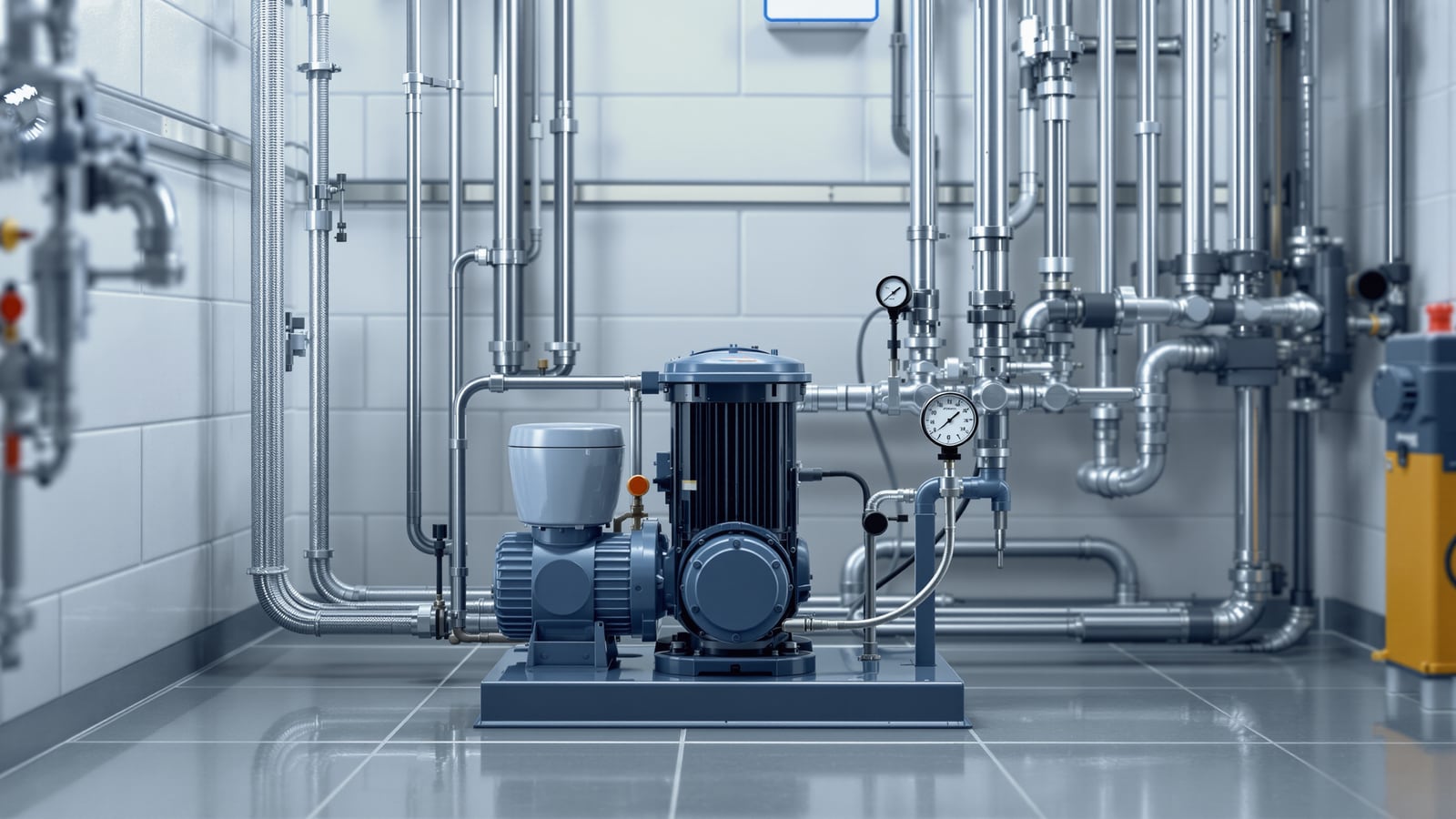
Pressurized Plumbing System in India: Booster Pumps, Pressure Vessels & VFD Supply
How a pump-driven, hydro-pneumatic water supply delivers even, strong pressure at every outlet — constant-pressure and booster pumps, pressure vessels, VFD drives, target pressures in bar, and where a pressurised system beats plain gravity in an Indian home.
A pressurized plumbing system replaces the gentle push of an overhead tank with a pump that delivers strong, even pressure to every outlet — the difference between a rain shower that drizzles and one that actually rains. Instead of relying on how high the water is stored, it relies on machinery to guarantee the pressure, no matter which floor you are on or how many taps run at once.
This is a system guide, not a shopping list: it explains how a pump-driven, hydro-pneumatic supply is put together, the target pressures to design for, and where it earns its keep in an Indian home. It sits under the flagship plumbing systems guide for India as one of the two great supply strategies; its sibling is the gravity-fed plumbing system guide.
Gravity gives you the pressure your rooftop happens to provide. A pressurised system gives you the pressure you choose — set on a controller, held steady by a pressure vessel, and available equally on the ground floor and the top floor.
Why pressure, not just water
Every fixture has a minimum pressure below which it misfits its job. A plain tap will dribble happily at almost nothing, but a modern bathroom is full of fixtures that were designed abroad for mains pressure and simply do not perform on Indian gravity heads.
- Rain showers and body jets want roughly 1.5–2.5 bar to spray as intended; on a weak head they weep.
- Instant/tankless geysers often need 0.5–1.0 bar just to fire their flow switch.
- Multi-jet, thermostatic and concealed diverter showers lose pressure at every internal turn and need a firm supply behind them.
- Simultaneous use — two showers plus a kitchen tap — divides a weak gravity supply until nobody is happy.
Remember the rule of thumb: 1 bar equals roughly 10 metres of water head. An overhead tank sitting three metres above a first-floor shower gives only about 0.3 bar — fine for a bucket tap, feeble for a rain head. That single number is why so many Indian homes with beautiful bathrooms still feel disappointing, and why a pump is the fix.
To size a pump to the flow your fixtures actually demand, use the Studio Matrx shower pump calculator and cross-check the litres-per-minute each outlet draws with the shower water flow calculator.
When you actually need a pressurised supply
Not every home needs one. Reach for a pressurised system when one or more of these is true.
- Rain showers, body sprays or spa fixtures are on the wish-list — these are the single most common trigger.
- Top-floor or upper-floor bathrooms sit too close to the tank for gravity to build useful head.
- Multiple outlets run at once in a larger family home and the pressure must not collapse when a second tap opens.
- Direct-pressure homes with no overhead tank at all, where a pump-and-vessel set boosts the sump or municipal supply straight into the house.
- Long horizontal pipe runs in a sprawling bungalow, where friction eats the little head gravity gives.
- Weak or erratic municipal pressure, where a booster on a stored sump evens out the supply.
If none of these apply — a single-storey home, ordinary taps, a tank comfortably above every fixture — a simpler gravity layout may serve you better and cheaper. That trade-off is the subject of the dedicated comparison; here we assume you have decided pressure is worth it and want to build it right.
The building blocks of a pressurised system
A pressurised supply is an assembly of a few well-understood components. Get the combination right and it runs silently for years; get it wrong and it hammers, cycles and burns out.
The pump
At the heart is a pump drawing from a stored source — almost always an underground sump or ground-level tank, never directly off the municipal main (drawing suction on the main is prohibited by most water utilities and can pull in contamination). Common types in Indian homes:
- Pressure booster / self-priming pumps — a jump up from a plain transfer pump, holding a set pressure at the outlets.
- Multistage centrifugal pumps — several impellers in series that build high, smooth pressure with low noise, the workhorse of quality booster sets.
- Constant-pressure pumps — a pump paired with electronics that hold one chosen pressure regardless of how many taps are open.
The pressure vessel (hydro-pneumatic tank)
A pressure vessel, also called a hydro-pneumatic or bladder / diaphragm tank, is the quiet hero. Inside is a rubber bladder holding water against a cushion of pre-charged air. It does two vital jobs:
- Stops the pump short-cycling. When you open a tap briefly, the vessel supplies that small draw from its stored pressurised water, so the pump does not switch on and off every few seconds — the fastest way to kill a pump and its switchgear.
- Absorbs water hammer and smooths the pressure so outlets feel steady rather than pulsing.
The pre-charge air pressure is set slightly below the pump cut-in pressure. A larger vessel means fewer pump starts and a longer motor life.
The controls — pressure switch or VFD
How the pump knows when to run defines the whole system's character.
- Pressure switch (on/off). The simplest control: the pump kicks on at a cut-in pressure and off at a cut-out pressure, with the vessel bridging the gap. Cheap and robust, but pressure visibly rises and falls between those two set-points.
- VFD — Variable Frequency Drive (constant pressure). A VFD continuously varies the motor speed to hold one target pressure no matter the demand — a trickle to a basin or a full rain shower feels identical. It is the premium answer: even pressure, soft starts that spare the motor and the plumbing, energy saved at part-load, and much quieter running. A small vessel is still fitted alongside a VFD to handle tiny draws and protect against rapid cycling.
Target pressures — what to design for
Pressure is the whole point, so set numbers, not vibes. The values below are indicative design targets for Indian homes; confirm the exact requirement of each fixture against its manufacturer's data sheet, because a specific rain head or thermostatic mixer may ask for more.
| Outlet / fixture | Comfortable working pressure | Notes |
|---|---|---|
| Ordinary pillar tap / bucket fill | 0.2–0.5 bar | Gravity often enough |
| Wash basin mixer, kitchen sink | 0.5–1.0 bar | Below this, feels weak |
| Overhead / standard shower | 1.0–1.5 bar | The everyday comfort band |
| Rain shower, body jets | 1.5–2.5 bar | The usual reason to go pressurised |
| Instant / tankless geyser | 0.5–1.0 bar | Needs flow to fire the switch |
| Whole-house design pressure | ~2.0–3.0 bar | Keep static below fitting limits |
Two guardrails matter as much as the target. First, keep the static pressure at any fixture below about 3–4 bar — most taps, mixers and flexi-hoses are rated to roughly this, and higher pressure shortens their life and invites leaks; fit a pressure-reducing valve (PRV) on lower floors of a tall home where pressure would otherwise stack up. Second, size the pump for flow and pressure together: a pump that hits 2 bar with one tap open but sags when three run has been sized for pressure alone. Use the shower pump calculator to add up simultaneous demand before choosing a model.
Pressurised vs gravity — the honest trade-off
Neither system is simply "better"; they solve different problems. This table is a quick orientation — the full head-to-head lives in the dedicated comparison guide.
| Factor | Gravity-fed | Pressurised (pump-driven) |
|---|---|---|
| Pressure source | Tank height (head) | Pump + pressure vessel |
| Pressure at top floor | Weak, falls near the tank | Strong and even everywhere |
| Rain showers / body jets | Usually inadequate | Designed for this |
| Runs during a power cut | Yes (tank feeds by gravity) | No, unless on inverter/DG |
| Moving parts to maintain | Very few | Pump, vessel, controls |
| Running cost | Near zero | Electricity + servicing |
| Water hammer / noise risk | Low | Managed by vessel + VFD |
| Typical indicative kit cost | Lowest | ₹25,000 to ₹1,20,000+ per set |
The two are not mutually exclusive. A very common Indian arrangement is gravity for the basic taps and a booster only for the pressure-hungry bathrooms, or a whole-house booster fed from the same sump that would otherwise fill the overhead tank. For the wider context of both approaches, see the plumbing systems guide for India and the sibling gravity-fed plumbing system guide.
Getting it right — practical notes
- Feed from stored water, not the mains. Boost from a sump; direct suction on the municipal main is usually prohibited and risks contamination.
- Match the pump to a real demand total, adding the simultaneous flow of the outlets that will run together — not a single fixture.
- Always fit a pressure vessel, even with a VFD, to stop short-cycling and cushion hammer.
- Protect the low floors of a tall home with a PRV so static pressure stays within fitting limits.
- Plan for power cuts — a pressurised home has no water when the pump is off unless the pump is on an inverter or DG line, or a small gravity tank backs it up.
- Leave access — the pump, vessel and controller need servicing space, a drain and isolation valves.
- Keep bathrooms out of scope here. Fixture selection, geysers and hot-water pressure balancing live in the Bathrooms hub — start at the bathroom plumbing guide.
Treat every pressure figure and pump size above as an indicative starting point. Final selection of pump duty, vessel volume and PRV settings should be confirmed against your fixtures' data sheets, your local water bye-laws and a licensed plumber or pump supplier.
References
- National Building Code of India (NBC) 2016, Part 9 — Plumbing Services (water supply, pumping and distribution)
- CPHEEO Manual on Water Supply and Treatment, Ministry of Housing and Urban Affairs (design flows and pressures)
- IS 2065 — Code of practice for water supply in buildings
- IS 1172 — Code of basic requirements for water supply, drainage and sanitation
- IS 15778 (CPVC) and IS 4985 (uPVC) — plastic piping standards for pressurised supply
- Individual pump, pressure-vessel and fixture manufacturers' data sheets for exact duty points and minimum working pressures
- Local municipal / water-utility bye-laws on boosting, direct mains suction and storage (vary by city and state)
Export this guide
Related Guides — Deep-dive reading
Water Pressure Booster Pump India: Fix Weak Shower Flow Before You Buy a Rain Head (2026)
Gravity from an overhead tank cannot run a rain shower or body jets — especially on the top floor. This is the honest India-first guide to pressure booster pumps: pressure-switch vs flow-switch, single-fixture vs whole-house sizing by head and LPM, dry-run protection, noise, mounting, electricals and real rupee ranges.
BathroomsBody Jets Shower India: Body Spray Massage Systems, the Flow & Pressure They Really Need, and What It Costs (2026)
Wall-mounted horizontal body jets turn a shower into a spa massage — but every jet is a thirsty extra outlet. How many jets, at what heights, the big pump and geyser they force, the pipe sizing and concealed valves you must plan before tiling, the water and running cost, and exactly who it is worth it for.
BathroomsLow-Rise Plumbing Systems in India: Houses, Villas & Buildings up to 4 Storeys
How plumbing is organised for independent houses, villas and low-rise buildings up to about four storeys — the simple overhead-tank gravity model, when a small booster is still worth adding, single- versus multi-floor distribution, and the simpler stack and venting a low building can get away with.
PlumbingRelated Tools — Try Free
Shower Pump Calculator
Check whether your shower needs a pressure-boost pump and what size — available vs required pressure from your tank height or supply.
Bathroom CalculatorShower Water Flow Calculator
Shower water use per shower, day and month by head type, plus a pressure-adequacy check for your tank height or pump and low-flow savings.
Bathroom CalculatorRainwater Tank Sizer
How big should your rainwater tank be? Computes annual harvest, recommended tank capacity in litres, water-bill savings, and payback — for 10 Indian cities.
RWH Calculator