
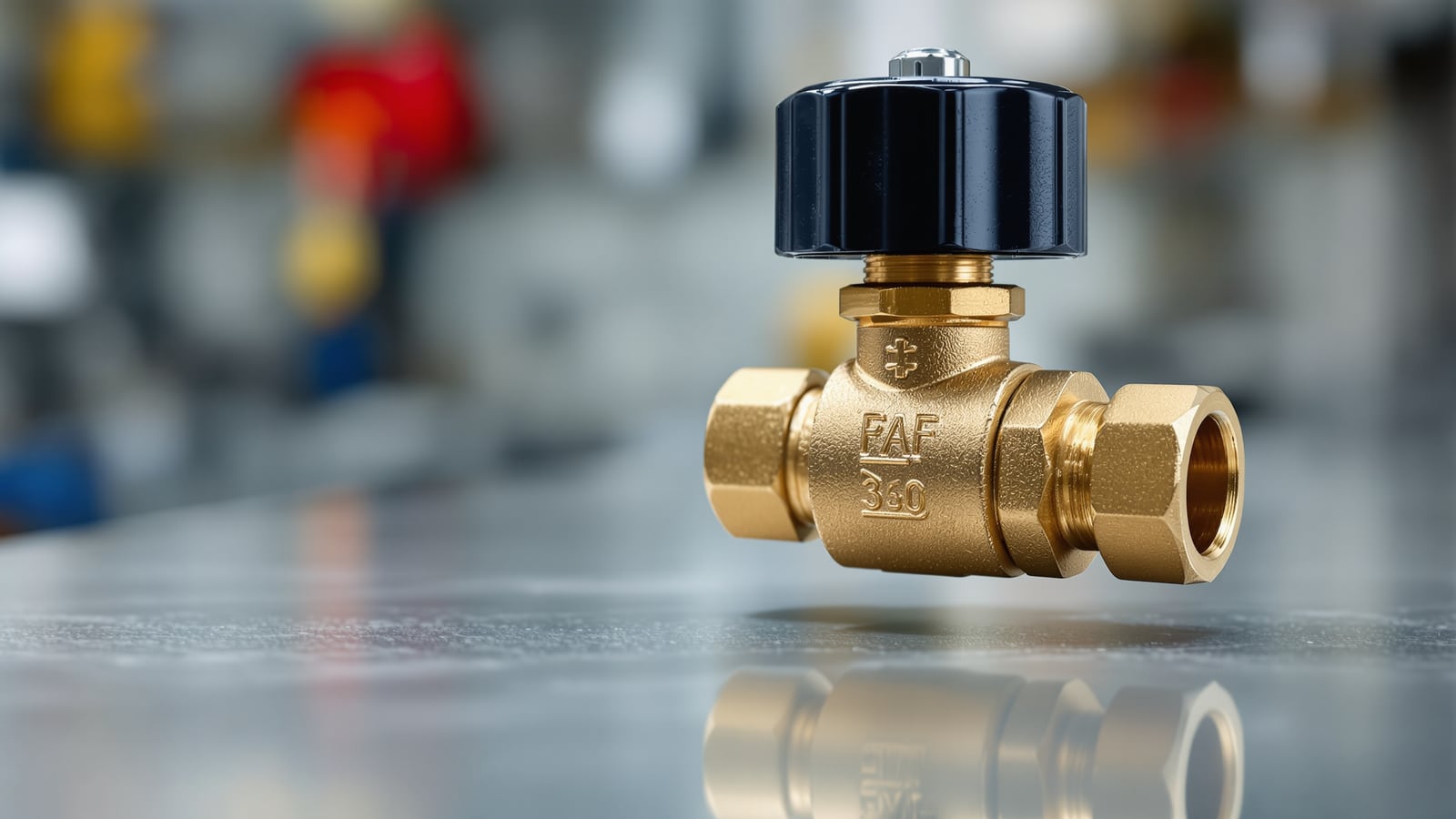
Pressure Reducing Valves (PRV) in India: How They Work, Setting Outlet Pressure, Sizing & Cost
The spring-and-diaphragm valve that drops a high, variable inlet pressure to a steady, safe downstream pressure — how a PRV regulates, why every high-rise and municipal-fed home needs one before its fixtures and geysers, how to set the outlet in bar, where to install it, and how to size, maintain and cost it in Indian work.
A pressure reducing valve (PRV), also called a pressure regulating valve, does one job supremely well: it takes a high and often fluctuating inlet pressure and delivers a lower, constant, pre-set pressure downstream — regardless of how the supply pressure swings above it. It is the quiet component that stops a tall building or an aggressive municipal main from hammering your taps, cartridges, flexible connectors and geysers to an early death.
This is a professional's guide to specifying, setting and installing PRVs in Indian work. It sits under the Studio Matrx plumbing valves guide and is the companion to the high-rise plumbing systems guide, where pressure zoning makes a PRV mandatory, and the pressurized plumbing system guide, which explains the pumped, pressurised supply a PRV is there to tame.
What a PRV controls: static and dynamic pressure
Every fixture, cartridge and appliance in a plumbing system has a working pressure it is designed for. Most Indian residential fittings — mixers, health faucets, flexible braided connectors, cistern inlet valves, instant and storage geysers — are happy at roughly 1.5 to 3 bar and are stressed or damaged above about 4 to 5 bar.
The problem is that real supply pressure rarely stays in that band on its own:
- A municipal main in a metro can deliver bursts well above 4 bar at certain hours, especially at night when draw-off is low.
- A pumped or hydro-pneumatic system delivers whatever the pump curve and cut-out pressure dictate.
- A high-rise gravity or pumped supply builds roughly 1 bar for every ~10 m of height below the tank or the pump. A tank 60 m above the ground-floor toilet imposes about 6 bar of static head on that toilet's cistern valve — far beyond what it is built for.
A PRV clamps all of that to a set outlet — say 3 bar — so the fixtures below only ever see the pressure they were designed for.
Uncontrolled pressure is the single most common hidden cause of dripping cartridges, weeping flexible connectors, water-hammer bangs and burst geyser inlet hoses. In most of these failures the fitting is blamed; the real culprit is a supply that was never regulated down to the fixture's rated band.
How a pressure reducing valve works
A direct-acting PRV is a self-contained mechanical regulator — no power, no signal, just a balance of forces. Inside the body:
- An adjustable spring presses down on a diaphragm (or piston), which is linked to a valve seat and stem.
- The spring force tries to hold the valve open; the downstream water pressure, acting up on the underside of the diaphragm, tries to push it closed.
- The valve settles at whatever opening makes those two forces balance. That balance point is a fixed downstream pressure, set by how far you have wound the spring in.
When downstream demand rises (a tap opens), outlet pressure dips, the spring wins, the valve opens wider to restore the set pressure. When demand stops, outlet pressure rises against the diaphragm, the valve throttles closed. Critically, the regulation is referenced to the outlet, so the set downstream pressure holds steady even as the inlet pressure swings — the essence of pressure regulation as opposed to simple throttling.
Larger commercial PRVs are often pilot-operated: a small pilot valve senses downstream pressure and modulates a diaphragm chamber that drives the main valve, giving finer control and higher flow. The principle is identical — a diaphragm balancing the set outlet against spring or pilot force.
Setting the outlet pressure
Setting a PRV is a deliberate, gauged operation — not a guess:
- Fit a pressure gauge downstream (many domestic PRVs have a gauge port or an integral gauge). You cannot set what you cannot read.
- Choose a target for the fixtures below. A typical Indian residential set point is 2.5 to 3 bar — comfortable flow through mixers and showers, safe for geysers and cistern valves. Storage geysers and premium thermostatic showers are content in this band; check the appliance's rated maximum.
- Set under no-flow (static) conditions first, then open a tap and confirm the running (dynamic) pressure has not collapsed — if it sags badly, the PRV is undersized or the set point is too low for the demand.
- Wind the setting screw in to raise the outlet, out to lower it, watching the gauge settle. Approach the target from below to avoid overshoot.
A useful rule of thumb: the PRV needs a pressure drop across it to regulate — the inlet must sit meaningfully above the outlet (commonly at least ~1 bar higher). If inlet and outlet are almost equal, the valve simply sits fully open and does nothing.
Do not chase the highest pressure the fixtures will "just about survive". Set for comfort and longevity — 3 bar delivers a strong shower and adds years to every cartridge, hose and geyser downstream. Note the set value on the valve and on the record drawing.
Where a PRV is installed
Placement follows the pressure it needs to cut:
- On the main inlet to a house, flat or villa fed by an over-pressured municipal main or a hydro-pneumatic pump — one PRV protects the whole property. This is the default domestic position.
- Immediately before a geyser where only the hot line or that appliance is pressure-sensitive, or as a second, tighter regulation stage.
- Per pressure zone in a high-rise — the defining use. This deserves its own section below.
Install it after the main stop valve and any strainer, with a strainer/Y-filter upstream to keep grit off the seat, an isolation valve each side for service, and a downstream gauge. Mount per the maker's arrow for flow direction, in an accessible position — a PRV is a serviceable part.
High-rise pressure zoning — the classic use
In a tall building fed from an overhead tank or a booster set, static pressure grows with depth below the source. Left unregulated, the lowest floors would see crushing pressure while the top floors see just enough. The standard answer is pressure zoning: the riser is broken into vertical zones of a handful of floors each, and every zone is fed through its own PRV that knocks the accumulated head back down to a working ~3 bar for the fixtures on those floors.
Zoning is not optional in a genuine high-rise: it is how the high-rise plumbing systems guide keeps every floor within the same comfortable pressure band, and it is why a tower has PRVs by the dozen while a bungalow may need just one.
Sizes, materials and connection
A PRV is sized on flow and connection, not just pipe diameter — an over-large valve regulates poorly at low flow, an over-small one starves the branch. Match the rated flow to the peak demand it serves.
| Nominal size | Body material | Connection | Typical use | Indicative price |
|---|---|---|---|---|
| 15 mm (½") | Forged/DZR brass | Threaded | Single geyser / single flat inlet | ₹1,200 to ₹3,500 |
| 20–25 mm (¾"–1") | Forged/DZR brass | Threaded | Villa or apartment main inlet | ₹2,500 to ₹8,000 |
| 32–50 mm (1¼"–2") | Brass / bronze / gunmetal | Threaded or flanged | Small riser / zone branch | ₹8,000 to ₹35,000 |
| 65–150 mm | Cast iron / ductile iron, SS trim | Flanged | High-rise zone / pilot-operated main | ₹45,000 to ₹2,50,000+ |
Notes on specification:
- DZR (dezincification-resistant) brass is the sensible default for potable domestic PRVs; plain brass can dezincify in aggressive Indian water.
- Diaphragm and seals are the wearing elements — EPDM/NBR — and a valve with a replaceable cartridge is far cheaper to maintain than one you scrap whole.
- Stainless or bronze trim on larger valves resists erosion at the seat where the pressure drop is taken.
- Prices are indicative and vary widely by brand, DZR grade and whether a gauge and strainer are integral; confirm current quotes locally.
Maintenance and common failures
- Clean the upstream strainer periodically — grit lodged on the seat is the number-one cause of a PRV that will not hold its set pressure or that passes (creeps) upward at no flow.
- Watch for creep. If the downstream gauge slowly climbs above the set point at zero flow, the seat is not sealing (debris or a worn seat) — clean or replace the cartridge.
- Replace the diaphragm/cartridge on schedule for the model; a hardened diaphragm loses regulation and can chatter.
- Thermal expansion. On a closed system with a PRV (which acts as a check to the main), a heating geyser expands water that cannot flow back past the valve, spiking pressure. Provide an expansion vessel or a relief/expansion path on the hot side so the geyser's relief valve is not the only escape.
- Set point drift — re-check and re-gauge the outlet at each service; note the reading.
Pros and cons
| Factor | With a PRV | Without a PRV |
|---|---|---|
| Fixture / geyser / hose life | Protected at set pressure | Cut short by over-pressure |
| Water hammer & noise | Damped by lower steady pressure | Bangs and stress on joints |
| High-rise low-floor comfort | Uniform ~3 bar per zone | Crushing pressure at the base |
| Water use | Lower flow, lower waste | Higher flow, splashing, waste |
| Moving part / servicing | Yes — strainer, cartridge, gauge | None to service |
| Head loss when flowing | Small drop taken across the valve | None |
The honest summary: on any supply that can exceed the fixtures' rated pressure — which is most pumped, municipal-metro and high-rise supplies in India — a PRV is not a luxury but the component that makes everything downstream last. Its only real cost is a serviceable seat and a modest flowing pressure drop, both trivial against the failures it prevents.
For the fixture end of the calculation — turning your set outlet pressure into an actual shower flow at the fitting — use the Studio Matrx shower water flow calculator.
References
- National Building Code of India (NBC) 2016, Part 9 — Plumbing Services, and the Uniform Plumbing Code of India — the governing framework for water supply design, in which pressure control and high-rise pressure zoning are addressed.
- Manufacturer instructions and product data — every PRV must be selected, set and installed to its own rated flow, inlet/outlet pressure range, orientation and cartridge schedule; the maker's data sheet overrides any general table here for warranty and compliance.
- The Studio Matrx plumbing valves guide, high-rise plumbing systems guide and pressurized plumbing system guide for the wider valve and supply context.
- All pressure set points, sizes and prices in this guide are indicative for planning; confirm the current code edition, the specific fixtures' rated pressures and the product's rating with a licensed plumber before installation.
Export this guide
Related Guides — Deep-dive reading
Water Pressure Booster Pump India: Fix Weak Shower Flow Before You Buy a Rain Head (2026)
Gravity from an overhead tank cannot run a rain shower or body jets — especially on the top floor. This is the honest India-first guide to pressure booster pumps: pressure-switch vs flow-switch, single-fixture vs whole-house sizing by head and LPM, dry-run protection, noise, mounting, electricals and real rupee ranges.
BathroomsPlumbing Systems: The Ultimate Guide for Indian Homes & Buildings
The wide-angle pillar for the Studio Matrx Plumbing Knowledge Hub — what plumbing is, the two halves of every system (water supply and drainage/DWV), the whole-house water journey from source to fixture to drain, the main system types, and where conservation, building services and maintenance fit — with links down to every deeper guide.
PlumbingButterfly Valves in India: Wafer vs Lug vs Flanged, Sizing, Operators & Cost
The compact quarter-turn disc valve that isolates and throttles large-diameter lines — building risers, pump headers, tank connections, HVAC chilled-water and fire mains — at a fraction of the size, weight and cost of a gate valve. How the rotating disc works, which body style to specify, lever versus gear operator, materials and sizes, pros, cons and indicative pricing.
PlumbingRelated Tools — Try Free
Shower Water Flow Calculator
Shower water use per shower, day and month by head type, plus a pressure-adequacy check for your tank height or pump and low-flow savings.
Bathroom CalculatorAcoustic Privacy (STC) Visualizer
Indian healthcare acoustic visualizer — compare wall assemblies and noise sources, see received SPL after STC attenuation, and check FGI 2018 / IS 1950 / NABH speech-privacy compliance with live dual-canvas waveform.
Acoustic ToolApartment vs Villa Interior Planning Guide
Compare ceiling height, structural flexibility, lighting, storage, and services between apartments and villas.
Planning Guide