
Plumbing Gaskets and Seals in India: Rubber Rings, Flange Gaskets, O-Rings & Tap Washers
The elastomeric consumables that actually stop the leak — push-fit and socket-spigot rubber rings, flange gaskets, O-rings and tap washers: what they are made of, where each one seals, why they fail, and how to replace them.
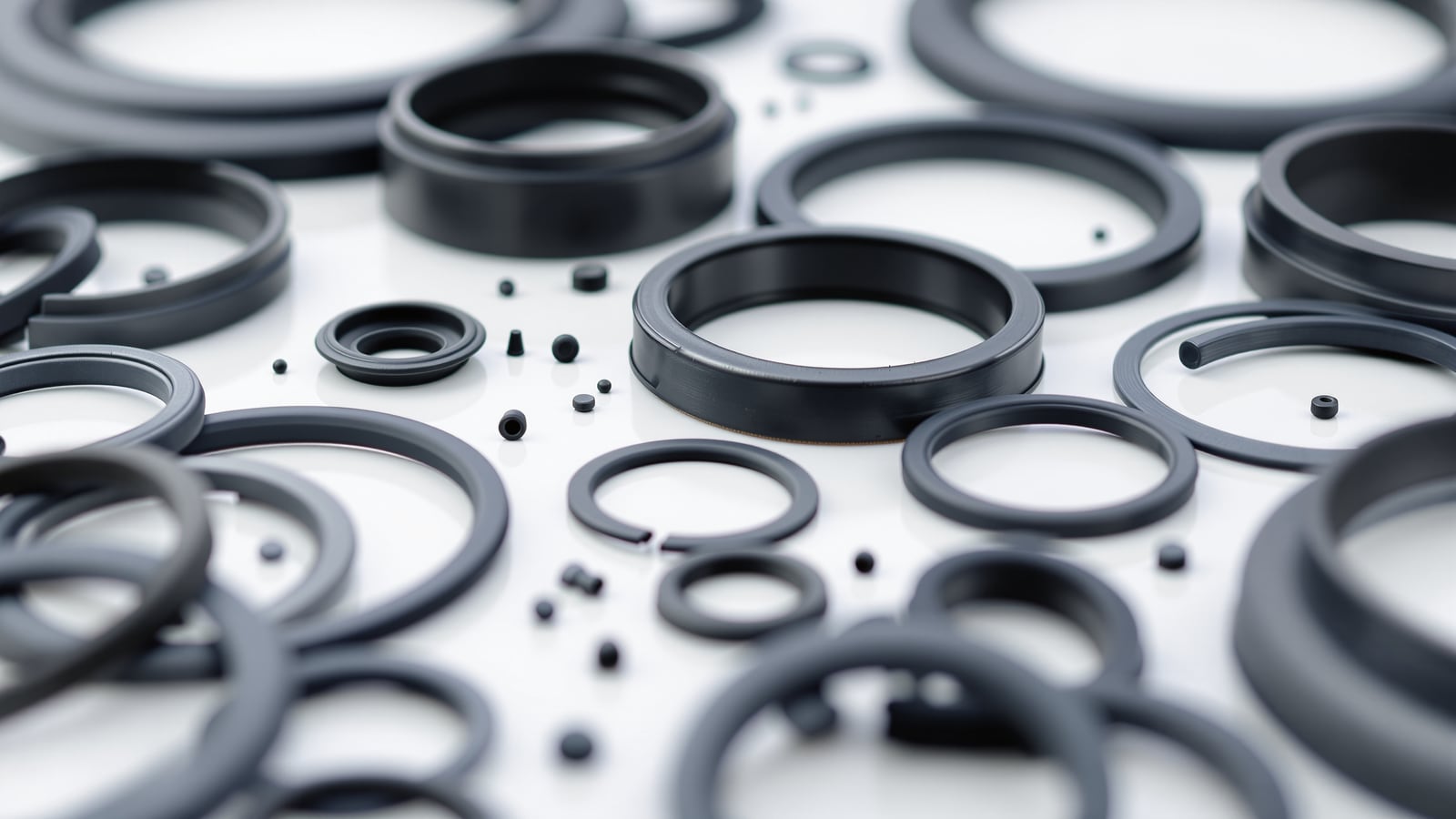
Pipes and fittings do not, on their own, hold water back. In a huge share of plumbing joints the thing that actually seals is a small piece of rubber — a ring, a gasket, an O-ring or a washer — squeezed into a controlled gap. Get that elastomer right and the joint outlives the building; get it wrong and you have a slow weep behind a wall or a spigot that will not stop dripping. This guide is the installer's reference for plumbing gaskets and seals in Indian work: what each type is, where it seals, why elastomers age and fail, and how to replace them.
This is a materials guide within the Studio Matrx Plumbing hub. It sits beside the jointing methods guide, which covers the techniques — solvent cement, fusion, threading and rubber-ring assembly — end to end. Here we look only at the seal itself: the consumable that lives inside the joint.
A joint does not leak because the pipe is bad. It leaks because the seal was the wrong material, was pinched or twisted on assembly, was starved of the right lubricant, or has simply aged out. Every one of those is preventable.
What a seal actually does
Every rubber seal works the same way: it is compressed between two surfaces so that its own elasticity pushes back, closing every microscopic gap. Two families cover almost all plumbing:
- Compression seals — the joint clamps the rubber flat or squashes it radially, and the residual squeeze holds the seal. Flange gaskets and tap washers work this way.
- Interference / lip seals — a ring sits in a groove or shoulder and the pipe pushes past it, deforming it just enough to seal while still allowing the pipe to slide. Push-fit and socket-spigot rings, and O-rings on cartridges, work this way.
The critical idea for both is controlled compression. Too little and the seal never closes the gap; too much and the rubber is crushed past its elastic limit, takes a permanent set, and can no longer spring back. Most seal failures are one of those two extremes, or an ageing that quietly moves a good seal into the first.
The main seal types and where each one seals
Indian sites use a fairly small vocabulary of seals across drainage, pressure and fixture work. The table below maps each to its job and, crucially, to the sign it gives when it is failing.
| Seal type | Where it is used | Material (typical) | Failure sign |
|---|---|---|---|
| Socket-spigot / rubber-ring joint (RRJ) | uPVC & PVC-O pressure pipe, RCC and stoneware drainage, DI push-on | EPDM / SBR rubber | Weep or damp patch at the socket mouth; ring visibly rolled or pinched |
| Push-fit drainage seal | SWR / soil-waste-rain uPVC fittings, waste traps | EPDM / TPE lip ring | Sewer smell, slow drip at a fitting shoulder, ring dislodged |
| Ductile-iron push-on gasket | DI water mains | EPDM / SBR | Seepage at the bell after backfill; ring cut on a burr |
| Electrofusion / butt-fusion (no rubber) | HDPE mains | fused polymer — no gasket | Cold-weld / void at the joint (a fusion fault, not a seal fault) |
| Flange gasket | Pump headers, valves, DI/CI flanged pipe, tanks | EPDM / neoprene / reinforced rubber | Weep between flange faces; bolts un-even, gasket blown out at one spot |
| O-ring | Faucet cartridges, unions, spindle stems, RO housings | EPDM / nitrile / silicone | Drip from under the spout collar; O-ring flattened or nicked |
| Tap / bib-cock washer (jumper) | Compression taps, bib cocks, stop cocks | nitrile / EPDM | Tap drips when fully closed; washer worn conical or hardened |
| Ceramic-disc cartridge | Quarter-turn taps & mixers | ceramic discs + rubber seat | Drip at closed; grit-scored discs, perished seat ring |
Two rows on that table deserve emphasis because they are the ones most often confused on site. First, HDPE is the exception: a properly made HDPE main is butt-fused or electrofused, so the polymer becomes continuous and there is no rubber to fail — though HDPE compression fittings and its transition to DI do use O-rings and gaskets. Second, DI push-on and uPVC socket-spigot use the same rubber-ring principle, so the same assembly discipline applies to both.
Which rubber: EPDM, nitrile, neoprene, silicone
Elastomers are not interchangeable. Matching the rubber to the fluid and temperature is the single most important material decision, and the wrong one ages out in months.
- EPDM — the plumbing workhorse. Excellent with cold and hot potable water, resistant to chlorine, ozone and weathering. This is the correct rubber for water pipe rings, DI gaskets, most flange gaskets on water and cartridge O-rings on water taps. It is not compatible with petroleum oils and greases — which is exactly why the lubricant matters (below).
- Nitrile (NBR) — good with oils, fuels and greases; common on tap washers and where hydrocarbon contact is possible. Poorer ozone and hot-water life than EPDM, so not ideal for long-term hot potable lines.
- Neoprene — a general-purpose gasket rubber, weather- and moderate-chemical resistant; seen on flanges and mechanical joints.
- Silicone (VMQ) — very wide temperature range and physiologically inert; used where high heat or food-grade contact matters, but it has lower tear strength, so it is less common on drag-through pipe rings.
The two rules that prevent most material failures: use EPDM for water and hot water, and never let petroleum grease near an EPDM seal — it swells and destroys it. Use only a manufacturer-approved seal lubricant.
Why seals fail
Nearly every seal failure traces to one of a short list of causes. Knowing them turns a mystery leak into a five-minute diagnosis.
- Ageing and perishing. All rubber hardens, cracks and loses elasticity over years — faster when hot, sun-exposed or chlorinated. A perished seal has taken a permanent set and no longer springs back. This is the normal end of life and the reason seals are consumables.
- Wrong or no lubricant. A dry rubber ring dragged over a spigot rolls, folds or tears; a petroleum-greased EPDM ring swells and softens. Use only the approved silicone or soap-based pipe lubricant supplied for the joint — never oil, never grease, never soap from the site washroom on a potable line.
- Over-compression. Bolting a flange down hard and un-even, or forcing a washer onto a scored seat, crushes the rubber past its elastic limit. It sets, then weeps. Flange bolts must be tightened evenly in a crossing (star) pattern to even, moderate torque — not maximum.
- Twisting and pinching on assembly. A ring that rolls in its groove, or an O-ring that spirals as the cartridge is pushed home, seals on part of its circumference only and weeps at the rest.
- Debris and scoring. Grit, swarf or a burr left on the spigot or seat cuts the seal or holds the gap open. Chamfer and clean the pipe end; deburr cut ends. See the traps guide for how the same debris issues foul waste-fitting seals.
- Chemical or thermal mismatch. Nitrile on a long hot line, or a water-grade ring exposed to solvents, ages far faster than rated.
Replacement basics
Seals are the most replaceable component in plumbing — that is their job. The essentials by type:
| Job | Key steps | Watch-outs |
|---|---|---|
| Tap / bib-cock washer | Isolate supply, open tap to drain, unscrew headgear, replace jumper washer, check the seat | A scored brass seat needs re-grinding or a seat insert, else the new washer drips too |
| Cartridge O-ring | Isolate, remove handle and cartridge, replace O-rings and any rubber seat, lightly grease with silicone | Match the exact cartridge; smear silicone, never petroleum grease |
| Push-fit drainage seal | Pull the pipe out of the fitting, lift out the ring, clean the groove, seat a new ring, re-insert with approved lube | Seat the ring the right way round; deburr the pipe end |
| Socket-spigot / DI ring | Expose joint, withdraw spigot, replace ring in the socket groove, lubricate, re-assemble to the witness mark | Clean the socket; on buried pipe, re-bed and re-test before backfill |
| Flange gasket | Isolate and drain, unbolt, scrape faces clean, fit correct-size gasket, bolt up in a star pattern to even torque | Right bore and bolt pattern; never re-use a set gasket; even torque only |
A few habits that separate a joint that lasts from one that comes back:
- Replace, do not re-seat, a perished seal. Rubber that has taken a set will not recover. New joints get new rubber.
- Clean and inspect the mating surface. A perfect ring on a scored seat or a burred spigot still leaks. The seat matters as much as the seal.
- Use the correct, approved lubricant only — the silicone or soap-based paste sold for that joint, applied to the ring and the pipe chamfer, never oil or grease on EPDM.
- Keep the right sizes on the van. Seals are cheap and product-specific; a mismatched near-fit ring is a callback waiting to happen.
Standards and quality
For rubber sealing rings in Indian pipework, look for BIS-marked rings made to the relevant Indian Standard for elastomeric seals in pipe joints, and confirm the grade against the pipe manufacturer's specification. Do not mix a random ring into a proprietary push-fit fitting — manufacturers dimension the groove and ring together, and a near-fit substitute is a common source of slow leaks. Where potable water is involved, the elastomer should be a food-grade / potable-approved compound. The seal is the cheapest part of the joint and the worst place to save money.
Seals are small, cheap and utterly decisive. The whole integrity of a joint — whether a buried DI main, a concealed waste stack or a kitchen mixer — comes down to a piece of rubber sized, seated, lubricated and compressed correctly. Treat the seal as the engineered component it is, match the rubber to the water and temperature, keep petroleum away from EPDM, and most "pipe leaks" simply never happen.
References
- National Building Code of India (NBC) 2016, Part 9 — Plumbing Services — the governing framework for water-supply and drainage pipework and jointing in Indian buildings.
- Bureau of Indian Standards — the IS codes covering elastomeric sealing rings for pipe joints and the pipe systems (uPVC, DI, HDPE, PVC-O) that use them. Confirm the current code and edition, and potable-water suitability of the compound, with a licensed professional.
- Manufacturer technical manuals — ring and gasket dimensions, approved jointing lubricant, torque and assembly instructions for the specific pipe and fitting range installed. Treat every figure here as indicative and verify locally with a licensed plumber before assembling or torquing a joint.
Export this guide
Related Guides — Deep-dive reading
Pipe Jointing Methods in India: Solvent, Threaded, Fusion, Soldered & Push-Fit
How every plumbing pipe material is actually joined — solvent cement for PVC/CPVC/uPVC, threaded joints for GI and metal, heat fusion for PPR and HDPE, soldering and brazing for copper, compression and push-fit for quick work, flanged connections for large bore, and rubber-ring socket-and-spigot for drains. Which method suits which material, how reliable each is, and the skill it demands.
PlumbingBathroom Leak Repair in India: Find & Fix Common Leaks (2026)
A practical, India-first guide to finding and fixing the everyday bathroom leaks — dripping taps, weeping traps and angle valves, a running cistern, failed silicone seals — plus how to tell a simple fixture leak from a waterproofing failure that needs a professional.
BathroomsBathroom Plumbing Code India: NBC 2016 Part 9, UPC-I & the IS Standards That Govern Pipework
A professional reference to the codes and standards that govern bathroom plumbing in India — the National Building Code (NBC 2016) Part 9 on Plumbing Services, the Uniform Plumbing Code India (UPC-I), the CPHEEO Manual, and the IS standards for water supply, drainage, trap seals, pipe sizing, slopes and venting — with a caveat to always verify the current code and your local authority.
BathroomsRelated Tools — Try Free
Plumbing Pressure-Test & Leak Checklist
Pre-closure pressure and leak test — 9 categories, 60+ checkpoints across water supply, drainage, fixtures, waterproofing, hot water, tanks.
Pre-Closure TestBefore & After Studio
Generate AI before-and-after renders to preview how your redesign could look.
DesignAIApartment Furniture Size Chart
Standard furniture dimensions for Indian apartments — sofas, beds, tables, dining, storage.
Reference Chart