
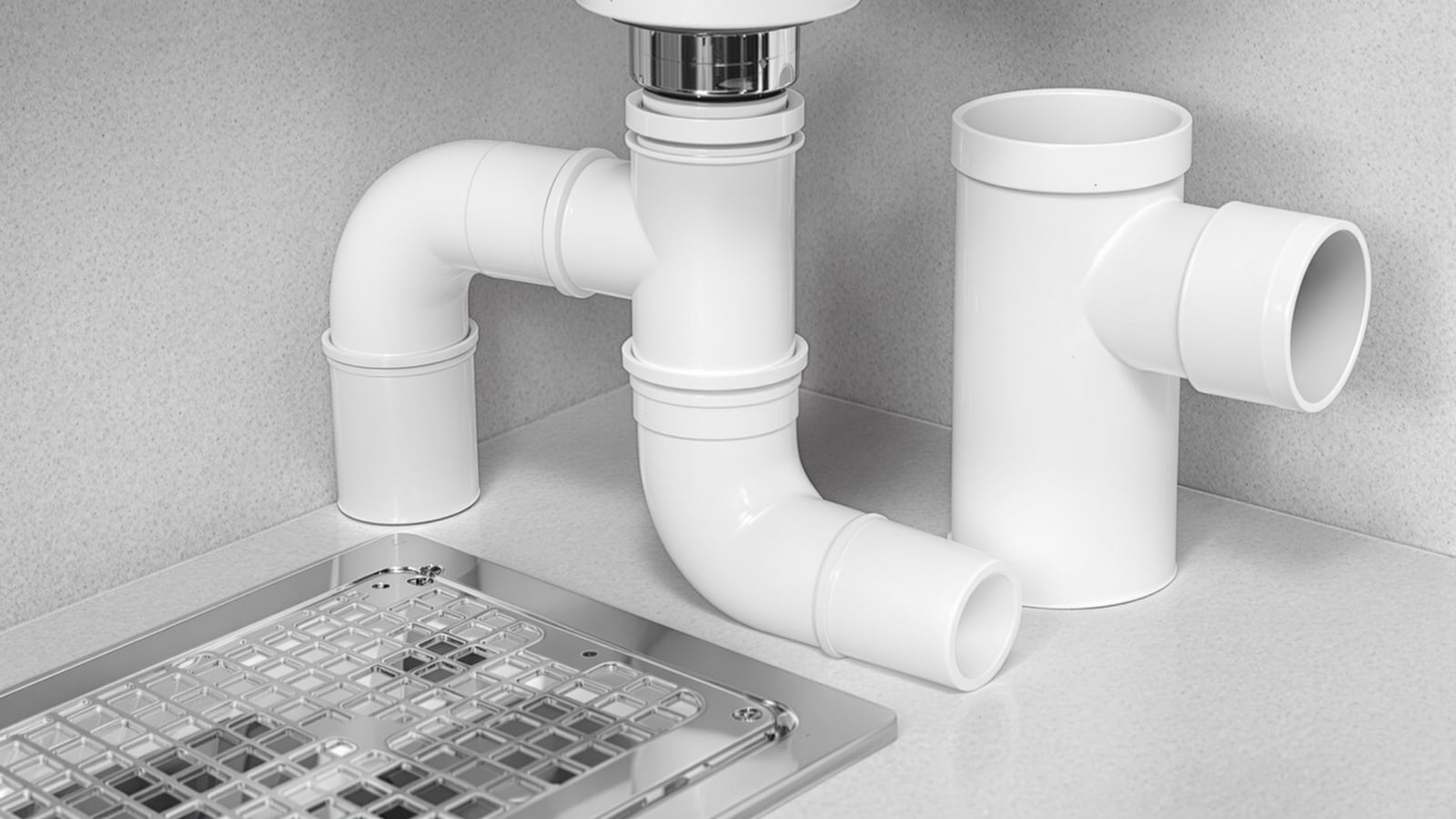
Plumbing Trap India: P-Trap vs S-Trap, Bottle & Floor Traps (2026)
The small U of water that keeps sewer gas out of your bathroom — what a trap is, P-trap vs S-trap vs bottle trap, matching a WC S-trap or P-trap to the rough-in, the nahani floor trap and gully trap, why traps lose their seal and start to smell, plus cleaning, sizes and rupee costs.
Of all the plumbing hidden in your bathroom, the humble trap is the one part that does the most and gets the least thought. It is the bend — the little U or bottle of standing water — that sits between every fixture and the drain pipe. That water is not an accident of the pipework; it is the whole point. It forms a seal that lets waste water fall through but stops the foul air, gases and insects in the sewer line from climbing back up into your home. Break that seal and the most obvious symptom arrives within a day: a bathroom that smells faintly, then strongly, of drain.
If you have ever walked into a rarely-used guest toilet or a house shut for the monsoon and been hit by a sewer smell, you have met a dried-out trap. Understanding traps is therefore not a plumber-only topic — it explains half the "mystery smells", gurgles and slow drains that homeowners live with. This guide sits under the bathroom plumbing guide for India; for the components that pair with traps read the floor drain guide and the whole-bathroom drainage guide for India.
A trap is only ever as good as the water sitting in it. No water, no seal — and no seal means sewer gas in your bathroom, whatever else you have done right.
What a trap actually is
A trap is a section of pipe shaped so that a small quantity of water is permanently held in a low point. When you use the fixture, fresh water pushes the old water through and refills the bend, so the seal is renewed on every use. The height of that trapped water — measured between the top of the dip and the point where it would overflow into the outlet — is the seal depth. In India a typical fixture trap holds a 50 mm (2 inch) seal; traps in exposed or evaporation-prone spots use a 75 mm deep seal.
Codes are blunt about this. The National Building Code (NBC) 2016 and IS 1729 (sanitary pipes and fittings) require that every sanitary fixture discharging to the drainage system be protected by a water-seal trap, and that no fixture be double-trapped (a trap draining into another trap causes air-lock and sluggish flow). One fixture, one trap, one seal — that is the rule.
Three jobs the seal does:
- Blocks sewer gas — hydrogen sulphide, methane and the smell that carries them.
- Blocks pests — cockroaches, mosquitoes and rodents that travel drain lines.
- Blocks back-flow of odour during heavy use elsewhere on the same stack.
P-trap vs S-trap vs bottle trap
Almost every trap you will meet in an Indian bathroom is one of three shapes. They differ only in where they send the water after the seal — and that choice is dictated by whether your waste pipe leaves through the wall or through the floor.
- P-trap — the bend turns and leaves roughly horizontally into the wall. It is the safest, most siphon-resistant everyday shape and the default for wash basins and wall-outlet WCs.
- S-trap — the bend turns and leaves vertically down through the floor. Common on older Indian layouts and on floor-outlet WCs, but a full-bore S-trap is more prone to self-siphonage (the falling column of water can suck the seal out).
- Bottle trap — a compact cylinder that holds the seal in a removable bottle. Neat, chrome-finished and popular under modern wash basins because it looks good on show and unscrews for cleaning — but its narrow throat clogs faster with hair and toothpaste.
| Trap type | Best for | Seal | Pros | Watch-outs |
|---|---|---|---|---|
| P-trap | Basins, wall-outlet WC | 50 mm | Siphon-resistant, universal | Needs a wall-side outlet |
| S-trap | Floor-outlet WC, old layouts | 50 mm | Fits floor drains | More prone to siphonage |
| Bottle trap | Exposed basin waste | 50 mm | Compact, decorative, easy clean | Narrow bore clogs; costs more |
Typical rupee costs: a PVC P- or S-trap ₹120–400; a decent chrome-plated brass bottle trap ₹700–2,500; a designer bottle trap ₹3,000–6,000.
The WC trap: S-trap vs P-trap must match the rough-in
Toilets carry their trap built into the ceramic, so here the trap type is not a fitting you add later — it is a property of the pan you buy, and it must match the drain that is already in your floor or wall.
- S-trap WC — outlet drops straight down through the floor. Defined by the trap distance: the horizontal gap from the finished wall to the centre of the floor drain, commonly 220 mm or 300 mm in India (older homes vary, so measure).
- P-trap WC — outlet exits horizontally into the wall, defined by the outlet height from finished floor to drain centre (often 180 mm).
Buy the wrong one and the new pan will not sit over the pipe — the single most common Indian WC replacement mistake. Confirm your trap type and exact rough-in before you pay; the full drill is in the floor-mounted toilet guide for India.
Floor traps: the nahani and the gully
Away from the fixtures, the bathroom floor itself drains through traps you walk over every day.
- Nahani / floor trap — the square grating set into the low point of the floor that takes shower and floor washdown water. Under the grating is a small trap holding a seal, so the floor opening does not vent the sewer. A multi-inlet floor trap has side sockets so the basin and washing-machine waste can also feed into it, keeping the number of separate drain points down.
- Gully trap — a deeper, larger trap set outside the building where waste sub-lines from the bathroom and kitchen join the main drain. It carries a deep seal (usually 75 mm) and a removable grating, catches grit and grease before the main line, and stops smells from the external drain rising back through the branch.
Why traps fail — and the smell that follows
A trap fails when the seal water is lost. The four classic causes, all common in Indian homes:
- Evaporation — the biggest cause of the "shut house" smell. A trap not used for days (guest toilet, second-home floor drain) simply dries up. A splash of water — or a spoon of cooking oil to slow evaporation — restores the seal.
- Self-siphonage — a fast-emptying fixture (especially an S-trap basin) creates suction that pulls its own seal down the drain. Correct pipe size and a vent/anti-siphon connection prevent it.
- Induced siphonage — a flush or discharge on the same stack drops pressure and sucks a neighbouring trap dry; you hear a gurgle, then later smell it. Again, proper venting is the cure.
- Back-pressure and leaks — a blocked or under-vented stack pushes air (and smell) back through the weakest seal; a cracked trap or loose slip-nut simply lets the water drain away.
If a bathroom smells of sewer, suspect a lost seal first — long before you blame the fixture. Pour water into every floor trap and unused drain; if the smell clears, evaporation was the culprit. For a smell that persists or gurgles across fixtures, the fix is usually venting, covered in the bathroom drainage guide for India.
Trap and pipe sizes
Traps are sized to the fixture they serve — too small and they block, too large and the discharge cannot fill the bore fast enough to keep a clean seal. Common Indian sizes:
| Fixture | Trap / outlet size | Seal depth |
|---|---|---|
| Wash basin | 32 mm (1¼") | 50 mm |
| Kitchen sink | 40 mm (1½") | 50 mm |
| Shower / floor trap (nahani) | 50–75 mm outlet | 50 mm |
| WC (integral trap) | 100 mm (4") | 50 mm |
| Gully trap (external) | 100–150 mm | 75 mm (deep) |
The rule of thumb: match the trap bore to the fixture waste, keep it a deep seal (75 mm) anywhere evaporation or siphonage is a risk, and never neck a large trap down to a smaller pipe.
Cleaning and maintenance
- Bottle traps unscrew at the base — do this every few months over a bucket to clear the hair-and-soap sludge that narrows the bore.
- Floor traps — lift the grating, remove the hair basket, and flush; a self-closing or spring floor trap helps in dry-prone spots but still needs occasional water.
- Hard water (much of India) leaves scale in traps; a mild acid or enzyme cleaner beats caustic soda, which corrodes brass and PVC alike.
- Never rod a trap with wire that can crack ceramic or brass; use a plunger or remove the trap.
Get the trap right on every fixture and the reward is a bathroom that simply never smells — the quiet mark of good plumbing.
References
- National Building Code of India (NBC) 2016, Part 9 (Plumbing Services) — water-seal traps, seal depths and venting requirements.
- IS 1729 — Specification for sand-cast iron / sanitary pipes and fittings, including traps and gully traps.
- IS 2556 (Sanitary Appliances series) — vitreous china sanitaryware including WC traps and floor traps.
- CPHEEO Manual on Sewerage and Sewage Treatment (Ministry of Housing & Urban Affairs) — trap seals, siphonage and venting principles.
- IS 12183 / relevant CPWD Specifications — plumbing and drainage workmanship for buildings.
Export this guide
Related Guides — Deep-dive reading
Bathroom Drainage India: Waste vs Soil Pipes, Slope, Sizes, Traps & Venting (2026)
How a bathroom's waste and soil pipes actually work — the difference between waste lines (basin, shower) and the soil line (WC), the fall you need, pipe sizes in mm, floor slope to the floor trap, how it all joins the stack, and how traps and venting stop blockages and smells.
BathroomsBlocked Drains in India: Clearing & Prevention (Drain Cleaning Guide)
A homeowner's India-first guide to blocked drains — why kitchen sinks, bathroom floor traps, WCs and external chambers clog, how to clear them safely (plunger, hot water and baking soda, drain snake, hydro-jetting), why chemical drain cleaners are risky, and how to stop blockages coming back.
PlumbingSewer Gas Smell in India: Causes & How to Fix Bathroom & Drain Odour
A homeowner's India-first guide to that foul drain or bathroom smell — why sewer gas is unpleasant and unhealthy, the number-one cause (a dry or siphoned trap seal), the other culprits, and a room-by-room symptom-to-fix approach.
PlumbingRelated Tools — Try Free
Monsoon-Readiness Checklist
Pre-rain home audit across 9 categories — terrace, drains, waterproofing, electrical, HVAC, pest, vehicles, documents.
Seasonal AuditBathroom Drainage Pipe Calculator
Recommended drain and waste pipe sizes, slopes and stack size for a bathroom's fixtures — indicative IS 1172 / NBC plumbing practice.
Bathroom CalculatorFalse Ceiling Cost Estimator
Live ₹/sqft across 8 ceiling types — POP, gypsum, designer, metal, PVC, wooden — with cove and spot lighting for 20 Indian cities.
Cost Calculator