
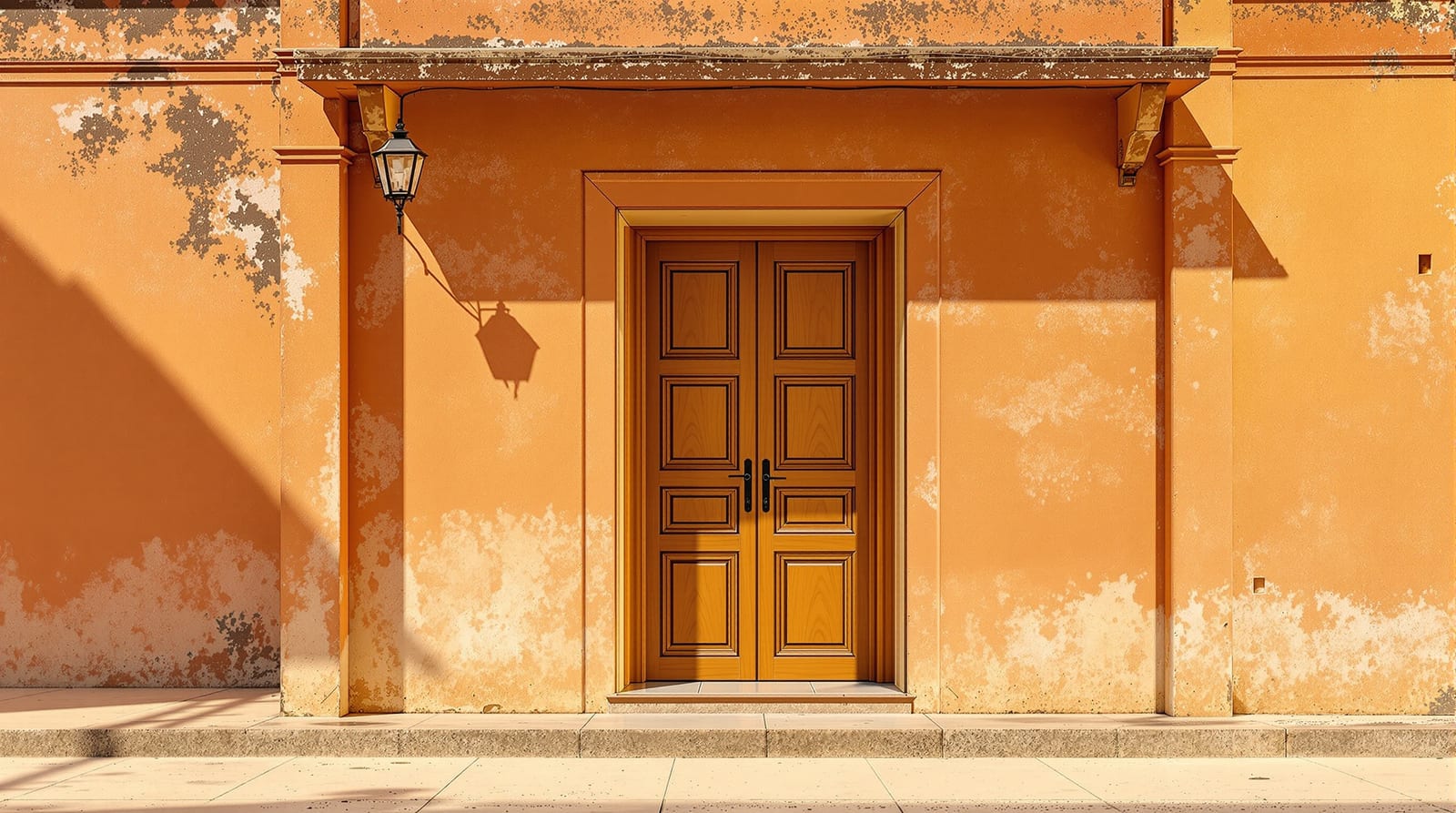
North India Door Buying Guide: Prices & Picks India 2026
How to buy doors across Delhi-NCR, Punjab, Haryana, UP, Rajasthan and the J&K hills — climate-smart picks, local markets and 2026 price bands.
North India door buying is a different exercise from the rest of the country, and the reason is the weather. A door in Delhi-NCR, Punjab, Haryana, western UP or Rajasthan has to survive 45°C-plus summers, dusty loo winds, monsoon humidity and single-digit winter nights — sometimes all within a few months. That swing makes timber move, paint crack and cheap flush doors warp. Add the region's deep love of carved Sheesham and Rajasthani heritage work and you get a market with both the country's most ornate main doors and its most demanding climate. This guide walks you through what to buy, where North Indians actually buy it, and what it should cost in 2026.
What the North Indian climate does to a door
The core problem is dimensional movement. Wood and water-based products expand in the August humidity and shrink in the dry, cold winter. A solid timber leaf that fits perfectly in July can develop a draught gap by January. Dust is the second enemy — fine Indo-Gangetic and Thar dust works into hinges, tracks and gaps. The third is the cold itself: in Chandigarh, the Punjab belt and the J&K hills, an unsealed door bleeds heat and lets in winter draughts.
The practical takeaways:
- Prefer stable cores. Solid-core (BWR-grade) flush, engineered, WPC and uPVC doors move far less than budget hollow-core or poorly seasoned solid timber. See our door materials comparison for how each behaves.
- Seal the gaps. Budget for weather-stripping and a door-bottom seal, especially for external and balcony doors — it cuts winter draughts and keeps dust out.
- Insist on proper seasoning for any solid Sheesham or sal. Kiln-dried or well air-seasoned timber is the single biggest predictor of whether a wooden door warps.
- uPVC earns its keep here. For external doors and balconies, uPVC doors handle the heat-cold-dust cycle with almost zero maintenance — which is why they have grown fast across Delhi-NCR apartments.
North India's material tastes
This region has the country's strongest tradition of solid hardwood and carved work. Sheesham (Indian rosewood) is the signature North Indian timber — Saharanpur and the UP-Punjab belt are famous for Sheesham furniture and doors. Sal is the workhorse for door frames (chowkhats) across the plains. Rajasthan is the home of carved heritage main doors — the jharokha-style, brass-studded, intricately carved doors from Jodhpur, Jaipur and the Shekhawati region that buyers across India seek out.
For day-to-day internal doors, the modern North Indian home increasingly uses laminate or membrane flush doors and WPC — lower maintenance, no warping, and a wide finish range. The split most homes settle on: a statement solid-wood or carved main door plus practical flush/WPC/uPVC doors everywhere else.
2026 price bands for North India (supply only)
North India runs close to the national average for most doors, then climbs in Delhi-NCR and the premium hill markets. The table below applies the regional reality to the 2026 door cost guide benchmark. All figures are supply only, for one standard 7×3 ft leaf, before 18% GST, and before fitting.
| Door type | National avg (₹) | Typical North India band (₹) |
|---|---|---|
| Solid-core flush (BWR) | 3,000–5,500 | 3,000–5,800 |
| Laminate / membrane flush | 4,000–7,000 | 4,000–7,200 |
| WPC door | 4,500–7,500 | 4,500–7,800 |
| PVC door (bathroom) | 1,800–4,000 | 1,800–4,000 |
| uPVC door | 8,000–16,000 | 8,500–17,000 |
| Sal / hardwood panel | 9,000–16,000 | 8,500–15,000 |
| Sheesham / teak panel, carved | 22,000–45,000+ | 22,000–50,000+ |
| Carved Rajasthani heritage main door | 30,000–80,000+ | 35,000–1,50,000+ |
| Door frame (sal, per door) | 2,000–3,500 | 2,000–3,200 |
Note how solid sal and ordinary hardwood can be cheaper than the national average here because the timber supply chain is local — but elaborate carved work pushes the top end much higher than elsewhere. For where this fits the bigger picture, see the door cost by city pillar.
City multipliers within the North
The North is not one price. Apply these multipliers (national average = 1.00) for a quick estimate.
| City / belt | Index | Effect on a ₹4,000 flush door |
|---|---|---|
| Delhi-NCR | 1.12 | ~₹4,480 before GST |
| Chandigarh / Punjab | 1.00 | ~₹4,000 before GST |
| Jaipur / Rajasthan | 0.95 | ~₹3,800 before GST |
| Lucknow / central UP | 0.92 | ~₹3,680 before GST |
So a solid-core flush door that averages ₹4,000 nationally runs about ₹4,480 in Delhi-NCR but closer to ₹3,680 in Lucknow. City-level detail is in our Delhi-NCR door cost, Jaipur door cost, Lucknow door cost and Chandigarh door cost guides.
Where North Indians actually buy doors
The region has some of India's largest door and timber markets:
- Kirti Nagar, Delhi — the country's biggest furniture and timber hub, with dozens of door showrooms covering everything from budget flush to premium carved main doors.
- Saharanpur, UP — the Sheesham carving capital; the source for much of North India's carved and panelled wooden doors.
- Jodhpur, Jaipur and Shekhawati, Rajasthan — carved heritage main doors, brass-studded and reclaimed-wood pieces.
- Local timber markets in Ludhiana, Lucknow, Chandigarh and the Jaipur old city for sal frames and made-to-order panel doors.
- Brand showrooms and large-format stores in NCR malls and high streets for flush, WPC and uPVC ranges.
For the wider channel choice, compare a door showroom vs online and read where to buy doors in India before committing.
Brands you will see here
North India has strong dealer reach for the major names. For flush, WPC and engineered doors you will commonly find CenturyPly / Century Doors, Greenpanel, Greenply, Action Tesa, Alstone and Merino — see best flush door brands and best WPC door brands. For uPVC, Fenesta (DCM Shriram), Weatherseal (Asian Paints), Encraft and Prominance have solid NCR presence; details in best uPVC door brands. For locks, Godrej, Yale, Dorset, Europa and Ozone dominate the hardware aisle. Treat brand pricing as broadly indicative — always get a written quote.
GST, quotes and getting a fair price
Doors attract 18% GST (wooden and flush under HSN 4418; uPVC/PVC under HSN 3925). Always read a quote as price + 18% GST, and confirm whether it is supply-only or installed. Fitting per door runs ₹1,000–2,500 and a basic hardware set ₹1,200–2,500 — both before GST. A whole-home job for a 3BHK (10–14 doors) typically lands at ₹1.2L–₹4L+ depending on how much carved or solid-wood work you choose.
| Cost component (per door) | Typical North India range (₹) |
|---|---|
| Door leaf (solid-core flush) | 3,000–5,800 |
| Frame (sal chowkhat) | 2,000–3,200 |
| Hardware set | 1,200–2,500 |
| Fitting / installation | 1,000–2,500 |
| GST (18% on the above) | add 18% |
To estimate your own city number, use the door cost by city calculator, and check the tax line with the door GST calculator. When you are ready to bargain, our guide to negotiating door prices and the door quotation guide will keep you from overpaying. These bands are indicative ranges, not firm quotes — confirm everything in writing.
Frequently asked questions
Which door material is best for Delhi-NCR's extreme weather?
For external and balcony doors, uPVC is the most forgiving — it ignores heat, cold and dust with almost no maintenance. For internal doors, solid-core (BWR) flush, WPC or laminate flush stay stable through the seasons. Keep solid Sheesham or teak for the main door, and make sure it is properly seasoned.
Are carved Rajasthani doors worth the price?
As a statement main door, yes — they are genuinely distinctive and hold value. Budget ₹35,000 to ₹1.5 lakh-plus for a well-made carved Sheesham or teak piece from Jodhpur or Jaipur. Confirm the timber, the seasoning and whether the carving is hand-done before paying.
Where is the cheapest place to buy doors in North India?
Tier-2 belts like Lucknow (index ~0.92) and Jaipur (~0.95) are cheaper than Delhi-NCR (~1.12), and buying frames and panel doors direct from timber markets such as Saharanpur or Ludhiana usually beats showroom pricing. The trade-off is less after-sales support.
Why do North Indian doors warp, and how do I avoid it?
Warping comes from the big summer-winter humidity swing acting on poorly seasoned or hollow-core doors. Avoid it by choosing stable cores (solid-core, WPC, uPVC), insisting on kiln-dried or well air-seasoned solid timber, and sealing gaps with weather-stripping.
How much should a full set of doors cost for a 3BHK here?
For 10–14 doors, expect ₹1.2 lakh to ₹4 lakh-plus including frames, hardware, fitting and 18% GST — the spread depends mostly on how much carved or solid-wood work you choose versus flush and WPC. Use the door budget planner to model it.
Should I buy doors online or from a showroom in the North?
For a carved main door or anything custom, buy in person — Kirti Nagar, Saharanpur or a Rajasthan workshop — so you can inspect the timber and carving. For standard flush, WPC and uPVC doors, online or brand showrooms work well and are often more convenient.
Export this guide
Related Guides — Deep-dive reading
Door Cost in Jaipur (2026): Prices, Markets & Buying Guide
What doors really cost in Jaipur in 2026 — city index 0.95, worked examples with 18% GST, real timber markets and the carved-wood heritage premium.
Home Doors & EntrancesDoor Cost in Hyderabad: Prices, Markets, GST Guide 2026
What doors really cost in Hyderabad in 2026 — city index 1.05, worked examples with 18% GST, and the markets where people actually buy.
Home Doors & EntrancesDoor Cost in Chennai (2026): Prices, Markets & Buying Guide
What doors really cost in Chennai in 2026 — city index 1.08, worked examples with 18% GST, real markets and coastal-climate advice.
Home Doors & EntrancesRelated Tools — Try Free
Door Cost Calculator
Estimate the all-in cost of a door — leaf, frame, hardware, fitting and GST — by type, material and size.
Door CalculatorDoor Material Comparison Tool
Compare 2–4 door materials on cost, durability, maintenance, security and moisture resistance.
Comparison ToolBefore vs After — Cost Reality Check
Compare what you expected to pay vs what you actually paid, category by category.
Reality Check