
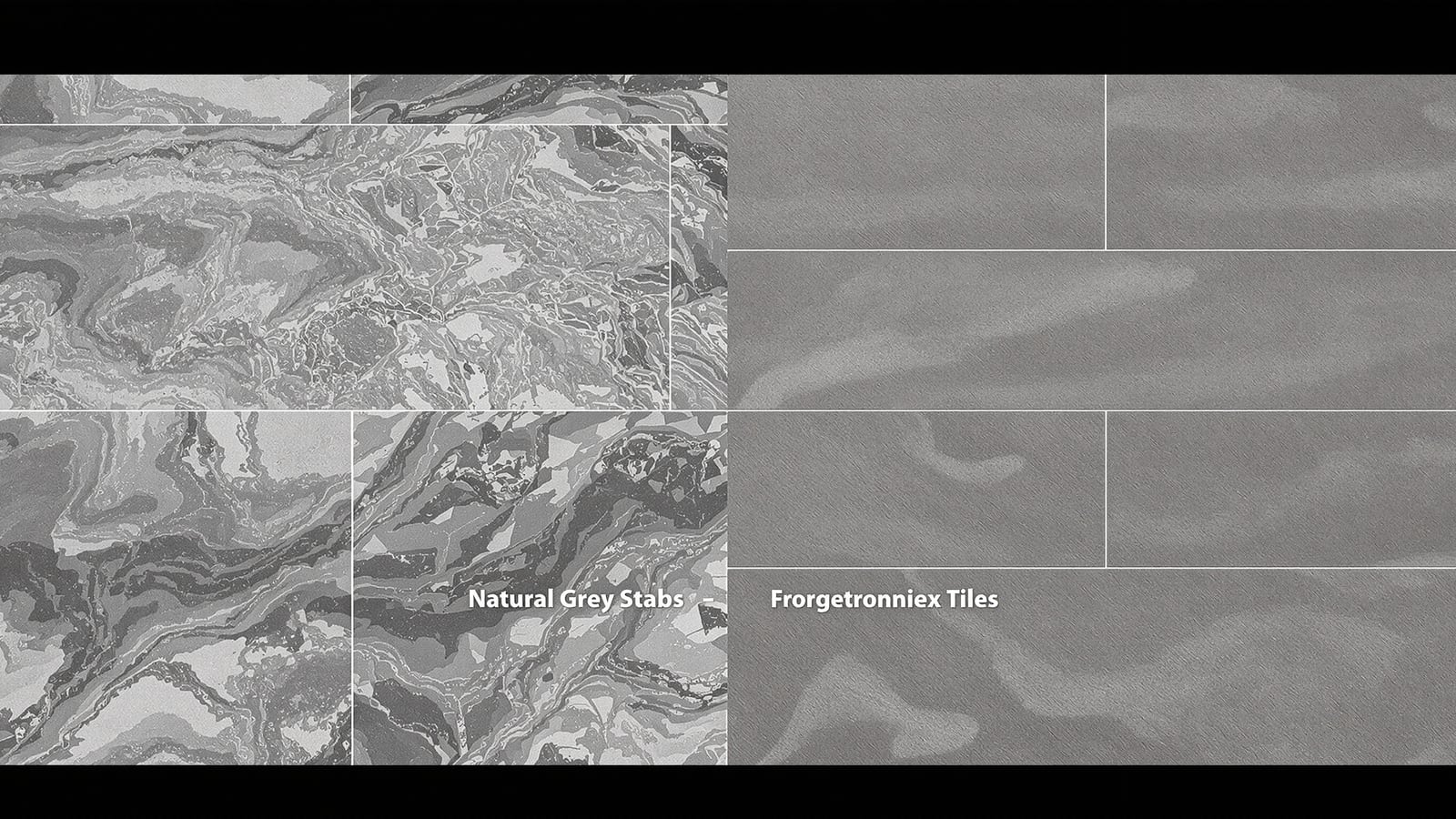
Natural Stone vs Tiles for Bathrooms: Which Is Better? (India)
A fair, India-first head-to-head between natural stone (granite, marble, kota) and ceramic/vitrified tiles for bathroom floors and walls — porosity, hard-water and stain resistance, slip, luxury, ₹ cost and real maintenance effort — with a verdict by budget.
Walk into any Indian bathroom showroom and you face the same fork in the road: a wall of glossy vitrified tiles on one side, and slabs of marble, granite and kota on the other. Both can clad the same floor and walls, both survive daily water, and both come in every price bracket — so the honest answer to "which is better" is it depends on your budget, your water and how much upkeep you will tolerate. This guide settles it fairly, attribute by attribute.
Natural stone means quarried granite, marble, kota or slate cut into slabs or tiles. Tiles here means factory-made ceramic (glazed clay) and vitrified (fully pressed, near-zero-porosity porcelain) tiles. If you want the material-level detail on each side, read our companions on bathroom stone flooring in India and porcelain bathroom tiles in India. For the wider menu of floor options, see the bathroom flooring guide for India.
The one property that decides everything: porosity
Nearly every practical difference below traces back to a single number — how much water the surface absorbs.
- Vitrified / porcelain tiles absorb under 0.5% water. They are, in effect, waterproof stone that never needs sealing. Glazed ceramic is a little higher but the glaze itself is impervious.
- Granite is dense (around 0.4% absorption) and behaves almost like vitrified tile — but it still benefits from sealing at joints.
- Marble and kota are porous and alkaline-sensitive. They must be sealed on installation and re-sealed every 1–2 years, or hard water will etch and stain them.
That is the crux: a tile arrives at your door already sealed for life by its manufacturing; most natural stone arrives needing a sealing regime you have to maintain. In India's hard, alkaline water, that difference is not academic — unsealed marble picks up dull white scale rings within months, and kota can darken unevenly where water pools near the floor drain.
Hard water, staining and the Indian reality
Most Indian mains and borewell water is hard — rich in calcium and magnesium — and mildly alkaline. That chemistry is the single biggest reason tiles outperform stone on stain resistance here. On a vitrified tile, dissolved minerals sit on the impervious surface and wipe off; at worst you get a light scale film cleared with a mild descaler. On unsealed marble the same water reacts with the stone, etching a dull halo that no amount of wiping restores — you have to re-hone it. Kota and other porous stones absorb coloured liquids (turmeric, hair dye, rust from a leaking pipe) and hold the stain.
Sealing closes this gap, but it is a commitment, not a one-time fix. A quality penetrating sealer on marble or kota lasts roughly 1–2 years in a wet bathroom before it needs reapplying, and you must use only pH-neutral cleaners in between — the acidic bathroom cleaners most Indian households reach for will strip the seal and etch the stone. Granite, being dense, is far more forgiving and behaves close to a vitrified tile once its joints are sealed.
The head-to-head verdict table
| Attribute | Natural Stone | Ceramic / Vitrified Tiles | Winner |
|---|---|---|---|
| Look and luxury | Unique veining, depth, cool solid feel | Consistent; convincing "stone-look" prints but repeats | Stone |
| Porosity and sealing | Marble/kota porous; sealing mandatory. Granite dense | Vitrified <0.5% absorption; no sealing ever | Tiles |
| Hard-water / stain resistance | Alkaline water etches unsealed marble; kota stains | Impervious glaze/body wipes clean | Tiles |
| Slip resistance | Honed/flamed finishes safe; polished is slippery | Matt/anti-skid R10–R11 grades widely sold | Tie |
| Price range (₹/sq ft, material) | Kota 45–90; granite 90–200; marble 150–800+ | Ceramic 40–90; vitrified 60–200 | Tiles (predictable) |
| Installation | Heavier slabs; skilled mason; slower | Lighter, faster, standardised trades | Tiles |
| Maintenance effort | Re-seal 1–2 yrs; pH-neutral cleaners only | Routine cleaning; only grout needs care | Tiles |
| Repair / replacement | Slab match hard years later | Buy extra boxes; easy swaps | Tiles |
| Durability (decades) | Granite/kota essentially permanent | Vitrified very hard; glaze can chip | Tie (both last) |
| Resale / prestige | Marble/granite signal premium | Neutral; expected as standard | Stone |
| India suitability overall | Great if sealed and finished right | Forgiving, low-risk default | Tiles for most |
Tiles win more rows — but notice which rows stone wins: the ones buyers pay a premium for. This is not a knockout; it is a trade of maintenance for character.
Slip, safety and finish — closer than you think
Neither material is inherently safe or unsafe underfoot; the finish decides it. A polished marble or mirror-polished granite floor is genuinely dangerous once a health faucet oversprays it — this is where most stone-floor accidents happen in Indian bathrooms. But specify a honed (matt-ground) or flamed stone finish and the same slab becomes grippy and safe. Tiles solve the same problem with anti-skid grades rated R10 to R11, now cheap and widely stocked. So on pure safety the two draw — provided you refuse polished stone and glossy floor tiles in the wet zone. For the numbers behind those grades, see our companion on stone flooring linked above, and treat any showroom "it looks fine dry" as irrelevant: a bathroom floor is judged wet.
Fair pros and cons
Natural stone — pros: genuine, one-of-a-kind veining; a cool, solid underfoot feel tiles cannot fake; granite and kota are effectively permanent; strong resale signal in premium homes; can be re-honed to look new decades later.
Natural stone — cons: porous stones must be sealed and re-sealed; hard water etches and dulls unsealed marble; acidic cleaners are banned; heavier, slower, costlier to lay; slab colour matching is hard for later repairs.
Tiles — pros: vitrified tiles are near-waterproof and never need sealing; shrug off India's hard-water scale; huge price and design range including stone-look; fast, standardised installation; easy to keep spare boxes for repairs; anti-skid grades solve wet-floor slip.
Tiles — cons: grout lines stain and harbour mould if not sealed and cleaned; glaze can chip on impact and is hard to repair invisibly; even the best print reads as a repeat up close; less prestige than real marble in luxury projects.
What it actually costs
Material cost is only part of it — stone adds skilled-mason labour and, over a decade, periodic re-sealing. Tiles add grouting and, occasionally, a chipped-tile swap.
| Scenario | Stone route | Tile route |
|---|---|---|
| Budget bathroom, floor | Kota ₹45–90/sq ft | Ceramic/vitrified ₹40–90/sq ft |
| Mid-range, floor + walls | Granite floor + tiled walls | Vitrified throughout ₹80–150/sq ft |
| Luxury bathroom | Marble ₹250–800+/sq ft | Large-format vitrified ₹150–250/sq ft |
| 10-year upkeep | Re-seal every 1–2 yrs (₹) | Grout cleaning only |
For deeper numbers, see our how to choose bathroom tiles for India guide, which breaks down grades and where each earns its price.
Which should you choose?
| Pick natural stone if… | Pick tiles if… |
|---|---|
| You want a genuine luxury, statement bathroom | You want a forgiving, low-maintenance bathroom |
| You will keep up sealing every 1–2 years | You do not want any sealing routine |
| Resale prestige of marble/granite matters | Predictable budget and fast build matter |
| You are on a tight budget and choose kota | Your area has very hard water |
| You want a floor that lasts generations | You want easy repairs and spare-box swaps |
For picking the specific tile grade and finish, our how to choose bathroom tiles for India guide is the next step.
Bottom line: For most Indian homes and hard-water regions, vitrified tiles are the better default — they are waterproof out of the box, shrug off scale, cost predictably and need almost no upkeep. Choose natural stone when you genuinely want the depth and prestige of marble or granite and will maintain the sealing — or when budget-driven kota beats a cheap tile. The smartest common answer is a hybrid: vitrified for floor and shower walls, real stone as a feature (vanity top, niche or a marble accent wall) where its character shows and water risk is lowest.
References
- Bureau of Indian Standards IS 15622 — Pressed ceramic tiles (specification and water-absorption groups)
- Bureau of Indian Standards IS 13801 — Vitreous and semi-vitreous ceramic mosaic tiles
- Bureau of Indian Standards IS 1130 — Marble (blocks, slabs and tiles)
- Bureau of Indian Standards IS 14223 — Polished building stones (granite and allied)
- National Building Code of India (NBC) — Part 6, flooring and wet-area finishes
Export this guide
Related Guides — Deep-dive reading
Bathroom Stone Flooring India: Granite, Marble, Kota, Slate & Sandstone
A practical, India-first guide to natural stone bathroom floors — which stones survive constant water and hard-water scale, how honing and flaming beat slip, the sealing regime porous stone demands, and real ₹/sq ft costs and maintenance.
BathroomsPorcelain, Ceramic & Sintered-Stone Facade Cladding in India: A Practical Guide
Thin large-format porcelain and sintered-stone slabs can clad a building with the look of marble, concrete or weathered steel at a fraction of stone's weight — but on a facade, the fixing system is a life-safety decision, not a finish choice.
Building FacadesQuartz vs Marble Bathroom Vanity Top: Which Is Better? (India)
A fair, India-first head-to-head between engineered quartz and natural marble for a bathroom vanity top — porosity, staining and etching, durability, that unmistakable marble veining, maintenance, ₹ cost and an honest verdict for the wet Indian counter.
BathroomsRelated Tools — Try Free
Flooring Cost Calculator
Estimate the all-in cost of a floor — material, laying, wastage, skirting and GST — by area and material.
Flooring CalculatorBefore vs After — Cost Reality Check
Compare what you expected to pay vs what you actually paid, category by category.
Reality CheckTile Water Absorption Classifier
Classify a tile by its water-absorption percentage into its IS 15622 group and see where it can be used.
Flooring Tool