
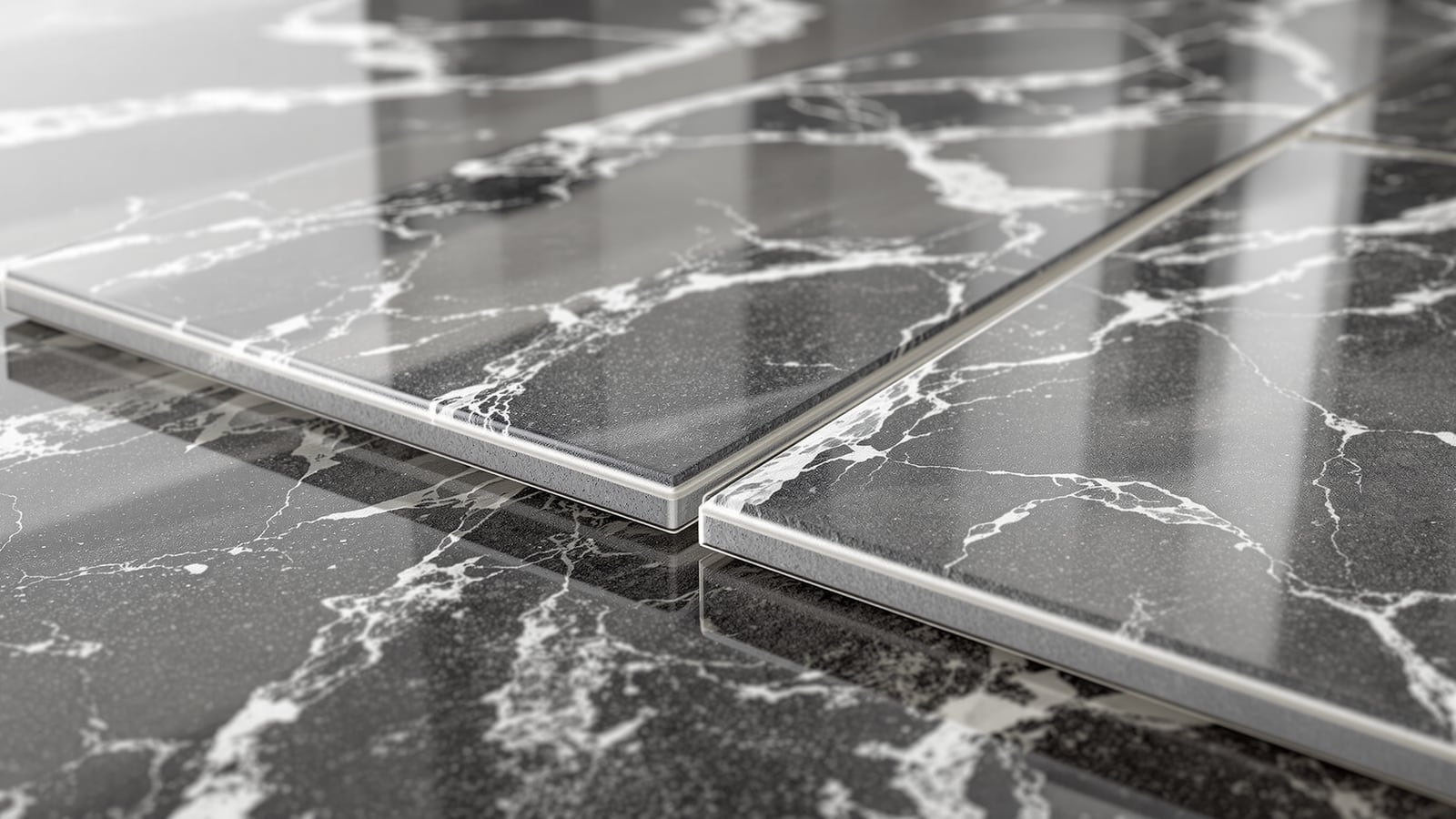
Porcelain Bathroom Tiles India: Vitrified, GVT/PGVT & Full-Body Explained
A homeowner's guide to porcelain — called vitrified in India — for bathroom floors and walls: what <0.5% water absorption means, full-body vs glazed vitrified (GVT/PGVT), large-format sizes, strength, rupee costs and how they are cut and laid.
Walk into any Indian tile showroom and you will hear one word far more than "porcelain": vitrified. In India, the dense, fired-to-glass tiles that the rest of the world calls porcelain are almost always sold as vitrified tiles — and the naming trips up a lot of homeowners. They are, for bathroom purposes, the same family: a body fired so hot that it partially turns to glass (vitrifies), leaving almost no open pores for water to soak into. That single property — a water absorption below 0.5% — is why porcelain/vitrified is the material of choice for wet bathroom floors in India.
This is the porcelain-and-vitrified guide in the Studio Matrx bathroom hub. Read it alongside the bathroom wall tiles guide for India for the pillar overview, and against the ceramic bathroom tiles guide if you are weighing the cheaper option. For where each tile belongs underfoot see the bathroom flooring guide, and for slip safety the anti-skid bathroom tiles guide.
If you remember one thing: "porcelain" and "vitrified" describe the same low-absorption, high-strength tile. In India you will buy it as vitrified — GVT, PGVT, full-body or double-charge — so learn those sub-types, not the word porcelain.
Porcelain = vitrified: clearing up the terminology
Tile bodies are graded by how much water they absorb, tested per IS 13630. The lower the absorption, the denser and stronger the tile.
- Ceramic (non-vitrified): water absorption above 3%, often 10–20% for wall tiles. Porous body, softer, cheaper.
- Vitrified / porcelain: water absorption below 0.5% — technically "Group BIa" in IS 15622. Fired at 1200 °C or higher until the body vitrifies.
So when an Indian dealer says "vitrified," they mean what the imported catalogue calls porcelain. The confusion comes because ceramic and vitrified both come as glazed, printed tiles that look identical on the shelf — you cannot tell them apart by eye. Always ask for the water-absorption class and the box marking.
| Property | Ceramic (glazed) | Vitrified / porcelain |
|---|---|---|
| Water absorption (IS 13630) | 3%–20% | Below 0.5% |
| Body | Porous, red/white clay | Dense, glass-fused |
| Firing temperature | ~1000–1100 °C | 1200 °C and above |
| Breaking strength | Lower | High (>1300 N for thick tiles) |
| Best bathroom use | Dry walls | Floors + walls, wet or dry |
| Frost / heavy load | Weak | Strong |
The vitrified sub-types you will actually be sold
"Vitrified" is an umbrella. Inside it, the type is defined by how the surface is made — and this decides both looks and price.
- GVT (Glazed Vitrified Tile): a vitrified body with a printed glaze layer on top. Digital printing gives sharp marble, wood and stone looks. This is the mainstream bathroom-floor and wall tile in India today.
- PGVT (Polished Glazed Vitrified Tile): GVT with a polished glossy surface. Stunning mirror finish, but polishing removes the anti-slip texture — avoid PGVT on wet bathroom floors; keep it for dry vanity walls or dry-zone floors.
- Full-body vitrified: the colour and pattern run all the way through the tile body, not just a printed skin. Chips and scratches do not show a different colour underneath. The toughest, but plainer and pricier — ideal for high-traffic or commercial-grade bathroom floors.
- Double-charge vitrified: two layers of pigment pressed together, giving a 3–4 mm patterned top that survives years of wear. A good middle ground for durable floors.
- Soluble-salt / nano: older, cheaper surface treatments — thinner wear layer, fine for light-use dry areas only.
For most Indian home bathrooms the practical answer is: matt or textured GVT on floors, GVT (glossy is fine) on walls, PGVT only where it stays dry.
Why porcelain beats ceramic on a wet bathroom floor
A bathroom floor is the hardest place a tile has to work: standing water from the health-faucet and shower, dropped bottles, heavy feet, and hard-water salts. Porcelain/vitrified wins on every count that matters here.
- Near-zero absorption. Below 0.5% means water sits on top and drains away instead of wicking into the body. Ceramic's porous body can darken, harbour damp and — over years — feed efflorescence and grout mildew.
- Strength. Vitrified breaking strength comfortably clears the IS 15622 floor requirement; ceramic floor tiles are weaker and crack under a dropped geyser bracket or a loaded bucket.
- Stain and chemical resistance. The vitrified surface shrugs off Indian hard-water scale, acidic cleaners and dye spills better than glazed ceramic.
- Large formats without lippage. Vitrified tiles are flatter and more dimensionally consistent, so 600×600 and larger sheets sit true with fewer joints — critical for a clean shower fall.
The one caveat: a polished vitrified surface is slippery when wet. That is a finish problem, not a body problem — choose a matt, textured or anti-skid vitrified for the floor. See the anti-skid bathroom tiles guide for the R-rating you want.
Sizes and large-format tiles
Vitrified comes in far larger, flatter formats than ceramic — a big reason designers reach for it. Common Indian bathroom sizes:
| Size (mm) | Typical bathroom use | Notes |
|---|---|---|
| 300×300 | Small floors, anti-skid | Many joints; more grip lines |
| 300×600 | Walls (most common) | Standard "1×2 ft" wall tile |
| 600×600 | Floors, larger walls | Fewer joints, clean look |
| 600×1200 | Feature walls, big floors | Large-format; needs flat substrate |
| 800×1600 & slabs | Luxury seamless walls | Pro-only handling |
Large-format tiles (600×1200 and up) give a near-seamless, fewer-grout-lines finish that reads calm and premium — but they demand a dead-flat bed and skilled hands. On a bumpy Indian brick-and-plaster wall, a large tile will "rock" and lippage will show. The larger you go, the more the substrate prep matters.
What porcelain/vitrified costs in India
Prices are per square foot, material only, and swing with brand, size and finish. Add laying, adhesive and wastage.
| Tile type | Indicative ₹/sq ft (material) |
|---|---|
| Basic glazed ceramic (for reference) | ₹30 – ₹55 |
| GVT / PGVT (mainstream) | ₹55 – ₹120 |
| Double-charge vitrified | ₹70 – ₹140 |
| Full-body vitrified | ₹110 – ₹250 |
| Large-format 600×1200 GVT | ₹120 – ₹300 |
| Big-slab / imported porcelain | ₹300 and up |
Add roughly ₹35–₹90/sq ft for laying labour, plus tile adhesive (₹18–₹40/kg) or a cement bed, plus 8–10% wastage for cuts. Budget for good adhesive: large vitrified must be fixed with notched-trowel tile adhesive (IS 15477 type), not thrown on a raw cement dab, or it will hollow-sound and pop.
Cutting and laying vitrified — the practical bits
Vitrified is hard and brittle, which changes how it is worked compared with soft ceramic.
- Cutting: straight cuts with a manual tile cutter (scribe-and-snap) work for thinner GVT, but thick full-body and large formats need a wet cutter with a diamond blade to avoid chipping. Holes for pipes and the floor drain want a diamond hole-saw, run wet.
- Substrate: floors need a level, cured cement screed; walls need true plaster. The denser the tile, the less forgiving it is of a wavy base.
- Adhesive over cement mortar: because vitrified absorbs almost no water, the old thick cement-mortar bed does not grip it well — the tile does not suck moisture to bond. Use polymer-modified tile adhesive applied with a notched trowel; back-butter large tiles.
- Slope and drain: maintain a fall of about 1:80 to 1:100 toward the floor trap in the wet zone, and keep the anti-skid finish there.
- Joints: leave a 2–3 mm joint even for "rectified" tiles and use an epoxy or good polymer grout — in a wet Indian bathroom, cement grout stains and grows mildew.
- Waterproofing first: none of this matters if the deck leaks. Tank the floor and skirting before tiling — see the Studio Matrx waterproofing guide.
Quick do and don't
- Do buy vitrified (any sub-type) for bathroom floors — the low absorption and strength earn their keep.
- Do use matt or anti-skid vitrified on wet floors; save polished PGVT for dry walls.
- Do fix large and full-body tiles with notched tile adhesive, and grout with epoxy.
- Don't assume a glossy showroom tile is safe underfoot — ask for the R-rating and the absorption class.
- Don't lay large formats over a wavy plaster wall without levelling; lippage will show.
- Don't skip waterproofing — the best tile cannot fix a leaking deck.
For the wider picture on where each tile goes, loop back to the bathroom wall tiles guide, compare the budget route in the ceramic bathroom tiles guide, plan the underfoot layer with the bathroom flooring guide, and lock in slip safety via the anti-skid bathroom tiles guide.
References
- IS 15622:2017 — Pressed ceramic tiles, including vitrified (Group BIa, water absorption below 0.5%). Bureau of Indian Standards.
- IS 13630 — Ceramic tiles: methods of test, including water absorption and breaking strength.
- IS 15477 — Specification for polymer-modified tile adhesives.
- NBC 2016, National Building Code of India — Part on flooring, wall finishes and tiling workmanship.
- BIS (Bureau of Indian Standards) — tile classification and ISI marking guidance.
Export this guide
Related Guides — Deep-dive reading
Bathroom Flooring Guide India: Anti-Skid Tiles, Stone, Vinyl & Epoxy Compared
Every bathroom floor material for Indian homes in one place — anti-skid ceramic and vitrified tiles, natural stone, mosaic, vinyl (SPC/LVT) and epoxy — with a full comparison table, slip ratings, ₹/sq ft costs and the safety and slope rules that keep a wet floor from becoming a hazard.
BathroomsBathroom Wall Tiles in India: The Complete Guide to Wall Finishes
Ceramic vs porcelain wall tiles, sizes and large-format, full-height vs dado, highlighter walls, layout and setting-out, adhesive vs cement, grout and epoxy grout — plus paint, panels, stone and glass alternatives. India-first, with ₹ costs and IS codes.
BathroomsCeramic Bathroom Tiles India: Water Absorption, Cost & Where They Suit (2026)
What ceramic tiles actually are (glazed earthenware), how water absorption groups under IS 13630 and IS 15622 decide where they belong, why they are the smart choice for bathroom walls and low-traffic floors, glazes, finishes, sizes, PEI ratings, rupee costs, and an honest comparison with porcelain and vitrified.
BathroomsRelated Tools — Try Free
Bathroom Tile Calculator
Tiles and boxes for a whole bathroom — floor plus wall (dado or full-height), separate tile sizes, opening deductions and wastage.
Bathroom CalculatorFlooring Cost Calculator
Estimate the all-in cost of a floor — material, laying, wastage, skirting and GST — by area and material.
Flooring CalculatorFlooring Material Selector
Get the best flooring material for your room, budget and climate, with anti-slip checks for wet areas.
Flooring Tool