
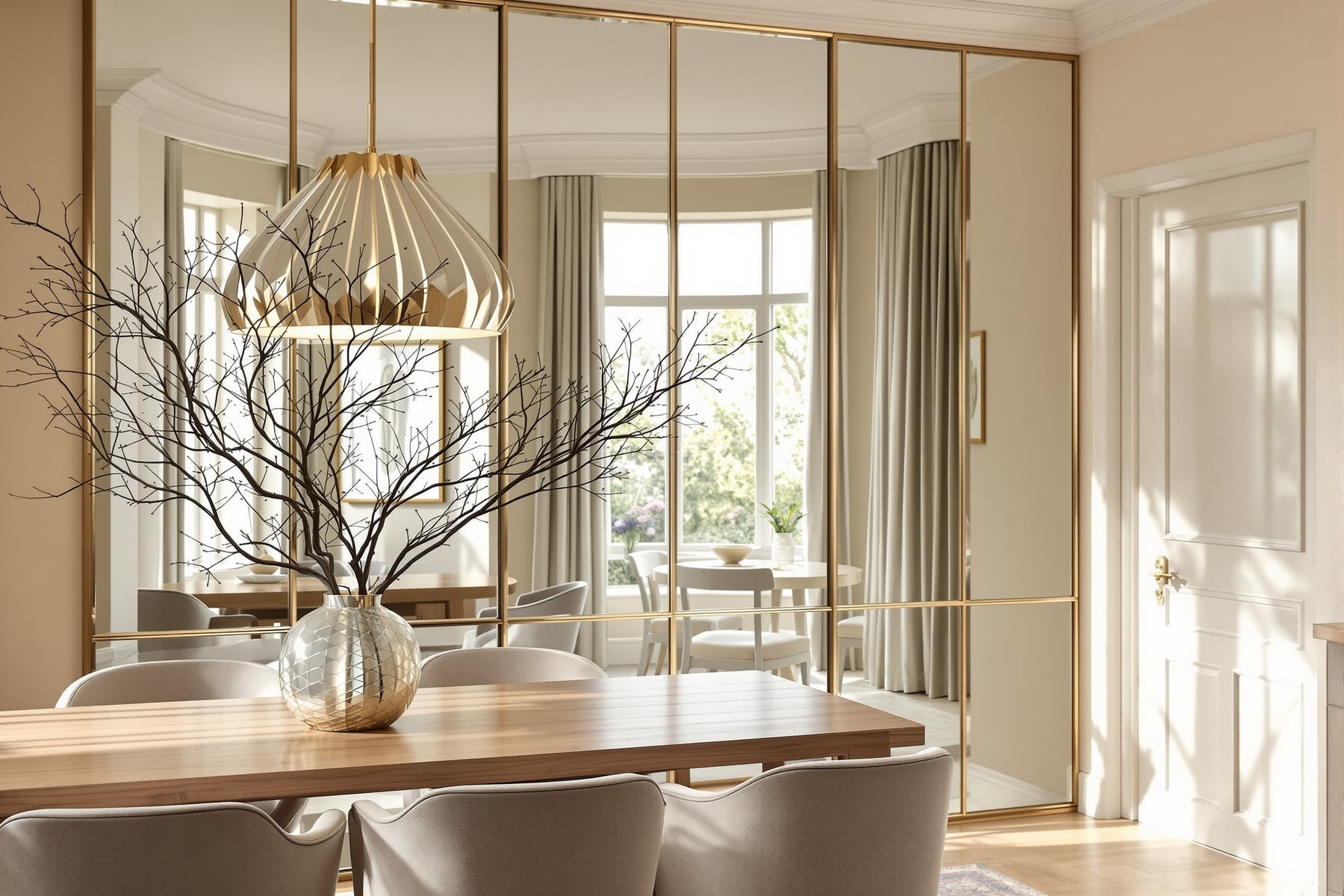
Mirror Walls: The Complete Guide for Indian Homes
The oldest trick for a small room — what a mirror wall does, the types from clear to antique, how it's fixed safely, where it works (and where not, including Vastu), plus design tips and cost.
A mirror wall is the oldest and most reliable trick in the interior playbook: it makes a small room feel twice as large, throws daylight deep into a dim space, and adds a layer of depth and glamour that no paint or panel can match — all with a single reflective surface. Designers reach for it in narrow hallways, cramped dining rooms and windowless corners precisely because nothing else expands a space so instantly. Done thoughtfully — framed, aimed at something worth reflecting, and safely fixed — a mirror wall is one of the highest-impact moves in a home.
This is the complete guide to mirror walls for Indian homes — a deep dive under the glass wall finishes guide and the master wall-finishes guide. We will explain exactly what a mirror wall does, show the types from bright clear to moody antique, cover how it is fixed safely, map where it works (and where it does not, including the common Vastu concern), and finish with design tips and cost.
What a mirror wall does
The reason to use a mirror wall is not decoration for its own sake — it is what a large reflective surface does to the perception of a room.
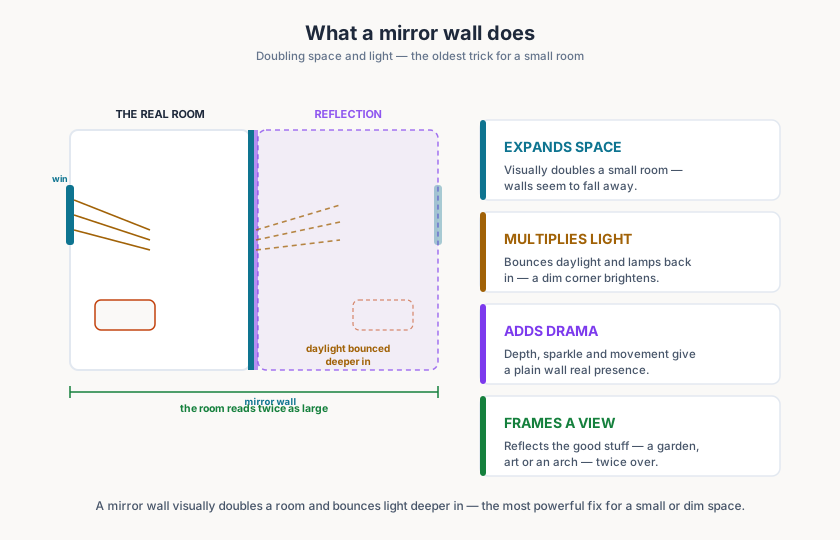
A mirror wall does four things at once: it expands space (visually doubling a small room), it multiplies light (bouncing daylight into darker corners), it adds drama (depth and sparkle), and it frames a view (reflecting whatever good thing sits opposite). That is why it is the single most powerful fix for a small or dim space — but it is also why what it faces matters so much, as we will see.
Mirror wall types
"Mirror" is not one finish — from bright clear glass to speckled antique, each type sets a completely different mood and hides (or shows) fingerprints differently.
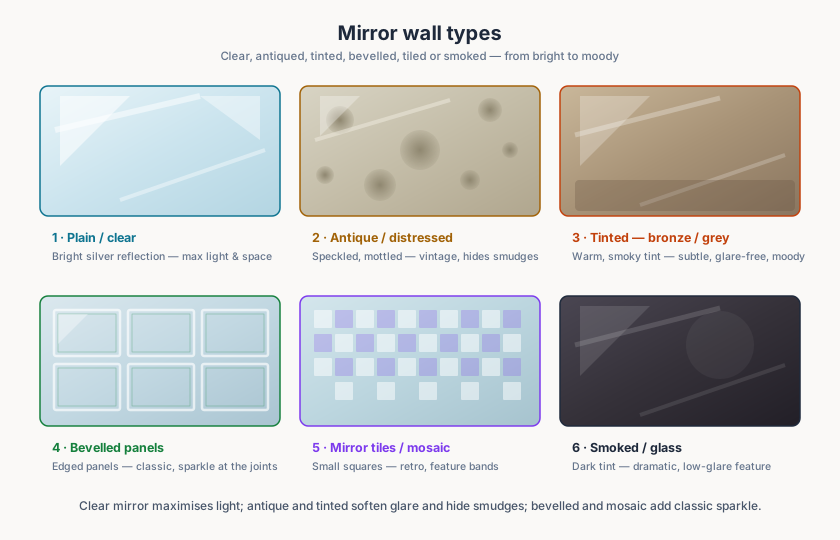
The options: plain/clear (the brightest reflection, for maximum light and space), antique/distressed (speckled and mottled — vintage, softer, and forgiving of smudges), tinted bronze or grey (subtle, warm and glare-free), bevelled panels (a classic grid that sparkles at the joints), mirror tiles or mosaic (retro, good for feature bands), and smoked/dark glass (dramatic and low-glare). Clear mirror maximises light; antique and tinted soften glare and hide smudges; bevelled and mosaic add classic sparkle.
Fixing a mirror wall, safely
A wall of glass overhead-height and at arm's reach is a safety matter, and the fixing detail is where mirror walls most often go wrong.
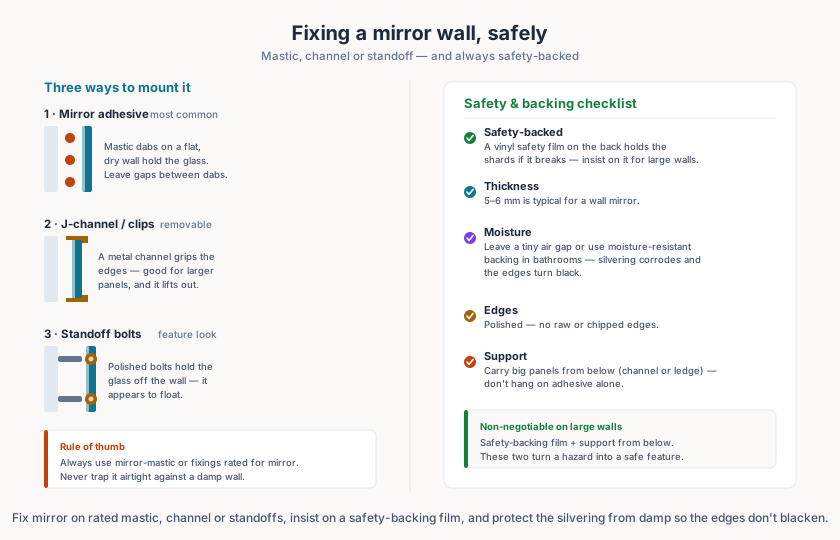
There are three mounting methods: mirror adhesive/mastic dabs on a flat wall (the most common), a J-channel or clips holding the edges (removable, for larger panels), and standoff bolts for a floating feature look. Whichever you use, insist on the right safety spec: a safety-backing film on the reverse (it holds the shards if the glass ever breaks — non-negotiable on a large wall), a sensible thickness (around 5–6 mm), moisture protection in bathrooms (leave a tiny air gap or use moisture-resistant backing, or the silvering corrodes into black edges), polished edges, and proper support from below for big panels — never hang a heavy mirror on adhesive alone.
Where a mirror wall works
Because a mirror doubles whatever it faces, placement is the entire art — and this is where the common regrets (and Vastu concerns) live.
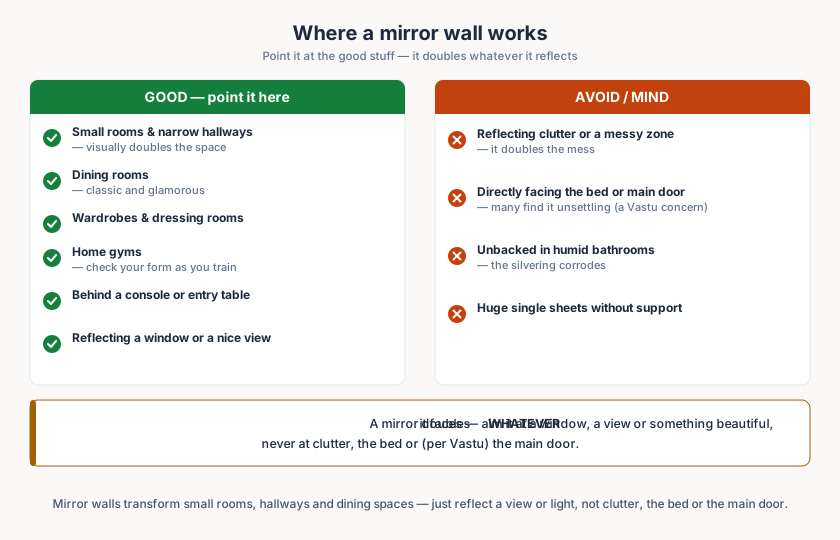
It is excellent in small rooms and narrow hallways (it doubles them), dining rooms (a classic, glamorous move), wardrobes and dressing rooms, home gyms (to check form), and behind a console or entry, and anywhere it can reflect a window or a genuinely nice view. Be careful reflecting clutter or a messy zone (it doubles the mess), placing it directly facing the bed or the main door (many people find this unsettling, and it is a common Vastu concern), using it unbacked in a humid bathroom (the silvering corrodes), or hanging huge single sheets without support. The governing rule: a mirror doubles whatever it faces — aim it at a window, a view or something beautiful, never at clutter, the bed or (per Vastu) the main door.
Design tips and cost
A mirror wall can look either bespoke and glamorous or cheap and gym-like, and a few choices make all the difference.

Budget roughly ₹150–350/sq ft for plain mirror and ₹350–700/sq ft for antique, tinted or bevelled — and note that a large mirror wall needs two or more people and rated fixings to install. The smart tips: reflect a window or view, not clutter; choose antique or tinted mirror to hide fingerprints and smudges (lower upkeep); make it look intentional with a framed panel or grid rather than a raw sheet; go full-height to exaggerate the space-doubling; pair it with warm lighting so it does not feel cold and gym-like; and keep it off constant-damp walls (or use a moisture-backed mirror).
A mirror wall remains the most efficient way to make a room feel bigger and brighter than it is — a designer's shortcut hiding in plain sight. Frame it, aim it at the light or a view, fix it safely with a backing film, and mind the Vastu placement, and it repays you every time you walk in. For the wider glass family it belongs to, return to the glass wall finishes guide.
Export this guide
Related Guides — Deep-dive reading
Decorative Mirrors — A 2026 Guide for Indian Homes
Space, light and a focal point in one move · Full-height to Venetian · Where to place them and why
Design StylesBathroom Mirror India: Plain vs LED vs Backlit vs Smart, Size, Height & Cost (2026)
The complete India-first guide to bathroom mirrors — plain, LED, backlit, smart, anti-fog and magnifying types; the right size and mounting height over a basin; copper-free silvered glass that resists black-edge corrosion in humid bathrooms; fixing to tile, lighting a mirror the right way, demister pads and rupee costs.
BathroomsUsing Focal Points to Make Any Room Feel Intentional
Why every room needs one thing the eye lands on first — and how to choose, create and frame a focal point, from the mandir and the jharokha view to the television problem in Indian living rooms.
Design PrinciplesRelated Tools — Try Free
Cross-Ventilation Analyzer
Estimate airflow and air changes per hour (ACH) from room size, window areas, layout, and local wind — with NBC 2016 Part 8 compliance check.
Ventilation CalculatorFalse Ceiling Cost Estimator
Live ₹/sqft across 8 ceiling types — POP, gypsum, designer, metal, PVC, wooden — with cove and spot lighting for 20 Indian cities.
Cost CalculatorVastu Window Planner
Vastu guidance for window placement and size by wall direction and room — rating and remedies.
Vastu