
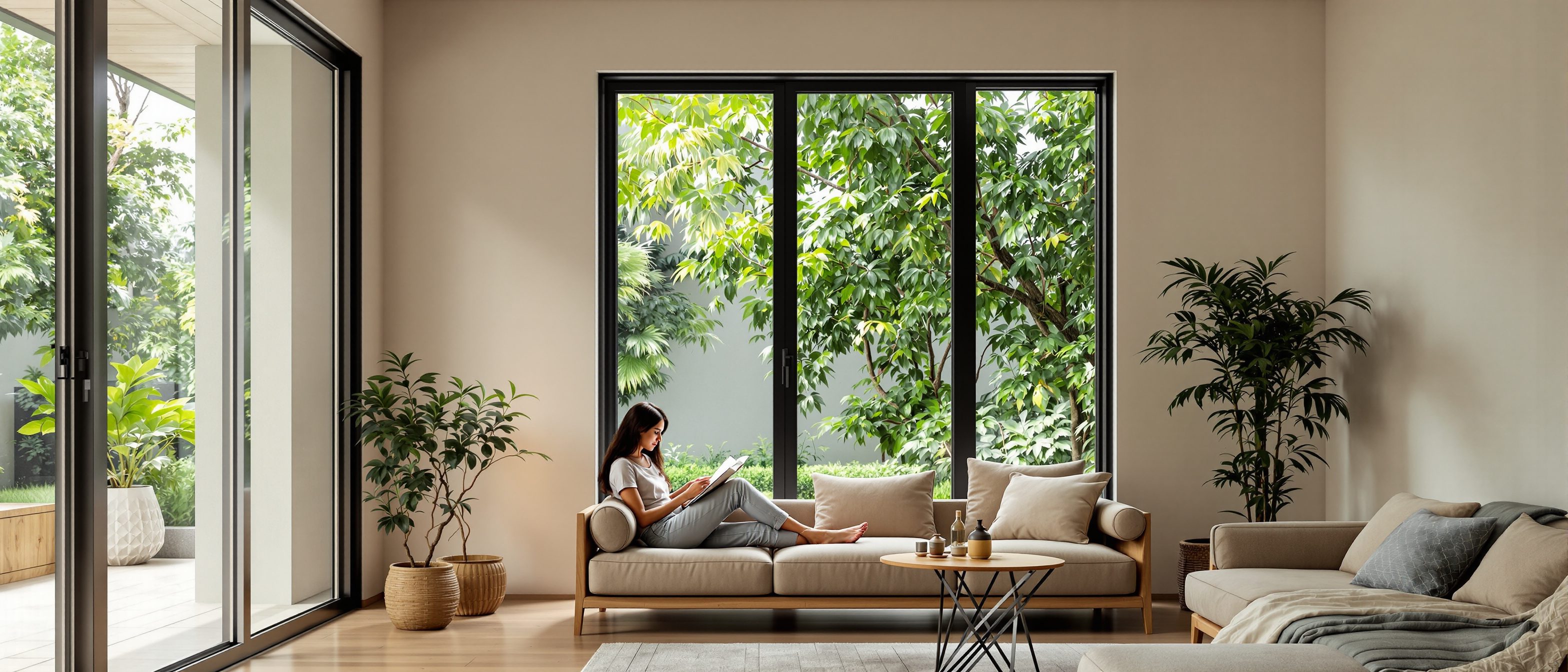
Black Frame Windows Guide
Why the black-frame trend works, which finish and material to pick, and the honest hot-India heat caveat
Black is the frame colour that quietly rewrote the modern Indian window. Walk through any new apartment showroom in Bengaluru or a designer villa in Pune and you will see it: slim, dark profiles ringing big sheets of glass, turning an ordinary opening into something that looks deliberate. The black frame is not a window type and it is not a single style — it is a finish, a colour decision, that can be laid over almost any modern look. This guide is about that decision: why it works visually, which finishes and materials to choose, and the one honest caveat for hot India that nobody in the showroom mentions.
A black frame does for a window what kohl does for an eye — it sharpens the edge so your gaze lands exactly where it should: on the view, not the wall.
Why black frames work
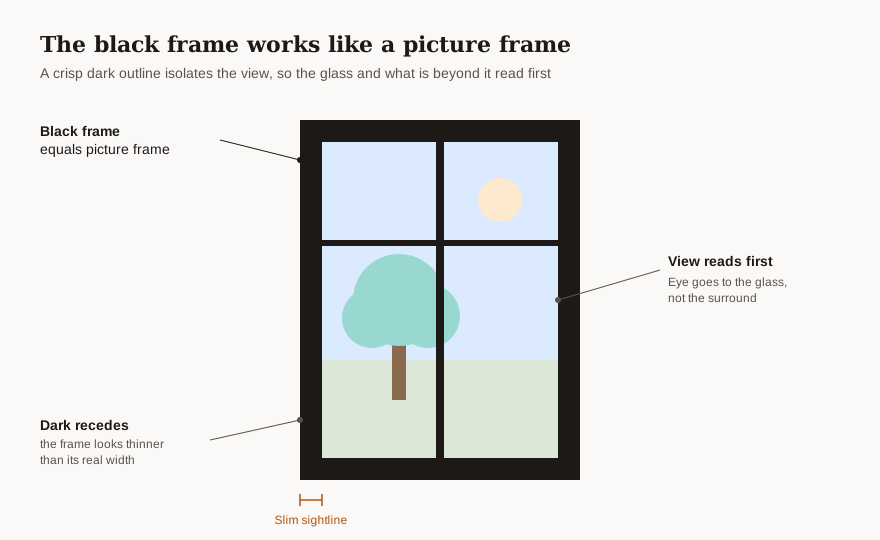
The trick is contrast. A white or beige frame blends into the wall and the whole opening goes soft and indistinct. A black frame draws a crisp, graphic outline around the glass, so the window reads as a deliberate picture frame around the view — the trees, the skyline, the courtyard. Your eye reads the dark rectangle first, then drops straight to what is inside it.
- It frames the view. The dark border isolates the outdoors like matting around a print.
- It looks slimmer than it is. Dark recedes, so a black frame of the same width looks thinner than a white one — useful when you want minimal sightlines without paying for premium slimline systems.
- It is style-agnostic. Black pairs with whitewashed minimal walls, raw concrete, exposed brick, warm Japandi oak, and brushed-brass luxury alike. Few finishes are this flexible.
- It hides grime better than white at the reveal edges, which matters in dusty Indian cities.
This is the broader cousin of the industrial steel-look window. If you want gridded, multi-pane "factory" glazing with exposed-brick energy, read our Industrial-Style Windows guide — that is one specific style the black frame serves. Black-frame styling, by contrast, spans many looks: a single huge clear pane with a thin black border is black-frame but emphatically not industrial.
Matte vs satin vs gloss
The single biggest aesthetic lever after "black" itself is the sheen of the powder coat. Most designers default to matte, but each has a place.
| Finish | Look and feel | Best for | Watch-outs |
|---|---|---|---|
| Matte (texture) | Flat, soft, no reflection; reads as deep "true black" | Minimal, modern, Japandi, most homes | Shows dust and fingerprints a little more; harder to wipe streak-free |
| Satin / semi-matte | Slight sheen, a touch of depth | The safe all-rounder; high-traffic homes | None major — easiest to live with |
| Gloss | Reflective, lacquered, "wet" black | Statement luxury, glam interiors, lacquer-look kitchens | Shows every scratch and dust speck; can feel dated; reflections fight the view |
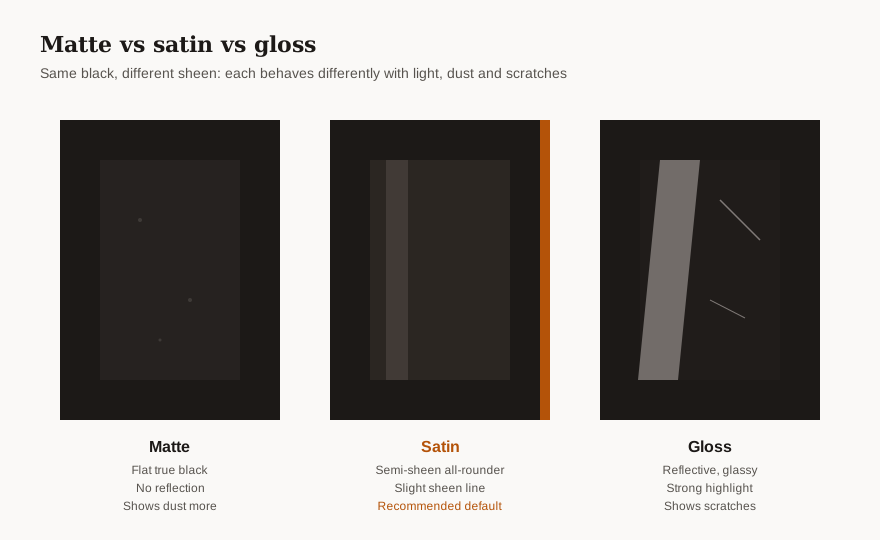
For the average Indian home in a dusty, hard-water climate, matte or satin is the right call. Gloss looks stunning in photos and high-maintenance in life.
The finish that lasts: powder-coat and warranty
"Black frame" almost always means a powder-coated finish (a dry pigment baked on as a tough, even skin) — far more durable than wet paint, and the standard for both aluminium and steel-look systems. For exterior-facing windows in coastal or polluted air, the quality grade matters:
- Ask whether the coating is an architectural-grade powder rated for outdoor weathering, ideally to the AAMA 2604 / 2605 or Qualicoat class your fabricator can name.
- A reputable aluminium fabricator should offer a coating warranty of around 8 to 15 years against fading and chalking. Get it in writing.
- Coastal homes (Goa, Kerala, Chennai) should specify a marine-grade pre-treatment — salt air is the enemy of any coating.
| Material | How "black" is achieved | Durability of the black | Indicative price (window, supply) |
|---|---|---|---|
| Aluminium | Powder-coated, factory-baked | Excellent; even, repairable | Rs 350 to 3,000 per sqft |
| Steel (true Crittall-style) | Powder-coated or painted over galvanised steel | Excellent and very slim, but rust if coating is breached | Premium; specialist fabricators |
| uPVC with black foil/laminate | A black foil laminated onto the white profile | Good; can be prone to edge-lift or fade if cheap foil | Rs 250 to 800 per sqft |
| uPVC mass-coloured | Black through-and-through (rare in India) | Best for uPVC; no foil to peel | Higher than foil uPVC |
A note on uPVC: black is the hardest colour for it. The foil absorbs heat and can make the profile expand, and budget foils peel at the corners. If you want black uPVC, insist on a reputable laminated foil from a named brand and avoid it on the most sun-blasted west and south elevations. For the full how-it-works and cost breakdown by material, see Types of Home Windows in India.
Where black frames suit best
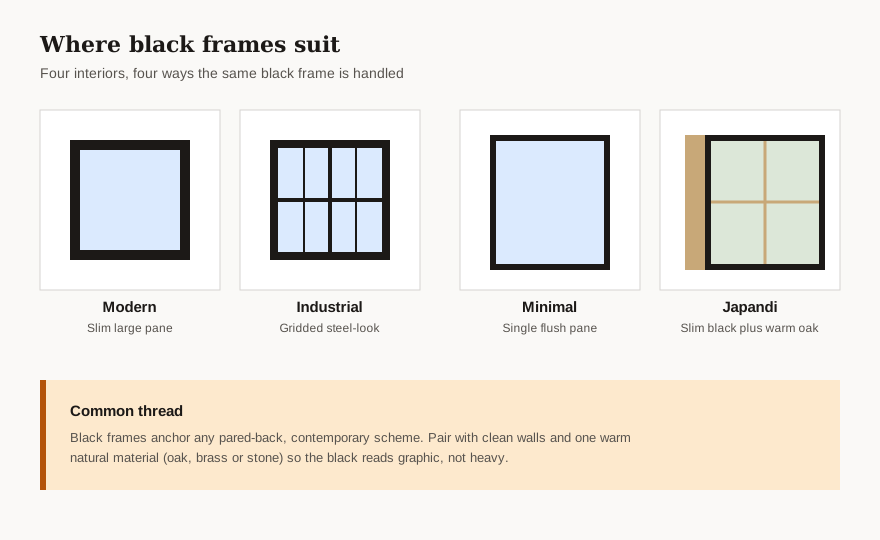
| Interior style | Why black works | Pair it with |
|---|---|---|
| Modern / contemporary | Sharp, intentional sightlines | Slim aluminium, large clear panes |
| Industrial | The signature look | Gridded steel-look, exposed brick or concrete |
| Minimalist | Single graphic line, no clutter | One large pane, flush reveal, no grids |
| Japandi | Black grounds the warm-wood calm | Slim black frame, oak floors, shoji-style grids |
| Heritage / ornate | Usually clashes | Prefer white, teak, or wrought-iron tones instead |
The fit is strongest where the rest of the room is restrained — black frames are loud, so they sing in calm, neutral spaces and shout in busy, traditional ones.
Living with black: dust and scratches
Two honest maintenance truths:
- Dust shows. Black surfaces broadcast every speck of pale Indian dust and every dried water spot. Plan to wipe the frames more often than you would a beige one. A soft damp microfibre cloth is enough; skip abrasive scrubbers, which dull matte finishes.
- Scratches reveal the substrate. A deep scratch on aluminium or steel exposes the lighter metal beneath and stands out sharply. Keep a small touch-up pen from your fabricator. On steel, repair scratches promptly — bare steel rusts.
The honest hot-India caveat
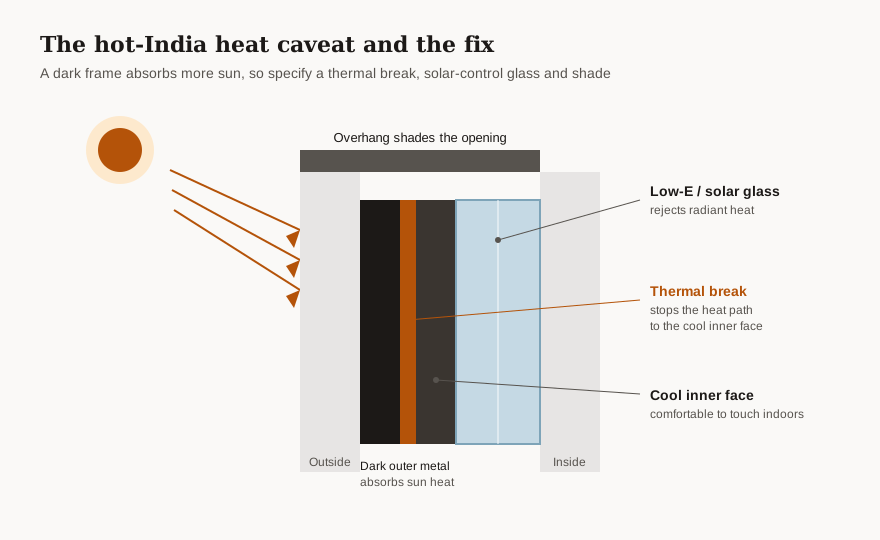
Here is the part the trend reels skip. Dark surfaces absorb solar heat. A black frame in full afternoon sun runs significantly hotter than a white one — the metal warms, and that heat conducts inward through the frame and convects into the room. On a west-facing window in a Nagpur or Ahmedabad summer, this is a real, felt difference, not a theoretical one.
This does not mean "don't use black." It means don't use black naively on a hot, exposed elevation. Pair it intelligently:
- Specify the glass, not just the frame. A black frame around plain clear glass is the worst case. Around Low-E or solar-control glass, the frame is a minor heat path next to the (now-controlled) glass. The glass does the heavy lifting — see Energy-Efficient Windows for India and Types of Glass for Windows.
- Choose a thermally-broken frame in aluminium and steel — an insulating barrier inside the profile that stops the hot outer metal handing heat to the cool inner face. Non-broken black aluminium is the worst conductor of the lot.
- Shade the opening. Overhangs, deep reveals, louvres, external blinds or pergolas cut the sun before it ever reaches the dark frame.
| Hot-India do / avoid | Do | Avoid |
|---|---|---|
| Glass | Low-E / solar-control behind the black frame | Plain clear glass on sun-facing black frames |
| Frame build | Thermally-broken aluminium or steel | Non-broken black aluminium on west / south |
| Material on hot walls | Aluminium or steel | Black-foil uPVC on the most sun-blasted elevations |
| Shading | Overhangs, deep reveals, louvres, external blinds | Black frame, full sun, zero shade |
Get-the-look checklist
- Choose matte or satin black, not gloss, for most Indian homes.
- Keep the room calm and neutral so the frame reads as a graphic line, not noise.
- Go frameless-minimal (one big pane) for modern, or gridded only if you genuinely want the industrial look.
- Specify an architectural-grade powder coat with a written coating warranty; marine pre-treatment on the coast.
- On any sun-facing wall, pair black with Low-E glass, a thermal break, and shade — never black-on-clear-glass in full sun.
- Buy a touch-up pen with the windows; budget for more frequent dusting.
For the umbrella of the modern window aesthetic — slim sightlines, large glazing, frame colour and proportion — start at the pillar, Modern Window Design Ideas for India.
References
- Crittall Windows — heritage steel windows (founded 1849): https://www.crittall-windows.co.uk/
- AAMA / FGIA architectural coatings standards (AAMA 2604 / 2605): https://fgiaonline.org/
- Qualicoat powder-coating quality standard: https://www.qualicoat.net/
- Bureau of Energy Efficiency — windows and glazing guidance: https://beeindia.gov.in/
Export this guide
Related Guides — Deep-dive reading
Aluminium Windows Guide (India): Slim, Strong, and the Thermal-Break Question
Why aluminium gives you the most glass and least frame, why bare metal conducts heat, and how a polyamide thermal break plus DGU fixes it.
Windows & GlazingIndustrial Style Windows in India: The Crittall-Style Steel Look
Slim black gridded steel-look frames, factory glazing and raw-material pairing — plus the honest choice between true steel and steel-look aluminium
Windows & GlazingMinimalist Window Designs for Indian Homes
The slimline, near-frameless look — hidden frames, single large panes, no grids, monochrome detail, and how to get it without the heat and cleaning traps.
Windows & GlazingRelated Tools — Try Free
Window Material Comparison Tool
Compare uPVC, aluminium, wood, steel and composite windows on cost, life, upkeep and insulation.
CompareWindow Maintenance Cost Calculator
Estimate annual window upkeep by frame material — yearly, per-window and 5-year cost.
Window CalculatorDoor Material Comparison Tool
Compare 2–4 door materials on cost, durability, maintenance, security and moisture resistance.
Comparison Tool