
Luxury Window Design Trends for Indian Homes (2026)
Oversized glazing, pivot and lift-and-slide systems, curved glass, bronze frames and motorised windows, the statement-window trend book for premium Indian homes.
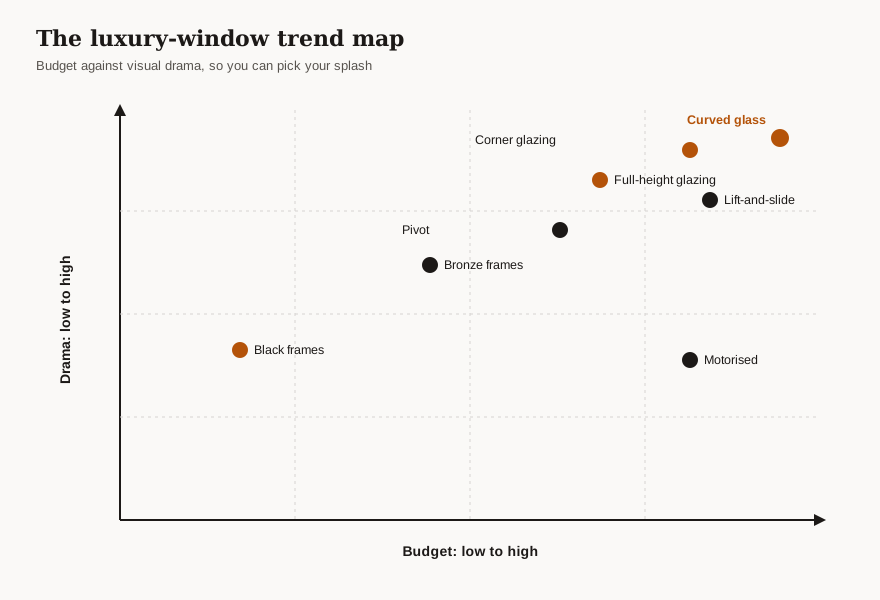
Luxury, in a window, is not a single feature you bolt on. It is a set of decisions about scale, sightline, frame finish and how the glass moves, all working together so the window reads as architecture rather than as a hole punched in a wall. This guide is the trend book for premium and statement windows in Indian homes for 2026: what is in, what the looks actually are, and how to read each trend before you commit. It deliberately stays in the styling lane. For how these systems mechanically work, see the type guide; for what a full luxury interior costs, we link out rather than repeat.
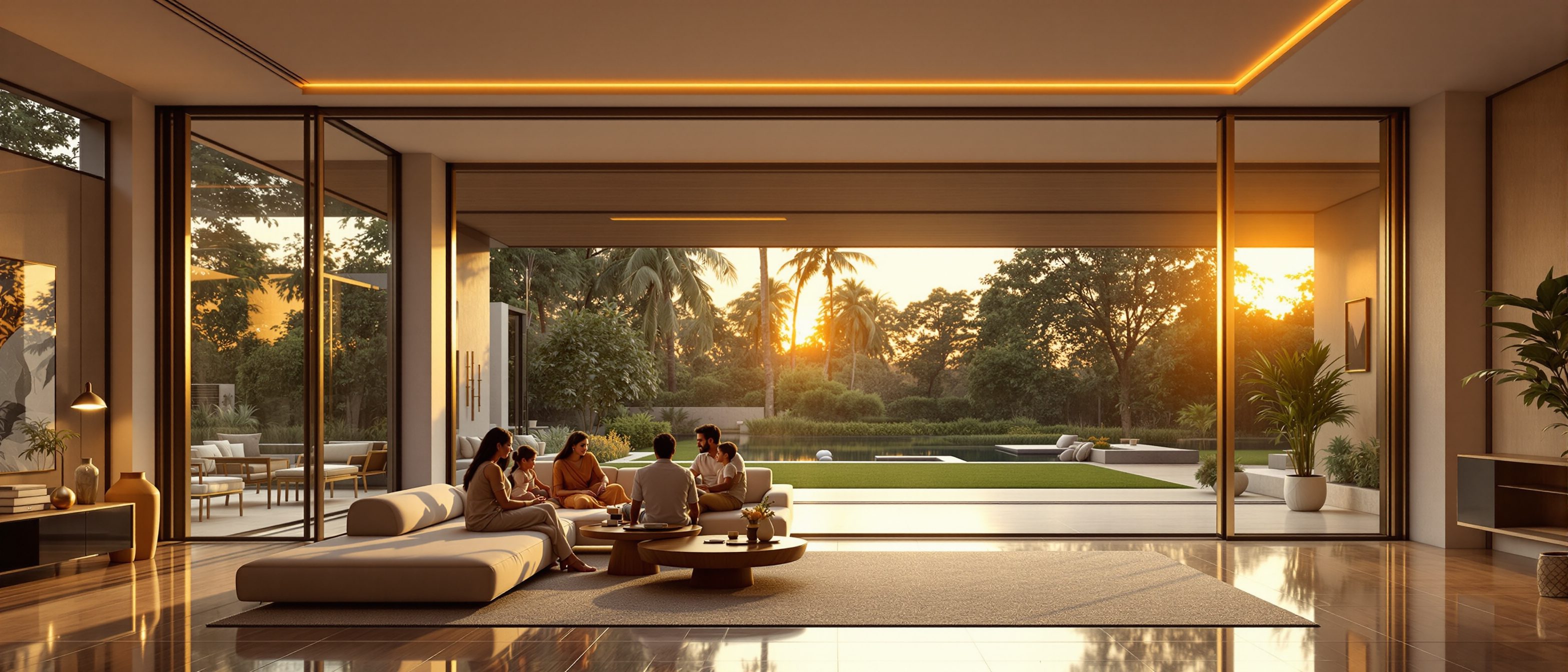
A luxury window earns its keep visually: the frame disappears, the glass enlarges, and the view becomes the most expensive material in the room.
What makes a window read as "luxury"
Three things separate a statement window from an ordinary one, and none of them is the price tag alone.
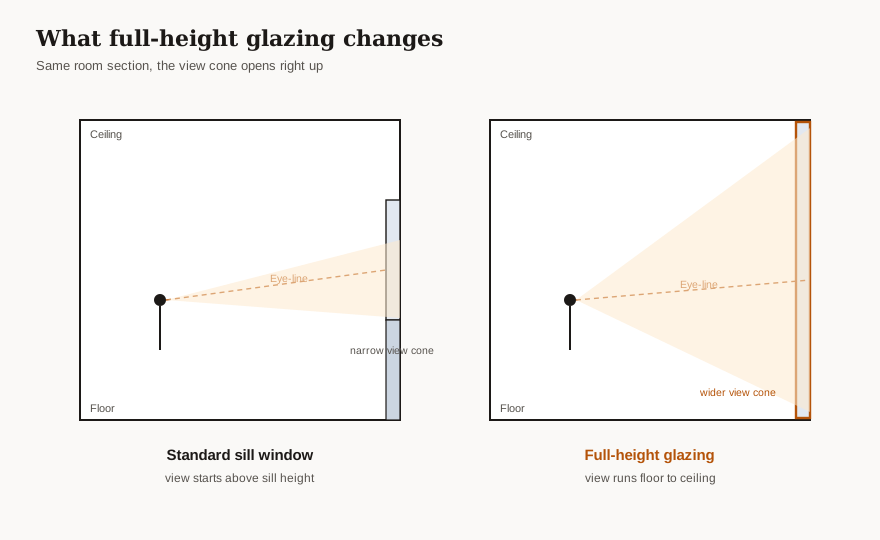
- Scale. Glazing that runs floor-to-ceiling, or spans a full wall, changes the proportion of the room. A 2.7 m clear pane reads as luxury; a standard 1.2 m window with a sill does not.
- Sightline. Slim or hidden frames mean more glass and less metal. The eye sees the garden, the skyline, the courtyard, not the framing.
- Material and movement. Brass and bronze finishes, motorised operation, and oversized moving panels signal craft and engineering most homes do not have.
The 2026 luxury window trends
| Trend | The look it speaks | Where it suits | Watch-out |
|---|---|---|---|
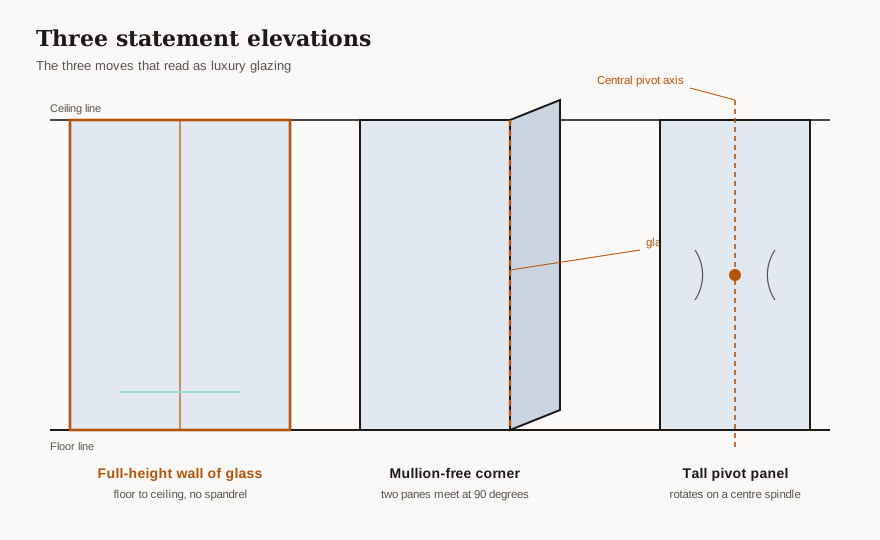
| Oversized / full-height glazing | Gallery wall of glass, no sill | Living rooms, double-height halls, sea/skyline views | Solar heat gain; needs Low-E and shading |
| Pivot windows / doors | Single huge panel rotating on a central spindle | Statement entries, garden rooms | Heavy leaf; needs a strong floor and quality pivot hardware |
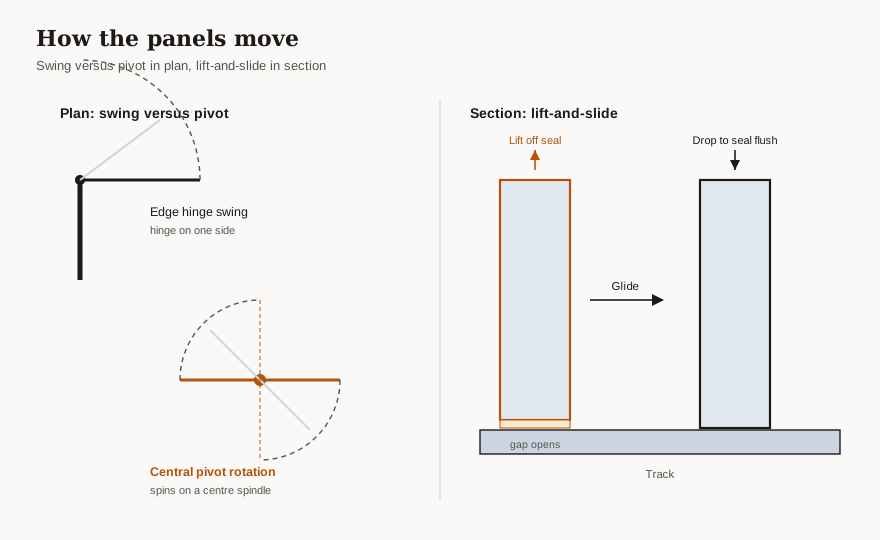
| Lift-and-slide systems | Wide panels that glide and seal flush | Indoor-outdoor flow to decks, lawns, balconies | Track must be detailed flush for the look |
| Curved / bent glass | Soft, seamless wrap around a corner or stair | Feature stairwells, turrets, premium facades | Bespoke, long lead time, high cost |
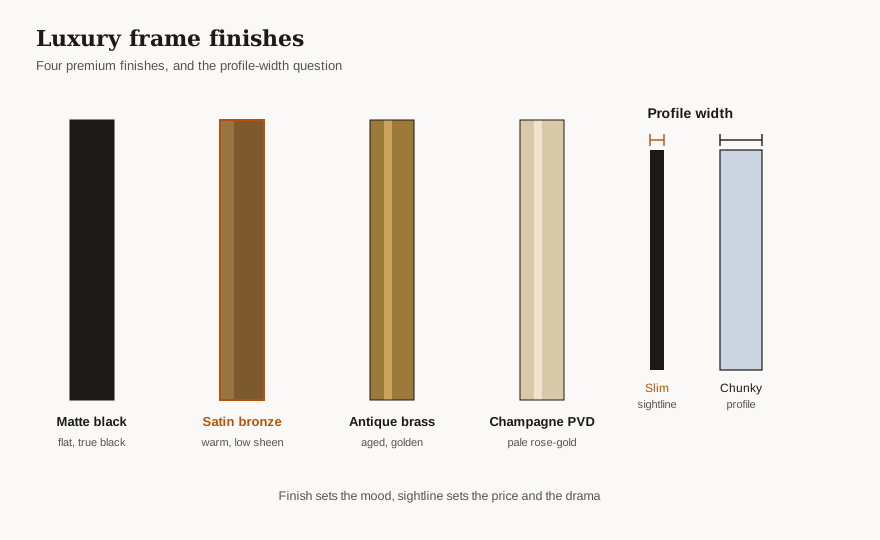
| Brass and bronze frames | Warm metallic jewellery for the opening | Luxe drawing rooms, period and contemporary alike | Real bronze ages; PVD "bronze" stays uniform |
| Corner glazing without mullions | Two glass panes meeting at 90 degrees, no post | Corner living rooms, vista-led plans | Structure must carry the load above the glass |
| Motorised / smart windows | Frame-free operation, app and voice control | High windows, clerestories, hard-to-reach spans | Actuators and power routing must be planned early |
Oversized and full-height glazing
The defining luxury move is the wall of glass. Instead of a window in a wall, the wall is glass. In Indian living rooms this works best where there is a view worth framing, a sea front in a Mumbai or Goa home, a layout opening to a private lawn, or a high-floor skyline. The slim-sightline aluminium and steel systems that make this possible are covered mechanically in our types guide; aesthetically, the rule is fewer, larger panes and the thinnest frame the structure allows.
Pivot and lift-and-slide systems
A pivot panel rotates on a central axis rather than swinging on edge hinges, so a single very large leaf can open with a fingertip. It reads as sculptural and is most often used as a statement door or a feature window in a garden room. Lift-and-slide systems lift the panel off its seal to glide, then drop it to seal flush, giving you wide, weather-tight spans that disappear into a pocket. Both are the premium answer to indoor-outdoor flow.
Curved and bent glass
Curved glazing wraps a corner, a stairwell or a turret in one continuous sweep with no visible vertical break. It is the most bespoke item on this list, made to order, slow to fabricate and the priciest per square foot, but nothing else delivers that seamless, soft-edged drama. Reserve it for one hero moment, not the whole house.
Brass, bronze and dark metal frames
Frame finish is where luxury becomes tactile. Brass and bronze frames add a warm, jewel-like outline that flatters both period drawing rooms and clean contemporary interiors. Real bronze develops a living patina; PVD-coated "bronze" and "champagne" finishes on aluminium stay uniform and are easier to maintain. The graphic alternative is the black frame, a trend so distinct it has its own deep-dive, linked below.
Corner glazing and motorised glass
Mullion-free corner glazing, two panes butt-jointed at the corner with no post between, dissolves the boundary of the room and is a signature of vista-led luxury plans. Motorised and smart windows let high clerestories, skylights and wide spans open at a tap or on a schedule, with rain sensors closing them in the monsoon. Both must be designed in early: corners need the structure overhead resolved, and motors need power and actuators planned before plaster.
Get-the-look checklist
| Element | Luxury choice | The styling logic |
|---|---|---|
| Pane size | Largest single pane the system allows | More glass, fewer interruptions |
| Frame profile | Slimmest sightline available | The view, not the frame, is the feature |
| Frame finish | Bronze, brass, champagne PVD or matte black | Metallic warmth or graphic contrast |
| Movement | Pivot, lift-and-slide or motorised | Engineering you can feel |
| Grids / muntins | None, or one bold structural division | Minimal grids read modern and costly |
| Glass | Low-E, solar-control, extra-clear "low-iron" | Clarity plus heat control |
Where the money actually goes
Statement windows concentrate spend in a few places, and it helps to know where before you brief a fabricator. The premium is paid for: large single panes (glass cost and handling rise sharply with size), slim structural frames (the thinner the sightline, the more engineered the system), specialist hardware (pivot spindles, lift-and-slide gear, motors), and bespoke glass (curved, bent or low-iron). Operable luxury systems sit well above the everyday anchors, ordinary uPVC runs roughly Rs 250 to 800 per sqft and aluminium Rs 350 to 3,000 per sqft, with installation around Rs 200 per sqft, but premium pivot, lift-and-slide and curved systems are quoted bespoke and routinely land far above the top of those bands.
This guide is about the trends, not the budget. For how to spend a whole-interior luxury budget wisely, and where windows sit within it, read our cost guides rather than a number we repeat here.
Do and avoid
| Do | Avoid |
|---|---|
| Pick one or two hero windows to carry the drama | Making every opening oversized, it dilutes the effect and the heat load |
| Pair big glazing with Low-E and external shading | Specifying clear glass on a west or south wall in a hot zone |
| Match frame finish to your hardware and metals | Mixing brass, chrome and black at random across the room |
| Plan motors, corners and pivots before structure | Retro-fitting smart hardware after plaster |
| Keep grids minimal or absent | Busy muntin patterns that fight a luxury sightline |
Restraint is the luxury. One wall of glass, framed in bronze, says more than ten ornate windows.
Related reading
- Pillar: Modern Window Design Ideas for Indian Homes places these statement windows within the wider modern-window aesthetic.
- Cousin (cost, differentiate): Budget Luxury Interiors and Cost of Luxury Interiors in Metro Cities tell you how to spend on a whole luxe interior. This guide is the window trend book, the looks, not the budget.
- How they work and cost per type: Types of Home Windows in India covers the pivot and lift-and-slide mechanics behind these trends.
- Sibling: Black-Frame Windows in India and Minimalist Window Designs take the slim-sightline luxury look further.
References
Export this guide
Related Guides — Deep-dive reading
Minimalist Window Designs for Indian Homes
The slimline, near-frameless look — hidden frames, single large panes, no grids, monochrome detail, and how to get it without the heat and cleaning traps.
Windows & GlazingMinimalist Door Designs in India (2026): Flush, Frameless & Concealed-Frame Doors
The clean-line, no-architrave, hidden-hardware door language behind modern Indian apartments and designer interiors — flush-to-wall doors, concealed hinges, recessed pulls, tall leaves and what the look really costs.
Home Doors & EntrancesModern Door Design for Indian Homes: 9 Contemporary Looks That Still Work in the Monsoon
Minimalist flush-and-groove leaves, vertical and horizontal slats, flush-with-frame reveals, handle-less pulls, glass accents and statement pivots - the contemporary door styles that look right in a 2026 Indian home, and what each one costs and demands.
Home Doors & EntrancesRelated Tools — Try Free
Window Cost Calculator
Estimate window price plus installation by type, frame material, size, glass and quantity.
Window CalculatorBrise-Soleil Visualizer
Interactive horizontal-louvre cut-off angle calculator — sun altitude, louvre depth, and spacing inputs with a live shadow preview. Computes θ = arctan(spacing/depth) for façade shading, ECBC envelope compliance, hospital daylight design, and tropical sun-control detailing.
Sun Shading ToolMaterial Schedule Generator
Generate a room-wise finish schedule — walls, floors, ceilings, trim, and joinery by location.
Material Schedule