
Tadelakt Walls: The Complete Guide for Indian Homes
The Moroccan lime plaster that waterproofs a shower with no tiles and no grout — what tadelakt is, where it shines, how the soap-and-lime reaction seals it, its tactile look, and the cost versus microcement.
Tadelakt is one of the small miracles of the finishing world: a lime plaster, no tiles and no grout, that you can use inside a shower. Brought from Morocco — where it has lined hammams and bathhouses for centuries — it is troweled on, polished hard with a smooth river stone, and then cured with a black-soap treatment that reacts with the lime to make the surface genuinely water-repellent. The result is a seamless, softly undulating, warmly coloured wall that feels like polished stone and wraps around curves, niches and even basins in one continuous, joint-free skin.
This is the complete guide to tadelakt walls for Indian homes — a deep dive under the decorative wall finishes guide and the master wall-finishes guide into the seamless waterproof lime finish. We will explain what tadelakt is, map where it shines, reveal how the soap-and-lime chemistry actually waterproofs it, describe its tactile look, and weigh it honestly against its modern rival, microcement.
What tadelakt is
Tadelakt's magic is chemical, not a coating — and understanding that is the key to trusting it in a wet room.
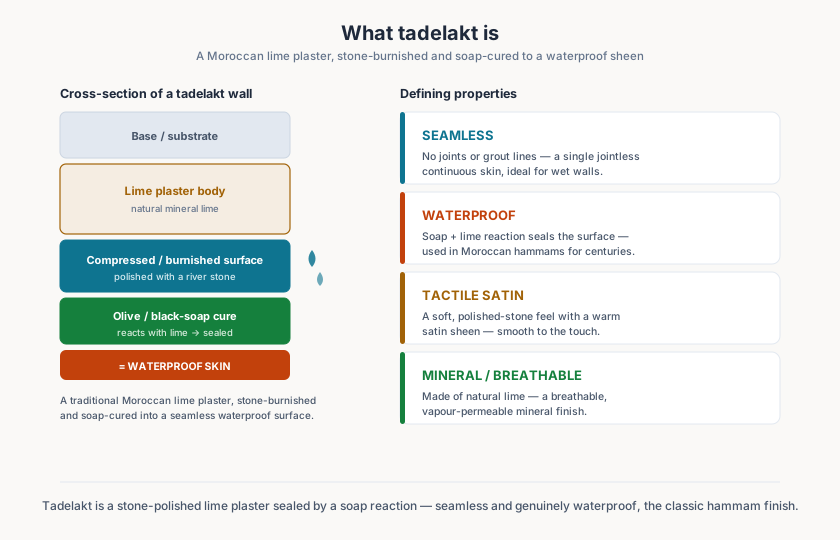
Tadelakt is a traditional Moroccan lime plaster that is stone-burnished to compact its surface and then cured with black (olive) soap, whose fats react with the lime to form an insoluble, water-repellent skin. That gives it four defining qualities: it is seamless (a continuous jointless surface, even in a shower), it is genuinely waterproof (the soap-lime reaction, proven over centuries in hammams), it has a tactile satin feel like soft polished stone, and it is mineral and breathable. Where ordinary lime finishes fear water, tadelakt is made for it.
Where tadelakt shines
Tadelakt earns its premium precisely where seams and grout are a liability — wet, curved and hand-shaped spaces.
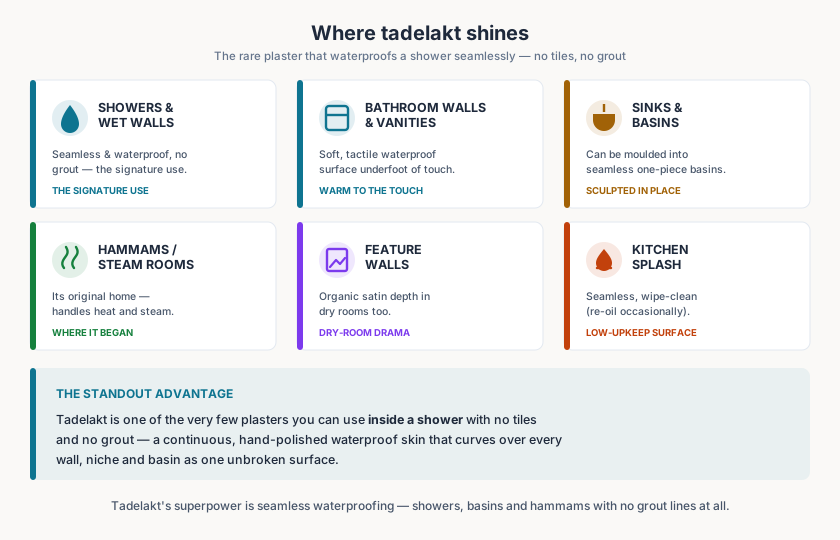
Its signature act is the shower and wet wall — seamless and waterproof, with no grout to mould. It is equally at home on bathroom walls and vanities, and it can be moulded into seamless sinks and basins, in hammams and steam rooms (its original habitat), on dry feature walls for its organic satin depth, and on a kitchen splashback (re-oiled occasionally). The headline: tadelakt is one of the very few plasters you can use inside a shower with no tiles and no grout — a continuous, hand-polished waterproof skin.
How tadelakt is made waterproof
The part that surprises people is that tadelakt's waterproofing is not a sealer you paint on — it is a reaction built into the surface.
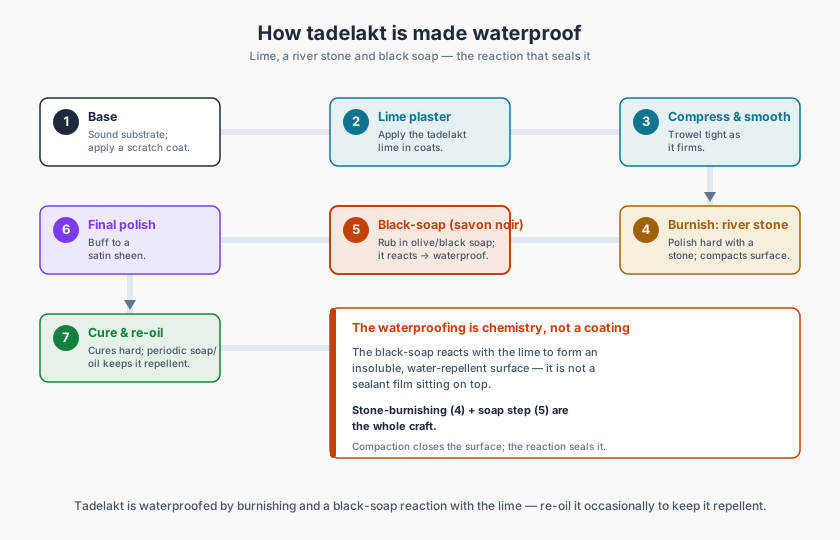
Over a scratch base, the applicator lays the tadelakt lime in coats, compresses and smooths it tight as it firms, then burnishes it hard with a smooth river stone to compact the surface, then rubs in black soap (savon noir), which reacts with the lime to form the insoluble, waterproof layer, before a final polish to a satin sheen and a slow cure. Periodic re-oiling keeps it repellent. The waterproofing, in other words, is chemistry, not a coating — and the stone-burnishing and soap step are the whole craft.
The tadelakt look
Beyond its waterproofing, tadelakt is prized for a look no tile can imitate: warm, organic and seamless.
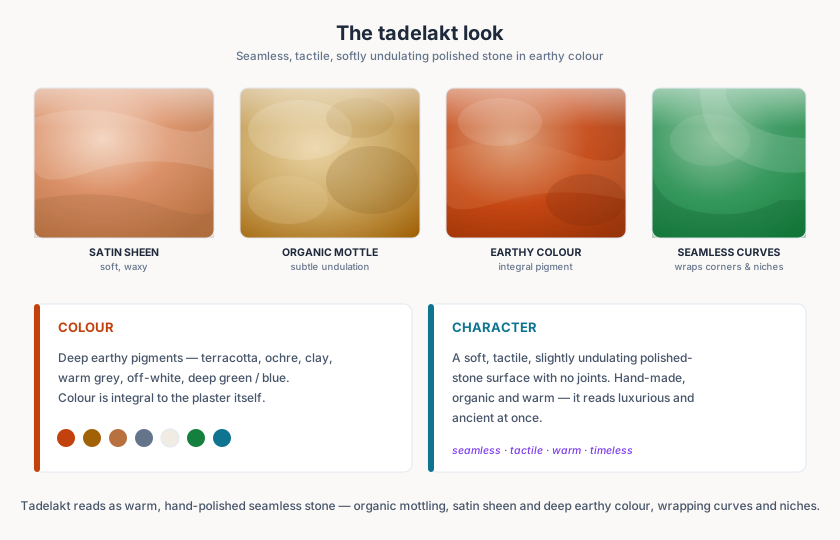
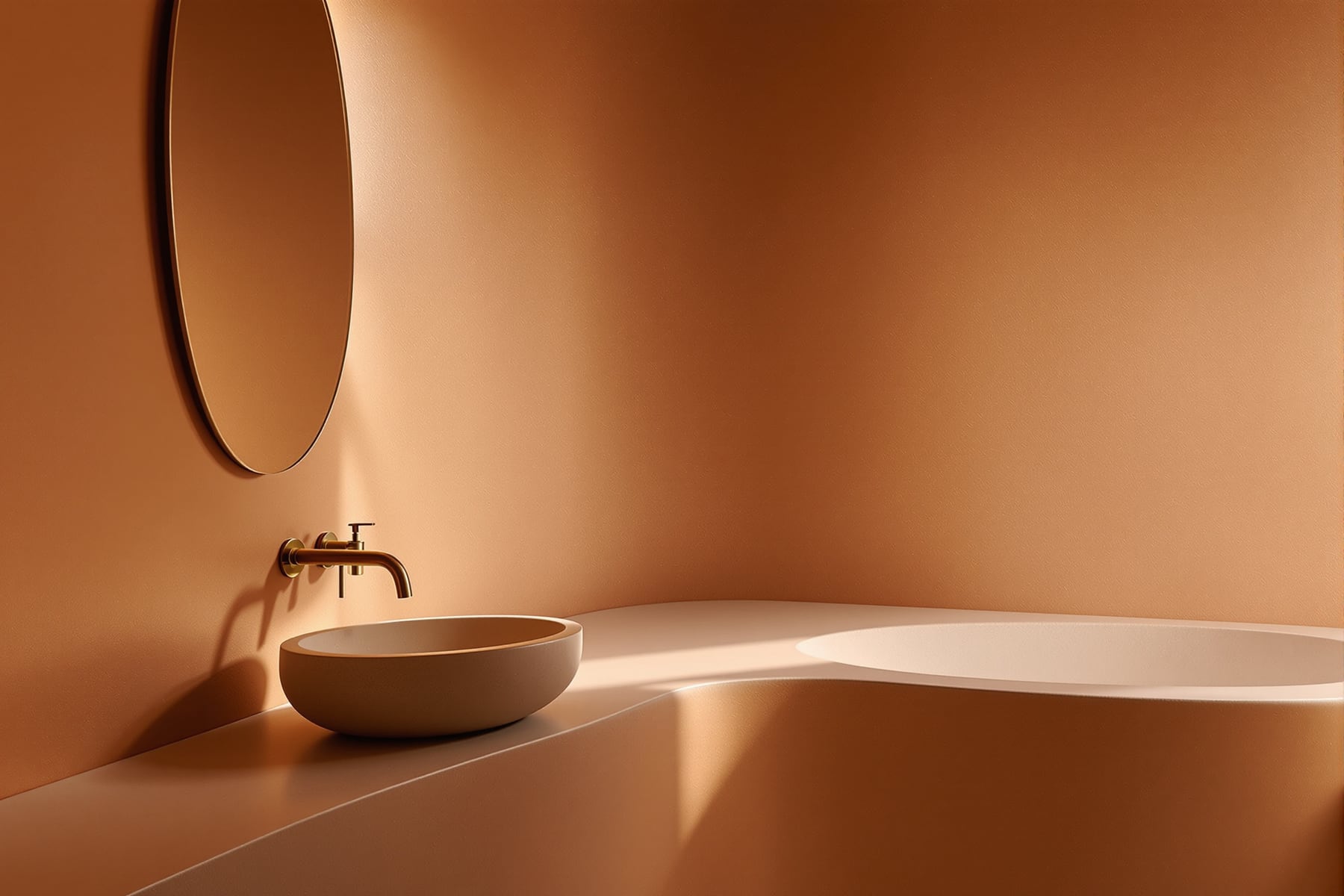
It reads as a soft satin sheen over a subtly undulating, organic surface, in deep earthy integral colours — terracotta, ochre, clay, warm grey, off-white, even deep green and blue — and it wraps seamless curves, corners and niches that tile simply cannot. In character it is hand-made, warm and slightly imperfect in the best way, reading as both luxurious and ancient. Every tadelakt wall is one continuous, tactile piece.
Tadelakt versus microcement, and the cost
Tadelakt's modern rival for a seamless wet room is microcement, and the honest comparison helps you choose.
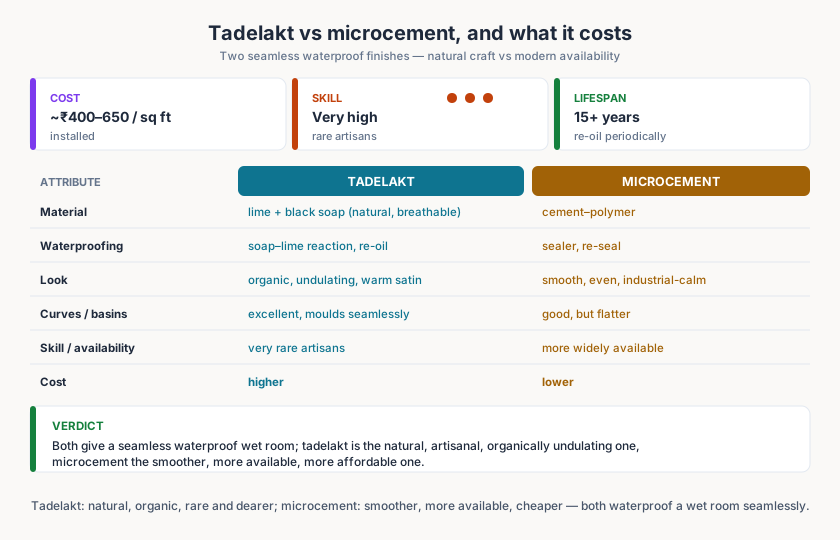
Expect roughly ₹400–650/sq ft installed for tadelakt, at very high skill with rare artisans, lasting 15-plus years with periodic re-oiling. Against microcement: tadelakt is the natural, breathable, organically undulating, warmly artisanal choice, waterproofed by the soap-lime reaction; microcement is the smoother, more even, more widely available and more affordable choice, waterproofed by a sealer. Both give a seamless, grout-free wet room — so the decision is really between natural craft (tadelakt) and modern availability and value (microcement).
Tadelakt is the finish that lets a bathroom become a single, seamless, hand-polished object — waterproof by ancient chemistry, warm by nature, and unlike anything a tile can do. Find a true artisan, keep it oiled, and it lasts for decades. For its smoother modern cousin and the wider family, see microcement walls and the decorative wall finishes guide.
Export this guide
Related Guides — Deep-dive reading
Decorative Wall Finishes: The Complete Guide for Indian Homes
The artisan tier — microcement, Venetian plaster, lime wash, tadelakt and more. The whole family of hand-troweled finishes, the look each one gives, where they work (including wet rooms), what they cost in skill and money, and how they're built up by hand.
Wall FinishesMicrocement Walls: The Complete Guide for Indian Homes
The thin, seamless cement skin that goes over almost anything — what microcement is, where it works including wet rooms, how it's applied by hand, the look and colours, and how it compares with tile.
Wall FinishesVenetian Plaster Walls: The Complete Guide for Indian Homes
The luxury lime-and-marble finish burnished to a stone-like glow — what Venetian plaster is, the matte-to-mirror look, how it's applied, where it belongs, and the cost, skill and care it demands.
Wall FinishesRelated Tools — Try Free
Home Colour Studio
Colour every room — living, bedroom, dining, kitchen, bathroom — surface by surface in any HEX/RGB/CMYK colour, or from 80+ curated Indian shades.
Colour StudioBathroom Waterproofing Calculator
Work out waterproofing material (kg/L) and cost for a bathroom by area, wall band, system type and coats — cementitious, acrylic, PU or SBR.
Bathroom CalculatorShower Water Flow Calculator
Shower water use per shower, day and month by head type, plus a pressure-adequacy check for your tank height or pump and low-flow savings.
Bathroom Calculator