
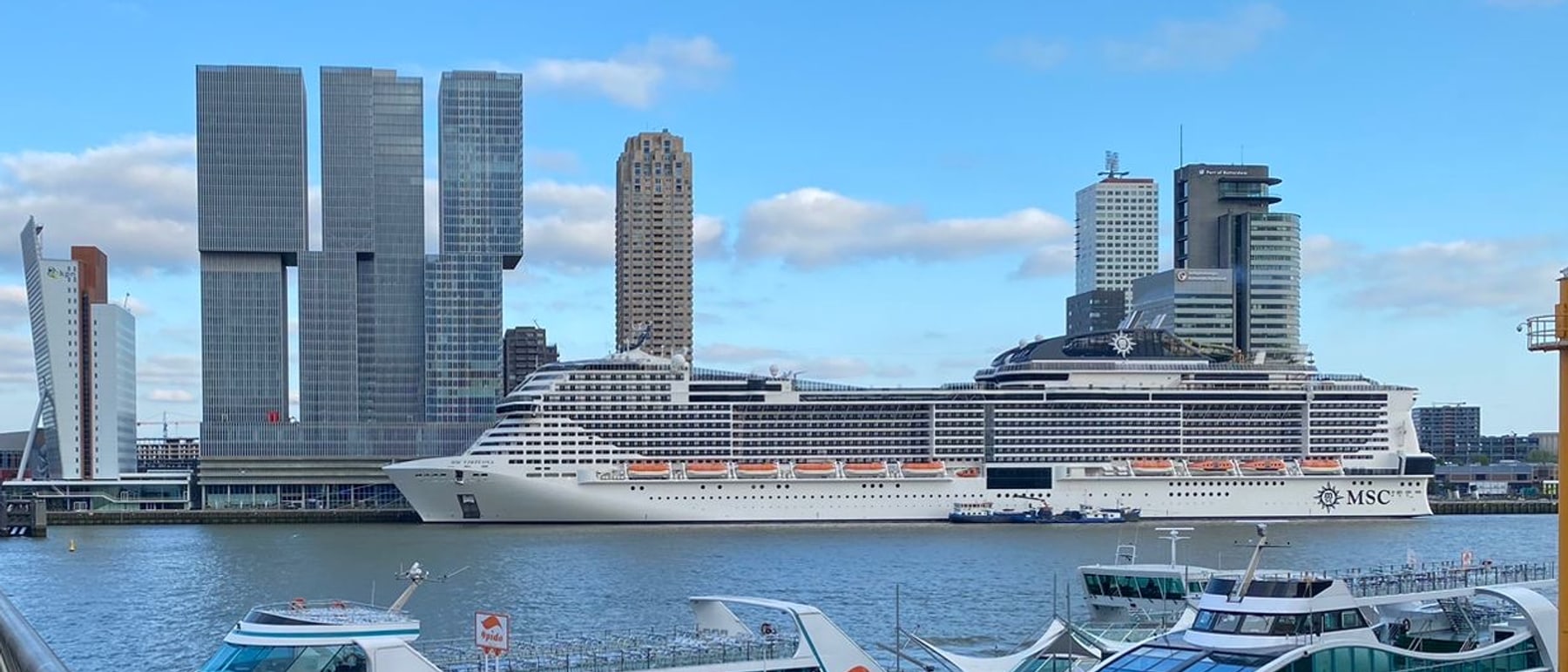
Kop van Zuid: A New City on the Old Docks
How Rotterdam turned a mile of derelict Holland America Line docklands — the pier from which close to a million emigrants sailed for the New World — into a waterfront district of star-architect towers, stitched to the city by a single bridge and built patiently across thirty years.
One last time in Rotterdam — and this time the wonder is not a building at all. It is a whole piece of a city. Stand on the Erasmus Bridge and look south, across the Nieuwe Maas, to a spit of land called the Wilhelminapier, crowded now with gleaming towers. This is Kop van Zuid — "the head of the south" — and forty years ago it was a wasteland: a mile of derelict docks, rusting cranes and empty warehouses, abandoned when Rotterdam's port sailed west to deeper water. Today it is one of the most admired pieces of urban regeneration in Europe, and the story of how it changed is, in its own quiet way, as much a wonder as any single building in this series.
It also carries a deep and moving history. This quay was the great departure gate of the Holland America Line — the pier from which, over half a century, close to a million Europeans boarded steamships and sailed for a new life in America. Kop van Zuid is a place built on departures, remade into a place to arrive.
This is the twenty-eighth article in our Architectural Wonders series — and the first about a whole district rather than a single building.
1. From dead docks to a district
To feel the achievement, you have to picture the emptiness first. For a century the south bank was working harbour — the wharves and warehouses of the Holland America Line and its neighbours. Then, as ships grew huge and cargo went into containers, the port migrated west, out to the deep water of the Maasvlakte, and left the old inner-city docks to die. By the 1980s the Kop van Zuid was a mile of dereliction staring across the water at a prosperous city that had turned its back on it.
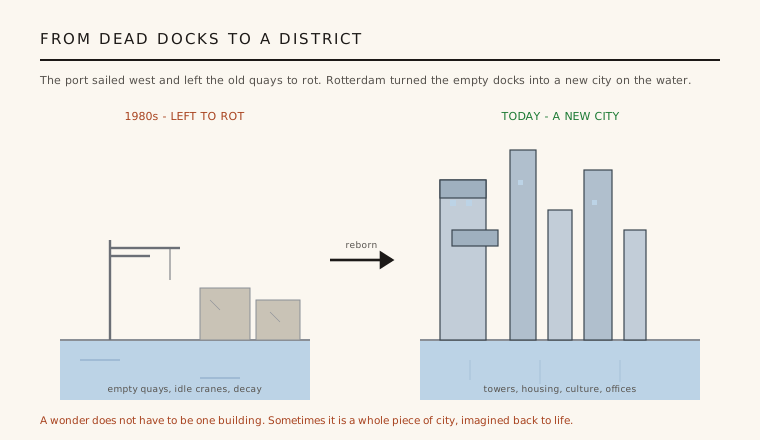
The turn came in 1986, when the city's planning chief resolved to redevelop the dead docks, and in 1991 Rotterdam adopted a masterplan by the planner Teun Koolhaas (no relation, as we will see, to Rem). Its idea was bold and simple: don't treat the south bank as a suburb, treat it as an extension of the city centre, leapt across the river — roughly 125 hectares and some 5,300 homes of offices, culture and housing. And crucially, the plan took the district's industrial identity as its starting point: instead of clearing the old harbour away, it would keep the great warehouses, the quays, the Holland America Line buildings, and give them new life beside audacious new towers. Memory and provocation, side by side.
2. The stitch across the water
But none of it could happen while the south bank was, in every sense, cut off. For a hundred years the river had divided a rich north from a poor south, and no amount of masterplanning would draw people and money across a gap they could not cross. So Rotterdam did something telling: before the district, it built the bridge.
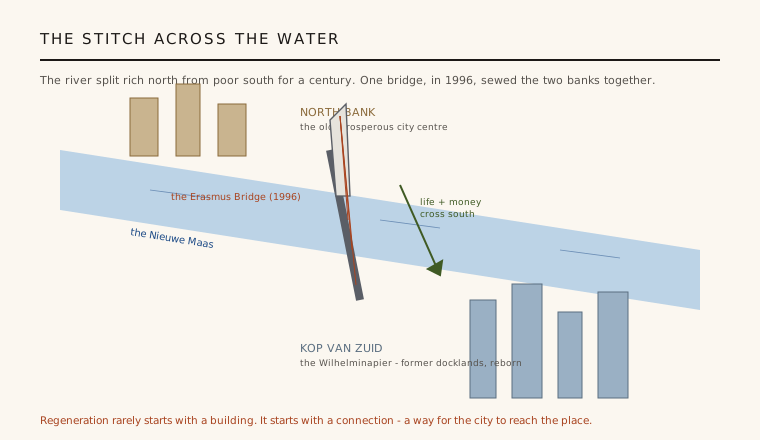
The Erasmus Bridge — Ben van Berkel's great white "Swan," opened in 1996 — was not only a way across the water. It was the catalyst and the symbol of the whole project, a deliberate, beautiful, expensive announcement that the south bank now mattered. The city judged the connection important enough to deserve an icon, and it was right: the bridge unlocked everything that followed. This is the first and largest lesson of Kop van Zuid, and it is easy to forget — regeneration rarely begins with a building. It begins with a connection, a way for the life of the city to reach the place you want to bring back.
3. A skyline by many hands
Once the bridge had opened the door, the towers came — and here is the second thing that makes Kop van Zuid remarkable. Its skyline was not designed by one celebrated architect stamping a signature on the waterfront. It was assembled, over years, from the hands of many of the world's best, each given a plot and a brief within Koolhaas's frame.
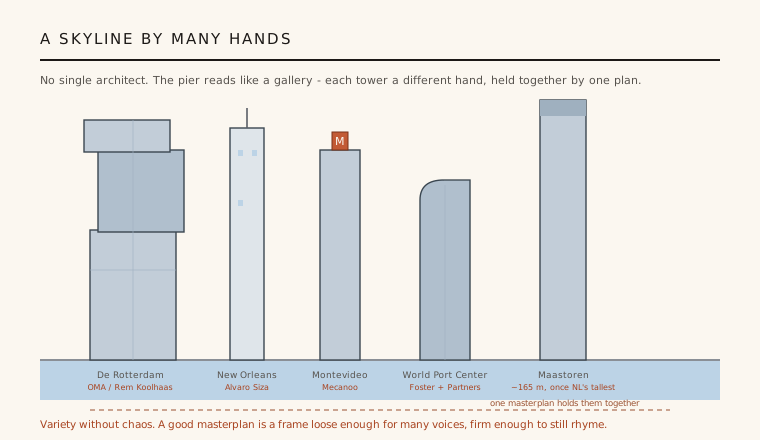
The result reads like a gallery. Rem Koolhaas and OMA built De Rotterdam (2013), a "vertical city" of three stacked, offset towers holding offices, homes, a hotel and shops in one mass — often called the largest building in the Netherlands, and a cousin of the stacking we saw at the nhow in Amsterdam. Álvaro Siza gave the pier the slender New Orleans tower; Mecanoo (Francine Houben) the Montevideo, crowned with a giant letter M; Norman Foster the curved World Port Center; and the nearby Maastoren rose to about 165 metres, for a time the tallest in the country. No two are alike, yet the skyline rhymes, because a masterplan held them together. That is the art of it — a frame loose enough to welcome many voices, and firm enough that they still make a chord rather than a cacophony. (And note the pleasing coincidence buried in the credits: the district's planner was Teun Koolhaas; its most famous tower is by Rem Koolhaas — two different men, a generation and a discipline apart.)
4. The gateway to the New World
Walk the pier, though, and the most affecting thing is not the newest tower but the oldest building — a stout, turreted, art-nouveau block at the very tip of the Wilhelminapier. It is now a hotel; it was once the headquarters of the Holland America Line, and it is the emotional heart of the whole district.
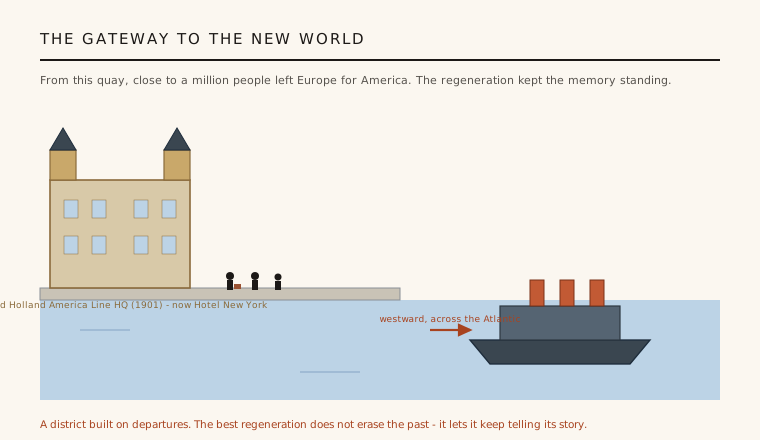
From this quay, between roughly 1880 and 1925, close to a million people — the poor, the hopeful, the persecuted, families with their suitcases and their children — boarded ships and sailed west across the Atlantic for a new life in the New World. For most of them, this pier was the last piece of Europe they would ever stand on. The masterplan understood that a place with a story like that must not be scrubbed clean: it kept the Holland America Line's headquarters, its departure hall and its warehouses, and turned the old HQ into the beloved Hotel New York (1993). The best regeneration does not erase the past to make room for the future; it lets the past keep telling its story beneath the new towers. There is something quietly moving in it — a district built on leavings, on the ache of departure and the courage of a new beginning, now made into a place people come home to. For a series that is itself a map of one traveller's journeys, no theme could be closer to the heart.
5. A city made slowly
And here is the final lesson, the one that most tests a modern architect's patience. Kop van Zuid was not built in a hurry. It could not be.
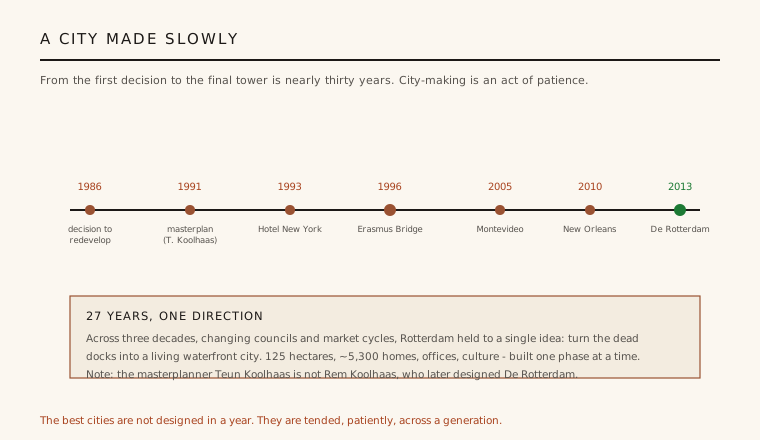
From the 1986 decision to the completion of De Rotterdam in 2013 is nearly thirty years — across changing city councils, boom and bust, and the slow grind of land, finance and construction. Through all of it, Rotterdam held to a single, patient idea: turn the dead docks into a living waterfront city, one phase at a time. That is perhaps the hardest truth in all of city-making, and the one our impatient age most needs to hear: the great pieces of city are not designed in a year. They are tended, across a generation, by people willing to begin something they may not live to see finished — which is, when you think about it, the most hopeful act of building there is.
6. What a modern architect can learn from Kop van Zuid
- Regeneration begins with a connection. Rotterdam built the Erasmus Bridge first, as icon and stitch, and the district followed. Before you design the buildings, ask how the life of the city will reach the place.
- A wonder can be a district, not a building. The unit of design here is a whole piece of city — 125 hectares, many towers, one waterfront. Learn to compose at the scale of the neighbourhood, not just the object.
- Keep the memory, add the provocation. The plan preserved the Holland America Line's buildings and set daring new towers beside them. Heritage and boldness can share a site — and the tension between them is the richness.
- Curate a skyline from many hands. A masterplan loose enough for OMA, Siza, Mecanoo and Foster, firm enough that they still rhyme. Variety with coherence beats either monotony or chaos.
- Anchor a place in its story. The emigration history gives Kop van Zuid an emotional depth no amount of real estate could buy. Memory is a design material; find the true story of a site and build on it.
- City-making is an act of patience. Thirty years, many hands, one direction. The best urban work is tended across a generation — begun by people content not to see it finished.
In Amogh's frame
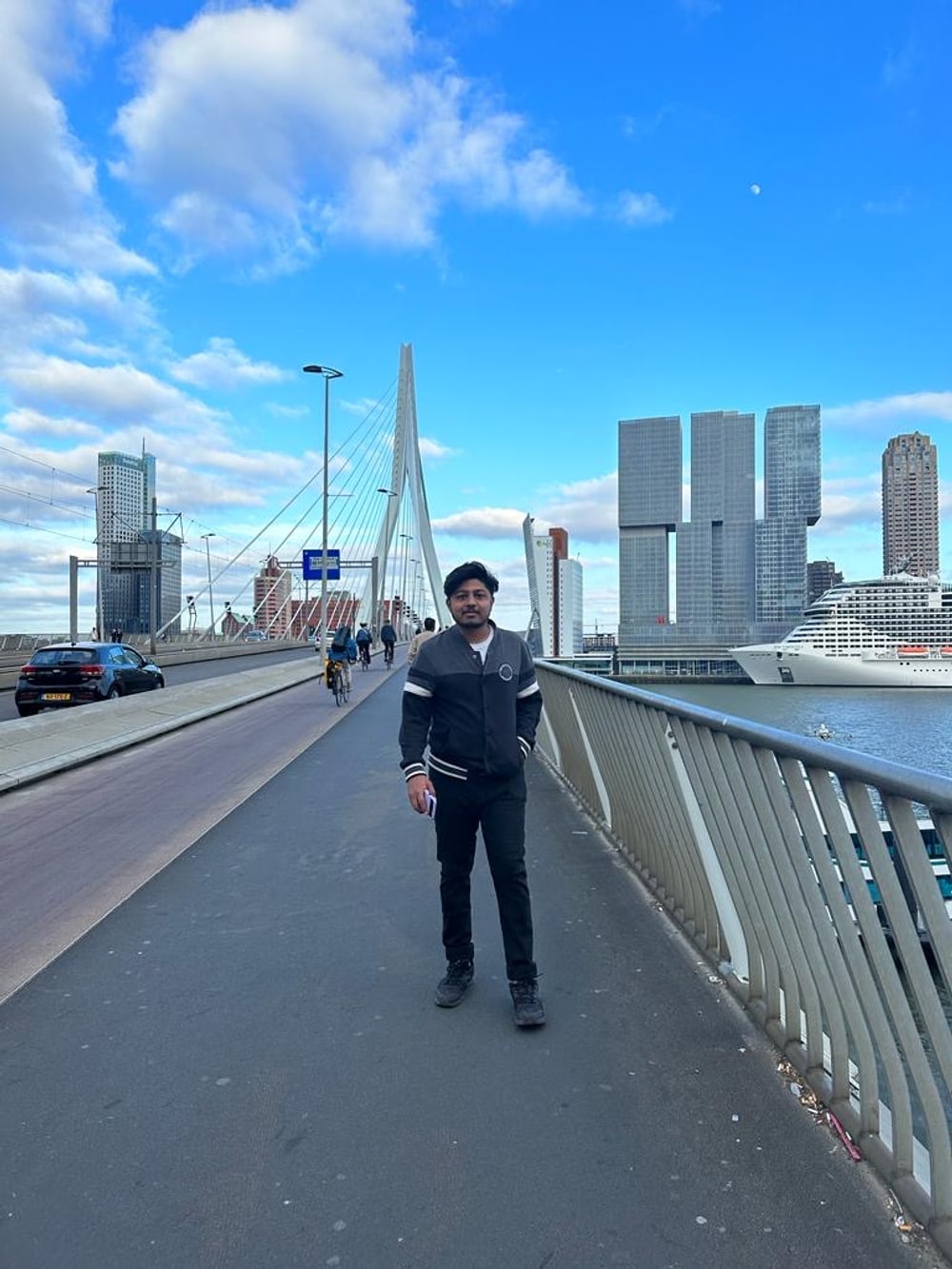
Kop van Zuid is a place Amogh walked himself. Here he is on the Erasmus Bridge — the very stitch across the water this whole article is about — with the towers of the reborn south bank rising behind him, on a bright, cloud-scudded afternoon in Rotterdam. He is standing, quite literally, on the connection that brought the district back to life.
Studio Matrx is built in his memory. Some of these wonders he walked through himself; this is one of them.
References & further reading
1. Wikipedia — Kop van Zuid. https://en.wikipedia.org/wiki/Kop_van_Zuid
2. Stadsarchief Rotterdam (City Archive) — Herontwikkeling Kop van Zuid. https://stadsarchief.rotterdam.nl/herontwikkeling-kop-van-zuid
3. URBED — Making Connections: Kop van Zuid Case Study. https://urbed.coop/
4. OMA — De Rotterdam. https://www.oma.com/projects/de-rotterdam
5. Wikipedia — Hotel New York (Rotterdam). https://en.wikipedia.org/wiki/Hotel_New_York_(Rotterdam)
6. Building magazine — Kop van Zuid, Rotterdam. https://www.building.co.uk/focus/kop-van-zuid-rotterdam/1519.article
Last verified 2026-07-03. Figures vary between sources and are given as widely cited approximations — Kop van Zuid covers about 125 hectares with roughly 5,300 planned homes on the former Holland America Line docklands; the masterplan (adopted 1991) was led by the planner Teun Koolhaas, who is not the architect Rem Koolhaas — the latter's OMA built De Rotterdam (2013, about 150 m, described as the largest building in the Netherlands). The Erasmus Bridge (1996) as catalyst, the towers by Siza (New Orleans), Mecanoo (Montevideo) and Foster (World Port Center), Hotel New York as the preserved Holland America Line headquarters, and the emigration of close to a million people to the New World (c.1880–1925) follow the established record.
Export this guide
Related Guides — Deep-dive reading
The Erasmus Bridge: Rotterdam's Swan
How a single leaning pylon and a fan of steel cables became the emblem of a city that had to reinvent itself — Ben van Berkel's cable-stayed swan across the Nieuwe Maas, the largest bascule in Western Europe, and the modern proof that a bridge can be a verb: it did not merely span Rotterdam, it changed it.
Architectural WondersACROS Fukuoka: Emilio Ambasz and the Building That Gave Its Park Back
Two decades before the vertical forest, Emilio Ambasz hid a million square feet of concert hall and offices under a fifteen-storey climbing garden — turning the oldest argument in cities, land value versus open space, into a single terraced hill in the heart of Fukuoka.
The Future of ArchitectureAmaravati: Can You Still Draw a Capital City on a Blank Sheet?
Foster + Partners' masterplan for Andhra Pradesh's new capital proposes an entire city from scratch on the banks of the Krishna — a green-spined grid crowned by a 250-metre assembly rising from a lake. It is one of the last great tabula-rasa capitals of the twenty-first century, and a live test of whether that idea should survive at all.
The Future of ArchitectureRelated Tools — Try Free
Before & After Studio
Generate AI before-and-after renders to preview how your redesign could look.
DesignAICross-Ventilation Analyzer
Estimate airflow and air changes per hour (ACH) from room size, window areas, layout, and local wind — with NBC 2016 Part 8 compliance check.
Ventilation CalculatorInterior Project Timeline Planner
Build a week-by-week project timeline across demo, civil, joinery, finishes, and handover.
Project Planner