

Home Renovation Red Flags
The warning signs in a quote, contract, or site that predict a renovation gone wrong
Most renovation disasters are predictable. The warning signs are visible in the quote, the contract, and the first site conversation — long before the money is lost. Homeowners miss them not because they are hidden, but because they do not know what to look for, and because the lowest, most confident-sounding vendor is the most reassuring at exactly the moment caution matters most.
This guide is a field manual for spotting renovation red flags before you sign. It is a deep-dive companion to our 25 interior mistakes homeowners regret and pairs with the interior contractor warning signs guide.
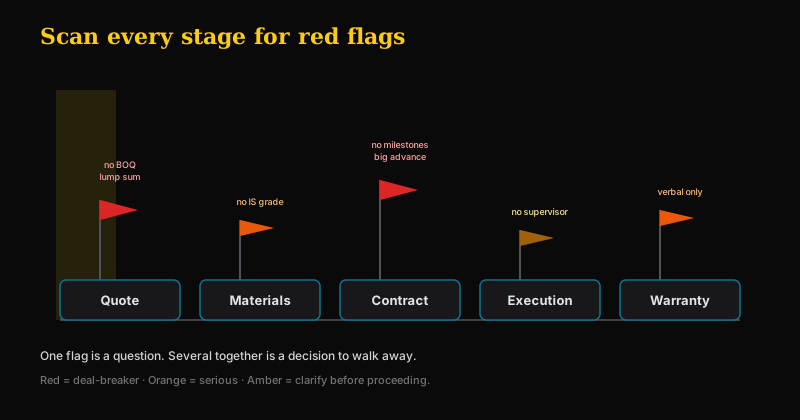
Red flags scan: across the whole project
Red flags cluster at five stages. A single one is a question; several together is a decision to walk away.
Stage 1: The quote
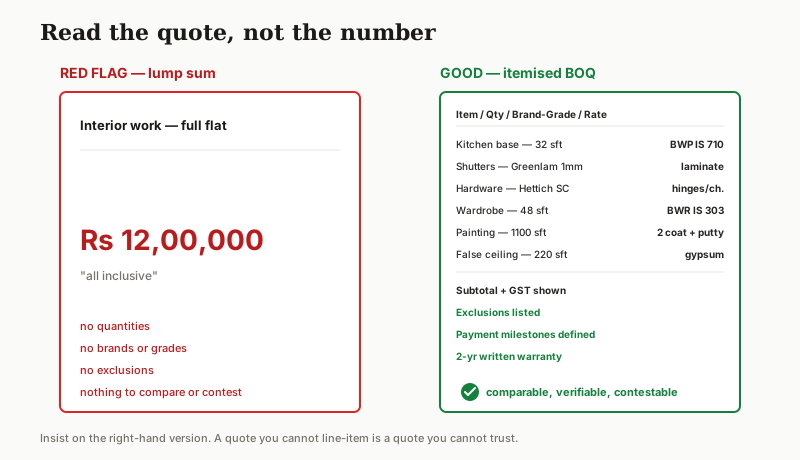
The quote is the first and most reliable tell. A trustworthy quote is itemised; a risky one is a single confident number.
| Red flag | Why it matters |
|---|---|
| Lump sum, no line-item BOQ | No way to compare, verify, or contest |
| No brand or grade named | Invites cheap substitution later |
| Far below every other quote | The savings are hidden cuts you will pay for |
| Verbal-only, nothing written | No recourse when it changes |
| Pressure to decide today | Manufactured urgency hides scrutiny |
Stage 2: Materials
If the quote will not name a plywood grade (IS 710 / IS 303), a laminate thickness, or a hardware brand, that is a material red flag. Vague specs are how a premium-looking quote becomes a budget build.
Stage 3: The contract
| Red flag | Why it matters |
|---|---|
| No written contract at all | The single biggest predictor of disputes |
| Large upfront advance (over ~25–30%) | Money gone, leverage lost |
| Payments not tied to milestones | No lever to keep work moving |
| No timeline or penalty clause | Delays become open-ended |
| No warranty in writing | After-sales evaporates |
Stage 4: Execution
No named site supervisor, carpentry done off-site with no inspection rights, electrical and plumbing changes undocumented, no mock-up before bulk production — all signal a project that will drift out of your control.
Stage 5: Warranty and handover
Verbal-only warranties, no invoice-backed cover, no service escalation contact. A vendor confident in their work puts the warranty in writing.
Trust the documents, not the confidence. The most reassuring vendor at signing is often the least accountable at handover.
The fix, in order
1. Demand an itemised BOQ with brands and IS grades.
2. Cap the advance and tie every payment to a milestone.
3. Get a written contract with timeline, penalty, and warranty clauses.
4. Confirm site supervision and inspection rights.
5. Run a red-flag check before any money changes hands.
Prevent it: Screen the proposal with the Red Flag Checklist, vet the vendor with the Contractor Checklist, prepare the site with the Pre-Renovation Checklist, and benchmark the numbers with the Cost Reality Check and home renovation cost in India.
References
- Consumer Protection Act, 2019 (India). New Delhi: Ministry of Consumer Affairs, Government of India.
- Indian Contract Act, 1872 (India). New Delhi: Government of India.
- Bureau of Indian Standards (2010) IS 710:2010 — Marine Plywood. New Delhi: BIS.
- Ramus, J., Birchall, S. and Griffiths, P. (2006) Contract Practice for Surveyors. 4th edn. Oxford: Butterworth-Heinemann.
Part of the Studio Matrx Mistakes & Pitfalls series.
Export this guide
Related Guides — Deep-dive reading
Contractor Red Flags: Warning Signs When Hiring in India (2026)
A homeowner's plain-language guide to the warning signs before you sign and while work is on site - and the practical safeguard for each. Even-handed: most contractors are honest, and these habits protect you against the minority who are not.
Hiring ProfessionalsUnderstanding Construction Contracts & Retainage in India
A homeowner-protective guide to the contract and payment structure behind every interiors or build project — the contract types and when each fits, how to stage payments so your money trails the work, and the retention clause that quietly protects you more than any other.
Cost & MoneyThe Complete Guide to Planning Your Home Before You Spend a Rupee
Why the cheapest, most powerful work happens on paper — a planning playbook for Indian homeowners before any money moves
Home PlanningRelated Tools — Try Free
Interior Contract Clause Checklist
16 sections and 98 checkboxes covering scope, BOQ, milestones, penalties, warranty, and disputes.
Contract ChecklistInterior Red Flag Checklist — Before Signing
54 red flags across 8 categories with a live risk score and personalised PDF.
Red Flag ChecklistSnag Checklist
Professional interior snag checklist for handover inspection across 10 work categories.
Snag List