
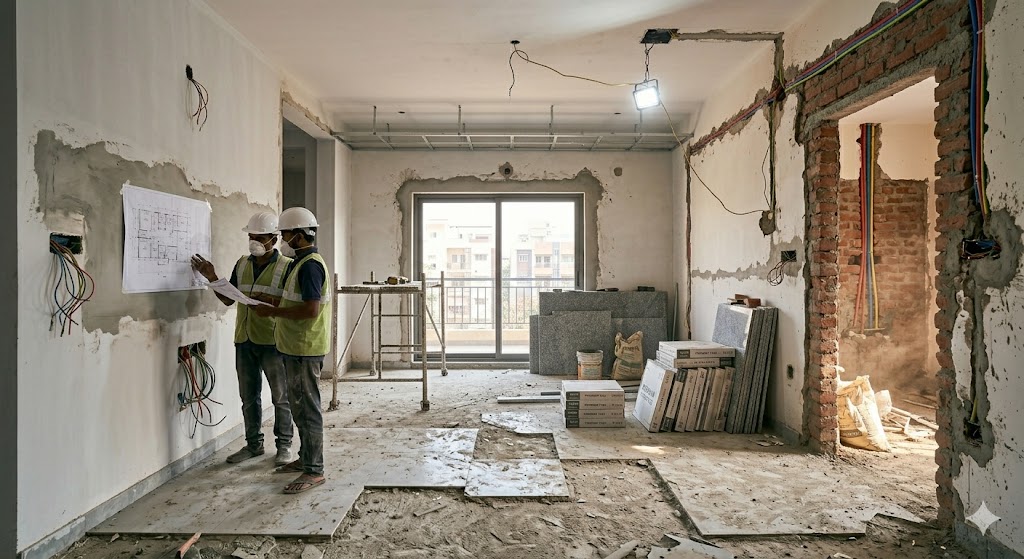
Home Renovation Cost in India — The Homeowner's Working Reference
Five Renovation Scopes, the Renovate-vs-Build-New Decision, Cost Breakdown, Room-by-Room Priorities & Ten Hidden Costs
Renovation cost is a different problem from construction cost. New construction is "what does ₹/sft buy?" Renovation is "what scope am I taking on, and what is the unavoidable retrofit premium?"
A 1,500 sft Bangalore 3 BHK can absorb a ₹ 3 L "refresh" or a ₹ 80 L "gut-and-rebuild" — the spec band is roughly the same, but the SCOPE and the retrofit overhead are radically different. Get the scope wrong and you spend ₹ 30 L when ₹ 12 L would have delivered 80% of the value; get the scope right and renovation is the single highest-ROI homeowner spend.
This guide is the homeowner's working reference for home renovation cost in India 2025-26. It covers the five-tier renovation scope ladder, the renovate-vs-build-new decision matrix, a detailed cost breakdown for a 1,500 sft full interior renovation, room-by-room renovation priorities (the order in which to spend), the ten renovation-specific hidden costs, six common renovation cost mistakes, and a pre-renovation budgeting checklist.
Renovation has a 30-50% premium over greenfield interior fit-out for the same outcome — demolition, civil rework, plumbing-electrical retrofit, living-out, and higher contingency. That premium is unavoidable; what IS avoidable is paying it on rooms you didn't need to renovate. Pick your scope ruthlessly before the contractor arrives.
For the cost-cluster context, see Construction Cost in India, Interior Cost per Sft in India, Hidden Costs in Interiors, Turnkey Interiors in India, and BOQ Explained for Indian Homeowners. For the decision-driven calculator see Renovation vs New Tool and Pre-Renovation Checklist.
The Renovation Scope Ladder — Five Tiers
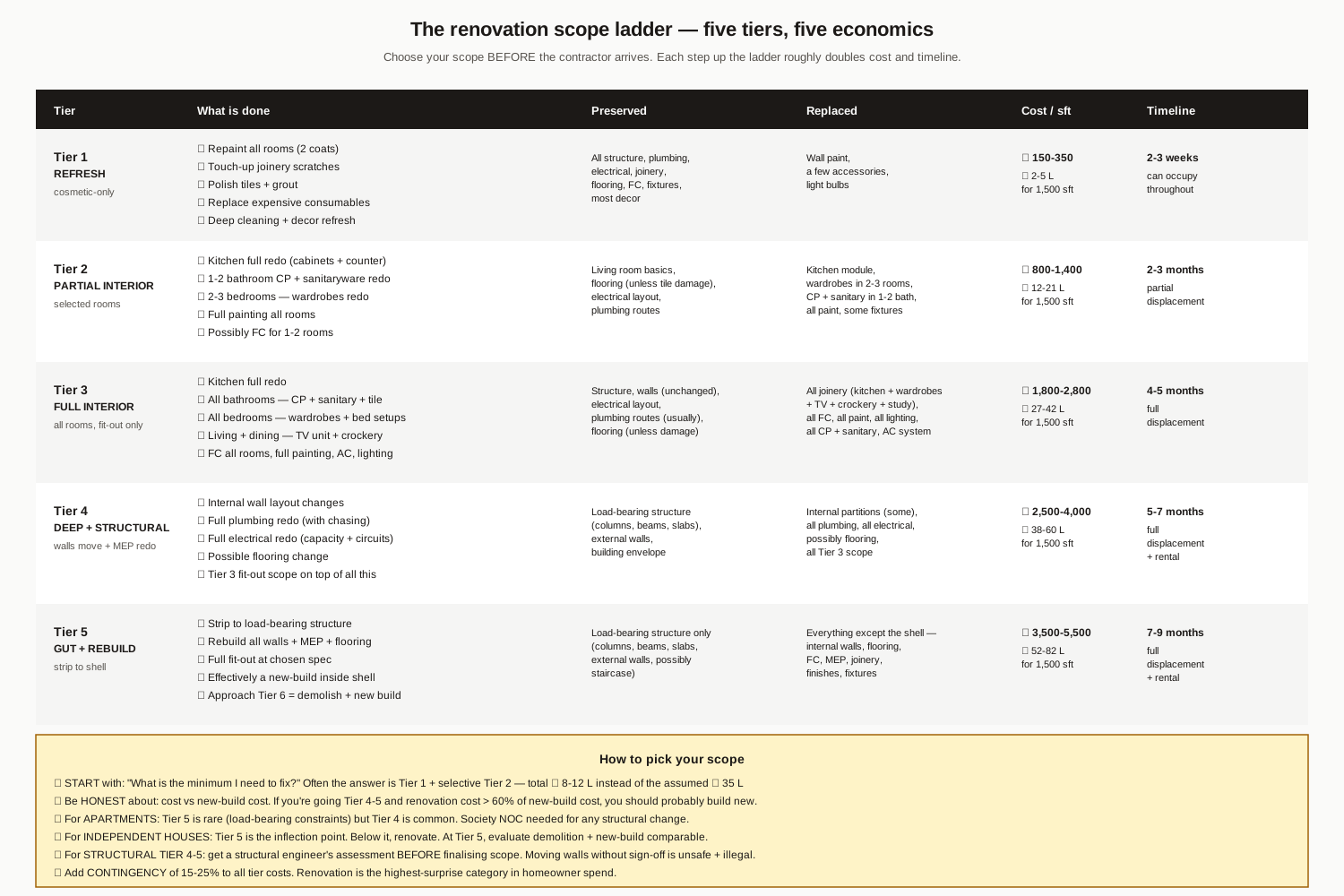
The first decision in any renovation is "what tier am I taking on?" — and most homeowners (and most contractors) skip this question entirely, defaulting to "let's see what looks good." The result: scope creep, time overruns, and a final bill 60-100% higher than the initial mental budget.
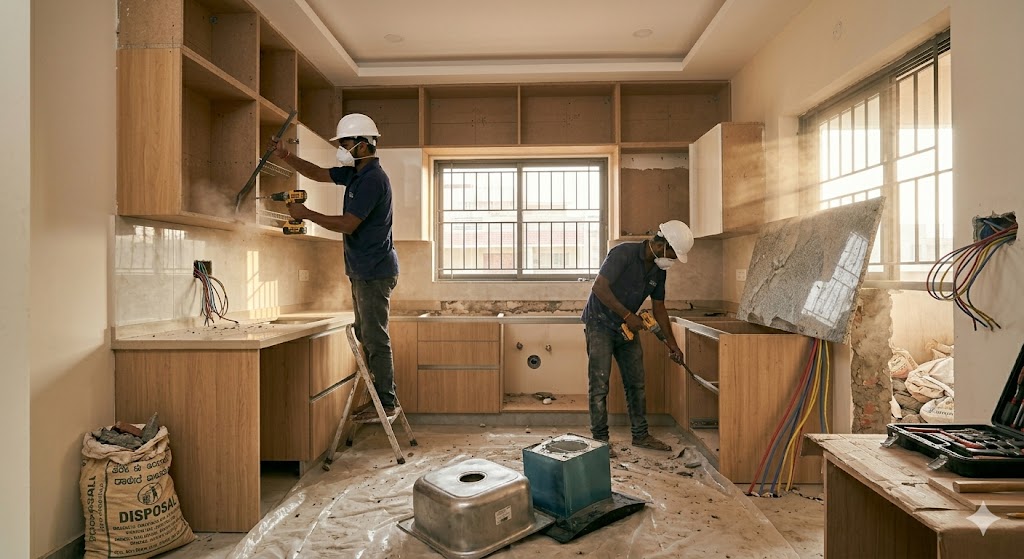
Tier 1 — Refresh (₹ 150-350/sft, 2-3 weeks, ₹ 2-5 L for 1,500 sft)
Cosmetic-only. Repaint all rooms, touch-up joinery scratches, polish tiles + grout, replace expensive consumables, deep clean.
Preserved: all structure, plumbing, electrical, joinery, flooring, FC, fixtures. Replaced: wall paint, a few accessories.
Suitable for: a 5-8 year old apartment that has aged cleanly, a rental property between tenants, a quick pre-sale uplift, a homeowner whose budget is ₹ 5 L max.
You CAN occupy throughout. ₹/sft is the lowest of any renovation tier and the ROI on resale uplift is the highest — paint adds 2-3% to resale price for a 1-2% spend.
Tier 2 — Partial interior (₹ 800-1,400/sft, 2-3 months, ₹ 12-21 L for 1,500 sft)
Selected-rooms-only. Kitchen full redo + 1-2 bathroom refresh + 2-3 bedroom wardrobe redo + full house paint + selective FC.
Preserved: living room basics, flooring (unless tile damage), electrical layout, plumbing routes. Replaced: kitchen module, wardrobes in 2-3 rooms, CP + sanitary in 1-2 bathrooms, all paint, some fixtures.
Suitable for: a 10-15 year old apartment where kitchen + 1 bathroom + bedroom wardrobes are showing age but the rest is fine. The most popular renovation tier in India.
Partial displacement: you can stay in some part of the home during phased construction (kitchen + bath redo first, then bedrooms one at a time).
Tier 3 — Full interior (₹ 1,800-2,800/sft, 4-5 months, ₹ 27-42 L for 1,500 sft)
All-rooms, fit-out only. Kitchen full redo + all bathrooms (CP + sanitary + tile) + all bedrooms (wardrobes + bed setups) + living + dining (TV unit, crockery) + FC all rooms + full painting + AC + lighting.
Preserved: structure, walls (unchanged), electrical layout, plumbing routes (usually), flooring (unless damage). Replaced: all joinery, all FC, all paint, all lighting, all CP + sanitary, AC system.
Suitable for: a 15-25 year old home where everything visible needs refresh but the structure and MEP are fine. Apartment owners typically max out here (structural changes need society NOC + load assessment).
Full displacement: you cannot stay in the home during a Tier 3 renovation. Plan for 4-5 months alternative housing.
Tier 4 — Deep + structural (₹ 2,500-4,000/sft, 5-7 months, ₹ 38-60 L for 1,500 sft)
Walls move + MEP redo + full Tier 3. Internal wall layout changes (combine 2 rooms into 1, partition 1 into 2, move kitchen, etc.), full plumbing redo with chasing, full electrical redo (capacity + circuits), possible flooring change, plus all of Tier 3 fit-out.
Preserved: load-bearing structure (columns, beams, slabs), external walls, building envelope. Replaced: internal partitions (some), all plumbing, all electrical, possibly flooring, all Tier 3 scope.
Suitable for: a 15-25 year old home where the layout fundamentally needs changing (family size changed, new functions like home office), or where plumbing-electrical is unsafe / inadequate for modern life.
CRITICAL: structural engineer's assessment is mandatory before any wall move. Apartments need society NOC for structural change. Independent houses need municipal approval for any structural alteration.
Tier 5 — Gut + rebuild (₹ 3,500-5,500/sft, 7-9 months, ₹ 52-82 L for 1,500 sft)
Strip-to-shell + rebuild everything inside. Strip to load-bearing structure, rebuild all walls + MEP + flooring, full fit-out at chosen spec. Effectively a new-build inside the existing shell.
Preserved: load-bearing structure only. Replaced: everything else.
Suitable for: a 25+ year old home where the structure is sound but everything else is end-of-life. Apartment buyers who bought a 30-year-old flat and want a fresh start within the same envelope. Heritage buildings where the facade is protected but interior is unconstrained.
At Tier 5, renovation cost approaches 60-80% of new-build cost on a similar plot. This is the inflection point — evaluate demolition + new-build comparable before committing.
Renovate vs Build New — The Decision Matrix
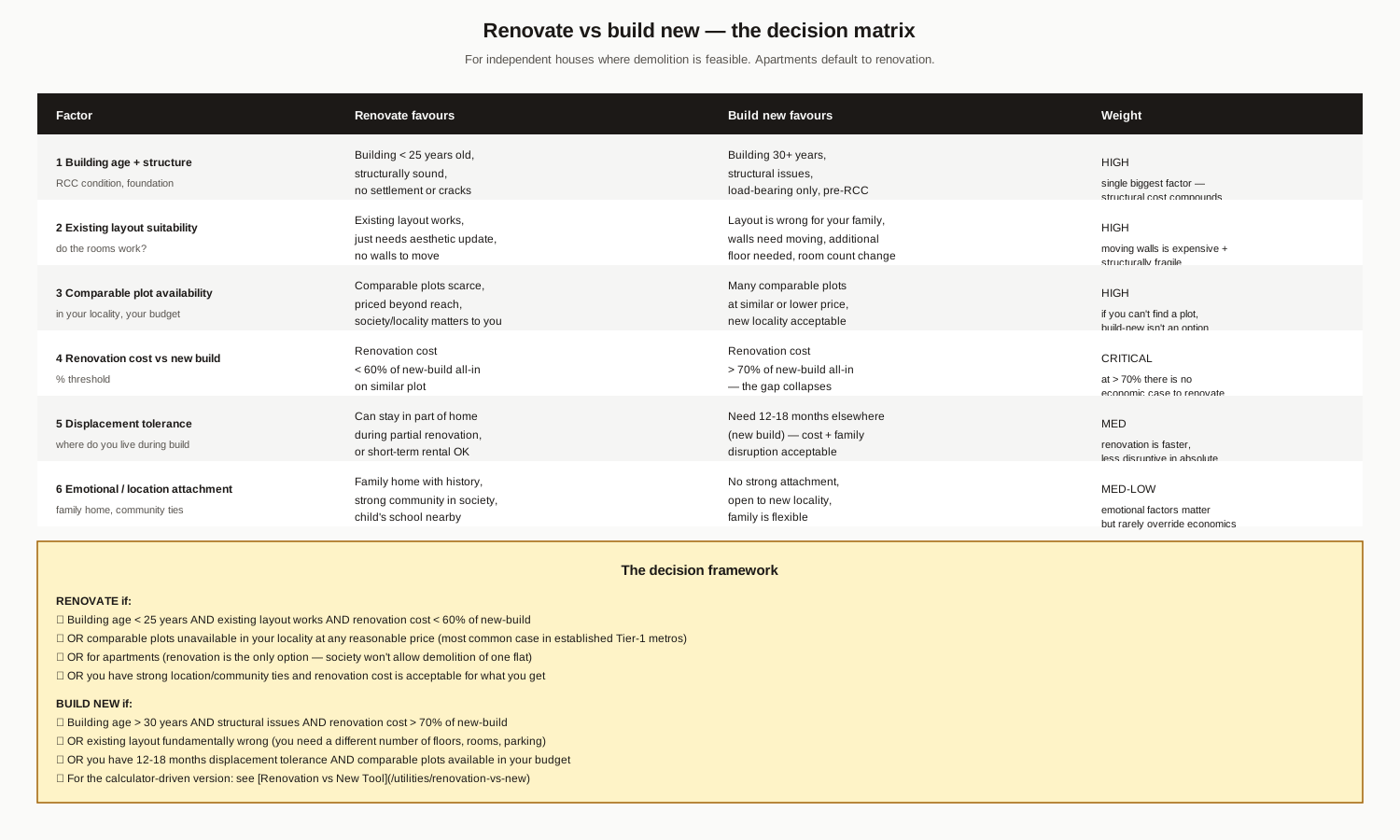
For independent houses where demolition is feasible, the renovate-vs-build-new question is genuine. For apartments, you almost always renovate (society won't allow demolition of one flat). The matrix above runs through the six factors.
When to renovate
1. Building age < 25 years AND existing layout works AND renovation cost < 60% of new-build
2. OR comparable plots unavailable in your locality at any reasonable price (most common case in established Tier-1 metros — Mumbai south, central Bangalore, central Delhi)
3. OR for apartments (renovation is the only option)
4. OR you have strong location/community ties and the cost is acceptable for what you get
5. OR you can stay in part of the home during partial renovation (Tier 1-2 only) — avoid full displacement
When to build new
1. Building age > 30 years AND structural issues AND renovation cost > 70% of new-build
2. OR existing layout fundamentally wrong (different number of floors, rooms, parking needed)
3. OR you have 12-18 months displacement tolerance AND comparable plots available in your budget
4. OR the building is pre-RCC (load-bearing only) — structural retrofit cost approaches new-build cost
5. OR you anticipate selling the property within 5 years and want maximum resale value
The 60-70% rule
The single cleanest decision threshold: if renovation cost exceeds 60% of new-build all-in cost on a similar plot in your locality, build new. Below 60%, renovate. Between 60-70% is a judgment zone — weigh location attachment, displacement tolerance, and building age.
For the personalised calculator that runs the same math on your specific numbers, see Renovation vs New Tool on Studio Matrx.
Cost Breakdown — Full Interior Renovation, 1,500 sft
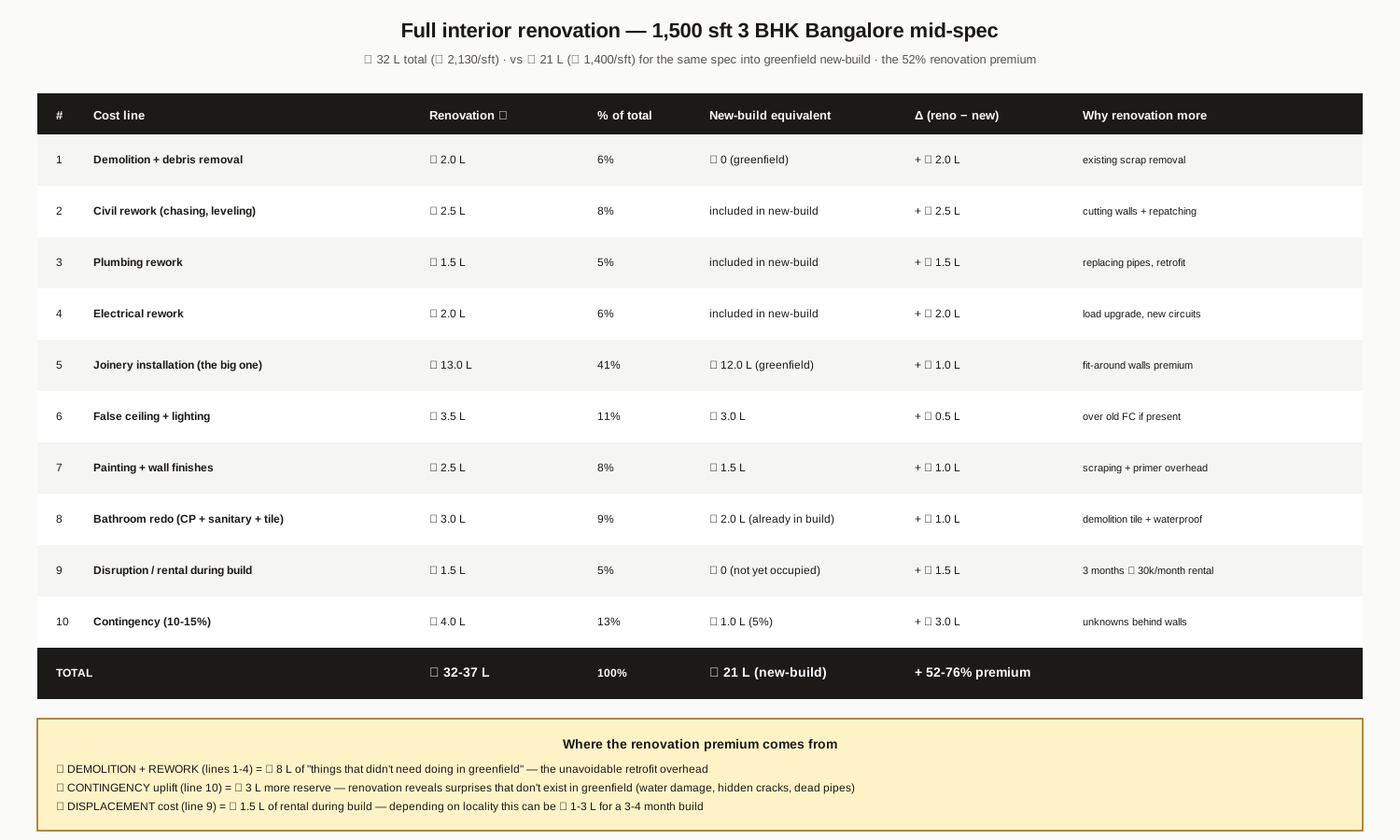
The figure above is the full BOQ-style cost breakdown for a Tier 3 (Full interior) renovation of a 1,500 sft 3 BHK Bangalore mid-spec, at ₹ 32-37 L all-in.
Where the renovation premium comes from
Comparing line-by-line to the same spec interior built into a greenfield new-build (₹ 21 L per Interior Cost per Sft in India):
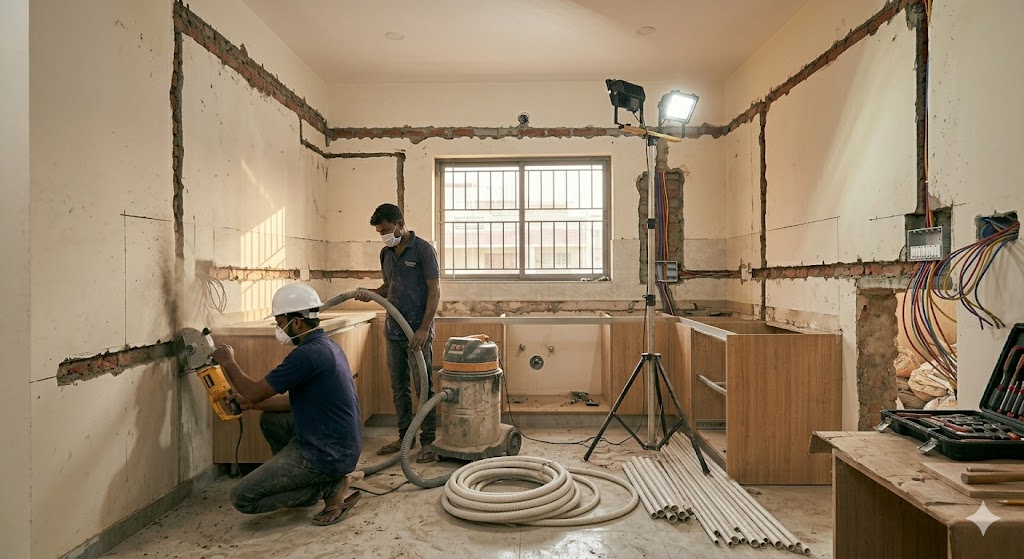
- Lines 1-4 (Demolition + civil + plumbing + electrical rework): ₹ 8 L of unavoidable retrofit overhead. Zero in greenfield. This is the "renovation premium" in its purest form.
- Line 5 (Joinery): ₹ 1 L more in renovation — fit-around-existing walls and ceilings adds 5-10% on joinery labour.
- Line 6 (False ceiling): ₹ 0.5 L more — typically over old FC if present, or with concealed routing.
- Line 7 (Painting): ₹ 1 L more — scraping existing paint, primer, crack patching add 30-60% over greenfield.
- Line 8 (Bathroom): ₹ 1 L more — demolishing old tile + redoing waterproofing per fresh design.
- Line 9 (Displacement): ₹ 1.5 L — 3 months of rental ₹ 30k/month + deposit + setup + two moves. Zero in greenfield.
- Line 10 (Contingency): ₹ 3 L more — 15% vs 5% for greenfield. Unknowns behind walls discovered during demolition.
Net renovation premium: ₹ 11-16 L on top of the ₹ 21 L greenfield cost = 52-76% premium. This is consistent across most renovation BOQs I have reviewed.
Room-by-Room Renovation Priorities
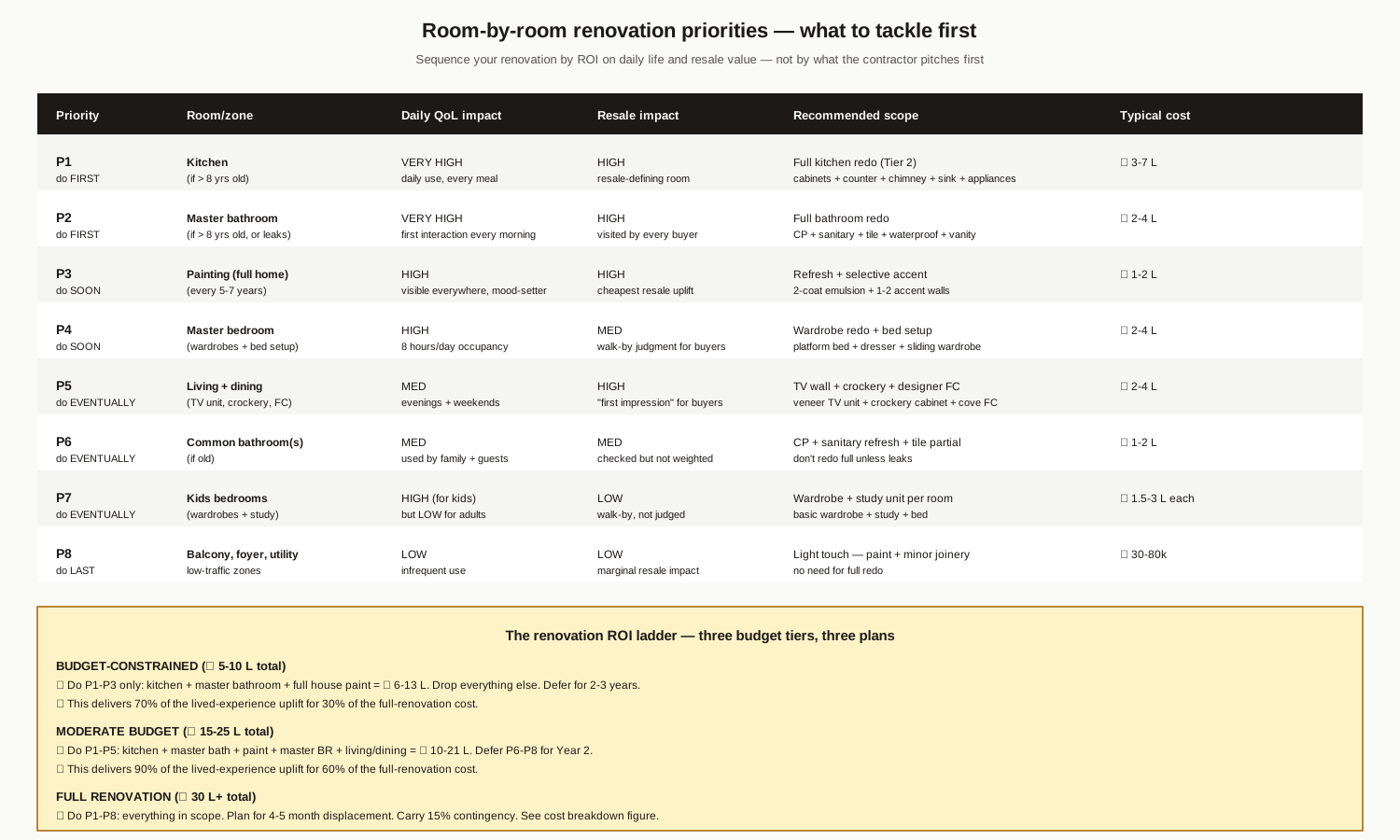
A common renovation mistake: spreading budget evenly across all rooms. Better discipline: sequence by ROI on daily life and resale.
The eight-priority ladder
P1 — Kitchen (if > 8 years old): VERY HIGH daily QoL impact (every meal), HIGH resale impact (kitchen is resale-defining). Full kitchen redo at ₹ 3-7 L. Do FIRST.
P2 — Master bathroom (if > 8 years old or leaks): VERY HIGH daily QoL (first interaction every morning), HIGH resale (every buyer visits). Full bathroom redo at ₹ 2-4 L. Do FIRST.
P3 — Painting (every 5-7 years): HIGH on both — visible everywhere, mood-setter, cheapest resale uplift. Refresh + selective accent at ₹ 1-2 L. Do SOON.
P4 — Master bedroom (wardrobes + bed setup): HIGH daily QoL (8 hours/day occupancy), MED resale. Wardrobe redo + bed at ₹ 2-4 L. Do SOON.
P5 — Living + dining (TV unit + crockery + FC): MED daily QoL (evenings + weekends), HIGH resale (first impression for buyers). Designer TV wall + crockery + cove FC at ₹ 2-4 L. Do EVENTUALLY.
P6 — Common bathroom(s) (if old): MED on both. CP + sanitary refresh + tile partial. ₹ 1-2 L. Don't redo full unless leaks. Do EVENTUALLY.
P7 — Kids' bedrooms: HIGH for kids but LOW for adult occupants, LOW resale (walk-by, not judged). Basic wardrobe + study + bed at ₹ 1.5-3 L per room. Do EVENTUALLY.
P8 — Balcony, foyer, utility: LOW on both. Light touch only — paint + minor joinery at ₹ 30-80k. Do LAST.
The three budget-tier plans
Budget-constrained (₹ 5-10 L total): Do P1-P3 only (kitchen + master bath + paint) = ₹ 6-13 L. Drop everything else. Defer for 2-3 years. This delivers 70% of the lived-experience uplift for 30% of the full-renovation cost.
Moderate budget (₹ 15-25 L total): Do P1-P5 (kitchen + master bath + paint + master BR + living/dining) = ₹ 10-21 L. Defer P6-P8 for Year 2. This delivers 90% of the lived-experience uplift for 60% of the full-renovation cost.
Full renovation (₹ 30 L+ total): Do P1-P8 — everything in scope. Plan for 4-5 month displacement. Carry 15% contingency.
Ten Renovation-Specific Hidden Costs
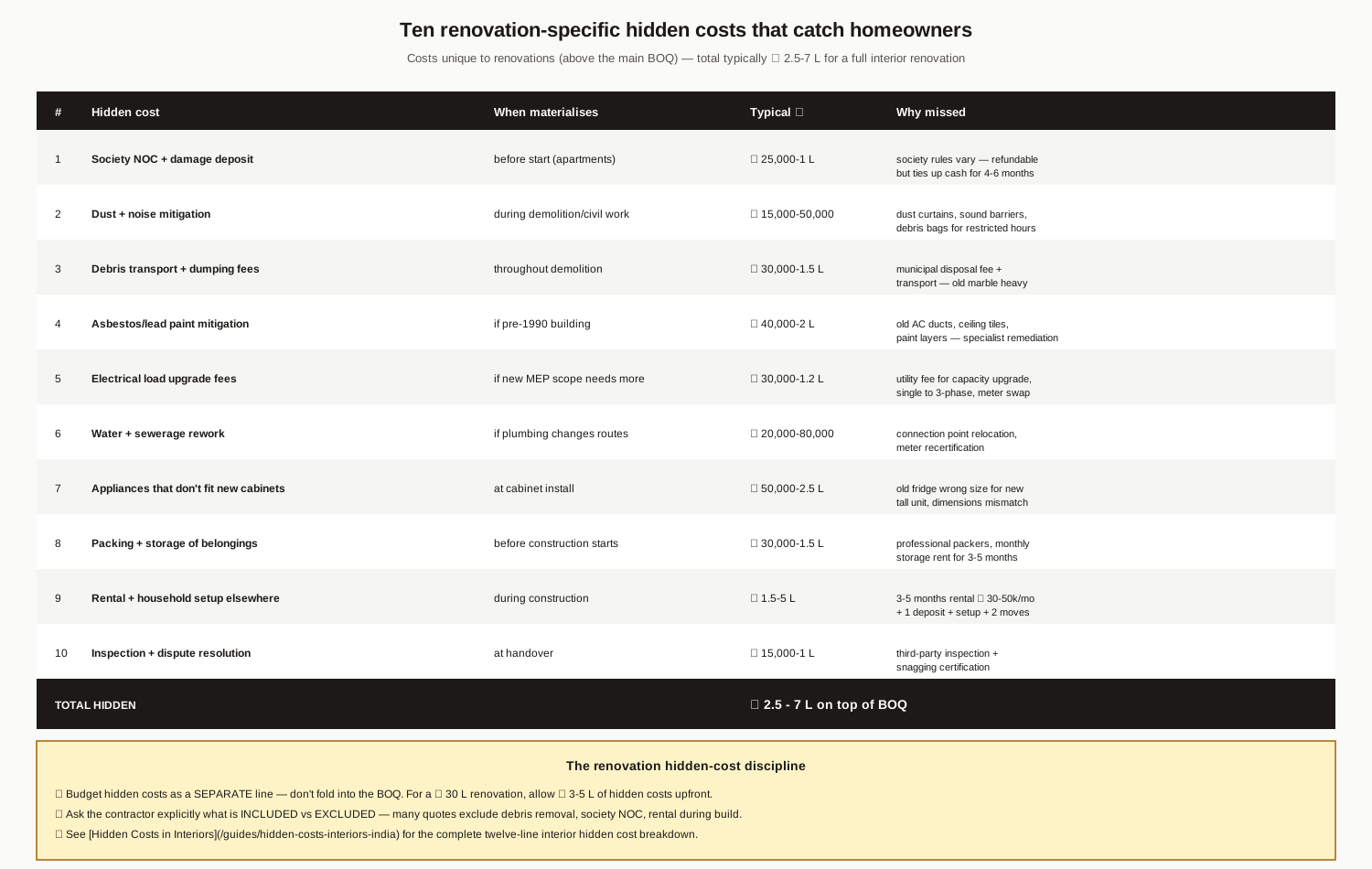
Costs unique to renovations, above the main BOQ. Total typically ₹ 2.5-7 L for a full interior renovation.
1. Society NOC + damage deposit (apartments): ₹ 25,000-1 L. Tied up for 4-6 months until society inspection clears the work.
2. Dust + noise mitigation: ₹ 15-50k. Required by most societies during demolition hours.
3. Debris transport + dumping: ₹ 30k-1.5 L. Municipal disposal fees + transport. Old marble alone is heavy and expensive to dispose of.
4. Asbestos / lead paint mitigation (pre-1990 buildings): ₹ 40k-2 L. Old AC ducts, ceiling tiles, paint layers may need specialist remediation.
5. Electrical load upgrade fees: ₹ 30k-1.2 L. If new MEP scope needs more capacity (smart home + AC + multiple appliances), utility upgrade fee + meter swap.
6. Water + sewerage rework: ₹ 20-80k. If plumbing changes routes, connection point relocation, meter recertification.
7. Appliances that don't fit new cabinets: ₹ 50k-2.5 L. Old fridge wrong size for new tall unit, washing machine doesn't fit new utility cabinet — replacement cost.
8. Packing + storage of belongings: ₹ 30k-1.5 L. Professional packers, monthly storage rent for 3-5 months.
9. Rental + household setup elsewhere: ₹ 1.5-5 L. 3-5 months rental ₹ 30-50k/month + deposit + setup + two moves.
10. Inspection + dispute resolution: ₹ 15k-1 L. Third-party inspection + snagging certification at handover.
See Hidden Costs in Interiors for the complete twelve-line interior hidden cost breakdown that applies to both renovation and new fit-out.
Six Common Renovation Cost Mistakes
1. Not picking a scope tier first. The contractor walks in, you start pointing at things, the scope grows from Tier 2 to Tier 4 without anyone noticing, and the bill triples. Pick your tier in writing before quotes.
2. Spreading budget evenly across rooms. Kitchen and master bathroom return 3-5× the ROI of guest bathroom and balcony. Sequence by ROI, not by what looks tired.
3. Underestimating the renovation premium. Builders quote based on "what they're doing" (Tier 3 fit-out at ₹ 21 L) and miss the demolition + civil + electrical rework that makes it ₹ 32-37 L. Pad your mental budget by 50% to ground reality.
4. Skipping the structural assessment for Tier 4-5. Moving walls without structural engineer sign-off is unsafe AND illegal. Worst-case: building damage that costs ₹ 20-50 L to remediate.
5. Living-in during a Tier 3+ renovation. Dust, noise, water/electricity disruptions, no kitchen — most homeowners regret this within Week 2. Budget the rental + plan to be elsewhere.
6. Going turnkey without comparing trade contractors. Turnkey designers add 8-15% on top of trade-contractor pricing. For some homeowners that buys real peace of mind. For others with time and willingness to coordinate, direct trades deliver same outcome at 15-25% less.
Pre-Renovation Budgeting Checklist
1. Scope tier declared (1-5) and locked in writing
2. Renovate-vs-build-new evaluated — see decision matrix above
3. Structural assessment done if Tier 4-5
4. Society NOC secured if apartment (apply 4-6 weeks before start)
5. Insurance review — homeowner insurance covers contractor mishaps?
6. Detailed BOQ with line-item brand, model, unit price, quantity
7. Hidden costs budgeted separately (₹ 2.5-7 L typical)
8. Contingency 15% of construction (vs 5-8% for new build)
9. Displacement plan — rental booked, deposit + setup budgeted, school transport sorted
10. Storage plan — packing + storage + access logistics for 3-5 months
11. Asset photograph + inventory before contractor enters
12. Payment schedule matched to milestones, NOT calendar dates
13. Snagging period of 30 days post-handover before final 10% payment
14. References checked — call 3 previous clients of the contractor, visit 1 site mid-build, 1 site post-completion
Where to Go Next
- For new construction cost: Construction Cost in India
- For greenfield interior fit-out: Interior Cost per Sft in India
- For the BOQ format: BOQ Explained for Indian Homeowners
- For interior hidden costs: Hidden Costs in Interiors
- For turnkey vs direct decision: Turnkey Interiors in India
- For the renovation-vs-new calculator: Renovation vs New Tool
- For pre-renovation checklist: Pre-Renovation Checklist
- For kitchen design depth: Modular Kitchen Design Guide
- For waterproofing reference: Waterproofing Guide for Indian Homes
References
1. NBC 2016, Part 7. Construction Management, Practices and Safety — applies to renovation work.
2. NBC 2016, Part 11. Approach to Sustainability — material reuse and disposal guidelines.
3. State Apartment Ownership Act + Society Bye-laws (Maharashtra, Karnataka, Tamil Nadu, etc.). Apartment renovation NOC procedures.
4. CPWD Schedule of Rates, Demolition and Reconstruction Section, latest revision. Demolition rate benchmarks.
5. BIS IS 13311. Non-Destructive Testing of Concrete. For structural assessment of existing concrete.
6. Council of Architecture (2020). Architect Practice Bylaws — Renovation Services Scope. Architect fee reference.
7. Construction Industry Development Council India, Renovation Cost Index, annual. Industry rate tracking.
8. JLL India / Knight Frank Renovation Market Reports (2024-25). Demand and rate trends.
9. State Pollution Control Boards. C+D Waste Management Rules 2016 — demolition debris disposal compliance.
10. Hettich India, Hafele India, Sleek Kitchens demolition + rework guidance. Hardware retrofit reference.
Author's note: Renovation is the highest-emotion, highest-surprise, highest-stress category of homeowner spend. The discipline that saves you is the SCOPE decision, made before any contractor walks in. A Tier 2 renovation at ₹ 12 L can deliver a transformed home; a Tier 4 renovation at ₹ 50 L delivers a slightly more transformed home for 4× the cost and 3× the disruption. The 60-70% rule is the single cleanest decision tool: if renovation cost > 60% of new-build cost on a similar plot, build new. Below 60%, renovate but pick your tier ruthlessly. Sequence by P1-P8 priority, budget hidden costs separately, carry 15% contingency, and plan for displacement.
Disclaimer: Cost ranges are 2025-26 indicative for Indian metro and Tier-1 cities and vary by building age, structural condition, scope, materials, vendor, and procurement model. Renovation scope decisions are project-specific — apartment renovations are constrained by society bye-laws and load-bearing structure; independent house renovations may require municipal approval for structural changes. The reference 1,500 sft 3 BHK cost breakdown is illustrative for a representative Bangalore mid-spec project; specific projects vary materially. Structural assessments for Tier 4-5 renovations must be done by a licensed structural engineer; do not move load-bearing walls without engineer sign-off. Society NOC processes vary by state Apartment Ownership Act and individual society bye-laws. Studio Matrx, its authors and contributors accept no liability for decisions made on the basis of this guide; engage a licensed architect, structural engineer (for Tier 4-5), interior designer, and contractor with renovation experience for project-specific scoping and budgeting.
Export this guide
Related Guides — Deep-dive reading
The Design Decisions With the Biggest Cost Consequences
A cost-leverage map of Indian home interiors — the handful of decisions that swing your total budget the most, so you spend your attention where a single choice has an outsized rupee impact.
Cost & MoneyThe Truth About Cost Per Square Foot
Why a ₹/sqft interior quote is the most misleading number in Indian home costing — and how to convert it into a real BOQ
Cost & MoneySmart Storage Interiors — A 2026 Working Reference for Indian Homes
Inventory-driven · Floor-to-ceiling · Hardware-engineered · Zone-mapped
Room PlanningRelated Tools — Try Free
False Ceiling Cost Estimator
Live ₹/sqft across 8 ceiling types — POP, gypsum, designer, metal, PVC, wooden — with cove and spot lighting for 20 Indian cities.
Cost CalculatorHome Building & Interior Cost Calculator — 20 Cities
Construction + interior costs for 20 Indian cities across kitchen, wardrobes, flooring, painting, ceiling.
Cost CalculatorAcoustic Privacy (STC) Visualizer
Indian healthcare acoustic visualizer — compare wall assemblies and noise sources, see received SPL after STC attenuation, and check FGI 2018 / IS 1950 / NABH speech-privacy compliance with live dual-canvas waveform.
Acoustic Tool