
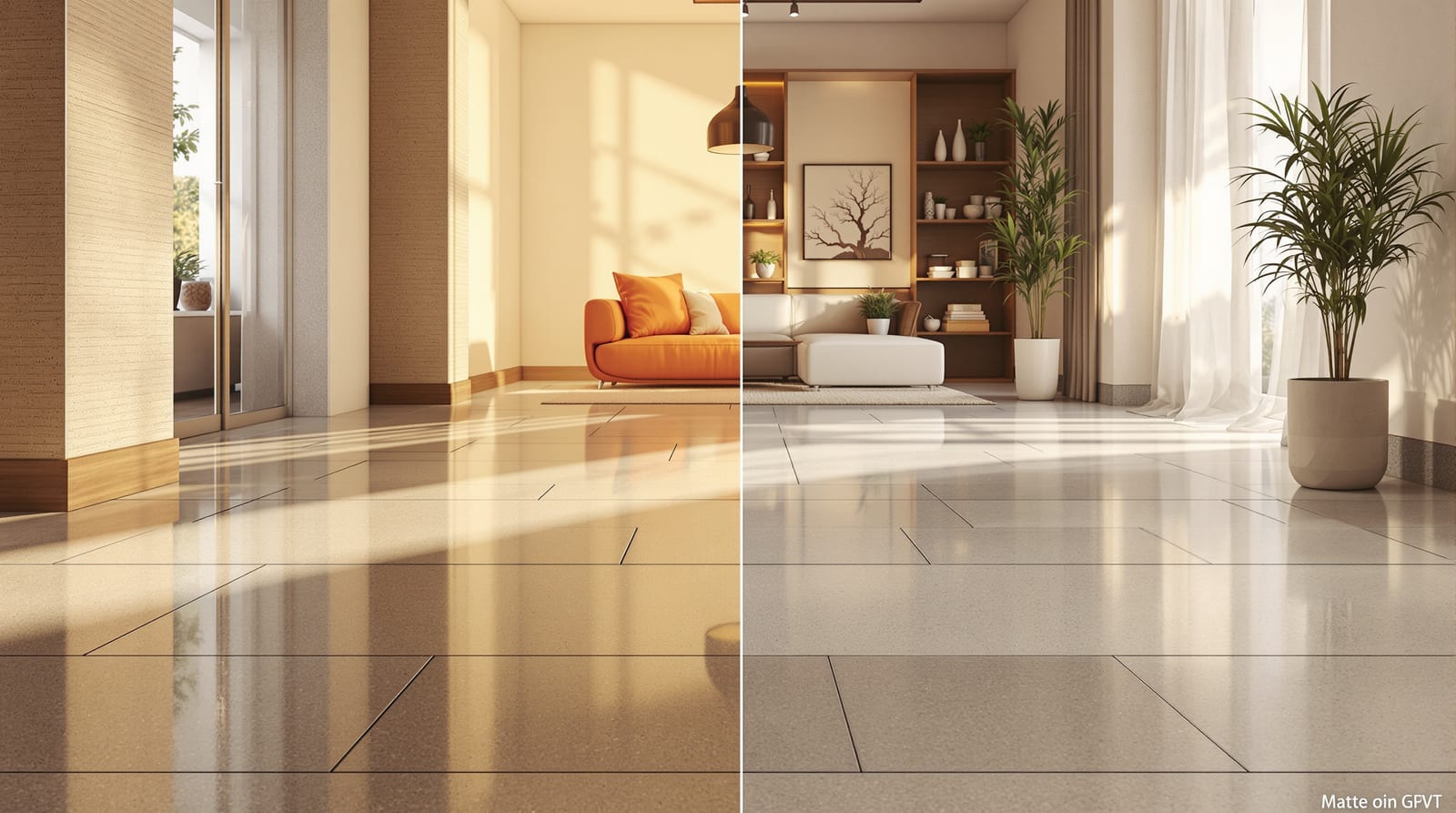
GVT vs PGVT in India: Matte vs Glossy Vitrified Tiles, Slip, Cost & Where Each Wins (2026)
GVT is the matte, natural-look glazed vitrified tile; PGVT is its mirror-polished, marble-look glossy cousin — a clear room-by-room verdict on look, slip safety, scratch, maintenance and ₹/sq ft.
Walk into any tile showroom in India and the first question the salesperson asks is not the brand or the size — it is "matte ya glossy?" That single choice is, almost exactly, the GVT vs PGVT decision. Both are glazed vitrified tiles built on the same glass-hard body, so they behave identically in strength and water resistance. What separates them is the surface: GVT keeps a natural matte (or soft-satin) finish, while PGVT is mechanically polished to a reflective, marble-like mirror. That one difference quietly decides where each tile is safe, how it ages, what it costs and how much you will scrub it. This guide gives you a clear room-by-room verdict.
Same body, different skin
Before comparing them, it helps to know they are siblings, not rivals from different families. Both GVT and PGVT start as a vitrified tile — a body fired so hot that it fuses to a near-glass slab with water absorption below 0.5% under IS 15622 (the BIa group). On top of that body sits a digitally printed "HD" design layer that can mimic marble veining, timber grain, stone or concrete. Up to this point they are the same tile.
The fork comes at finishing. GVT (glazed vitrified tiles) leaves the glaze as-fired in a matte, satin or textured state. PGVT (polished glazed vitrified tiles) sends the same glazed tile through grinding and polishing heads that abrade the surface to a high gloss — the "P" literally stands for polished. So PGVT is GVT plus a polishing step. That extra step is the whole story: it creates the shine, adds a little cost, removes some grip, and very slightly thins the top glaze.
Note one trap in showroom language: many shops use "GVT" loosely to mean any glazed vitrified tile and then add "matte GVT" or "glossy PGVT." When you say GVT in this guide, read it as the matte/satin finish; PGVT means the polished glossy finish. For how each is manufactured in depth, see our dedicated guides on glazed vitrified tiles (GVT) and polished glazed vitrified tiles (PGVT).
Where the finish is born
The look: natural matte vs reflective grandeur
This is where most buyers actually decide, and both choices are valid — they just send different signals.
PGVT is bought for drama. The polished surface reflects light, throws back the glow of a chandelier or a window, and reads almost exactly like polished Italian or Indian marble. In a living or dining room it makes the space feel larger, brighter and more "luxury showroom." For a homeowner who wants a marble look without marble's price, etching and sealing headaches, PGVT is the obvious pick — you get the mirror finish at vitrified-tile cost.
GVT (matte/satin) is bought for calm and contemporary. It absorbs light instead of bouncing it, so the room feels softer and more grounded — the look favoured in modern, minimal and "quiet luxury" interiors that are trending across Indian homes in 2026. Matte also flatters wood-look, stone-look and concrete-look prints, where a high gloss would look fake. If your aesthetic is Scandi-modern, muji-style or earthy rather than palatial, GVT wins on looks alone.
A practical reflection point: glossy PGVT shows everything the light catches — footprints, dust film, water spots and dry-mop streaks are all visible, especially in dark colours. Matte GVT hides daily smudges far better, which is why families with kids and heavy footfall often prefer it even in the living room.
Slip safety: the difference that actually matters
If you remember one thing, remember this: a wet polished floor is slippery, and PGVT is polished. The very gloss that makes PGVT beautiful reduces its surface grip, and once water, soap film or oil lands on it, the slip risk climbs sharply. Matte GVT, with its micro-textured unpolished surface, holds far more grip wet or dry.
In slip-resistance terms (DIN 51130 R-ratings, R9 to R13), most glossy PGVT sits around R9 — fine for dry indoor areas, not for wet ones. Anti-skid matte GVT and textured GVT are made in R10 and above, which is the threshold sensible designers want for wet, splash-prone and outdoor zones. India's NBC 2016 and the RPwD Harmonised Guidelines 2021 both push for anti-slip, level flooring in homes — a strong nudge toward matte in any area that gets wet.
The verdict is blunt: do not lay PGVT in bathrooms, near kitchen sinks and hobs, on covered balconies, around wash areas, on porches or anywhere monsoon rain or splashes reach. For older parents and toddlers, this is a safety decision, not an aesthetic one. Use matte/anti-skid GVT in all wet and high-traffic zones; save PGVT for dry living, dining and bedroom floors.
Scratch, stain, traffic and care
Because both share the same vitrified body, stain and water resistance are similar at the body level — neither absorbs spills the way ceramic or marble can. But the finish changes how damage shows.
A glossy surface is a mirror, and mirrors reveal every fine scratch, swirl and scuff. Over years of grit dragged underfoot, PGVT in a busy hallway can develop a dull, hazy traffic lane that catches the eye precisely because the rest still shines. Matte GVT scatters light, so the same micro-scratches are largely invisible — it ages more gracefully under heavy, joint-family use. This is why showrooms quietly steer high-traffic projects toward matte.
Polishing also opens microscopic pores in the glaze, so good PGVT is given a nano-coating (a factory anti-stain / anti-slip nano treatment) to seal them against tea, turmeric, oil and ink. Always confirm the PGVT you buy is nano-coated; un-coated polished tiles stain more readily and need more careful mopping. Matte GVT is more forgiving here too, though textured matte can trap dirt in its grain and needs occasional scrubbing.
Maintenance day to day: matte GVT asks for a normal mop and hides what it misses. Glossy PGVT demands a near-dry, streak-free mop with a mild cleaner and a microfibre finish to keep the mirror clean — skip that and it looks smeary. Never use harsh acid or abrasive scrub on either, as both attack the glaze.
GVT vs PGVT at a glance
| Criterion | GVT (matte / satin) | PGVT (polished, glossy) |
|---|---|---|
| Finish | Natural matte to soft satin, non-reflective | High-gloss mirror, reflective |
| Look | Contemporary, calm, natural; great for wood/stone/concrete prints | Marble-like grandeur, bright, makes rooms feel larger |
| Slip safety | Higher grip; anti-skid grades R10+ for wet areas | Lower grip; usually around R9, slippery when wet |
| Wet areas (bath, balcony, sink) | Suitable (use anti-skid grade) | Not recommended |
| Shows scratches / scuffs | Hides them well; ages gracefully | Reveals fine scratches and traffic-lane dulling |
| Shows footprints / dust | Hides daily marks | Shows footprints, dust film, water spots |
| Stain resistance | Good (matte forgiving; textured can trap grime) | Good if nano-coated; confirm coating |
| Daily cleaning | Normal mop, low effort | Streak-free near-dry mop, more effort |
| Body / water absorption | Vitrified, below 0.5% (IS 15622 BIa) | Vitrified, below 0.5% (IS 15622 BIa) |
| Indicative cost (material) | 40-150 ₹/sq ft | 50-160 ₹/sq ft (polishing premium) |
| Best for | Kitchens, balconies, high-traffic, anti-slip, matte/modern look | Living/dining showpiece floors, marble look, low-traffic dry areas |
What it costs in India (2026)
GVT and PGVT overlap heavily on price because the body and printing are the same; the gap comes from the polishing step. As an indicative material-only range, matte GVT runs about ₹40-150 per sq ft and PGVT about ₹50-160 per sq ft, with the polished tile typically ₹5-20/sq ft dearer for an equivalent design and size. Large formats (800x800, 600x1200, 800x1600 mm) and premium marble-look ranges sit at the top of both bands. These are indicative and vary by city, brand and vendor.
Remember tile price is only part of the bill. Add 18% GST, plus laying labour of roughly ₹15-60/sq ft (large-format polished tiles cost more to lay because lippage shows badly on a mirror surface), plus tile adhesive at about ₹12-30/sq ft, plus grout, skirting and edge polishing. PGVT in particular rewards skilled laying on tile adhesive over a true, level bed — any unevenness or hollow tile is glaringly obvious once it reflects light. To budget your job, try the Studio Matrx flooring cost calculator and the tile quantity calculator (add 5-10% wastage, more for diagonal or large-format layouts).
The room-by-room verdict
For most Indian homes, the right answer is to use both — matte GVT where safety and wear rule, polished PGVT where you want the wow.
- Living and dining room: PGVT if you want bright, marble-look grandeur in a relatively low-traffic, dry space; matte GVT if you have heavy footfall, kids, or prefer the calm modern look. Both are valid — let your aesthetic and traffic decide.
- Bedrooms: Either. Matte GVT (or wood-look matte) feels warmer and hides dust; PGVT gives a luxe sheen if the room is dry and lightly used.
- Kitchen: Matte / anti-skid GVT. Oil and water splashes make glossy PGVT a slip hazard near the hob and sink. See our kitchen flooring guide.
- Bathrooms and wash areas: Matte anti-skid GVT only (or anti-skid porcelain). Never PGVT — wet gloss is dangerous.
- Balconies, utility, porch, covered outdoor: Matte / textured anti-skid GVT, R10+. Monsoon and splashes rule out PGVT.
- Pooja room, foyer feature floor: PGVT can shine here for a marble-look entrance, provided it stays dry. Vastu tradition favours lighter, brighter floors in the north-east and east, where a polished light marble-look PGVT reads well — frame this as tradition plus the practical fact that gloss bounces daylight.
A simple rule of thumb: if water reaches the floor, choose matte GVT; if you want a marble showpiece and the floor stays dry, choose PGVT. For the bigger picture across all finishes, see the complete home flooring guide for India, how to choose flooring in India and the parent vitrified tile flooring guide. If you are weighing penetrated-design durability instead, compare both against double-charged vitrified tiles.
Frequently asked questions
Is PGVT better than GVT?
Neither is universally better — they suit different jobs. PGVT (polished, glossy) wins for marble-look grandeur in dry living and dining rooms. GVT (matte) wins for slip safety, scratch-hiding and high-traffic or wet areas like kitchens, balconies and bathrooms. Choose by room, not by ranking.
Can I use PGVT in the bathroom?
No. PGVT is polished and becomes slippery the moment water, soap film or oil lands on it, which makes it unsafe in bathrooms, wash areas and balconies. Use matte or textured anti-skid GVT (R10 or higher) in any zone that gets wet.
Why does PGVT cost more than GVT?
The same vitrified, glazed tile goes through an extra grinding-and-polishing step to create the gloss, which adds labour and a little material loss. That is why PGVT typically costs a few rupees more per sq ft than matte GVT of the same design and size. Large-format polished tiles also cost more to lay.
Does glossy PGVT scratch easily?
Both share the same hard vitrified body, so scratch resistance is similar — but a glossy mirror surface shows fine scratches, swirls and traffic-lane dulling far more than matte GVT, which scatters light and hides them. In busy hallways, matte ages more gracefully.
What is the actual difference between GVT and PGVT?
They are the same glazed vitrified tile until the final step. GVT is left matte or satin; PGVT is mechanically polished to a high gloss. That single polishing step changes the look (matte natural vs glossy marble-like), the grip (matte safer wet, gloss slippery), how damage shows, the cleaning effort and the price.
Export this guide
Related Guides — Deep-dive reading
Vitrified Tile Maintenance: How to Care for Vitrified & PGVT Floors in India
Vitrified and PGVT tiles are India's most common, near maintenance-free floor; the real weak point is the cement grout, not the tile, so this guide shows the simple routine, post-construction haze and stain removal, and how to keep the gloss.
Flooring & SurfacesGlazed Vitrified Tiles (GVT) for Indian Homes: HD Designs, Finishes & Cost (2026)
How GVT puts an HD printed glaze on a vitrified body to deliver marble, wood, stone and concrete looks double-charged tiles can't — with matte vs glossy, the wear-layer limit, sizes and ₹/sq ft.
Flooring & SurfacesAnti Slip Flooring for Bathroom and Wet Areas in India: R-Ratings, Finishes and Genuinely Safe Tile Choices
How to choose genuinely safe flooring for bathrooms, kitchens, balconies, pools, entrances and elderly- or child-friendly homes — the R-rating system, finishes that grip wet feet, anti-skid natural stone, slope to drains and the tiles to avoid.
Flooring & SurfacesRelated Tools — Try Free
Flooring Cost Calculator
Estimate the all-in cost of a floor — material, laying, wastage, skirting and GST — by area and material.
Flooring CalculatorCross-Ventilation Analyzer
Estimate airflow and air changes per hour (ACH) from room size, window areas, layout, and local wind — with NBC 2016 Part 8 compliance check.
Ventilation CalculatorWindow Cleaning Cost Calculator
Estimate professional window cleaning cost per visit and per year by access and frequency.
Window Calculator