
Green Building Window Standards in India
The mandatory envelope code (ENS 2018 and ECBC 2017) your windows must legally meet — RETV, the WWR-VLT ladder, U-value and the compliance paperwork — and how it differs from the optional green-rating scorecard.
When a builder says a project is "green", a homeowner reasonably asks: green by whose rule? In India there are now two very different answers. One is a voluntary scorecard you choose to chase for a plaque on the wall. The other is a mandatory envelope code your municipal building bye-law can force you to meet before it stamps your plan. This guide is about the second kind: the Eco-Niwas Samhita (ENS) 2018 for homes and the Energy Conservation Building Code (ECBC) 2017 for commercial buildings, and what they demand of your windows.
This is the compliance lens: the energy code a window must legally satisfy where it is adopted. For the optional IGBC, GRIHA or LEED credits you can earn for extra points, see the design-side companion below. Numbers here are indicative; always verify the local building bye-law, which adopts and amends national codes in practice.
Mandatory code versus voluntary rating: the one distinction that matters
This is the single most misunderstood point in Indian green building, so we state it plainly.
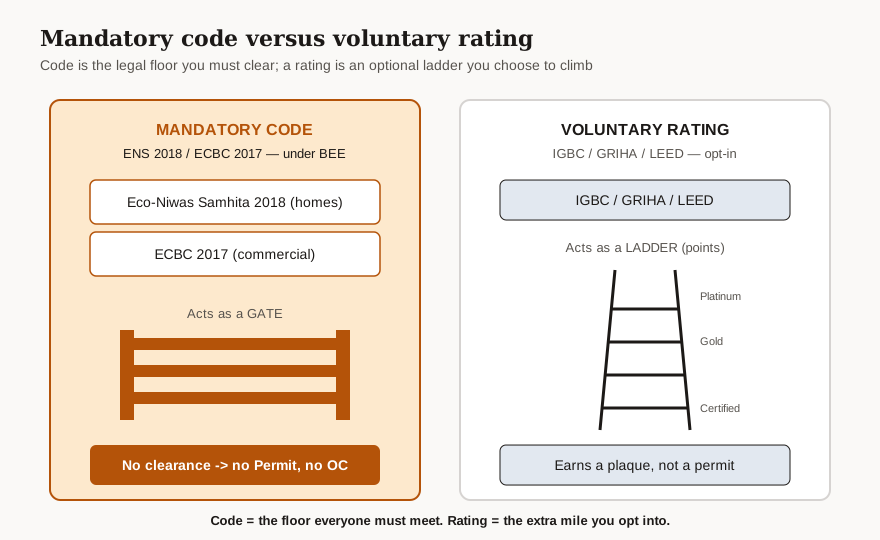
- Mandatory (this guide): ENS 2018 and ECBC 2017 are model energy codes notified by the Bureau of Energy Efficiency (BEE). They become legally binding when a State government notifies them and the local bye-law references them. Once adopted, your building permit and occupancy certificate can depend on meeting them. There is no plaque — just permission to build.
- Voluntary (the design cousin): IGBC, GRIHA and LEED are rating systems. You opt in, score credits, and earn a certified or platinum label. Skipping them costs you marketing shine, not your approval.
A window that scrapes past the ENS envelope limit can still be a poor green-rating performer, and vice versa. They are different tests. Treat the code as the floor you must clear, and the rating as a ladder you may choose to climb.
| Aspect | ENS 2018 / ECBC 2017 (mandatory code) | IGBC / GRIHA / LEED (voluntary rating) |
|---|---|---|
| Issued by | BEE (statutory body) | Industry councils / TERI |
| Legal force | Binding where State notifies and bye-law adopts | Opt-in, never required for permit |
| Window test | RETV, WWR-VLT ladder, U-value thresholds | Daylight, glare, view credits scored for points |
| Outcome of failing | Plan/OC can be refused | Lose points, lower or no rating |
| This guide covers | Yes | See design cousin |
What ENS 2018 actually requires of windows
The Eco-Niwas Samhita is the residential building envelope code. It targets the parts of a home that separate inside from outside — and the window is the weakest thermal link in that envelope. ENS controls windows through three linked levers.
1. RETV — the headline envelope limit. RETV (Residential Envelope Transmittance Value) measures how much heat the whole envelope lets in, in watts per square metre. ENS sets a ceiling of RETV less than or equal to 15 W/m2 for the four hot climate zones (composite, hot-dry, warm-humid, temperate). Cold climates use a U-value route instead. Big, unshaded, high-WWR glazing is the fastest way to blow this budget.
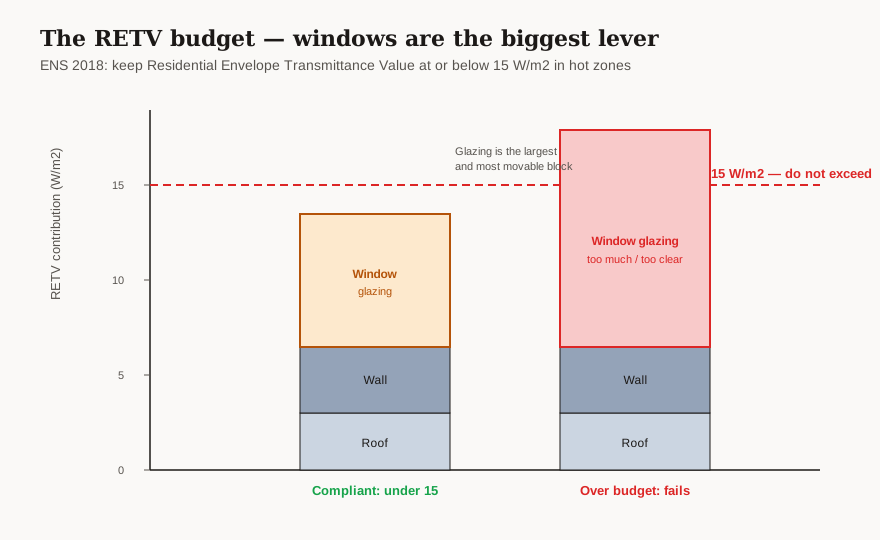
2. The WWR-linked VLT ladder. This is the rule that hits windows most directly. As your Window-to-Wall Ratio (WWR) rises, ENS demands progressively darker, lower visible-light-transmittance (VLT) glass so heat gain stays in check. More glass means lower-VLT glass — a sliding ladder.
| WWR (window area / external wall area) | Maximum VLT allowed (indicative) |
|---|---|
| Less than or equal to 0.30 | 0.27 |
| Greater than 0.30 to 0.40 | 0.20 |
| Greater than 0.40 to 0.50 | 0.16 |
| Greater than 0.50 to 0.60 | 0.13 |
| Greater than 0.60 to 0.70 | 0.11 |
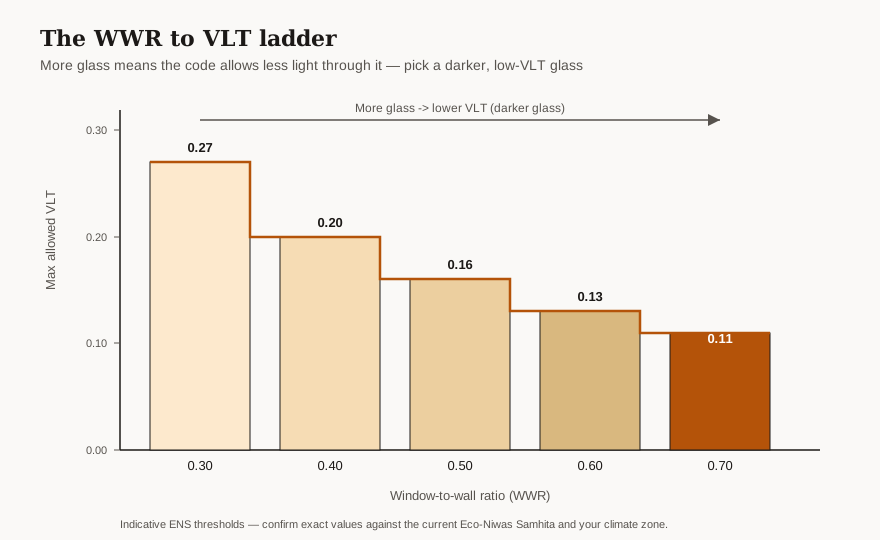
3. U-value / thermal transmittance. The code also bounds how readily the assembly conducts heat. In hot zones the openable-area and shading provisions carry weight; in cold climates a window U-value limit governs. The practical message for a homeowner is the same: a single-glazed clear-glass aluminium window with no shading is the hardest combination to make compliant.
The cheapest way to pass the WWR-VLT ladder is rarely darker glass — it is less glass plus more shading. Right-sizing the window and adding a chajja or fin often saves the view that low-VLT glass would have stolen.
ENS versus ECBC: which code governs your building
The two codes share DNA but cover different buildings. Get the scope wrong and you document against the wrong rulebook.
| Question | ENS 2018 | ECBC 2017 |
|---|---|---|
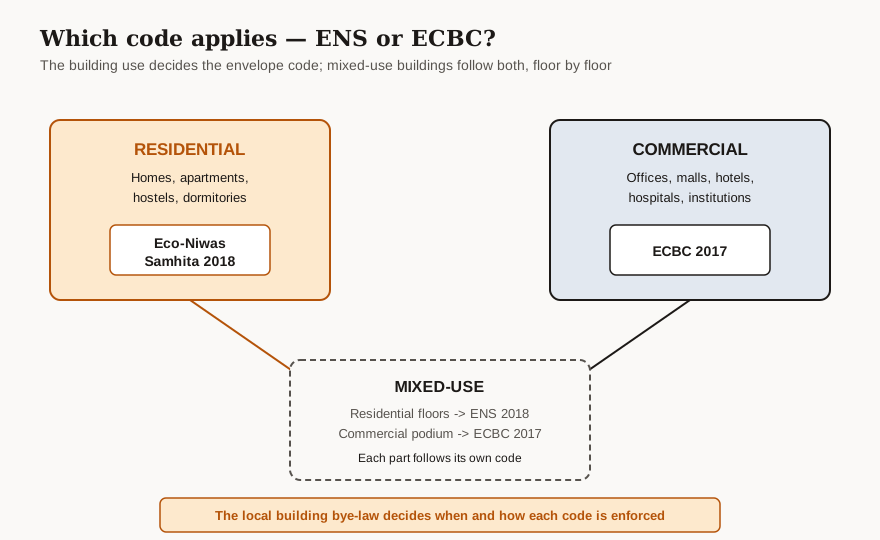
| Building type | Residential (homes, apartments) | Commercial (offices, malls, hotels, hospitals) |
| Trigger threshold | Plot/built-up area as notified by State | Connected load 100 kW or contract demand 120 kVA (typical) |
| Window metric focus | RETV, WWR-VLT ladder | SHGC, U-factor, VLT, daylighting |
| Compliance tiers | Single compliance level | ECBC, ECBC Plus, Super ECBC |
| Verifying body | Local authority / ULB | Local authority / SDA |
Mixed-use buildings can straddle both — the residential floors follow ENS, the commercial podium follows ECBC. When in doubt, the local body's adopted bye-law is the final word.
Compliance documentation a builder must produce
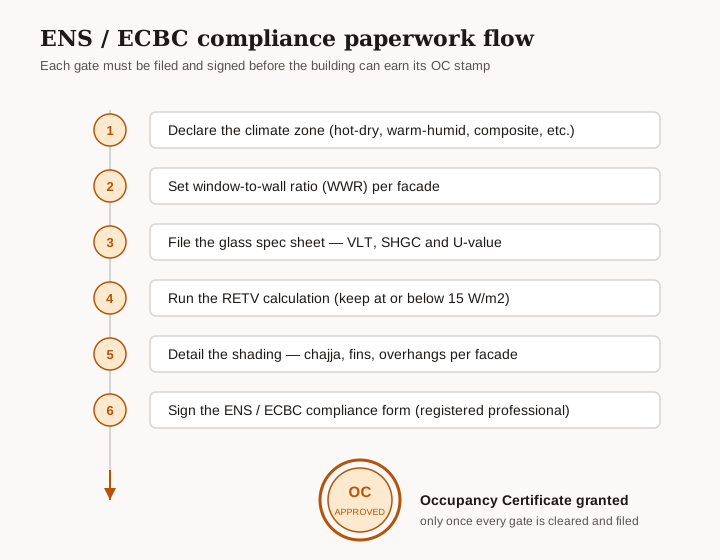
Where ENS or ECBC is adopted, compliance is proven on paper, not by inspection alone. Expect to file the following with the plan and again at occupancy.
| Checklist item | What it proves |
|---|---|
| Climate zone declaration | Which RETV / U-value route applies |
| WWR calculation per facade | Position on the VLT ladder |
| Glass spec sheet (VLT, SHGC, U-value) | Glazing meets the band |
| RETV compliance calculation (ENS) | Envelope under 15 W/m2 |
| Shading / chajja details | Credit toward heat-gain control |
| ENS / ECBC compliance form, signed | Statutory self-certification |
Keep the glazing supplier's test certificate: the VLT, SHGC and U-value printed on it are exactly the numbers the WWR-VLT ladder is checked against. A window installed without that paperwork can stall an occupancy certificate even if the glass is, in fact, fine.
Honest caveat: adoption is patchy — verify your State
National notification does not mean nationwide enforcement. States adopt ENS and ECBC on their own timelines, and a city's municipal building bye-law may amend the thresholds, the trigger area, or the documentation. Some States enforce ENS rigorously; others have notified it but not yet wired it into the permit workflow. Before you design to these numbers, confirm with your local urban local body whether ENS or ECBC is mandatory for your plot, and which version of the figures applies. The bye-law, not the model code, is what your approval rests on.
Where to go next
- Standards pillar: Residential Window Standards in India — the full map of every code touching a home window.
- Differentiate the design cousin: Green Building Window Design covers the voluntary IGBC, GRIHA and LEED credit scorecard — points you choose to chase. This guide is the mandatory ENS/ECBC code you must meet. Read both, but never confuse the plaque with the permit.
- The window that drives the ladder: Window-to-Wall Ratio in India — because WWR sets your VLT obligation.
- The broader compliance frame: Building Regulations and Compliance and Types of Home Windows in India.
References
- Eco-Niwas Samhita 2018 (BEE): https://beeindia.gov.in/en/programmes/eco-niwas-samhita-ens
- Energy Conservation Building Code 2017 (BEE): https://beeindia.gov.in/en/programmes/ecbc
- Bureau of Energy Efficiency: https://beeindia.gov.in/
- Indian Green Building Council (IGBC): https://igbc.in/
- GRIHA Council: https://www.grihaindia.org/
Export this guide
Related Guides — Deep-dive reading
Energy-Efficient Facades in India: How the Building Skin Cuts Your Cooling, Heating & Lighting Bills
How a building facade drives cooling, heating and lighting energy in India, the three levers of solar-heat-gain control, insulation and daylighting, U-value, SHGC, VLT and WWR in plain terms, ECBC and Eco-Niwas expectations, and real Indian green buildings.
Building FacadesGreen Building Window Design for India
The fenestration scorecard — exactly which window decision earns which IGBC, GRIHA or LEED credit, and the numeric thresholds to hit
Windows & GlazingEnergy Efficient Windows Explained: The Whole-System Guide for Indian Homes
Treat the window as an energy device — frame, glass, seals, shading, install and rating — and learn why low SHGC and shading beat chasing a cold-climate U-value in hot India.
Windows & GlazingRelated Tools — Try Free
Brise-Soleil Visualizer
Interactive horizontal-louvre cut-off angle calculator — sun altitude, louvre depth, and spacing inputs with a live shadow preview. Computes θ = arctan(spacing/depth) for façade shading, ECBC envelope compliance, hospital daylight design, and tropical sun-control detailing.
Sun Shading ToolGreen Building Window Compliance Tool
Check your window design against Eco-Niwas Samhita — WWR, VLT, SHGC and U-value pass or fail.
ENS Pre-checkWindow-to-Wall Ratio Calculator
Compute WWR percent and check it against Eco-Niwas Samhita VLT and RETV limits and climate.
Window Tool