
Glass Lift Cost Guide (India 2026): What a Panoramic Home Lift Costs
Why glass costs more than a steel cabin, the panoramic premium, PVE vs glass-clad traction prices, finish/tint upgrades, and an all-in budget for a glass home lift.
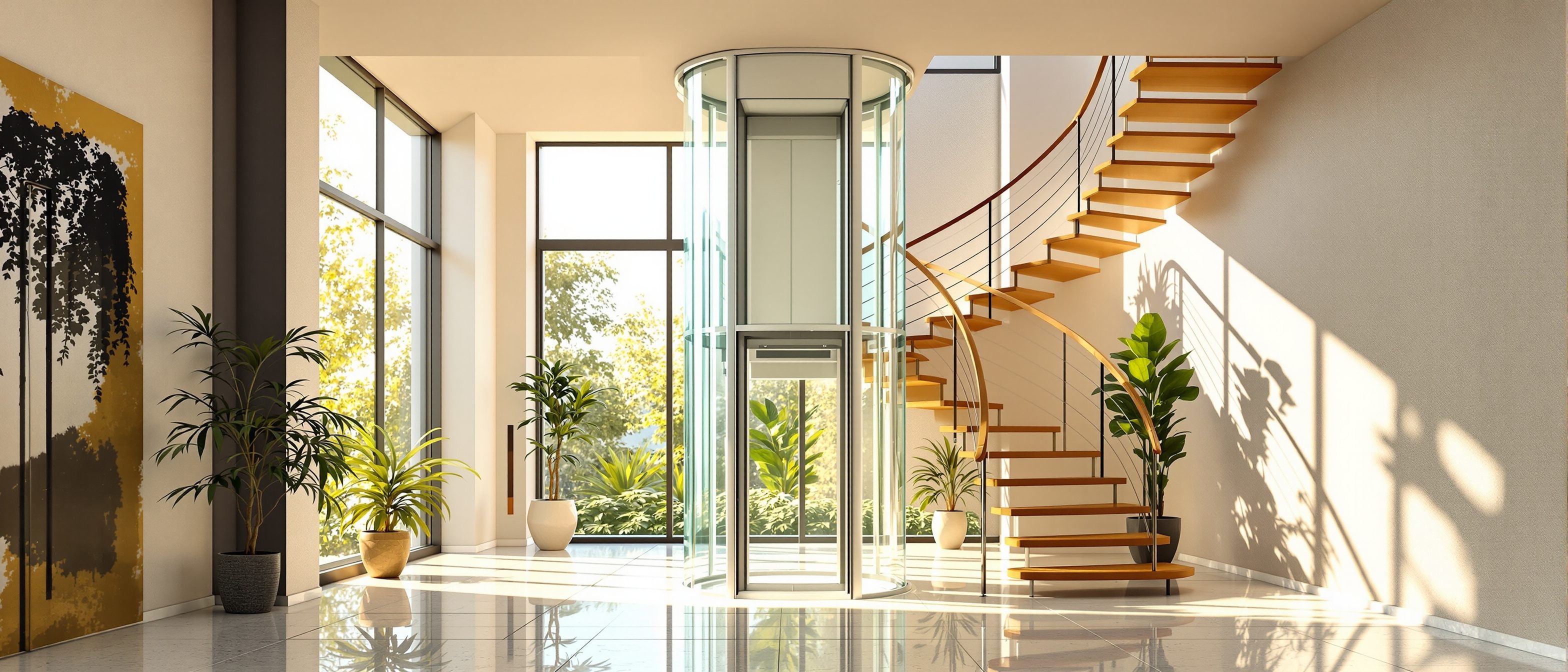
A glass lift turns a piece of building machinery into a sculptural object. Light passes through it, the staircase wraps around it, and the cabin becomes the visual centre of the home rather than a steel box hidden in a wall. That experience has a price. A panoramic home lift in India in 2026 runs broadly ₹11–25 lakh before GST and civil work — and the glass itself is one of the main reasons the figure sits at the upper end of the home-lift range.
This guide is the cost deep-dive for glass and panoramic home lifts — why glass costs more than a plain steel cabin, the premium you pay for it, the difference between a pneumatic vacuum (PVE) glass tube and a glass-clad traction lift, and what finishes and tints add. For the broad price benchmark across all lift types, read Home Lift Cost in India 2026. For how a glass lift is styled into a room, see Glass Elevator Design in India; for how the engineering actually works, see Glass Elevator Technologies in India. To price your own configuration, use the Home Lift Cost Calculator.
All prices here are indicative for June 2026, in ₹ — confirm with itemised quotes from licensed lift vendors before you budget.
What you actually pay for in a glass lift
A glass lift is not a standard cabin with the steel swapped for glass. The glass is a structural and safety component, which changes the engineering, the certification and the bill. Three things drive the premium:
- Safety glass, not ordinary glass. Cabin walls and panoramic shaft glazing use laminated and/or tempered (toughened) safety glass — multiple bonded layers that hold together if struck, rated to carry a human against them. This glass costs several times more per square metre than the steel-and-laminate panels of a standard cabin, and a panoramic lift uses a lot of it.
- Panoramic and curved engineering. Flat glass is one price; curved or cylindrical glass — the seamless tube look of a pneumatic vacuum lift, or a rounded glass-clad traction cabin — needs specialist forming and tighter tolerances, pushing cost up again.
- Structural-glass framing. The frame that holds large glass panels has to be engineered to transfer load and resist deflection without flexing the glass. Minimal "frameless" looks are the most expensive because the glass does more of the structural work.
Glass vs standard cabin: the cost premium
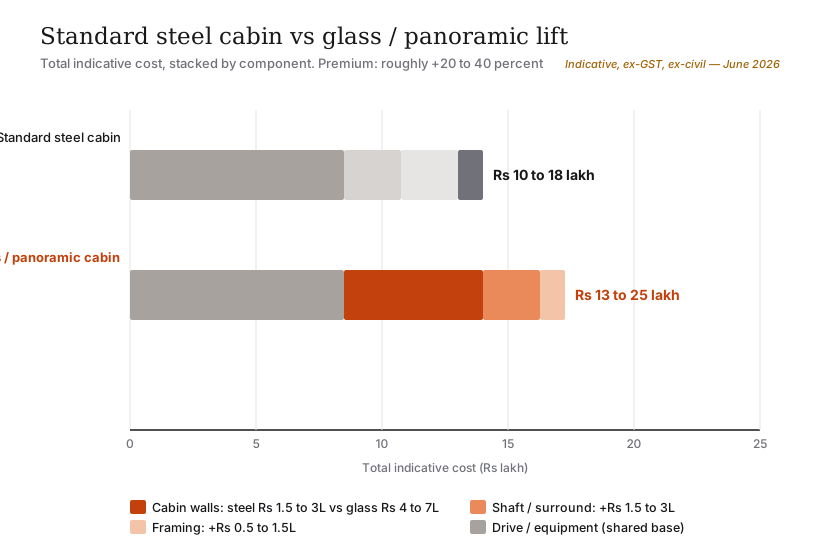
The cleanest way to see the glass premium is to hold everything else constant — same lift type, same floors, same capacity — and change only the cabin. A standard home lift cabin (powder-coated steel walls, laminate or mirror panels) is the baseline; the glass version adds the safety-glass panels, the panoramic shaft glazing and the heavier framing.
| Element | Standard steel cabin | Glass / panoramic cabin | Difference |
|---|---|---|---|
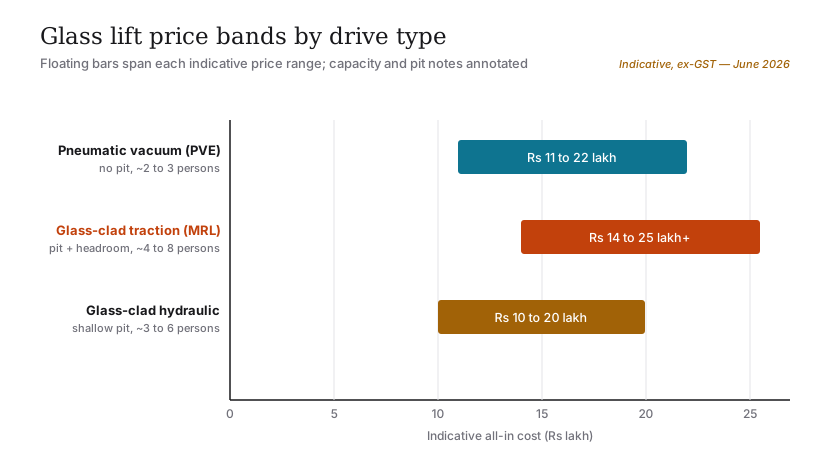
| Cabin walls and panels | ₹1.5–3 lakh | ₹4–7 lakh (laminated/tempered glass) | +₹2.5–4 lakh |
| Shaft / surround treatment | Plastered masonry, painted | Glass-clad or structural-glass shaft | +₹1.5–3 lakh |
| Framing and fixings | Standard steel frame | Structural-glass framing | +₹0.5–1.5 lakh |
| Typical all-in (ex-GST, ex-civil) | ₹10–18 lakh | ₹13–25 lakh | roughly +20–40% |
Rule of thumb: a panoramic glass cabin adds ₹3–8 lakh over an equivalent standard steel cabin — broadly a 20–40% premium on a comparable lift.
The premium is not a fixed number because it scales with glass area. A small glass-walled cabin in a masonry shaft (glass on the car only) sits at the low end; a full panoramic lift where the entire shaft is glass and the staircase wraps around it sits at the top, because every face is safety glass on a structural frame.
Glass cost by lift type: PVE vs glass-clad traction
"Glass lift" in an Indian home almost always means one of two very different machines, and they sit at different points on the cost curve.
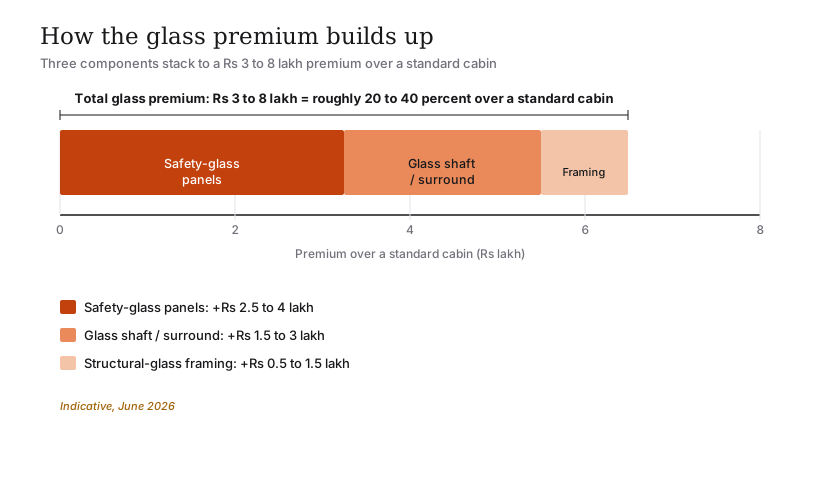
- Pneumatic vacuum elevator (PVE) — the cylindrical glass tube. Air pressure lifts a panoramic cabin; there is no pit, no shaft, no machine room, so it is the easiest glass lift to retrofit into a finished home. The glass is the product — a PVE is inherently panoramic. Capacity is limited (about 2–3 persons) and travel is modest. ₹11–22 lakh. Nibav is the best-known India-grown PVE brand.
- Glass-clad traction (MRL) — a conventional machine-room-less traction lift with a glass cabin and, often, a glass shaft built around it. Faster, higher capacity (up to ~6–8 persons), serves more floors, and gives a different, more "architectural" panoramic look. It needs a proper pit and headroom, so retrofitting is harder. Glass cabin + glass shaft pushes a base traction lift (₹10–25 lakh+) toward and past the top of its range. ₹14–25 lakh+ in glass trim.
A glass-clad hydraulic lift is also possible at the lower end (hydraulic base ₹8–20 lakh) for 2–4 floors, but PVE and glass traction are the two you will most often be quoted for a panoramic home lift.
| Glass lift type | Indicative price (ex-GST) | Pit / shaft | Capacity | Best for |
|---|---|---|---|---|
| Pneumatic vacuum (PVE) | ₹11–22 lakh | None — self-supporting | ~2–3 persons | Retrofit into a finished home; smallest footprint panoramic |
| Glass-clad traction (MRL) | ₹14–25 lakh+ | Pit + headroom needed | ~4–8 persons | New build; more floors, faster, larger panoramic cabin |
| Glass-clad hydraulic | ₹10–20 lakh | Shallow pit (~150–300 mm) | ~3–6 persons | Low rise (2–4 floors), budget-conscious glass look |
For the mechanics behind these choices — why a PVE needs no shaft, how MRL traction works — see Glass Elevator Technologies in India. This guide stays on the money.
Finish and tint options: what the glass upgrades cost
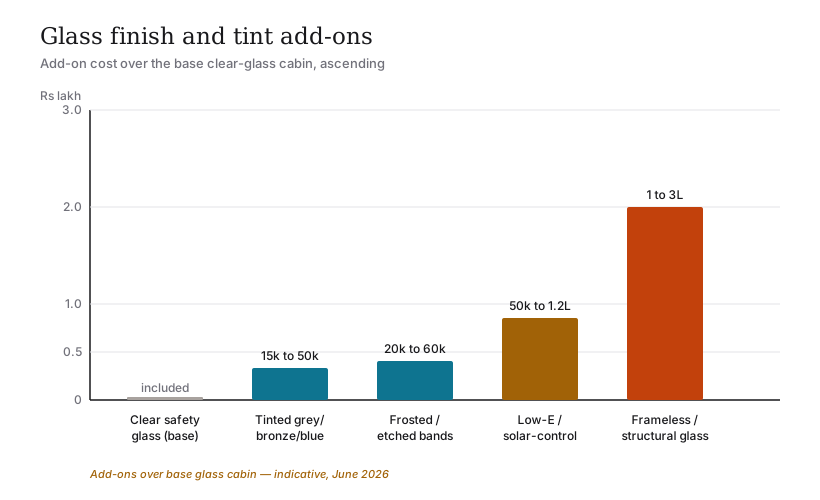
Once you commit to glass, the next decision is which glass, and the choices move the price meaningfully. These are add-ons over the base glass cabin.
- Clear laminated/tempered — the default; fully transparent, maximum light. No premium over the base glass cost.
- Tinted (grey / bronze / blue) — reduces glare and heat, adds privacy. A modest, mostly cosmetic upgrade.
- Frosted / acid-etched bands — translucent privacy strips, common at cabin floor and eye level. Small premium.
- Low-E / solar-control glass — worthwhile where the shaft sits against a hot west or south wall; cuts heat gain. Mid premium.
- Frameless / minimal-frame look — the most expensive option; structural glass with hidden fixings carries the load, so engineering and glass spec both rise.
| Finish / tint option | Indicative add-on cost | Why choose it |
|---|---|---|
| Clear safety glass (base) | Included | Maximum transparency and light |
| Tinted (grey / bronze / blue) | +₹15,000–50,000 | Glare, heat and privacy |
| Frosted / etched privacy bands | +₹20,000–60,000 | Privacy at floor and eye level |
| Low-E / solar-control glass | +₹50,000–1.2 lakh | Heat control on sun-facing shafts |
| Frameless / minimal-frame structural glass | +₹1–3 lakh | Premium seamless panoramic look |
For the visual decisions — clear vs tinted, where the glass shaft sits, how it reads against the staircase — see Glass Elevator Design in India. That guide is the look; this is the cost.
All-in cost for a typical glass home lift
Quoted prices are almost always ex-works — the cabin and machine only. The number that lands in your bank statement is larger. For a representative G+1, 2–3 person panoramic glass lift, build the budget up like this:
| Line item | Indicative amount |
|---|---|
| Glass lift (PVE or glass-clad traction), ex-works | ₹13–22 lakh |
| GST at 18% | ₹2.3–4 lakh |
| Civil work (shaft prep, electricals; minimal for PVE) | ₹0.5–4 lakh |
| Installation and commissioning | included to ₹1 lakh |
| Finish/tint upgrades (optional) | ₹0.15–3 lakh |
| Typical all-in delivered | ₹16–30 lakh |
| AMC, per year (non-comprehensive) | ₹20,000–38,500 |
| AMC, per year (comprehensive) | ~60–70% more than non-comprehensive |
A PVE lands at the lower, tighter end because it needs almost no civil work — no pit, no shaft to build. A glass-clad traction lift across more floors, with a structural-glass shaft and premium finishes, runs to the top.
By floors, expect the familiar home-lift escalation: a G+1 panoramic lift around ₹12–18 lakh ex-GST at the cabin, rising with each additional floor (more glass shaft, more travel, larger machine). To price your exact floors, capacity and finish, run the Home Lift Cost Calculator, then sanity-check it against the full price spread in Home Lift Cost in India 2026.
Where the glass premium is worth it — and where to save
- Worth paying for: safety glass (never substitute ordinary glass), an ARD battery backup (essential given Indian power cuts), and a strong AMC with a local service presence. These are not the places to economise.
- Easy savings: skip frameless/structural-glass framing if budget is tight — a clean framed cabin reads almost as well for ₹1–3 lakh less. Clear glass over exotic tints. A glass cabin in a masonry shaft instead of a full glass shaft.
- Watch the AMC fine print: comprehensive contracts cost 60–70% more but cap surprise bills; even "bumper-to-bumper" contracts often exclude pit flooding, vandalism and aesthetic glass replacement. Read it before you sign.
Bottom line: budget ₹16–30 lakh all-in for a typical panoramic glass home lift, of which roughly ₹3–8 lakh is the glass premium over a standard steel cabin. The glass buys light and presence; spend the rest on safety, backup and service.
References
- Cost basis: India home-lift market benchmarks, June 2026 (indicative; verify with licensed vendor quotes). Type bands: hydraulic ₹8–20 lakh, traction/gearless ₹10–25 lakh+, pneumatic vacuum ₹11–22 lakh, screw ₹14–30 lakh; GST 18%; civil and installation extra; AMC ₹20,000–38,500/yr non-comprehensive.
- IS 14665 — Electric Traction Lifts (BIS), Part 1 (outline dimensions): https://law.resource.org/pub/in/bis/S05/is.14665.1.2000.pdf
- IS 14665 — Electric Traction Lifts (BIS), Part 2 (installation, operation and maintenance): https://law.resource.org/pub/in/bis/S05/is.14665.2.1-2.2000.pdf
- National Building Code 2016, Part 8 Section 5 (Installation of Lifts) — BIS: https://www.bis.gov.in/standards/technical-department/national-building-code/
- Lift regulations in India (overview): https://www.99acres.com/articles/know-all-about-the-lift-regulations-in-india.html
Export this guide
Related Guides — Deep-dive reading
Types of Home Lifts in India (2026): Complete Comparison and How to Choose
All seven home-lift options on one comparison table, plus a five-question decision framework to pick the right one
Home Lifts & AccessibilityVacuum (Pneumatic) Home Elevators in India: How PVE Lifts Work, Costs and Limits
The air-driven, no-pit, no-shaft lift that retrofits into a finished home in days
Home Lifts & AccessibilityResidential Elevator Buyer's Guide (India 2026): Types, Cost, Sizing, Regulation & How to Choose
Everything an Indian homeowner needs to choose, size, budget, license and maintain a home lift the right way.
Home Lifts & AccessibilityRelated Tools — Try Free
Home Lift Budget Planner
Full line-item budget for a home lift — equipment, finishes, civil, GST, AMC and contingency.
Lift PlannerHome Lift Cost Calculator
All-in home lift cost by floors, type, capacity and city — equipment, civil, GST and AMC, with a drive-type comparison.
Lift CalculatorHome Lift Comparison Tool
Compare hydraulic, traction, pneumatic vacuum and screw lifts side by side for your home.
Lift Comparison