
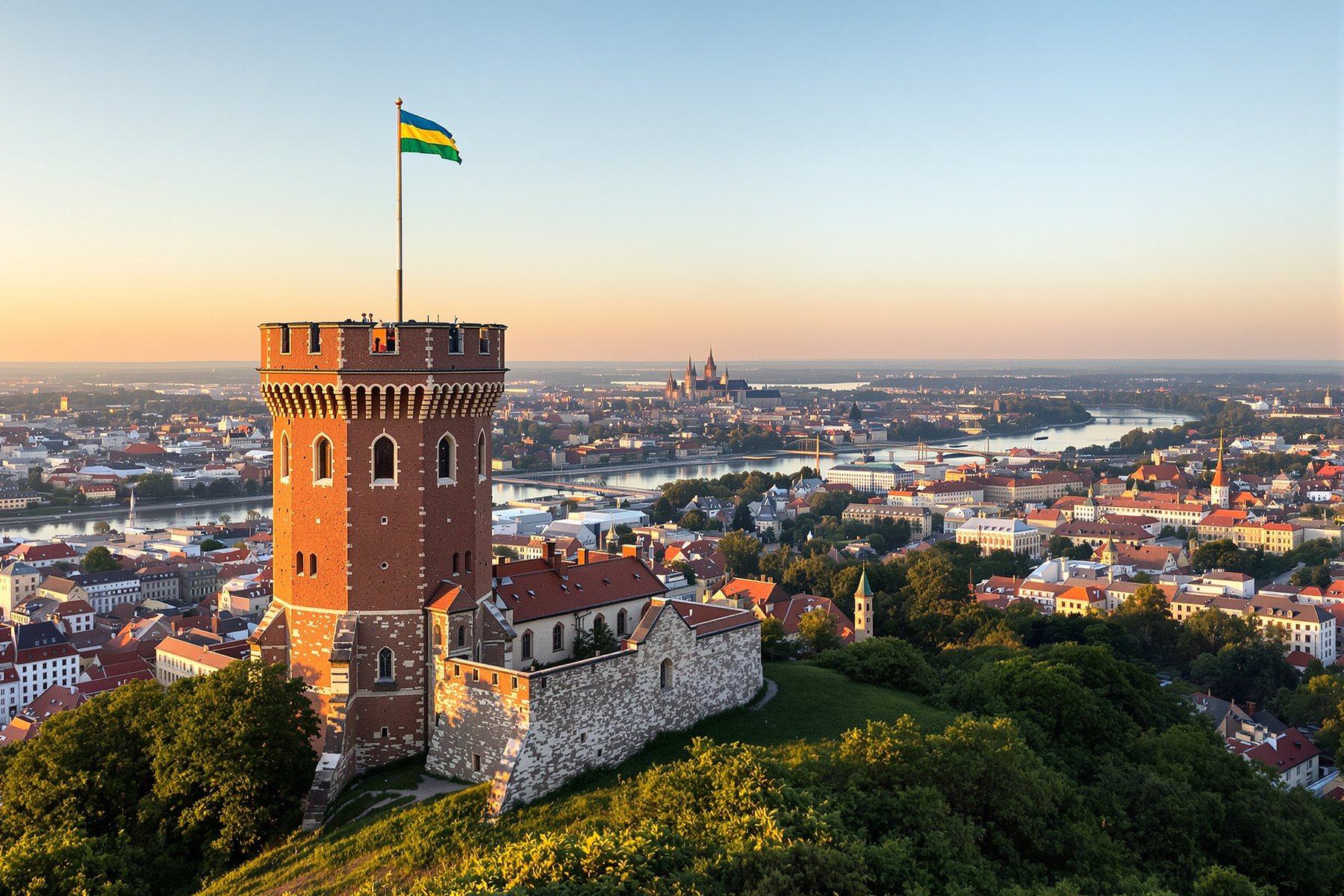
Gediminas' Tower: The Hill Where a City Was Dreamed
How a single red-brick tower on a Vilnius hilltop — the last fragment of a vanished castle, born of a legend about an iron wolf — became the flag-tower of a nation, and what it teaches about height, survival and the meaning of a site.
The last article stood in the Lower Castle of Vilnius, on the plain, before the great Cathedral. Now lift your eyes. Directly above the cathedral rises a steep green hill, and on its flat crown stands a single red-brick tower flying the Lithuanian flag. This is Gediminas' Tower — the last surviving fragment of the Upper Castle of Vilnius, the high half of a stronghold that once came in two levels. It is a small building with an enormous meaning: this is the hill where, according to legend, the city of Vilnius was not founded but dreamed.
If Trakai showed a castle that made a wall of water, Gediminas' Tower shows the other ancient answer — a castle that makes a wall of height. And it carries something Trakai and the Cathedral both touched: the way a single building can become the very emblem of a people.
This is the eleventh article in our Architectural Wonders series, and the third and last of our Lithuanian trio.
1. One stronghold, on two levels
Vilnius was guarded by a castle complex in two parts. On the plain, at the confluence of the Neris and Vilnia rivers, stood the Lower Castle — the cathedral and the Palace of the Grand Dukes, the buildings of the previous two articles. And above it, crowning the steep hill, stood the Upper Castle — the high keep and walls, the last refuge, the eye over the whole valley.
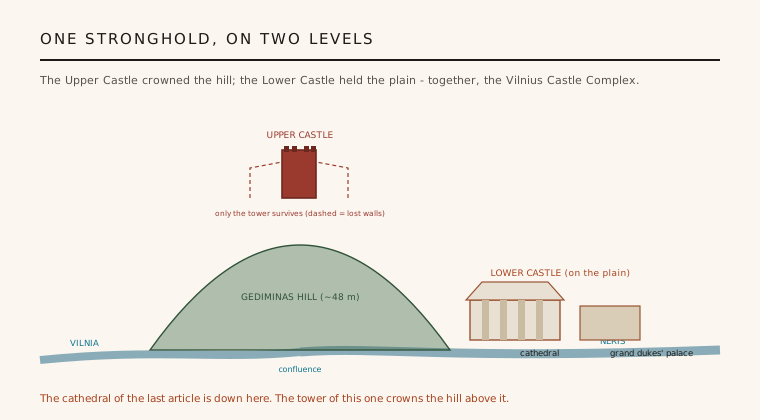
Of that Upper Castle, almost nothing remains — except one tower. Gediminas' Tower is the western tower of three that once ringed the hilltop, and it survives where its castle did not. To understand it you have to understand both why the hill was chosen, and why a single fragment came to mean so much.
2. A wall of height
Start with the hill, because the hill _is_ the architecture. Gediminas Hill rises some 48 metres above the rivers at its foot, with a flat oval crown — and that height was the whole point. The oldest defensive idea on earth, older than any wall of stone, is simply to be higher than your enemy.
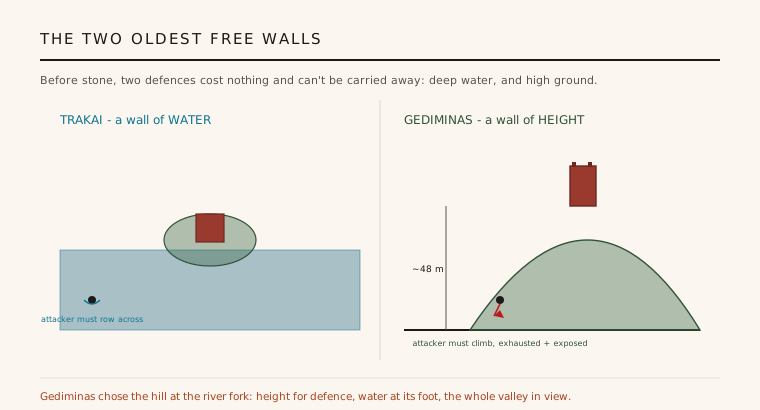
Think again of Trakai, where an attacker had to spend himself crossing open water before he reached a stone. Here he must spend himself climbing — toiling up a steep forty-eight-metre slope, slow and exposed, while defenders rain down everything they have from above. The hill does the work of an outer wall, for free, and it can never be carried away. And Gediminas chose this particular hill shrewdly: at the fork of two rivers, so the water guards its foot while the height guards its crown, and the whole valley lies open to view. Water and height — the two great free defences of this series — meet at the base of this one hill.
3. The city that began as a dream
But the hill was not chosen for tactics alone. It was chosen because of a story — and it is one of the loveliest founding legends in Europe.
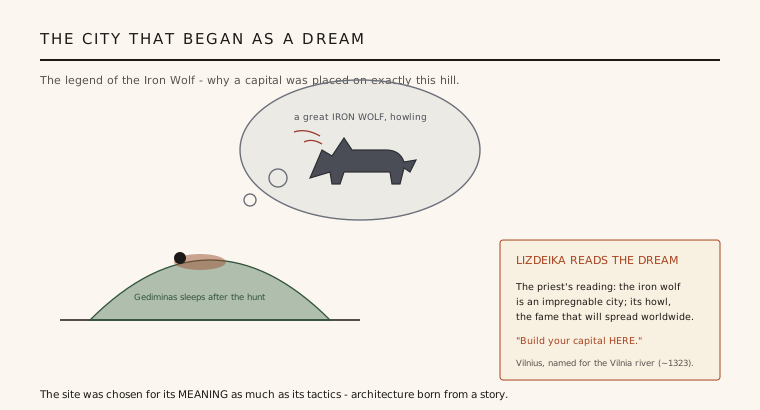
The tale runs that Grand Duke Gediminas, hunting in the valley, made his kill on this hilltop and, weary, lay down to sleep there. In the night he dreamed of a colossal wolf made of iron, standing on the very hill, howling with the voice of a hundred wolves. His pagan high priest, Lizdeika, read the dream: the iron wolf was an impregnable city to be built on this spot, and its unstoppable howl was the fame that would spread across the world. Gediminas obeyed the dream and founded his capital here, naming it Vilnius after the little Vilnia river — a name first recorded around 1323.
Whether or not a duke ever dreamed of a wolf, the legend tells an architectural truth: the site was chosen for its meaning as much as its strategy. A place can be sacred, or fated, or simply _right_, before a single stone is laid — and a city founded on a story carries that story in its bones forever. Architecture often begins not with a plan but with a reason to be _here_, and nowhere else.
4. The fragment that endured
What you climb to today is not the castle Gediminas began — those first works were timber. The brick castle was completed under Vytautas the Great in the early 15th century (his first brick castle is dated to 1409), in the same red Brick Gothic we met at Trakai. And of that whole hilltop fortress — walls, gates, three towers — only one tower still stands.
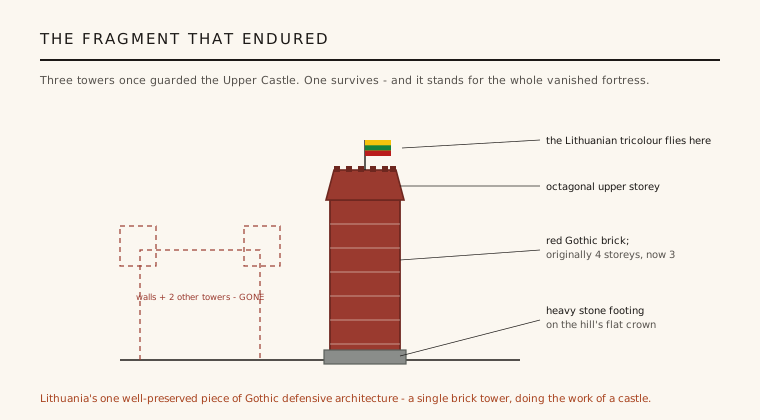
The survivor is a stout tower of red Gothic brick on a heavy stone footing, octagonal in its upper part, originally four storeys and now three, built to fight with and against early firearms. It is, remarkably, the only well-preserved example of Gothic defensive architecture in all of Lithuania — one brick tower carrying, single-handed, the memory of a vanished castle and an entire era of building.
There is a quiet lesson in that. We saw at Konark how a surviving porch stands for a fallen temple; here a surviving tower stands for a fallen fortress. A fragment, if it is the right fragment, can hold the whole. What endures is rarely everything — it is the one piece strong enough, or loved enough, to be kept.
5. A flag-tower, and a sliding hill
And kept it was — because of what this tower came to _mean_. On 1 January 1919, as modern Lithuania fought into being, the Lithuanian tricolour was raised on Gediminas' Tower for the first time. That act is now commemorated every year as Flag Day, the flag ceremonially hoisted on the same tower; the building houses a museum of the city's history; and the tower has become the single most recognised symbol of Vilnius and of Lithuanian statehood itself.
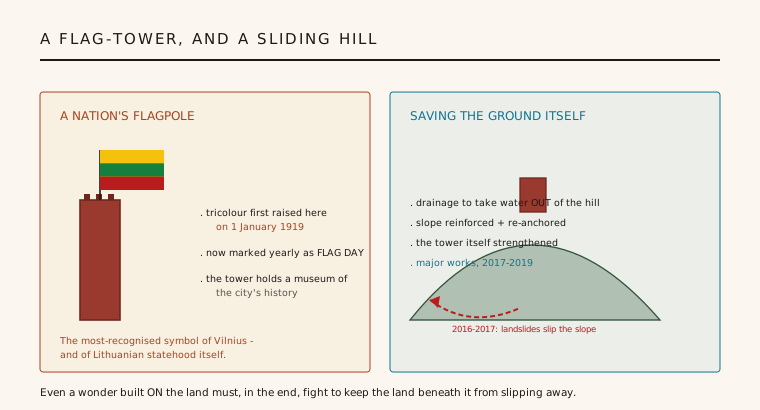
But there is a final, very modern twist, and it closes the circle of the whole series. The thing that made this tower strong — its hill — has lately become its greatest danger. In 2016 and 2017 the slopes of Gediminas Hill began to slip in landslides that threatened the tower itself, and Lithuania mounted a major rescue: draining water out of the hill, reinforcing and re-anchoring the slope, and strengthening the tower, in works running from roughly 2017 to 2019. It is a striking reminder that even a wonder built _on_ the land must, in the end, fight to keep the land beneath it from sliding away. The ground is never as permanent as it looks.
6. What a modern architect can learn from Gediminas' Tower
- Height is the oldest wall. Before any stone, the land's own high ground is a defence and an advantage — for safety, for outlook, for presence. Reading a site's topography, and letting it work for you, is the first move in architecture, not the last. (Together with Trakai's water, it is the lesson our site-planning writing keeps making: design _with_ the land.)
- Build where the meaning is. Vilnius was placed on this hill by a dream, not a survey. The most enduring places are chosen for why they matter, not only for what is convenient — and a building rooted in the meaning of its site outlasts one that merely occupies a plot.
- A fragment can carry the whole. One tower stands for a lost castle and a living nation. You do not always need the entire thing to keep the meaning; conserve the right piece, and it speaks for all that is gone.
- A building can become a flag. Architecture is one of the strongest containers a people has for its identity — sometimes literally, as a pole for a flag. Treat civic buildings as the carriers of memory they will inevitably become.
- Tend the ground, not just the building. The hill slides; the site itself needs care, drainage and engineering. A monument is only ever as safe as the earth it stands on — look after both.
References & further reading
1. National Museum of Lithuania — Gediminas Castle Tower. https://lnm.lt/en/museums/gediminas-castle-tower/
2. Go Vilnius (official city tourism) — The Gediminas Tower. https://www.govilnius.lt/visit-vilnius/places/the-gediminas-tower
3. Encyclopaedia Britannica — Vilnius (founding and castle hill). https://www.britannica.com/place/Vilnius
4. Lithuania Travel — Gediminas Castle Tower. https://lithuania.travel/en/why-lithuania/culture-and-heritage/culture-and-art/museums/history-museums/gediminas-castle-tower
Last verified 2026-06-30. Dates, the tower's storeys and the hill's height follow standard historical and museum reference sources and are given as widely accepted approximations; the Iron Wolf legend is presented as Lithuania's founding tradition, while the 1409 brick castle, the 1919 first flag-raising and the 2016–2019 landslide and reinforcement works follow the established historical record.
Export this guide
Related Guides — Deep-dive reading
Trakai: The Castle That Made a Wall of Water
How the Grand Dukes of Lithuania built a red-brick Gothic fortress on an island in a lake — using the water itself as its outermost wall — and how a 20th-century nation chose to rebuild it from ruin. The defensive idea, the Brick Gothic, and the reconstruction debate.
Architectural WondersBrihadeeswara: The Chola Tower That Never Fell
How an 11th-century Tamil emperor raised a 216-foot tower of solid granite — with no mortar, no iron and no machine — and why this colossal corbelled mountain has stood for over a thousand years where Konark's fell. The engineering, the 80-tonne capstone, and the lesson.
Architectural WondersChan Chan: The Vast City of Mud Where Every King Built His Own Palace
On the desert coast of Peru sprawl the ruins of the largest city ever built of mud — a thousand-year-old capital of adobe walls three storeys high, carved with fish and seabirds, that survived only because it almost never rains. It was a city of ten royal palaces, one for each king, driven by a strange rule of inheritance; and today, an earthen city in a warming world, it is racing the rain to survive. The ninth article in our chapter on the palaces and pleasures of worldly power.
Architectural WondersRelated Tools — Try Free
Before & After Studio
Generate AI before-and-after renders to preview how your redesign could look.
DesignAILift Safety Audit Checklist
Interactive checklist that scores your home lift on safety devices, compliance and upkeep.
ChecklistAI BOQ Generator
AI generates detailed Bill of Quantities with city-specific rates and labour breakdown.
ArchitectAI