
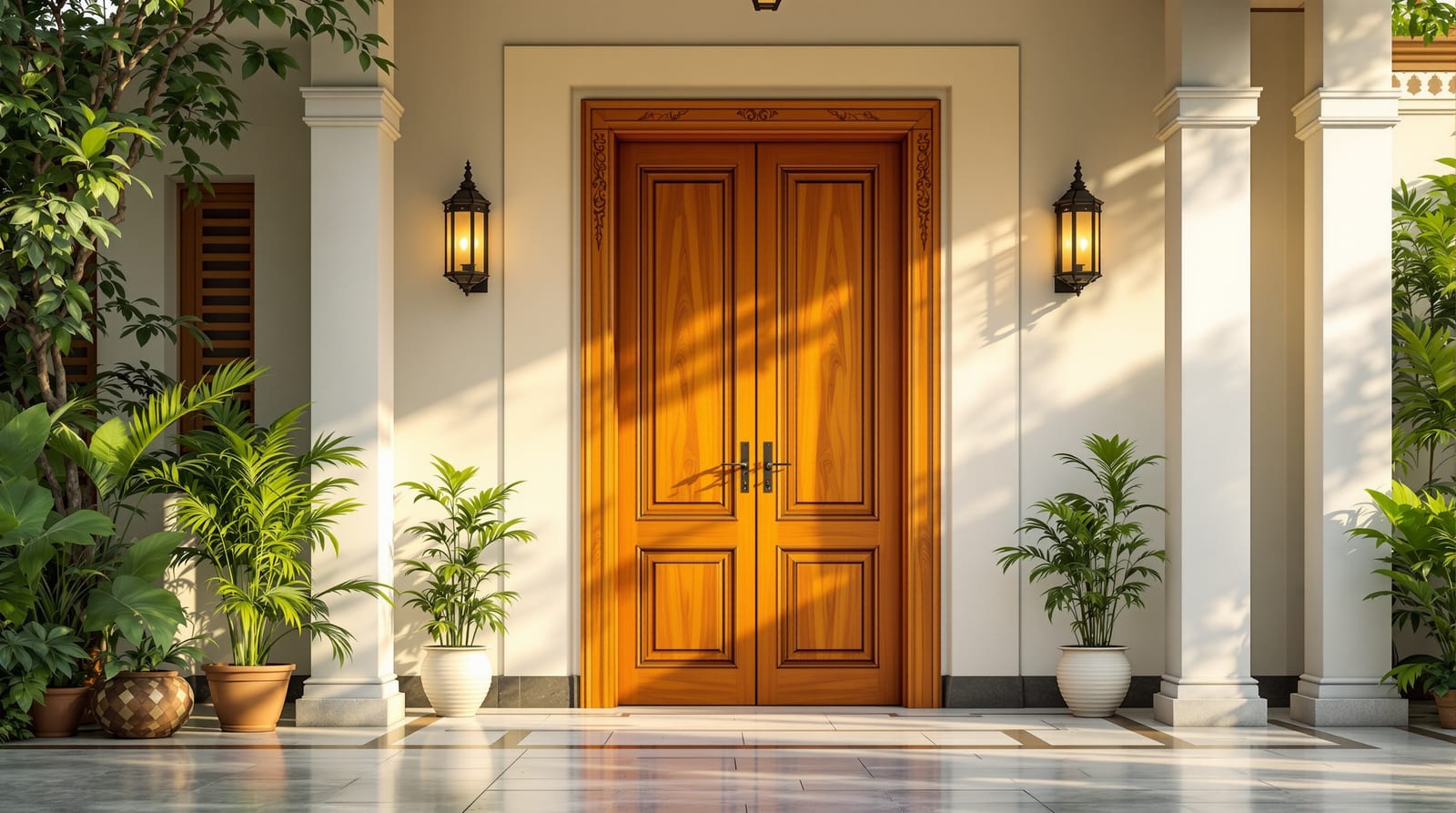
East India Door Buying Guide: Prices & Brands India 2026
How to buy doors in West Bengal, Odisha, Bihar, Jharkhand and the Northeast — moisture-proof picks, keen prices and where locals shop.
East India door buying has its own rulebook. From the soaking humidity of the Bengal delta to the flood-prone plains of Bihar and the monsoon belt of Assam and the Northeast, this is the most moisture-stressed corner of the country — and the region where the wrong door swells, warps and rots fastest. The good news: with CenturyPly, Greenply, Duroply and Sarda Ply all having deep eastern manufacturing roots, organised-brand doors here are often the most affordable in India. This guide covers what to buy, what it costs in 2026, and where people across West Bengal, Odisha, Jharkhand, Bihar and the Northeast actually shop.
Why East India is its own door market
Three forces shape every door decision in the east:
- Relentless humidity. Coastal Bengal and Odisha sit at 75–90% relative humidity for much of the year. Untreated or hollow-core doors absorb moisture, swell at the edges, and the leaf stops closing cleanly within a season or two.
- Heavy rain and flooding. Large parts of Bihar (the Kosi belt), riverine Bengal, coastal Odisha and the Brahmaputra valley flood. Ground-floor doors can stand in water for hours. Solid timber and ordinary plywood cores are a poor bet here.
- The Kolkata legacy. Old North and Central Kolkata houses carry tall, heavy panelled doors — often 8 ft or taller in 9 ft+ doorways — in Burma teak and sal. Replacing or matching these means oversized, made-to-order joinery, not catalogue sizes.
The practical takeaway: in East India, moisture resistance beats everything. That pushes most homeowners toward WPC, BWR-grade solid-core flush doors, and treated engineered options rather than cheap hollow-core or untreated softwood.
What to buy in a humid, flood-prone climate
| Where it goes | Best choice in the east | Why |
|---|---|---|
| Bathroom / utility | WPC or PVC door | Fully waterproof; won't swell or rot |
| Internal bedrooms | Solid-core flush (BWR grade) | Stable in humidity; affordable; takes laminate |
| Ground floor in flood zones | WPC or uPVC | Survives standing water and damp walls |
| Main door (modern) | Treated teak/sal panel or designer engineered | Looks the part, but seal and maintain it |
| Heritage match (old Kolkata) | Custom seasoned sal/teak joinery | Matches tall historic openings |
Skip hollow-core flush doors for anything but the driest internal rooms. They are the first to fail in eastern humidity. If you want timber, insist on properly seasoned and treated stock and budget for re-polishing every few years.
For the full material trade-offs, see door materials comparison and the deep dives on WPC doors and uPVC doors. To choose by room, how to choose doors walks through the decision.
What doors cost in East India (2026)
The table below is the pan-India supply-only average for one standard 7×3 ft leaf, before GST. East India runs slightly below the national average for organised-brand flush and WPC doors thanks to local manufacturing, while imported uPVC and premium teak track national pricing.
| Door type | Pan-India supply price (₹) | Typical East India position |
|---|---|---|
| Hollow-core flush | 1,800–3,000 | Keenly priced, but avoid in humidity |
| Solid-core flush (BWR) | 3,000–5,500 | Often near the lower end |
| Laminate / membrane flush | 4,000–7,000 | Competitive; wide local choice |
| WPC door | 4,500–7,500 | Strong value; the region's workhorse |
| PVC door (bathroom) | 1,800–4,000 | Cheapest waterproof option |
| uPVC door | 8,000–16,000 | National pricing; fewer local makers |
| Sal / hardwood panel | 9,000–16,000 | Sal is locally available |
| Teak panel / carved | 22,000–45,000+ | Premium; heritage demand |
| Designer main door | 30,000–80,000+ | Metro (Kolkata) showrooms |
| Door frame (sal, per door) | 2,000–3,500 | Sal frames common and reasonable |
| Fitting / installation (per door) | 1,000–2,500 | Lower in tier-2 towns |
| Basic hardware set | 1,200–2,500 | Standard |
Why is the east generally the most affordable region? Kolkata sits at a city index of just 1.02 versus the national average of 1.00, and most tier-2 eastern towns (Patna, Bhubaneswar, Ranchi, Guwahati, Siliguri) run below 1.00 because labour and showroom overheads are lower. Combine that with eastern factory output and the supply math works in your favour. For the full city-by-city picture, see door cost by city and the dedicated Kolkata door cost page.
Always add 18% GST. Wooden and flush doors fall under HSN 4418; PVC/uPVC under HSN 3925. A ₹5,000 WPC door is really ~₹5,900 delivered. Details in door GST and HSN.
A worked example
A solid-core BWR flush door that averages ₹4,000 nationally typically runs around ₹4,080 in Kolkata (index 1.02) and often ₹3,700–₹3,900 in a tier-2 town like Bhubaneswar or Patna. Add a sal frame (₹2,500), fitting (₹1,500) and a basic hardware set (₹1,500), then 18% GST on the lot: an installed internal door lands roughly ₹11,000–₹12,000 — among the most economical in the country.
To turn these indices into your own numbers, use the door cost by city calculator and the door GST calculator.
Brands that keep East India keen
East India is, in many ways, the home turf of the organised door industry — several of the country's largest panel and flush-door makers have manufacturing and historic roots in or near the region. That density of supply is exactly why prices stay competitive.
| Brand | Positioning | Typical strength |
|---|---|---|
| CenturyPly / Century Doors | Premium-mid | Strong eastern presence; broad BWR flush and WPC range |
| Greenply / Greenpanel | Mid | Wide dealer reach; engineered and laminated doors |
| Duroply | Mid-value | Long-standing Bengal maker; flush and ply |
| Sarda Ply | Value | Eastern distribution; budget flush doors |
| Alstone / Action Tesa | Mid | WPC and engineered specialists |
| Fenesta / Aparna Venster | Premium (uPVC) | National uPVC; good for flood-prone ground floors |
Use these as positioning cues, not fixed prices — quotes vary by dealer, finish and order size. Compare options with the door brand comparison tool, and for material-specific shortlists see best flush door brands and best WPC door brands.
Where East Indians actually buy doors
- Kolkata: the Rashbehari and Gariahat belt for showrooms; Howrah and the timber markets around Strand Road and Posta for sal and frames; Canning Street / Ezra Street for hardware. New flats in Rajarhat–New Town lean on branded WPC and laminate flush doors.
- Odisha (Bhubaneswar / Cuttack): Unit-4 and Saheed Nagar showrooms; Cuttack's older timber market for solid wood.
- Bihar (Patna): Bakerganj and Exhibition Road dealers; flood-belt buyers increasingly default to WPC.
- Jharkhand (Ranchi / Jamshedpur): Main Road and Lalpur showrooms.
- Northeast (Guwahati / Siliguri): Guwahati's Fancy Bazar and GS Road dealers; Siliguri acts as the distribution gateway for Sikkim and the hill states.
Deciding between a showroom and a screen? Weigh it with door showroom vs online and where to buy doors in India. For a like-for-like estimate before you visit, the door budget planner is handy.
Smart East India door buying tips
1. Insist on BWR or WPC for anything that faces moisture — and get the grade in writing.
2. Match heritage openings carefully. Old Kolkata doors are tall and non-standard; budget for custom joinery and seasoned timber, not catalogue leaves.
3. Protect ground-floor doors in flood zones with waterproof leaves and raised, sealed frames.
4. Get a line-item quote — leaf, frame, hardware, fitting and GST separately, so you can compare dealers. See door quotation guide.
5. Time your purchase away from the peak monsoon if you can; delivery and finishing both suffer in heavy rain.
For the master benchmark across every door type, keep the 2026 door cost guide bookmarked, and for neighbouring-region comparisons see the north India door buying guide.
Frequently asked questions
Which door material is best for East India's humidity?
WPC is the all-round workhorse — fully waterproof, dimensionally stable and reasonably priced. For internal rooms, a BWR-grade solid-core flush door is the value pick. PVC suits bathrooms, and uPVC is worth the premium for ground-floor doors in genuine flood zones.
Is East India really cheaper for doors?
Generally, yes. Kolkata sits at a city index of just 1.02 versus the national average of 1.00, and most tier-2 eastern towns run below 1.00. Combined with strong local manufacturing of flush and WPC doors, organised-brand pricing is among the keenest in the country. Imported uPVC and premium teak, however, track national rates.
How much does an installed internal door cost in Kolkata?
A BWR solid-core flush door installed with a sal frame, basic hardware and fitting typically lands around ₹11,000–₹12,000 including 18% GST. WPC doors are a little higher; hollow-core a little lower, though we don't recommend hollow-core in eastern humidity.
Can I still get tall traditional doors like old Kolkata houses have?
Yes, but they are custom joinery, not stock items. Expect to commission seasoned sal or teak from a timber market and a carpenter or showroom that does made-to-order work. Price depends on height, timber and carving — well above standard catalogue doors.
Do door prices include GST?
Usually not — most quotes are supply-only and exclude tax. Doors attract 18% GST (HSN 4418 for wooden/flush, 3925 for PVC/uPVC). Always confirm whether installation and GST are included, and budget the full amount.
Which brands have the strongest presence in East India?
CenturyPly/Century Doors, Greenply/Greenpanel, Duroply and Sarda Ply all have deep eastern distribution, which is a big reason prices stay competitive. For uPVC, national brands like Fenesta and Aparna Venster are the more reliable route in flood-prone areas.
Export this guide
Related Guides — Deep-dive reading
Door Cost in Hyderabad: Prices, Markets, GST Guide 2026
What doors really cost in Hyderabad in 2026 — city index 1.05, worked examples with 18% GST, and the markets where people actually buy.
Home Doors & EntrancesDoor Cost in Jaipur (2026): Prices, Markets & Buying Guide
What doors really cost in Jaipur in 2026 — city index 0.95, worked examples with 18% GST, real timber markets and the carved-wood heritage premium.
Home Doors & EntrancesDoor Cost in Indore (2026): Prices, Markets & Buying Guide
What doors really cost in Indore in 2026 — city index 0.93, worked examples with 18% GST, and the real markets where homeowners buy.
Home Doors & EntrancesRelated Tools — Try Free
Door Cost Calculator
Estimate the all-in cost of a door — leaf, frame, hardware, fitting and GST — by type, material and size.
Door CalculatorDoor Material Comparison Tool
Compare 2–4 door materials on cost, durability, maintenance, security and moisture resistance.
Comparison ToolInterior Budget Planner
Live room-wise and component-wise cost breakdown in ₹ with contingency, GST, and PDF summary.
Budget Calculator