
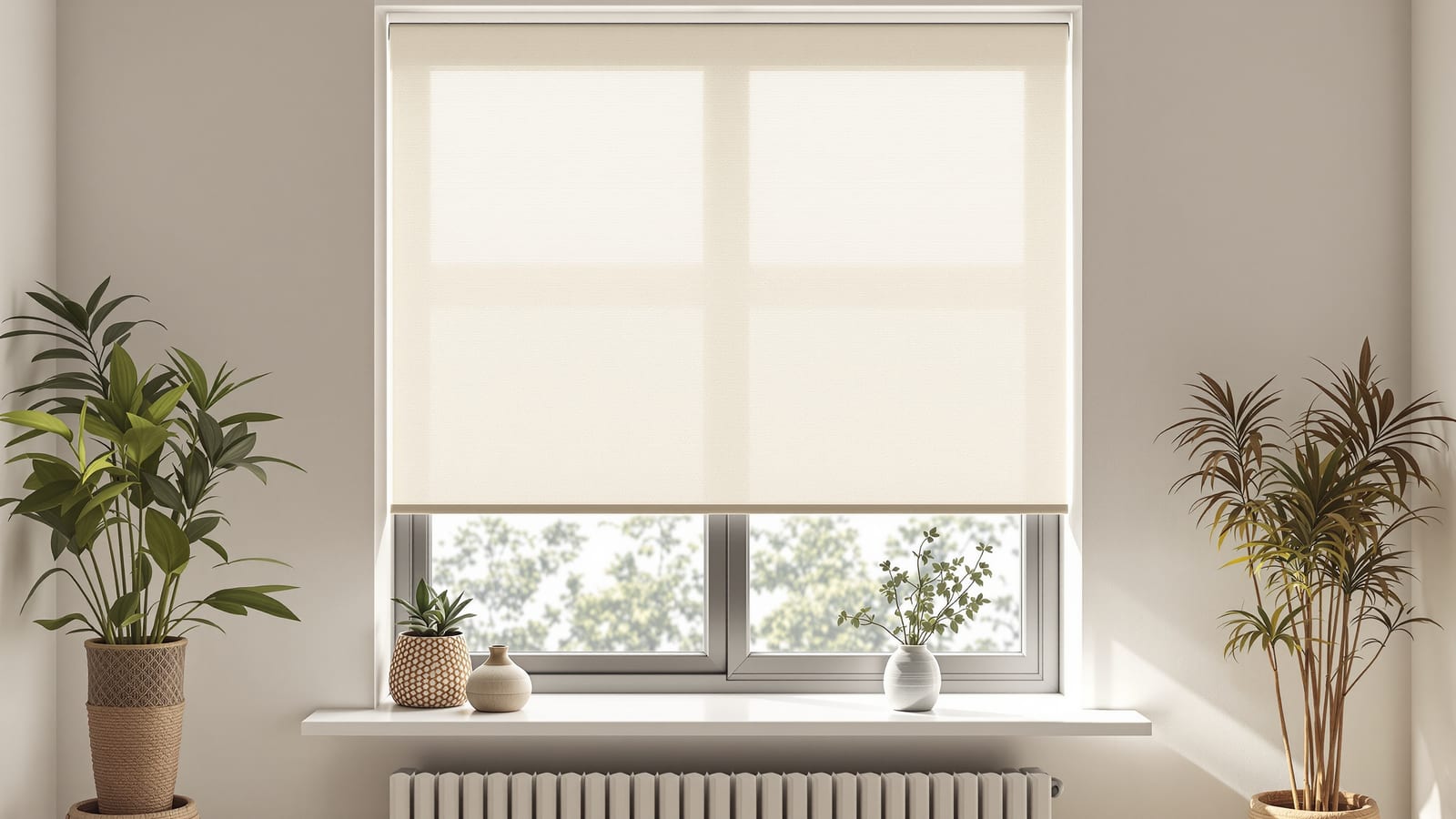
Curtains vs Roller Blinds: Which for Your Window? (India 2026)
A head-to-head on light, privacy, heat, acoustics, cost and cleaning — when a roller blind wins, when curtains win, and the quiet trick of using both on the same window.
Stand in a furniture showroom and the same question stalls everyone: do I put curtains on this window, or a roller blind? They are the two most common window covers in Indian homes, they cost overlapping money, and salespeople will happily sell you either. The honest answer is that they are good at different things, and the right pick depends on what this particular window is being asked to do. This guide lines them up side by side — light, privacy, heat, sound, cost, cleaning, room by room — so you can decide in minutes instead of second-guessing for weeks.
A roller blind and a curtain are not rivals so much as two different tools. The roller is a precise, minimal, easy-clean machine; the curtain is soft, warm and theatrical. Asking which is "better" is like asking whether a knife is better than a spoon.
If you are weighing roller blinds against every kind of blind, the broader curtains vs blinds comparison covers venetian, roman, zebra and the rest. This piece is the narrower, more common fight: a flat fabric roller against a hung curtain.
The thirty-second verdict
Before the detail, the short version most people need:
- Choose a roller blind when you want a clean, minimal, modern look, easy cleaning, a tight budget, precise daytime glare control, or coverage that disappears into a slim roll — kitchens, studies, bathrooms, balconies and compact rooms.
- Choose curtains when you want warmth and softness, genuine blackout for sleep, better acoustics, a taller-looking room or floor-length drama — bedrooms, formal living and dining rooms.
- Choose both when one window has to do everything: a roller at the glass for control, a dress curtain beside it for warmth. More on that below — it is the answer more often than people expect.
The head-to-head, job by job
Here is the honest scorecard. No single column wins outright — read the rows that matter for your window, not the totals.
| What the window needs | Roller blind | Curtains |
|---|---|---|
| Minimal, modern look | Excellent — flat and tidy | Softer, fuller, more traditional |
| Warmth and softness | Low — it is a flat sheet | Excellent — fabric and folds |
| Precise daytime light | Excellent — stop at any height | Good, but all-or-nothing in practice |
| True blackout for sleep | Leaks a halo at the edges | Excellent when lined and overlapped |
| Acoustics / noise | Negligible | Good — heavy, full curtains absorb sound |
| Privacy at night | Solid with dim-out or blackout | Solid with a lined or blackout layer |
| Easy cleaning | Excellent — wipe or dust, no folds | More effort — take down, wash, rehang |
| Compactness | Excellent — vanishes into a roll | Stacks back but never disappears |
| Floor-length drama | Not its look | Excellent |
| Budget entry point | Often the cheapest tidy option | Sheer-only is cheap; lined custom climbs |
The pattern is clear once you see it: the roller wins on control, cleaning and minimalism, the curtain wins on warmth, blackout, sound and drama. Almost every "which should I buy" question is really "which of those two clusters does this room care about more?"
Where the roller blind genuinely wins
A roller blind is a single flat sheet of fabric on a tube — no folds, no slats, no lining, no second layer. That simplicity is its whole advantage.
- Cleaning. This is the roller's biggest real-world edge in Indian homes. There are no pleats or gathers for dust to settle into; a dry microfibre wipe or a vacuum brush keeps it clean, and wipeable sunscreen and PVC fabrics handle kitchen grease and bathroom damp directly. Curtains, by contrast, hold dust and need taking down, washing and rehanging.
- Precise light. A roller stops at any height, so you can drop it exactly to cut the afternoon glare off a screen while leaving the top of the window open. Curtains are effectively open-or-closed.
- Minimalism and space. It sits flush, vanishes into a slim roll, and never eats floor space the way a fabric stack does — ideal for small rooms, kitchens and study corners.
- Budget. A plain translucent or light-filter roller is often the cheapest tidy custom cover you can put on a window. The full picture is in the dedicated roller blinds guide.
Where curtains genuinely win
A curtain is soft fabric, hung in folds, optionally lined and floor-length. Its advantages are exactly the ones a flat sheet cannot fake.
- Warmth and looks. Folds of cloth read warm and finished in a way a flat blind never will; floor-length curtains in particular make a room feel taller and more expensive. The full menu of looks is in types of curtains.
- True blackout. A lined or blackout curtain, mounted wide and overlapped at the centre, kills light far better than a roller — a roller always leaks a thin halo down each side of the glass. For bedrooms and nurseries this matters enormously; see the complete curtain and window-treatment guide for the layering that gets a room genuinely dark.
- Acoustics. Heavy, full curtains measurably soften traffic noise and echo. A roller does almost nothing for sound.
- Heat. A lined, full-drop curtain is meaningfully better thermal protection on a hot west window than a single roller sheet — there is simply more material and more trapped air.
Cost: the honest comparison
People assume blinds are cheaper than curtains, and at the entry level that is often true — a plain roller usually undercuts a lined custom curtain per window. But the brackets overlap heavily, because both are driven by what you specify, not the category:
- Cheapest: a plain translucent roller, or a single sheer curtain panel.
- Mid: a sunscreen or blackout roller; a pencil-pleat curtain in a mid fabric.
- Higher: lined, full, pinch-pleat floor-length curtains in a quality fabric — these climb above most rollers.
- Highest either way: motorisation, which adds a similar per-window motor cost to both.
So "blinds vs curtains" is not reliably "cheap vs dear" — a luxe blackout roller can cost more than a simple curtain, and a grand lined drape costs more than any roller. Price your own window before deciding on cost grounds. The curtain cost calculator sizes the fabric and gives a per-window rupee figure for either route from your dimensions, so you are comparing real numbers, not showroom guesses.
Room by room
- Bedroom — curtains, almost always: blackout for sleep, with the side overlap a roller cannot match. If you love the roller look, outside-mount a blackout roller and add a dress curtain.
- Living room — the classic use-both room. A roller (or sheer) at the glass for daytime control, floor-length curtains beside it for warmth and night privacy.
- Kitchen — roller, comfortably. Wipeable, fold-free, clear of the flame, easy near grease and steam.
- Home office / study — a sunscreen roller wins: precise glare control on the screen wall while keeping a view out.
- Bathroom / balcony — roller again: a moisture-tolerant PVC or sunscreen sheet beats cloth in damp and weather.
- Dining and formal rooms — curtains, for the warmth and drama the occasion wants.
The use-both trick (and why it is so common)
The smartest answer to "curtains or roller blinds" is often both, on the same window — and not as indecision, but as design. A roller blind handles the working jobs (precise light, easy cleaning, a tidy daytime look), while a floor-length dress curtain beside it adds the warmth, height, acoustics and night privacy a flat sheet lacks. The roller does the labour; the curtain does the styling.
This pairing is the standard for well-dressed Indian living rooms and is worth the extra spend on the windows you live with most. The blind can even be hidden almost entirely behind the open curtain when not in use. If you want the layering done properly — fabric weights, mounts and order of operations — the complete curtain and window-treatment guide lays it out.
So which should you buy? An honest "it depends"
There is no universal winner, and any guide that names one is selling something. The decision genuinely turns on the room:
- Want minimal, easy to clean, precise, compact, budget — lean roller blind.
- Want warm, dark for sleep, quieter, floor-length and grand — lean curtains.
- Have one window that must do everything — use both.
Two honest caveats before you commit. First, every cost here is indicative — measure and price your own window locally, because fabric grade and motorisation swing the number far more than the curtain-versus-blind choice does. Second, treat any Vastu colour or direction preference as cultural guidance, never a reason to block light or heat control you actually need.
Let Studio Matrx decide for you. Answer a few questions in the window treatment selector and it maps your room, orientation and priorities to curtains, a roller blind or both — then read the complete curtain and window-treatment guide and explore the rest of the Window Treatments cluster.
Export this guide
Related Guides — Deep-dive reading
Curtains vs Blinds: The Complete Comparison for Indian Homes (2026)
Light, privacy, heat, noise, cleaning, cost and looks — a head-to-head verdict on curtains and blinds, plus the under-rated answer most good designers actually use: both.
Window TreatmentsRoman Blinds: The Complete Guide for Indian Homes (2026)
The soft fabric blind that folds up in neat stacks — flat vs hobbled folds, lining and blackout, fabrics, cord vs chain vs motor, costs and cleaning, decoded for Indian rooms.
Window TreatmentsCurtains vs Venetian Blinds: Precision vs Softness (India 2026)
Tilt-precise venetians or warm, quiet curtains? A room-by-room, rupee-by-rupee verdict for Indian homes — including the dust and wind caveats nobody mentions, and the combo that beats both.
Window TreatmentsRelated Tools — Try Free
Window Treatment Selector
Curtains, blinds or a layered system? Answer five questions about your room and get a specific recommendation.
SelectorCurtain Cost Calculator
Get the fabric metres you need plus the total curtain cost by window size, fabric, pleat, lining and hardware.
Curtain CalculatorCross-Ventilation Analyzer
Estimate airflow and air changes per hour (ACH) from room size, window areas, layout, and local wind — with NBC 2016 Part 8 compliance check.
Ventilation Calculator