
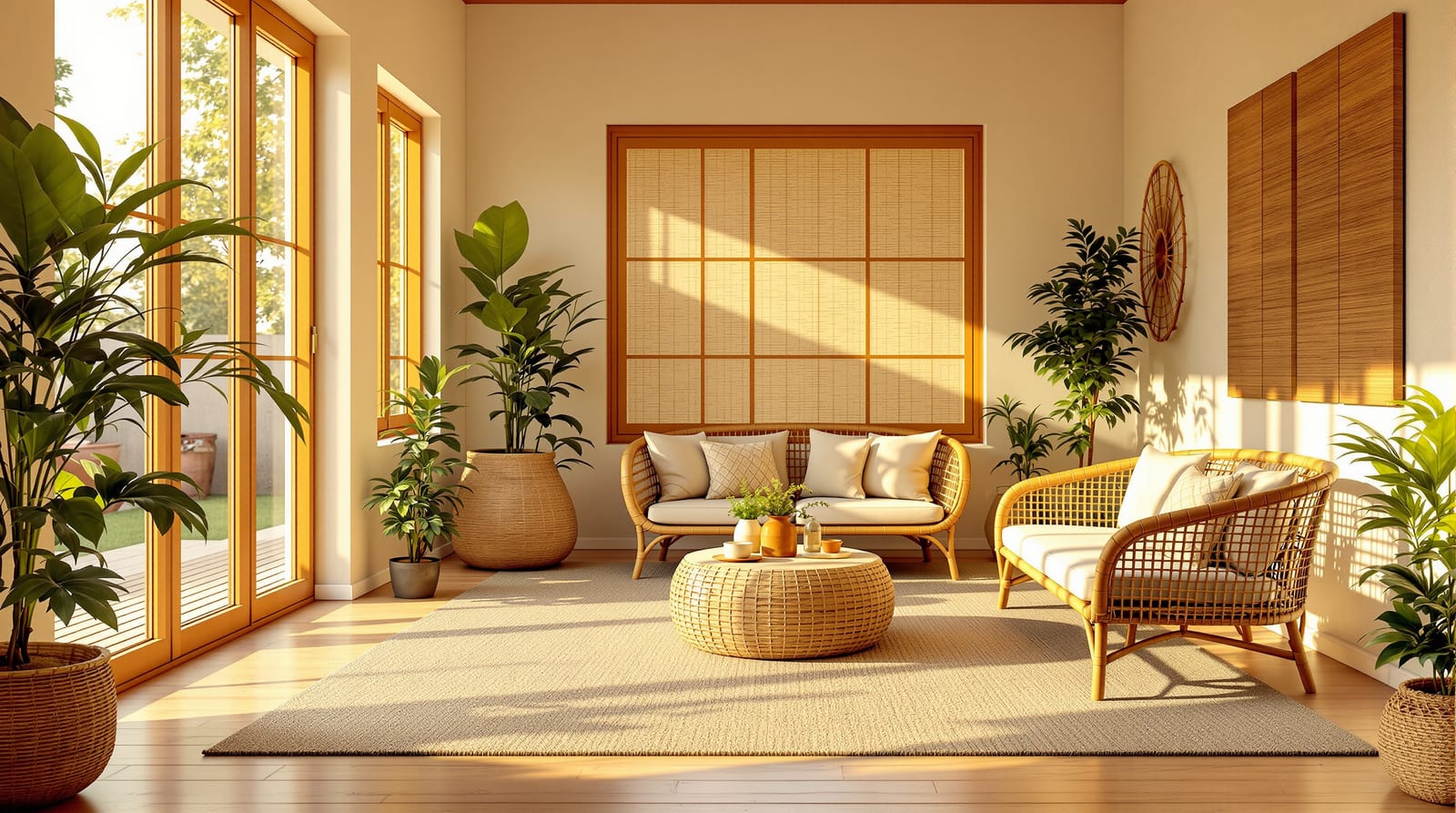
Coir Flooring & Natural Fibre Floor Coverings in India: Coir, Jute, Sisal, Seagrass & Banana Fibre — Character, Cost & Care
Coir flooring and its natural-fibre cousins — jute, sisal, seagrass and banana fibre — give Indian homes an eco, rustic, warm and textured floor covering as woven mats, rolls or wall-to-wall carpet at roughly ₹40–200 per sq ft. Here is each fibre's character, where it suits, install methods, pros, cons and care.
Natural-fibre floor coverings are the floors you feel before you see. Woven from coir, jute, sisal, seagrass or banana fibre, they bring a warm, rustic, hand-made texture underfoot that no tile or vinyl can fake — and India sits at the heart of this craft. Kerala alone produces the lion's share of the world's coir, spun from coconut husk, and the country's jute and banana-fibre traditions run just as deep. At roughly ₹40–200 per sq ft, these are honest, biodegradable, low-tech floors that suit eco homes, sunrooms, studies and living rooms — provided you keep them away from water and heavy spills.
This guide explains what separates coir, jute, sisal, seagrass and banana fibre, where each one belongs in an Indian home, how they are laid, and how to keep them looking good.
Why natural-fibre floors, and why now
For most of the twentieth century these were "the affordable floor" — coir matting in verandahs and offices, jute durries in bedrooms. Today they have swung the other way and become an aspirational, eco-conscious choice. The reasons are simple. They are made from renewable, agricultural by-products (coconut husk, jute stalk, agave leaf, banana stem) rather than petrochemicals. They are fully biodegradable at end of life. They are naturally anti-static, so they do not crackle or cling dust the way synthetic carpet can. And the chunky weave absorbs sound and softens a room's acoustics, which is why a coir or sisal floor makes a hard-surfaced apartment feel instantly calmer and warmer.
They are not a do-everything floor. Every natural fibre is hygroscopic — it drinks moisture from the air and from spills — so none of them belong in bathrooms, kitchens with frequent spills, or unprotected monsoon-exposed verandahs. Understood for what they are, though — a textured, eco floor covering for dry living spaces — they are hard to beat. If you are still deciding between a fixed floor finish and a covering like this, our guide on floor finish versus floor covering in India draws the line clearly.
The five fibres, compared
Each fibre has its own personality, and choosing well is mostly about matching that personality to the room and the budget. Coir is the toughest and coarsest; jute is the softest and cheapest; sisal is the durable, refined all-rounder; seagrass is smooth and the most water-tolerant; banana fibre is the silky, artisanal luxury option.
| Fibre | Character & feel | Durability | Indicative ₹/sq ft | Best for |
|---|---|---|---|---|
| Coir (coconut husk) | Coarse, tough, springy, golden-brown to dark | Very high, takes traffic & abrasion | 40–120 | Hallways, stairs, living rooms, doormats, high-traffic |
| Jute (jute stalk) | Soft, silky, fine, pale honey | Low–medium, delicate | 40–100 | Bedrooms, low-traffic studies, layered rugs |
| Sisal (agave leaf) | Firm, smooth-ish, refined, creamy | High | 80–180 | Living/dining, stairs, studies, formal rooms |
| Seagrass (reed) | Smooth, hard, slightly waxy, green-to-tan | High | 70–160 | Living rooms, sunrooms, slightly humid spots |
| Banana fibre | Silky, lustrous, soft, golden | Medium | 100–200 | Bedrooms, feature rugs, artisanal luxury |
A quick way to choose: walk a high-traffic path (hallway, stairs) on coir or sisal; reserve jute and banana fibre for bedrooms and rugs you sit on; pick seagrass where the room is on the humid side, because its naturally waxy, non-porous surface resists moisture and minor spills better than the others — though it also will not take a dye, so it stays in its natural green-tan range.
Coir — the Indian hero fibre
Coir deserves its own section because India, and Kerala in particular, is the world's coir hub. Coir is the fibrous husk that surrounds a coconut, retted (soaked), beaten and spun into yarn. Two grades matter: brown coir from ripe husks (strong, coarse, the floor fibre) and white coir from green husks (softer, more for ropes and brushes). For flooring you want brown coir.
What makes coir special underfoot is that it is the most hard-wearing of all the natural fibres and one of the few that genuinely shrugs off scuffing. That is why coir matting has been the default for verandahs, office corridors and stair runners for generations. It is springy, has a satisfying coarse bite, and hides dirt well in its mottled brown tone. The trade-offs are that it is the coarsest fibre — too scratchy for a bedroom you want to lie on — and, like all coir, it can shed a little fibre when new and will fade and weaken under strong direct sun over years. Weaves you will see in Indian showrooms include bouclé (looped, soft-ish), herringbone, panama (basket-weave) and the classic flat "coir matting" roll.
Jute, sisal, seagrass and banana fibre
Jute is the budget softie. Grown across West Bengal, Assam and Bihar, it is the same golden "burlap" fibre used for gunny sacks, and it is the softest and cheapest of the group — lovely under bare feet, which is why it suits bedrooms and rugs you sit on. But it is also the weakest and most stain-prone, so keep it out of hallways and dining zones and treat spills instantly.
Sisal, spun from the agave plant, is the refined all-rounder — firmer and smoother than coir, far tougher than jute, and elegant enough for a formal living or dining room. It takes dyes and intricate weaves (herringbone, diamond, tigereye) beautifully, which is why designer natural-fibre carpet is so often sisal. Its one weakness is that it stains and water-marks easily and shows them clearly on its pale surface.
Seagrass is woven from a reed grown in coastal paddies. Its fibre is hard and naturally coated in a waxy, non-porous layer, which makes it the most spill- and humidity-tolerant of the five — a sensible pick for Indian coastal homes and sunrooms. The same coating means it stays smooth and slightly slippery underfoot and cannot be dyed, so you live with its natural sea-green-fading-to-tan colour.
Banana fibre, extracted from the banana plant's pseudo-stem and a strong revival craft in South India, is the silky luxury option — lustrous, soft and artisanal, best used in bedrooms and as statement rugs rather than as a hard-wearing whole-floor covering.
How natural-fibre flooring is supplied and laid
There are three formats, and the format decides the install.
| Format | What it is | Install | Best where |
|---|---|---|---|
| Loose rugs / mats | Cut, bound-edge pieces | Just lay down, optional anti-slip underlay | Renters, layering, easy to lift & clean |
| Broadloom rolls (latex-backed) | Wall-to-wall covering, ~4 m wide | Glued (full-spread adhesive) to a clean screed | Fixed wall-to-wall in dry rooms |
| Tiles / panels | Modular fibre-faced tiles | Glue-down, individually replaceable | Where you may need to swap stained areas |
Most wall-to-wall natural-fibre flooring comes with a latex backing already bonded to the woven fibre. That backing does two jobs: it stabilises the weave (natural fibres expand and contract with humidity, and the latex limits the movement) and it gives a surface for the adhesive to grip. The standard install is a full-spread glue-down onto a clean, dry, level cement screed — never a loose-lay for fixed rooms, because natural fibre will ripple and shrink-gap if it is not bonded. The subfloor must be properly dry; trapping monsoon moisture under a latex-backed fibre floor is the fastest way to grow mildew. Our guide on floor screed and mortar bed in India covers getting that base right.
For most Indian homes, though, the lowest-risk and most popular route is the bound-edge loose rug or mat: a coir, jute or sisal rug simply laid over your existing tile or stone, often over a thin anti-slip underlay. It needs no adhesive, lifts straight up for cleaning or during the monsoon, and suits renters perfectly. This is also the easiest way to layer the look — a jute rug over a larger coir mat, for instance.
The weave, in section
A woven natural-fibre floor is just two systems stacked: the visible fibre weave on top, and a stabilising backing beneath. The diagram shows a latex-backed broadloom build-up.
Where it suits — and where to avoid it
Natural-fibre floors live and die by moisture. Match them to dry, characterful living spaces and they reward you; put them anywhere wet and they fail fast.
Suits:
- Living and dining rooms — sisal, seagrass or a coir-sisal blend give warmth and texture; pair with hard furniture and area rugs.
- Studies, home offices and reading nooks — the acoustic softening and anti-static surface suit a quiet, screen-heavy room.
- Bedrooms — jute and banana fibre are soft enough for bare feet; coir is usually too coarse here.
- Eco and natural-material homes — these floors fit a mud-plaster, lime, IPS or reclaimed-wood palette beautifully; see our sustainable flooring materials in India and eco-friendly flooring in India guides.
- Sunrooms and covered verandahs — seagrass tolerates the slightly higher humidity better than the others; keep it under cover.
- Stairs and hallways — coir and sisal runners are the traditional, hard-wearing choice.
Avoid:
- Bathrooms, kitchens with frequent spills, and any wet area — the fibres rot, stain and grow mildew. Use anti-slip wet-area flooring instead; our guide on anti-slip flooring for wet areas in India covers the right options.
- Uncovered, monsoon-exposed verandahs and terraces — direct rain destroys them.
- High-spill dining zones with small children — possible, but choose seagrass and accept the risk, or keep it to a washable rug.
- Strong, direct, all-day sunlight — over years it fades and weakens every natural fibre; use blinds or place rugs out of the harshest beam.
Cost in India (2026, indicative)
Natural-fibre flooring spans from genuinely budget (jute and coir matting) to designer-priced (banana fibre, fine sisal weaves). Rates are indicative and vary by city, weave, quality and vendor; add 18% GST, and glue-down laying is extra. Loose rugs need no laying cost.
| Item | Rate (₹ per sq ft) | Notes |
|---|---|---|
| Coir matting / coir carpet | 40–120 | Brown coir, by weave |
| Jute rug / broadloom | 40–100 | Soft, budget, low-traffic |
| Sisal carpet (latex-backed) | 80–180 | Refined, durable, dyed weaves dearer |
| Seagrass carpet | 70–160 | Humidity-tolerant |
| Banana fibre / artisanal weave | 100–200 | Luxury, statement use |
| Glue-down laying (broadloom) | 25–60 | Adhesive + labour onto screed |
| Anti-slip underlay (for rugs) | 10–25 | Optional, for loose mats |
A latex-backed sisal floor laid wall-to-wall in a living room typically lands around ₹120–230 per sq ft installed — in the same band as good carpet or mid laminate, and below most natural stone. A loose coir or jute rug, by contrast, is among the cheapest ways to warm a hard floor at all. To size a wall-to-wall job by area and price, the carpet calculator works the same way for fibre rolls, and for the wider rate picture see our flooring cost per square foot in India guide.
Pros and cons, honestly
| Pros | Cons |
|---|---|
| Renewable, biodegradable, low-embodied-energy | Stains easily (especially jute, sisal); spills must be blotted fast |
| Naturally anti-static — does not cling dust | Coarse texture (coir) can be rough underfoot and on knees |
| Sound-absorbing, warms a hard room | Hygroscopic — swells, shrinks and can mildew in humidity |
| Warm, rustic, hand-made character | Not for wet areas, bathrooms or exposed terraces |
| Inexpensive at the entry level (jute, coir) | Fades and weakens under strong direct sun |
| Loose rugs are renter-friendly and easy to lift | Fixed broadloom is hard to spot-clean — stains can be permanent |
Caring for a natural-fibre floor
The whole maintenance game is keeping moisture out and dirt from grinding in.
- Vacuum regularly, using suction (not a beater bar, which frays the weave) to lift grit before it abrades the fibre. This is the single most important habit.
- Blot spills immediately with a dry cloth, working from the outside in. Never rub, and never soak — water rings and stains on jute and sisal are often permanent. Seagrass and coir are more forgiving.
- No wet mopping. These are dry-clean floors. For a deeper clean, a barely-damp cloth and a specialist natural-fibre cleaner, then dry fast with a fan.
- Fibre-seal new sisal and jute if you can — a manufacturer's stain-guard treatment buys you real protection on the stain-prone fibres.
- In the monsoon, run a fan or dehumidifier in the room and lift loose rugs to air them; trapped damp is what breeds mildew. Our floor cleaning guide for India has the broader routine.
- Rotate rugs and use blinds so sun-fade and traffic wear spread evenly rather than marking one path or patch.
- Re-glue lifting edges on broadloom promptly; a curling corner is a trip hazard and lets dirt under the floor.
Where this fits in the bigger picture
Natural-fibre coverings are one branch of the alternative and specialty floors mapped in our specialty flooring guide for India — the pillar that places coir, jute and sisal alongside seamless, resilient and paving floors and helps you choose between them. If you like the warmth and softness but want something more spill-tolerant and uniform, compare synthetic and wool options in our carpet flooring in India guide; carpet tiles add modular replaceability. And if the eco angle is what draws you, our reclaimed and recycled flooring in India guide rounds out the sustainable-floor family.
Frequently asked questions
Which natural fibre is best for a high-traffic living room?
Coir or sisal. Coir is the toughest and most scuff-resistant — the traditional choice for hallways and stairs — while sisal is nearly as durable but smoother and more refined for a formal living or dining room. Save jute and banana fibre for bedrooms and rugs, since both are softer and stain far more easily.
Can I use coir or jute flooring in a humid coastal home?
With care. All natural fibres are hygroscopic and can mildew, so seagrass is your safest pick — its naturally waxy fibre resists moisture and minor spills better than the others. Keep any natural-fibre floor under cover, never in a bathroom or exposed verandah, and run a fan or dehumidifier through the monsoon to keep the weave dry.
How do I clean a stain off a natural-fibre floor?
Act immediately: blot (never rub) with a dry cloth from the outside of the spill inward, and avoid soaking it, because water itself leaves rings on jute and sisal. For a set stain, use a specialist natural-fibre cleaner sparingly and dry the spot fast with a fan. Treating new sisal and jute with a stain-guard at the start prevents most permanent marks.
Are natural-fibre floors really eco-friendly?
Yes, more than most. Coir, jute, sisal, seagrass and banana fibre are renewable agricultural by-products, fully biodegradable, and made with very low processing energy compared to ceramic, vinyl or stone. The main caveats are the latex backing and any adhesive used in a glued install, which are not biodegradable — choosing loose rugs or low-VOC adhesives keeps the footprint lowest. See our low-VOC flooring in India guide for adhesive choices.
Should I glue it down or just use a rug?
For most Indian homes, a bound-edge loose rug over your existing floor is the lower-risk choice — it needs no adhesive, lifts for cleaning and the monsoon, and suits renters. Glue-down latex-backed broadloom gives a seamless wall-to-wall look but demands a fully dry, level screed and is hard to spot-clean once stained, so reserve it for dry, low-spill rooms where you want the finished look.
Export this guide
Related Guides — Deep-dive reading
Cork Flooring in India: Warm, Quiet, Eco Floors for Bedrooms, Study & Kids' Rooms
Why cork is genuinely sustainable (bark is harvested while the tree lives on), the comfort and acoustic benefits, the natural look, ₹200-500/sq ft, click-floating vs glue-down tiles, sealing, and the dent, moisture and sun-fade caveats every Indian homeowner should know.
Flooring & SurfacesCarpet Tiles in India: Modular 50x50 cm Carpet Squares for Offices, Co-working & Commercial Floors — Types, Backing, Cost & Install
Carpet tiles — modular 50x50 cm (and 25x100 cm) backed carpet squares — are the go-to soft floor for offices, co-working spaces, IT and retail because a single stained tile can be lifted and swapped instead of recarpeting the whole room. Here are the backing types, install methods, acoustic and anti-static options, costs of ₹60–300 per sq ft, pros, cons and how they compare with broadloom carpet.
Flooring & SurfacesHow to Choose Flooring for an Indian Home: A Step-by-Step Framework (2026)
A decision framework to pick the right floor for any room — weighing traffic, water, comfort, budget, maintenance, look, climate, durability and resale, with the key natural-stone vs tile vs wood vs resilient trade-offs.
Flooring & SurfacesRelated Tools — Try Free
Modular Kitchen Budget Calculator
Live breakdown by running feet, countertop area, material tier and city — with wastage, design fee, GST.
Kitchen CalculatorFull-Room BOQ — Living, Bedroom, Kitchen, Bath
Room-wise BOQ across living, bedrooms, kitchen, utility, and bathrooms with line-item pricing.
Full-Room BOQFlooring Cost Calculator
Estimate the all-in cost of a floor — material, laying, wastage, skirting and GST — by area and material.
Flooring Calculator