
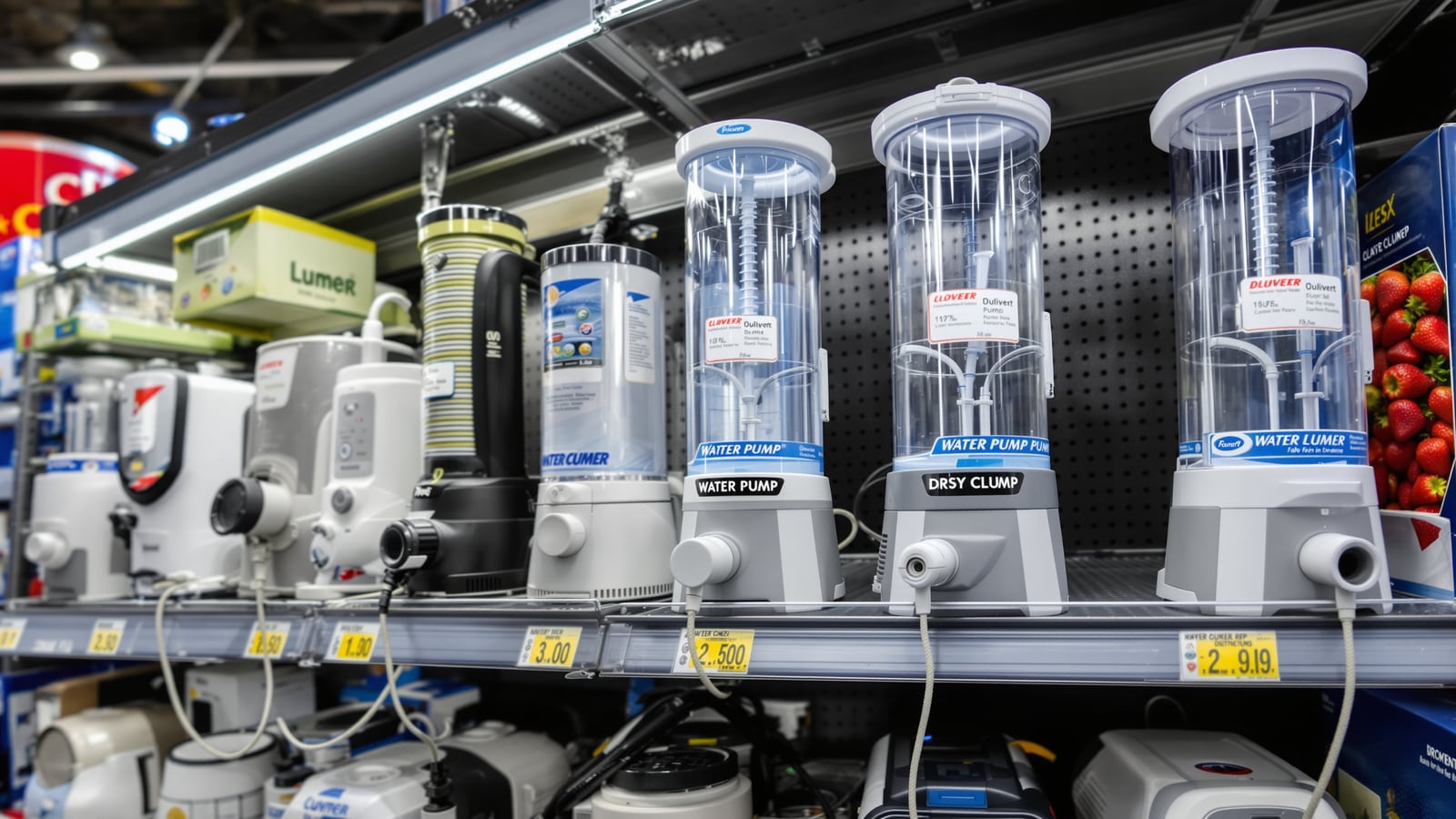
How to Choose & Buy a Water Pump in India: Match the Type, Size the Head, Check the Marks
A buyer's guide to picking the right domestic water pump — first match the pump type to your water source, then size it to head and flow instead of raw horsepower, and finally check the BEE star rating, ISI mark, dry-run protection, warranty and after-sales before you pay.
Buying a water pump in India goes wrong in two familiar ways: people buy the wrong type for their water source, or they buy the right type in the wrong size — almost always too big. Both mistakes cost you every month in wasted electricity, and the second one can wreck the pump itself. This guide is the buying decision, start to finish.
It sits inside the Studio Matrx Plumbing Knowledge Hub. It is deliberately not a technical explainer of how each pump works — that lives in the water pumps guide. Here we do three things in order: match the type to your source, size it properly, and run a shop-counter checklist of the marks and protections that separate a pump that lasts a decade from one that dies in a monsoon. For a broader view of buying any plumbing product well, start at the plumbing buying guide.
Step 1 — Match the pump TYPE to your water source
Before anything else, decide what the pump has to do. The source and the destination fix the type; get this wrong and no amount of horsepower saves you. Each of these is explained in depth in the water pumps guide — here we keep it to one line each so you can shortlist fast.
- Underground sump to overhead tank — a monoblock / centrifugal surface pump. The everyday home workhorse: it sits at ground level and lifts water from a filled sump up to the roof tank.
- Borewell (deep, narrow shaft) — a borewell submersible pump. A slim multi-stage unit that lives underwater far below ground; see the dedicated borewell pumps guide.
- Open well or shallow storage where suction lift is needed — a jet (self-priming) pump, which can pull water up from a few metres below itself without losing prime.
- Weak tap or shower pressure from an existing tank — a pressure booster pump, which raises pressure rather than moving bulk water; see the booster pumps guide.
Rule of thumb: submersibles push from below, surface monoblocks lift from a filled sump, jet pumps suck from an open source, and boosters pressurise a line that already has water. Pick by that verb.
The type-to-check table
| Your need | Pump type | The main thing to check |
|---|---|---|
| Sump to overhead tank | Monoblock / centrifugal | Total head (lift + friction) vs pump curve |
| Deep borewell | Submersible (V4/V6) | Body diameter fits bore; stages for depth |
| Open / shallow well | Jet / self-priming | Suction lift rating (how far it can pull) |
| Boost tap & shower pressure | Pressure booster | Pressure rise (bar) and auto cut-off |
| Whole-house from municipal line | Booster with pressure tank | Flow at your peak simultaneous outlets |
Step 2 — Size to HEAD and FLOW, not just HP
This is where most money is wasted. Shops sell pumps by horsepower because it is one easy number, but HP is the wrong thing to shop by. A pump does two jobs — it lifts water a certain height (head, in metres) and it delivers a certain quantity per minute (flow, in litres per minute or LPM). Every pump has a curve: as head goes up, flow comes down. You buy the pump whose curve covers your head and flow, and the HP falls out of that — it is a result, not a target.
- Head is the vertical lift from the water level to the tank inlet, plus friction losses in the pipe and fittings. A three-storey lift is not just the 9 metres of height — long or thin pipe runs add several metres more.
- Flow is how fast you want the tank to fill without straining the pump or the pipe.
Do not guess these. The pump size calculator turns your floors, pipe length and tank size into the head and flow figures you take to the shop, so you can read them straight off the pump's printed curve.
Oversizing is not a safety margin — it is a permanent tax. A pump two sizes too big draws more current every second it runs, can cavitate or dewater a bore, and often trips on overload. Right-sizing is the single biggest lever on your running cost. For lifetime numbers see the pump installation cost guide.
Step 3 — The buying checks that separate good from cheap
Once the type and size are settled, two pumps on the same shelf can differ hugely in quality. Here is what to insist on.
Single-phase vs three-phase
- Single-phase (230 V) — standard domestic supply, fine up to roughly 1–2 HP. What most homes should buy.
- Three-phase (415 V) — for larger pumps, deep borewells and continuous duty. Runs cooler and more efficiently at higher loads, but needs a three-phase connection. Do not order a three-phase pump unless your home actually has three-phase power.
BEE star rating (energy)
Since a pump often runs daily for years, efficiency dominates its lifetime cost. Look for the BEE star label (Bureau of Energy Efficiency) — more stars means less electricity for the same water. Paying a little more upfront for a higher-star pump is almost always cheaper over five years.
ISI mark and standards
Insist on the ISI mark (BIS certification) on the pump. It signals the unit was made and tested to the relevant Indian Standard rather than assembled from unbranded parts. It is also your best defence against counterfeit and substandard goods — a genuine ISI mark, a proper serial number and a real warranty card go together. Refer to standards by name at the shop; never accept a hand-written "ISI" sticker as proof.
Dry-run protection and warranty
- Dry-run protection cuts the motor if the source runs empty. Surface and submersible pumps burn out fast when they run dry, so a built-in cut-off (or a control panel that provides one) protects your investment — especially on borewells and monsoon-variable sumps.
- Warranty on a domestic pump is commonly around 1–2 years; read what it actually covers (motor windings vs seals vs "wear parts") and keep the invoice.
Single pump vs pump-with-control-panel
- A bare pump is cheaper but leaves protection to you.
- A pump with a control panel bundles overload, dry-run and voltage protection and often auto start/stop. For borewells and any pump you cannot easily watch, the panel usually pays for itself the first time it saves the motor.
Branded vs local, and after-sales
| What to check | Branded / ISI unit | Local / unbranded unit |
|---|---|---|
| Energy use | BEE-rated, efficient | Often no rating; higher bills |
| Certification | ISI mark, serial, warranty card | Frequently absent or faked |
| Spares & service | Dealer network, genuine spares | Hard to source, mixed quality |
| Warranty claim | Honoured through dealer | Often disputed or refused |
| Upfront price | Higher | Lower |
| 5-year cost | Usually lower | Usually higher |
The unbranded pump wins only on the price tag. On after-sales — the availability of a service centre, genuine impellers and seals, and a warranty that is actually honoured — the branded, ISI-marked unit almost always costs less over its life. Prices here are indicative; for current figures use the pump installation cost guide.
Buyer's checklist
- Fix the type first from your water source — monoblock for sump-to-tank, submersible for borewell, jet for open/shallow, booster for pressure.
- Get head and flow from the pump size calculator and match them to the pump's printed curve. Let HP fall out of that — never buy "extra" HP as a margin.
- Buy the right phase — single-phase for most homes, three-phase only if you have the connection and the load.
- Check the BEE star rating for energy, and the ISI mark for genuineness.
- Confirm dry-run protection and decide on a control panel for anything you cannot easily watch.
- Read the warranty and confirm a real dealer/service network exists nearby.
- Prefer branded + ISI over unbranded — the local pump only wins on the sticker price.
- Keep the invoice and warranty card; verify prices against the pump installation cost guide and the wider plumbing buying guide.
References
- Bureau of Energy Efficiency (BEE) — star-rating label for pump energy efficiency.
- ISI mark, Bureau of Indian Standards (BIS) — certification mark to insist on for genuine, standard-compliant pumps.
Export this guide
Related Guides — Deep-dive reading
Borewell Pumps in India: How to Size HP by Depth, V3/V4/V6 Types, Stages and Running Cost
The deep-well submersible pump is the heart of a private borewell — a slim multi-stage unit that sits underwater and pushes your supply up to the tank. This guide explains how to pick horsepower by borewell depth, water level and yield, which body diameter (V3/V4/V6) fits your bore, why more stages mean more head, and how oversizing wastes electricity and can dewater the bore.
PlumbingWater Pumps Guide for India: Types, How to Choose & Size (Head, Flow, Phase)
The master overview of domestic and building water pumps — what a pump actually does (lift plus pressure), the two numbers that decide everything (HEAD in metres and FLOW in LPM), a pump-type-to-use table, single vs three phase, priming, foot valve and NRV needs, dry-run protection, and BEE star rating with running cost at a glance for an Indian home.
PlumbingPlumbing Buying Guide: How to Buy Plumbing Products in India (2026)
The shopping and decision layer for buying plumbing products in India — the universal buying rules that apply to pipes, pumps, tanks, purifiers and fittings: insist on the BIS/ISI mark and the right IS standard, know when branded beats local, weigh warranty and after-sales, spot counterfeits, match the product to your need without oversizing, and read price against quality before you pay.
PlumbingRelated Tools — Try Free
Rainwater Tank Sizer
How big should your rainwater tank be? Computes annual harvest, recommended tank capacity in litres, water-bill savings, and payback — for 10 Indian cities.
RWH CalculatorLift Running Cost Calculator
Monthly and yearly electricity cost of a home lift by type, trips per day and city.
Lift CalculatorLift Safety Audit Checklist
Interactive checklist that scores your home lift on safety devices, compliance and upkeep.
Checklist