
Industrial Style Windows in India: The Crittall-Style Steel Look
Slim black gridded steel-look frames, factory glazing and raw-material pairing — plus the honest choice between true steel and steel-look aluminium
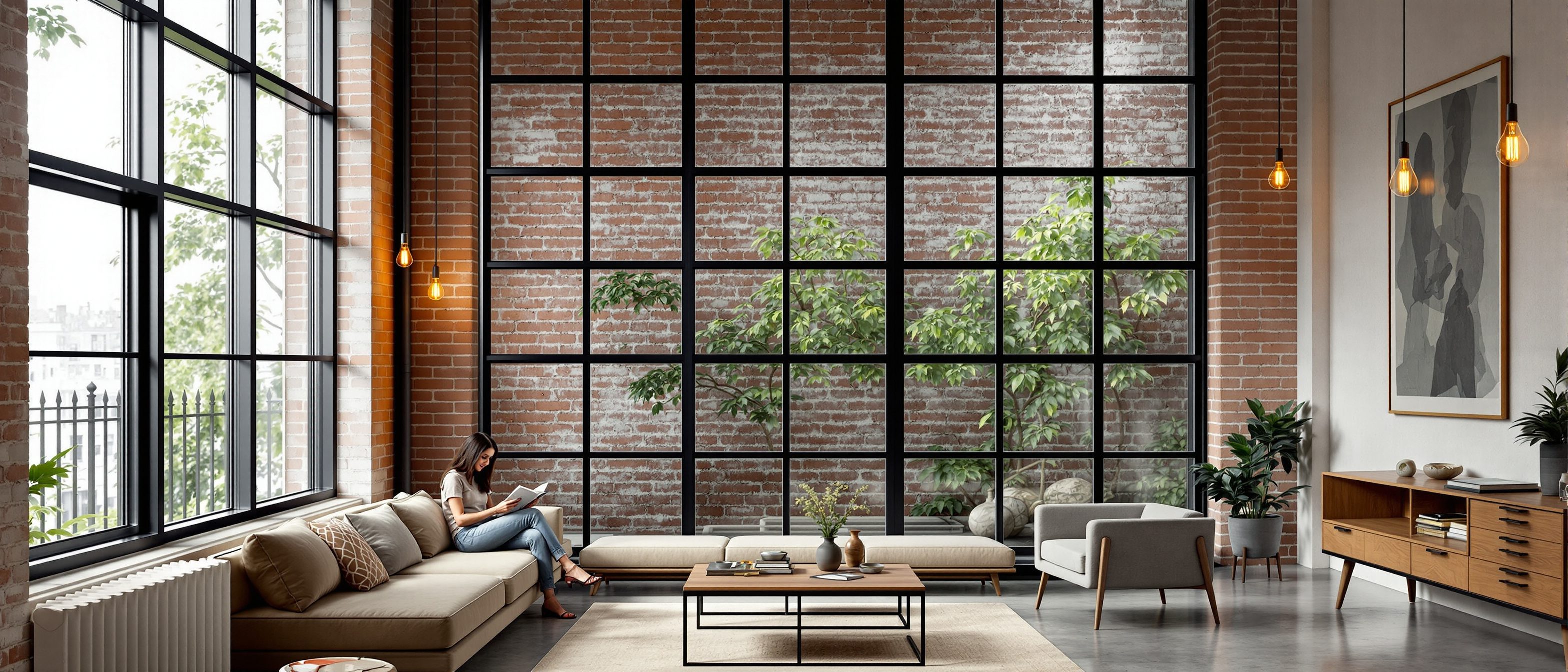
The industrial window is one of the most recognisable looks in modern Indian interiors: a slim black frame divided into a neat grid of small panes, throwing crisp shadow lines across exposed brick and polished concrete. It reads as "warehouse loft" even on a 1,000 sqft Bengaluru apartment. This guide is about the look and exactly how to get it in an Indian home — not the metallurgy. For the engineering of steel as a material (corrosion, lifespan, cost), read the material guide; for designing a whole industrial-style building, read the architecture guide. Here we stay in the styling lane: the grid, the profile, the black, and the honest choice between true steel and steel-look.
The industrial window sells a feeling — raw, made, factory-honest. You can buy that feeling in real steel, or you can fake the grid in aluminium for a third of the price. Both are legitimate; just know which one you are buying.
Where the look comes from
The slim steel window is a Victorian factory invention. Crittall, founded in 1849 in Essex, pioneered rolled-steel window frames; steel's strength let glazing bars (the muntins between panes) shrink to a fraction of timber's width, so factories and mills could flood their floors with daylight through tall, gridded multi-pane walls of glass. The classic W20 profile — a roughly 20 mm sightline section — became the industrial signature. That heritage is the whole point of the style: maximum glass, minimum frame, divided into a disciplined rectangular grid and painted matte black.
The five traits that make a window "industrial"
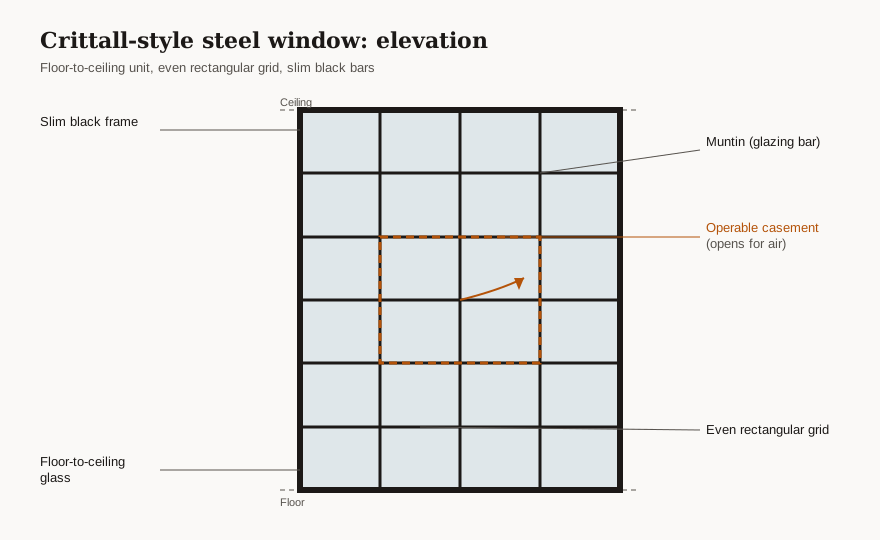
You do not need a Grade-II warehouse to get the look. The style is a recipe of proportions and finishes you can specify to any fabricator.
| Trait | What it means | Get-the-look note |
|---|---|---|
| Slim black frame | Narrow sightlines, matte black | The thinner the bar looks, the more "steel" it reads |
| Gridded panes | Rectangular grid of small lites | Even, repeated rectangles — not arched, not random |
| Large glass area | Frame is a minority of the wall | Go floor-to-ceiling or as tall as the wall allows |
| Square, honest geometry | Rectangles, right angles, no curves | Industrial is rectilinear — curves belong to Mediterranean |
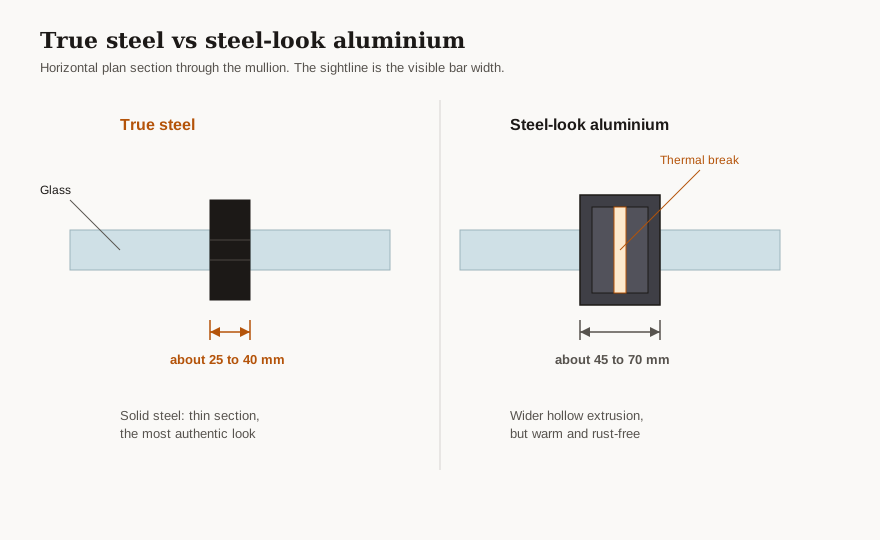
| Raw-material pairing | Brick, concrete, reclaimed wood, metal | The window is one note in a raw-material chord |
The honest decision: true steel vs steel-look
This is the choice that defines your budget and your conscience. The grid looks similar from across the room; up close and over years, the materials behave very differently.
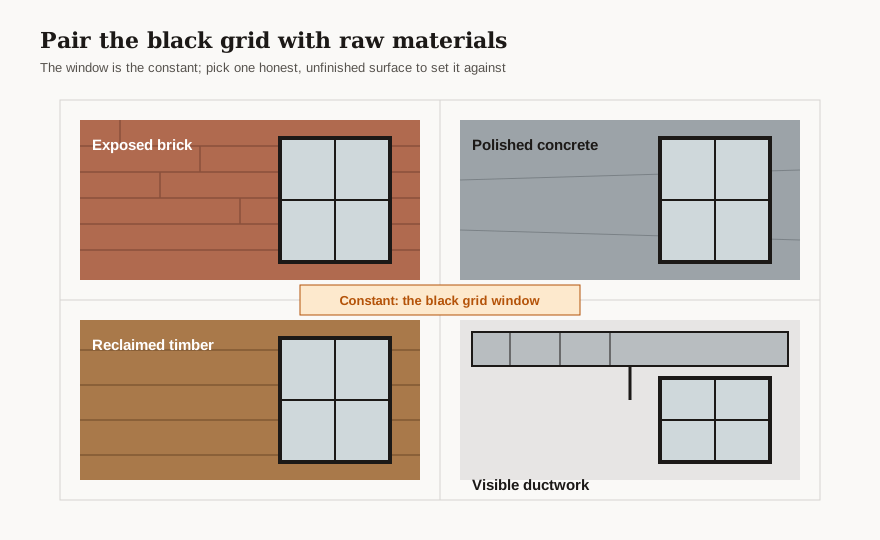
True steel (Crittall-style). Rolled or thermally-broken steel sections give the genuine slimmest sightlines because steel is strong enough to hold large glass on a thin bar. It is the real thing, it ages with character, and modern versions are available thermally-broken with double glazing (DGU) so they are not the cold, single-glazed originals. The catch in India: steel needs disciplined coating and maintenance against humidity and coastal salt, lead times are long, and it is the most expensive option by a wide margin.
Steel-look (aluminium or uPVC). Powder-coated aluminium — and to a lesser extent uPVC — can be fabricated into the same black grid for a fraction of the cost, with better corrosion resistance in coastal cities and easy availability. The honest trade-off: the sightlines are usually a little fatter than true steel, and a sharp eye reads it as "inspired by" rather than "authentic". For most Indian homes it is the sensible default.
| Factor | True steel (Crittall-style) | Steel-look aluminium | Steel-look uPVC |
|---|---|---|---|
| Sightline (slimness) | Slimmest, most authentic | Slim, slightly fatter | Fattest of the three |
| Indicative cost | Highest (premium, often imported/bespoke) | Rs 350-3,000 per sqft | Rs 250-800 per sqft |
| Corrosion in coastal India | Needs coating discipline | Excellent | Excellent |
| Thermal performance | Good with thermal break + DGU | Good with thermal break + DGU | Good (inherent insulator) |
| Lead time / availability | Long, specialist | Widely available | Widely available |
| Authenticity of look | The real thing | "Inspired by" | "Inspired by" |
If you are within sight of the Arabian Sea or Bay of Bengal, the romance of raw steel fights the salt air every monsoon. Steel-look aluminium often wins that argument.
For the deeper engineering on steel's corrosion, lifespan and true cost, see our material guide, Steel Windows in India — that guide is the material; this one is the look.
The black, and the heat caveat
The industrial grid is almost always matte black — gloss looks more contemporary than factory. But a dark frame in Indian sun absorbs heat. In Nagpur, Ahmedabad or Chennai, pair the black grid with solar-control or Low-E glass and external or deep-reveal shading so the frame's heat gain does not become a comfort or expansion problem. The black colour is a trend that runs across many styles, not just industrial; for the finish-and-durability detail of black frames generally, see Black-Frame Windows in India. The difference: black-frame is a colour and finish trend; industrial is the gridded factory geometry that happens to wear black.
Pairing the window with the room
The window is only half the look. Industrial style is a material conversation, and the glazing has to sit among raw partners.
| Pair the grid with | Why it works | Easy India sourcing |
|---|---|---|
| Exposed brick | Warm raw backdrop to cool black grid | Reclaimed or cladding brick tiles |
| Polished/bare concrete | The honest factory floor and wall | IPS, micro-concrete, or grey microtopping |
| Reclaimed timber | Warmth against the metal and concrete | Old teak/sal beams, reclaimed shutters |
| Visible ductwork and conduit | Celebrates the "unfinished" mechanical | Exposed black GI ducting, surface conduit |
| Edison/filament lighting | Period-correct warm pools of light | Filament LED, black pendant cages |
The interior application: steel-look partitions and doors
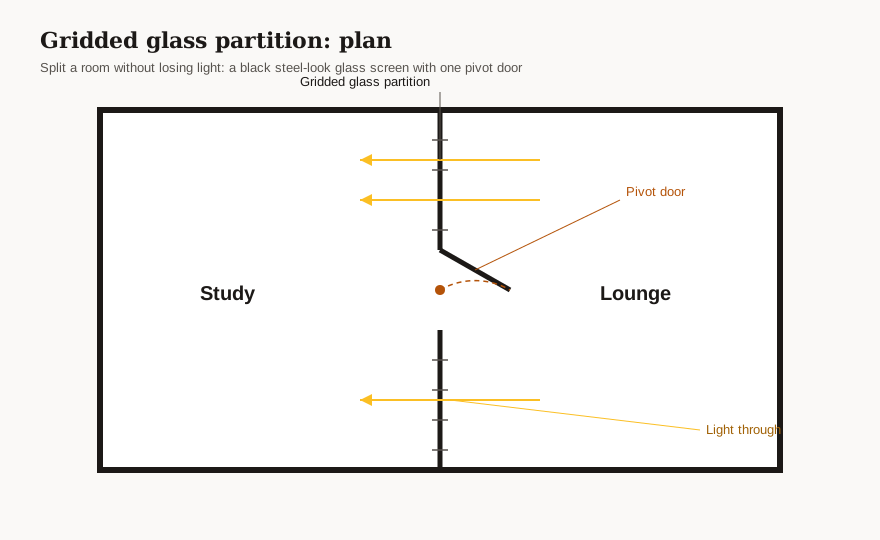
The single most popular use of this look in Indian flats is not even an external window — it is the internal steel-look partition or door. A black gridded glass screen splits a living room from a home office, encloses a kitchen without darkening it, or replaces a solid bedroom wall with light. Because it is internal, weather and corrosion are irrelevant, so cheaper steel-look aluminium does the job perfectly, and you keep open-plan light while gaining acoustic and visual separation. For the operable mechanics of a glazed door or partition, see Types of Home Windows in India.
Where industrial windows suit — and where they do not
| Home / space | Suits? | Note |
|---|---|---|
| Loft or duplex with double-height wall | Yes, strongly | The grid loves a tall canvas |
| Modern apartment with one feature wall | Yes | Use a single statement grid, not every window |
| Internal study/kitchen partition | Yes, easiest win | Steel-look aluminium, no weather risk |
| Coastal villa, raw steel | Caution | Salt air vs steel — prefer aluminium |
| Traditional Kerala or colonial home | No | Clashes with carved timber idiom |
| Tiny, low-ceiling room | No | Grid needs scale; it shrinks small rooms |
Do and avoid
| Do | Avoid |
|---|---|
| Keep the grid even and rectilinear | Mixing arches or curves into the grid |
| Go as tall as the wall allows | A small grid lost on a big blank wall |
| Pair with at least two raw materials | A black grid floating in a glossy modern room |
| Use solar-control glass behind black frames | Plain clear glass on a sun-facing black grid |
| Choose aluminium steel-look near the coast | Forcing raw steel into a salt-air monsoon |
Get-the-look checklist
- Choose your truth: true steel for authenticity and budget, or steel-look aluminium for value and coast-proofing.
- Specify a slim matte-black frame and an even rectangular grid — the two non-negotiables.
- Maximise glass: floor-to-ceiling or full-wall where structure allows.
- Behind the black, specify Low-E or solar-control glass plus shading in hot zones.
- Pair the window with two or more raw materials — brick, concrete, reclaimed timber, exposed ducting.
- Consider an internal steel-look partition as the highest-impact, lowest-risk entry point.
The industrial window is a confident, graphic choice that works best when it is committed to — one bold gridded wall of glass against honest raw materials, rather than a timid black frame here and there. Start with our design pillar, Modern Window Design Ideas for India, to place this look within the wider modern-window family, and let the grid do the talking.
References
- Crittall Windows — heritage and steel window history: https://www.crittall-windows.co.uk/
- Steel Windows in India (material, cost, durability): /guides/steel-windows-india
- Industrial Style Architecture in India (whole-building): /guides/industrial-style-architecture-india
- Modern Window Design Ideas for India (design pillar): /guides/modern-window-design-ideas-india
- Black-Frame Windows in India (colour and finish trend): /guides/black-frame-windows-india
Export this guide
Related Guides — Deep-dive reading
Aluminium Windows Guide (India): Slim, Strong, and the Thermal-Break Question
Why aluminium gives you the most glass and least frame, why bare metal conducts heat, and how a polyamide thermal break plus DGU fixes it.
Windows & GlazingBlack Frame Windows Guide
Why the black-frame trend works, which finish and material to pick, and the honest hot-India heat caveat
Windows & GlazingIndustrial Interiors — A 2026 Style Guide for Indian Homes
Raw, honest, warm · Concrete, black metal, reclaimed wood · Loft character, liveable
Design StylesRelated Tools — Try Free
Window Maintenance Cost Calculator
Estimate annual window upkeep by frame material — yearly, per-window and 5-year cost.
Window CalculatorFuture Home Comfort Score
Score your home 0 to 100 on daylight, ventilation, thermal and acoustic comfort and find the weak link.
Window ToolBrise-Soleil Visualizer
Interactive horizontal-louvre cut-off angle calculator — sun altitude, louvre depth, and spacing inputs with a live shadow preview. Computes θ = arctan(spacing/depth) for façade shading, ECBC envelope compliance, hospital daylight design, and tropical sun-control detailing.
Sun Shading Tool