
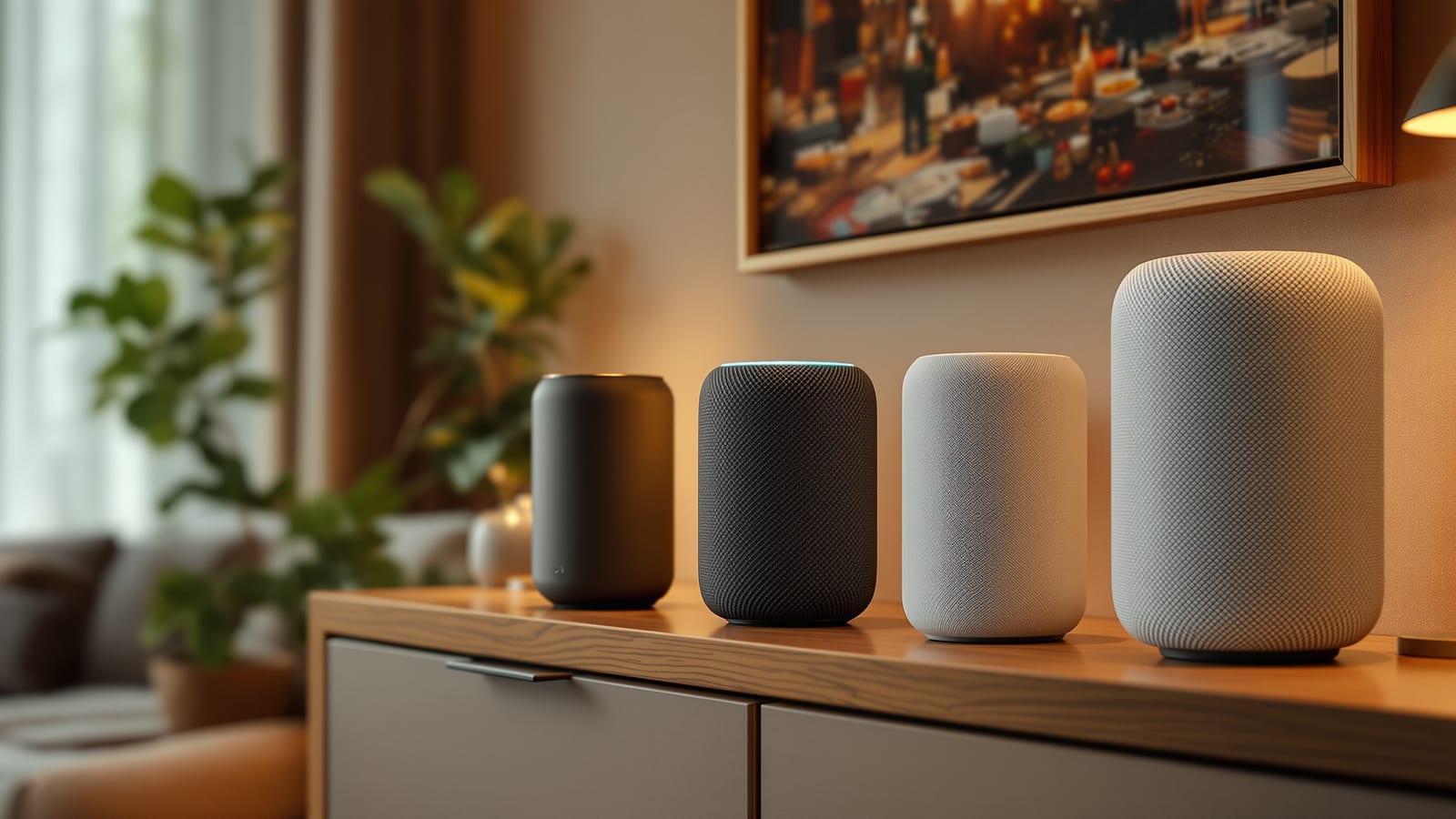
Alexa vs Google Home vs Apple Home in India: Which Ecosystem?
An honest, India-first comparison of the three smart-home ecosystems — cost, Indian-language support, privacy, automation and lock-in — plus how Matter quietly changes the whole decision.
Walk into any Indian electronics store or scroll Amazon Great Indian Festival deals and you will meet the same three names again and again: Amazon Alexa, Google Home and Apple Home. Pick one and, in effect, you are choosing the operating system your house will speak for the next decade — the assistant that hears your voice, the app that runs your automations, and the invisible rules that decide which future gadgets will and will not join the party. Choose badly and you spend years buying bridges and workarounds. Choose well and the home grows one device at a time.
This guide compares the three ecosystems the way an integrator actually weighs them for an Indian family — device cost and availability here, how well each understands Hindi and an Indian accent, how many devices each will talk to, what happens to your data, how powerful the automations really are, and how tightly each locks you in. It closes with a clear pick for every kind of household, and a section on Matter and Samsung SmartThings — the two forces steadily making the whole "which ecosystem" question less permanent than it used to be. If you are still mapping the big picture, read it alongside the ultimate guide to smart homes in India and the broader home automation guide.
Do not choose a voice assistant. Choose the household you already live in — the phones in your pockets and the privacy you can live with — and the right ecosystem chooses itself.
Quick verdict
If your family runs on Android phones and you want the smartest answers with the least fuss, Google Home is the natural fit. If everyone carries an iPhone and you care most about privacy and a home that keeps working offline, Apple Home rewards you — at a price. If you want the widest device support, the cheapest hardware, and the biggest sale discounts, Alexa is the pragmatic Indian default. And thanks to Matter, most modern devices now join all three anyway, so this is less of a life sentence than it was even two years ago.
Device cost and availability in India
This is where Alexa wins on paper. Amazon has sold Echo hardware in India longer and more aggressively than anyone, and its entry price during festival sales is genuinely low. Google Nest is competitive but its cheapest speakers surface less often at deep discounts. Apple sits in a different bracket entirely — there is no budget HomePod, and a HomeKit hub means owning an Apple device you may not otherwise buy.
| Ecosystem | Entry speaker (typical India price) | Premium speaker | Hub requirement | Where to buy |
|---|---|---|---|---|
| Alexa | Echo Dot, ~₹3,000–5,000 | Echo Studio, ~₹18,000–22,000 | None for basics; Echo acts as hub | Amazon.in, widely stocked |
| Google Home | Nest Mini, ~₹4,000–6,000 | Nest Audio, ~₹9,000–12,000 | None for basics; Nest Hub for display | Flipkart, Croma, Reliance |
| Apple Home | HomePod mini, ~₹9,900–12,900 | HomePod (2nd gen), ~₹32,900 | Yes — HomePod, Apple TV or iPad hub | Apple Store, authorised resellers |
Two India-specific realities matter here. First, availability of accessories — smart plugs, bulbs, sensors — is broadest for Alexa and Google because value brands (Wipro, Havells, Syska, Mi, TP-Link Tapo) certify for those two first and for Apple Home last, if at all. Second, festival pricing is real: Echo and Nest hardware routinely drops 30–50% during Great Indian Festival and Big Billion Days, while Apple almost never discounts HomePod. Model the true device count and spend for your own home in the smart home cost calculator before committing to a platform — the speaker is the cheapest part.
Indian-language and accent support
For an Indian family this is often the deciding dimension, and it is where Google and Amazon have invested heavily while Apple has lagged.
Google Assistant understands Hindi natively, supports several Indian languages, and — crucially — handles bilingual "Hinglish" commands and mixed English-Hindi phrasing more gracefully than the others. Its speech recognition also copes best with strong regional Indian accents, a direct benefit of Google's India-first language work.
Alexa supports Hindi and a Hindi-English bilingual mode in India, and it is genuinely usable for Hindi-speaking households. Its regional-language breadth is narrower than Google's, and it occasionally stumbles on heavily accented English, but for Hindi and Hinglish it is solid.
Apple's Siri is the weakest here. It supports Indian English and Hindi, but its regional-language coverage and its comfort with Hinglish and strong accents trail both rivals. A multilingual Indian household that talks to its home in a mix of Hindi, English and a regional tongue will feel Apple's limits fastest.
If elders in the home will speak Hindi or a regional language to the assistant, lean Google first, Alexa second, Apple last.
Device compatibility breadth
How many gadgets will each ecosystem actually control? Historically this was Alexa's crown — it supports the largest catalogue of third-party devices and "Skills," and almost every India value brand certifies for Alexa on day one. Google Home is a close second with a large, well-integrated device list. Apple Home supported the fewest devices for years because HomeKit's older certification (the MFi program) was stricter and costlier for manufacturers, so many cheap Indian brands simply skipped it.
Matter is rewriting this. A Matter-certified device joins all three ecosystems, which is why Apple's practical device gap has narrowed sharply since 2024 — the same Matter plug that works with Alexa now also works with Apple Home. Still, for the long tail of ultra-cheap Wi-Fi gadgets sold in India, Alexa remains the safest compatibility bet, with Google just behind.
Privacy and data: the real dividing line
This is the dimension where the three genuinely differ in philosophy, and under India's Digital Personal Data Protection (DPDP) Act, 2023 it deserves real weight.
Apple Home processes far more locally. Your HomePod or Apple TV acts as a home hub that runs many automations on-device, and Apple's stated design keeps home data encrypted and minimises what leaves your house. Apple's business does not depend on profiling you for ads, and that shapes the whole system. For a privacy-conscious household, Apple is the clear pick.
Alexa and Google Home are cloud-first by design. Voice requests are typically sent to Amazon's or Google's servers for processing, and both companies' broader businesses involve advertising and personalisation. Both now offer controls — you can review and delete voice recordings, disable human review, and set auto-delete windows — but the default posture is that your commands and usage patterns travel to a cloud. Both also run large parts of Indian traffic through data centres, and DPDP gives you rights (access, correction, erasure) you should actually exercise: turn on auto-delete and audit the app's privacy dashboard.
The honest summary: if data leaving your home worries you, Apple's local-first design is a real, structural advantage — not just marketing. This local-versus-cloud question is big enough that we treat it in depth in local vs cloud smart home; read it if privacy is your top priority.
Automation power
For everyday routines — "good morning" turning on lights and reading the weather, "goodnight" locking up and dimming — all three are more than capable, and you can build these from each app in minutes. The differences show at the edges.
Apple Home offers genuinely powerful conditional automations (time, location, sensor state, presence) that run locally on your hub, so they fire even when the internet is down. This is a quiet superpower for reliability.
Alexa Routines are flexible and support a huge range of triggers and actions, and Alexa's device ecosystem means there is usually a Skill for whatever you own. Most run in the cloud, so they need connectivity.
Google Home routines are clean and capable and have improved markedly with the newer Google Home app and script editor, which lets advanced users write more complex logic. Also largely cloud-dependent.
For truly advanced, fully local automation, none of the three matches a dedicated platform like Home Assistant — covered in local vs cloud smart home — but for a normal family, all three do the job.
Multi-room audio and lock-in
On multi-room audio, Apple and Amazon lead: HomePods pair into excellent stereo and whole-home audio, and Echo devices group easily for synchronised playback. Google's speakers also do multi-room well. Sound quality on the premium HomePod and Echo Studio is a clear step above the minis.
On lock-in, be honest with yourself. Buying deep into one assistant's proprietary features — an Alexa-only Skill, an Apple-only automation, a Google-only display feature — makes switching painful later. The single best defence is to buy Matter-certified devices wherever possible, because they are portable across all three. The lock-in that hurts is the accumulated automations and habits, not the plugs.
How Matter and SmartThings change the question
Matter is the industry's answer to the walled gardens. Founded under the Connectivity Standards Alliance with Amazon, Apple, Google and Samsung as core members, it lets a single certified device be controlled by all three ecosystems at once — a feature called multi-admin. In practice, a Matter plug bought in India can live in Alexa, Google Home and Apple Home simultaneously, so the family's mix of Android and iPhone stops mattering. This is why the deep dive in our smart home protocols guide argues you should buy for the protocol, not the brand.
Samsung SmartThings is a strong fourth option that acts as a super-hub: it speaks Matter, Zigbee and Thread, integrates tightly with Samsung TVs and appliances (common in Indian homes), and can sit alongside any of the big three. If your home is full of Samsung appliances, SmartThings is worth serious consideration as the connective tissue.
The takeaway: choosing an ecosystem in 2026 is a softer decision than it was. Pick the assistant your household's phones favour, buy Matter devices, and you keep your options open.
Recommendations by household
| Household | Best pick | Why |
|---|---|---|
| Android-heavy family, wants smart answers | Google Home | Best Hindi and Hinglish, sharpest assistant, strong Android integration |
| Everyone on iPhone, values privacy | Apple Home | Local processing, tight iPhone integration, strong automations |
| Budget-conscious, wants widest device support | Alexa | Cheapest hardware, biggest festival discounts, largest device catalogue |
| Multilingual home with Hindi-speaking elders | Google Home | Best regional-language and accent handling |
| Home full of Samsung TVs and appliances | SmartThings + any assistant | Super-hub ties Samsung gear together, speaks Matter |
| Wants to stay flexible / future-proof | Any, but buy Matter devices | Multi-admin keeps every ecosystem open |
Whichever you pick, protect the decision two ways. First, prefer Matter-certified accessories so nothing traps you. Second, plan the network before the gadgets — a shaky Wi-Fi setup will make any assistant feel dumb, which is exactly why the smart home networking guide treats a segmented, robust network as the foundation. And if security cameras and locks are part of your plan, the smart home security systems guide covers how each ecosystem handles them.
The honest closing thought: there is no single winner. The best ecosystem is the one that matches the phones already in your home and the privacy posture you can live with — and with Matter smoothing the edges, even a "wrong" first choice is now recoverable.
References
- Amazon Alexa — official site — Echo devices, Alexa features and Indian-language support.
- Google Home / Nest — official site — Google Home app, Nest speakers and Assistant capabilities.
- Apple Home and HomeKit — Apple Home, HomePod and HomeKit privacy and local-processing design.
- Connectivity Standards Alliance — Matter — the interoperability standard and multi-admin behaviour across ecosystems.
- Samsung SmartThings — the SmartThings super-hub, Matter/Zigbee/Thread support and appliance integration.
- MeitY — Digital Personal Data Protection Act, 2023 — India's data-protection law governing your rights over smart-home data.
Export this guide
Related Guides — Deep-dive reading
How to Choose a Smart Speaker in India (Alexa, Google, Apple)
A smart speaker is the friendliest way into a connected home — but the choice is really three choices layered together: which assistant, speaker or display, and which model for which room. This buyer's guide walks an Indian household through all three, with real prices and honest trade-offs.
Smart HomeHow to Choose a Security System (2026): The Master Buying Guide for Indian Homes and Buildings
The mental model that ties the whole buying decision together: start from your own risk, not a product; build the layers your situation actually needs; make the big architecture choices (wired vs wireless, local vs cloud, DIY vs professional); tell real product quality from marketing; and choose a vendor you can trust.
SecurityMatter Explained: The Standard Unifying Smart Homes (India Guide)
One app for everything, one device answering to Alexa, Google and Apple at once — that is the promise of Matter. Here is what it actually delivers in India in 2026.
Smart HomeRelated Tools — Try Free
Smart Home Ecosystem Selector
Answer 5 questions and get a ranked recommendation for the smart-home ecosystem that fits your Indian household — Amazon Alexa, Google Home, Apple Home, Samsung SmartThings, or Home Assistant — with pros, caveats and a rough starter cost.
SelectorWindow Hardware Cost Calculator
Estimate window hardware cost — hinges, handles, locks, rollers and multipoint gears.
Window CalculatorSmart Curtain Compatibility Checker
Check whether a motorised curtain will work with Alexa, Google, Apple Home, SmartThings or Home Assistant — and what you need.
Checker