
Local vs Cloud Smart Home: Privacy, Reliability & Control
Why where your automations run — on a hub in your house or on a server far away — quietly decides whether your smart home stays private, keeps working in a power cut, and survives the brand going bust.
Every smart home hides an invisible question that nobody asks the salesperson: when you say "turn off the lights," where does that decision actually get made? For a cloud smart home, your command travels from the switch to a server — often outside India — and back before the bulb obeys. For a local smart home, the decision is made by a small hub sitting in your own house, and nothing leaves the building. It sounds like a technicality. It is not. That single difference decides whether your lights work during a broadband outage, how fast they respond, who can see your daily patterns, and whether the whole system turns into e-waste the day the manufacturer shuts a server down.
This guide compares the two approaches honestly, for Indian conditions — where power cuts and patchy broadband are facts of life and where the Digital Personal Data Protection (DPDP) Act, 2023 now gives your household data real legal weight. We go dimension by dimension: reliability, latency, privacy, longevity, features, maintenance and cost. Then we give a clear verdict for different kinds of homeowners. If you are still assembling the big picture, read this alongside the ultimate guide to smart homes in India and the home automation guide; the choice of ecosystem in alexa vs google vs apple is closely tied to this one.
A cloud smart home rents its intelligence from a server you do not control. A local smart home owns it. In a country of power cuts and vanishing brands, ownership is the safer bet.
Quick verdict
For most Indian families, a hybrid is the right answer: keep the convenience of cloud voice assistants for questions and nice-to-haves, but make sure your essential automations — lights, locks, fans, security — can run locally so they survive an internet drop. If privacy or reliability is your top priority, or you are a hands-on enthusiast, go fully local with a platform like Home Assistant, Apple's local hubs, or local Zigbee and Thread devices. Pure cloud is the easiest to set up and the riskiest to depend on.
What "local" and "cloud" actually mean
A cloud smart home runs its brain on the manufacturer's servers. Your Wi-Fi plug, your routine, your voice command — all round-trip to a data centre. Alexa Routines and Google Home routines are largely cloud-executed: the trigger fires, the request goes up, the decision comes back down. This is why they are effortless to set up (no hub to configure) and why they stop working the moment your connection does.
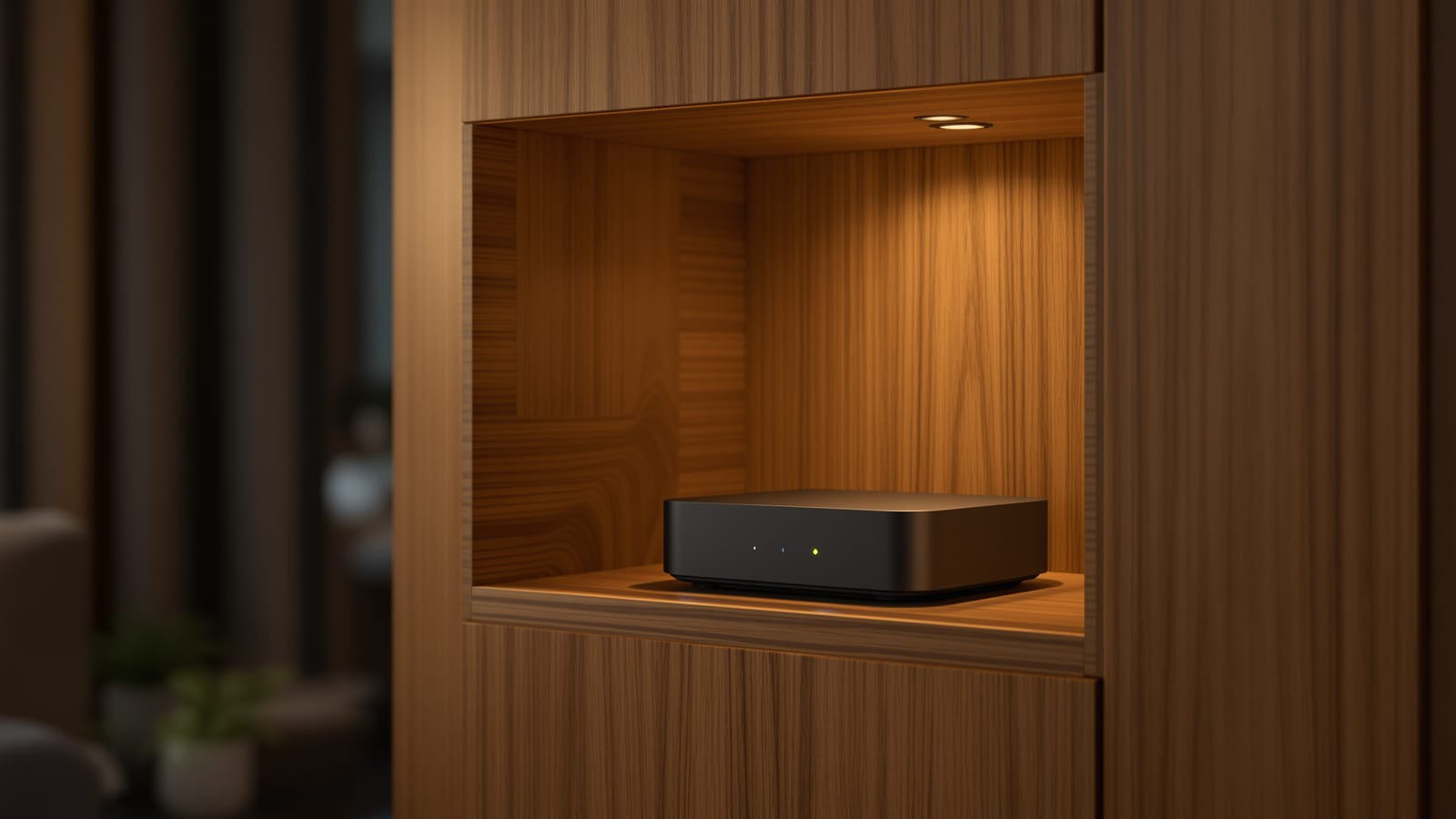
A local smart home runs its brain on hardware in your house — a Home Assistant box, an Apple HomePod or Apple TV acting as a home hub, or a Zigbee/Thread hub that executes automations on-device. Devices talk to each other over a local network or a local radio mesh, and the internet is optional, needed only for remote access when you are away.
Most real homes are a spectrum, not a binary. A single house might have cloud-dependent Wi-Fi cameras, locally controlled Zigbee lights, and an Apple hub running local automations. The goal is not purity — it is making sure the things you truly rely on do not depend on a distant server.
Reliability during an internet or power outage
This is where India tilts the argument. Broadband here still drops, and power cuts — though shorter than they once were — still happen. Ask what your home does in those minutes.
A cloud home can go partly dumb during an outage. If your lights are cloud Wi-Fi bulbs and the broadband is down, saying "turn off the lights" may simply fail, because the command cannot reach the server. Worse, some budget devices lose even local app control when the cloud is unreachable.
A local home shrugs it off. A Zigbee light bound to a local hub, or an automation running on an Apple hub, keeps working with no internet at all — only your local Wi-Fi or the device's own radio mesh needs to be up. Pair a small UPS or inverter (common in Indian homes already) with your hub and router, and essential automations survive a power cut too.
The practical rule: any device you would be genuinely annoyed to lose during an outage — the bedroom light, the main door lock, the security siren — should be locally controlled. This is exactly why the smart home security systems guide insists that locks and alarms never depend solely on a cloud that can be unreachable at the worst moment.
Latency: how fast the light responds
Local wins on speed, and you can feel it. A local command travels a few metres to a hub and back — response is typically sub-100 milliseconds, effectively instant. A cloud command travels to a data centre and back, which can add a noticeable fraction of a second, sometimes more on a congested connection. For a single light it is a minor annoyance; for a motion-triggered stair light that should be on before your foot lands, local responsiveness genuinely matters.
Privacy and the DPDP Act
This is the dimension where local's advantage is structural, not marginal. In a cloud home, your commands, routines and usage patterns travel to and are stored on company servers — a running log of when you wake, when you leave, when you sleep. In a local home, that data can stay entirely inside your house.
India's DPDP Act, 2023 gives you rights over personal data — to know what is collected, to have it corrected, and to have it erased. A cloud smart home makes you dependent on the provider honouring those rights and securing the data; a local smart home sidesteps much of the risk by never sending the data out in the first place. For privacy-conscious households, this is often the whole reason to go local. Apple Home's local-first design and Home Assistant's fully offline operation are the two clearest examples, and we compare Apple's posture against the cloud-first rivals in alexa vs google vs apple.
Longevity: the risk of a cloud shutdown
Here is the quiet horror story of the smart home. When a company shuts down a cloud service, cloud-dependent devices can stop working entirely — perfectly good hardware turns into a paperweight because its brain lived on a server that no longer exists. This has happened repeatedly worldwide, and several cloud-only Wi-Fi brands sold in India between 2018 and 2022 are already gone, taking their apps with them.
A local device does not have this problem in the same way. A Zigbee sensor or a locally controlled device keeps working as long as your hub does, regardless of what happens to the manufacturer's business. This is the strongest long-term argument for local control and for open protocols — a theme we develop fully in the smart home protocols guide: buy for the protocol, prefer local execution, and your investment outlives the brand.
Features, complexity and maintenance
Cloud is not all downside — it earns its place. Cloud services enable the slick extras: rich voice assistants that answer general questions, effortless remote access, automatic updates, cross-service integrations, and AI features that genuinely need server-side compute. Setup is trivial: plug in, open the app, done.
Local trades some of that convenience for control. A fully local platform like Home Assistant is enormously capable but demands more from you — installing it on a small computer, configuring devices, occasional maintenance, and a real learning curve. Apple Home is the gentle middle: much of it is local, yet it stays easy to use. The honest trade-off is effort versus ownership.
Cost
Cloud devices are usually cheaper up front — no hub required, and the value brands compete hard on price. Local can cost a little more initially because you buy a hub (a Home Assistant box, an Apple hub, or a Zigbee/Thread coordinator). But local can be cheaper over time: no reliance on paid cloud subscriptions for features, and no forced replacement when a service dies. Model both scenarios for your own home in the smart home cost calculator — the hub often pays for itself in avoided subscriptions and avoided re-buys.
The two approaches side by side
| Dimension | Cloud smart home | Local smart home |
|---|---|---|
| Works during internet outage | Often fails | Keeps working |
| Latency | Higher (server round-trip) | Very low, near-instant |
| Privacy under DPDP | Data leaves home | Data can stay in home |
| Longevity if brand shuts down | Devices may be bricked | Keeps working |
| Advanced AI / voice features | Strong | Limited locally |
| Remote access | Built in | Needs setup |
| Setup ease | Very easy | Moderate to hard |
| Ongoing maintenance | Minimal | Some (esp. Home Assistant) |
| Up-front cost | Lower (no hub) | Higher (hub needed) |
What still works when the internet is down
The clearest way to decide is to imagine your broadband dead for an hour and ask what your family loses.
| Function | Pure cloud setup | Local / hybrid setup |
|---|---|---|
| Turn lights on/off | May fail | Works |
| Motion-triggered lighting | Usually fails | Works |
| Door lock manual control | Works (key/keypad) | Works |
| Automated locking routine | May fail | Works |
| Security siren / alarm | May fail | Works |
| Voice assistant questions | Fails (needs cloud) | Fails (needs cloud) |
| Remote access from office | Fails | Fails |
| Camera live view (local) | Often fails | Works (local NVR) |
Notice the pattern: the things you most need in an outage — lights, locks, alarms, local cameras — are exactly the things local control protects, while the things you can happily lose for an hour (voice trivia, remote access) are the cloud's domain. That is the entire case for hybrid.
Verdict by homeowner
For the average family, build a hybrid. Use whichever cloud voice assistant suits your phones for convenience and questions, but choose devices that also support local control — Zigbee or Thread lights on a local hub, an Apple hub for local automations — so the essentials survive an outage. You get the ease of cloud with a local safety net.
For the privacy-focused or reliability enthusiast, go fully local. Home Assistant is the gold standard: powerful, private, offline-capable, and vendor-independent. Apple Home is the easier local-leaning option if you are already in the Apple world. Pair either with local Zigbee and Thread devices and a UPS-backed hub, and you have a home that answers to you alone.
For someone who wants the absolute least effort and accepts the trade-offs, pure cloud is fine for non-critical convenience — smart plugs for lamps, a voice speaker for music and questions. Just keep anything you truly depend on off the pure-cloud path.
Whichever way you lean, two foundations apply to both: a solid, segmented network (see the smart home networking guide) and open, local-friendly protocols (see the smart home protocols guide). Get those right and you can move along the local-cloud spectrum freely as your needs change.
The honest closing thought: cloud is convenient, local is dependable, and in Indian conditions — outages, patchy broadband, brands that come and go, and a new data-protection law — the safest home keeps its essentials local and lets the cloud handle the luxuries.
References
- Amazon Alexa — official site — how Alexa Routines and cloud processing work.
- Google Home / Nest — official site — Google Home routines and cloud-based automation.
- Apple Home and HomeKit — Apple's home hub and local-processing design.
- Home Assistant — official site — the leading local-first, privacy-focused, offline-capable smart-home platform.
- Connectivity Standards Alliance — Matter — local control, Thread and interoperability across ecosystems.
- MeitY — Digital Personal Data Protection Act, 2023 — India's data-protection law and your rights over smart-home data.
Export this guide
Related Guides — Deep-dive reading
Smart Home Maintenance & Troubleshooting for Indian Homes
A smart home is not a one-time purchase — it is a small fleet of computers that needs firmware updates, fresh batteries, occasional reboots and a plan for the day a manufacturer switches off the cloud. This guide gives you a maintenance calendar, a troubleshooting flow for the failures Indian homes actually see, and the UPS and security hygiene that keep it all running through power cuts and voltage swings.
Smart HomeVoice-Controlled Security for Indian Homes: What Is Safe to Say, and What Is Not
Alexa, Google Assistant and Siri can make home security genuinely easier — arm the system on your way to bed, turn on the outdoor lights, ask whether the front door is locked. But some voice commands are dangerous, and a shout through a window can trigger them. The safe line, the honest limits, and the privacy of an always-listening microphone.
SecurityVoice Controlled Bathroom India: Waterproof Smart Speaker, Hands-Free Lights, Shower & Geyser, Privacy & Cost
A practical India-first guide to voice control in the bathroom — a splash-rated smart speaker or voice-enabled mirror that turns lights, music, exhaust fan, geyser and even the shower on and off hands-free — plus the microphone and privacy questions, the humidity and IP durability the device must survive, whether your Wi-Fi even reaches the wet corner of the house, which tasks genuinely benefit, the real accessibility win for elderly and disabled users, and what it all costs.
BathroomsRelated Tools — Try Free
Smart Home Ecosystem Selector
Answer 5 questions and get a ranked recommendation for the smart-home ecosystem that fits your Indian household — Amazon Alexa, Google Home, Apple Home, Samsung SmartThings, or Home Assistant — with pros, caveats and a rough starter cost.
SelectorSmart Home Cost Calculator
13 device categories across 5 ecosystems (Apple HomeKit, Alexa, Google Home, Mi, Wipro). Live floor-plan that lights up as you add devices, per-room and per-category breakdown.
Smart Home CalculatorCCTV Cloud vs Local Cost Calculator
Compare cloud CCTV subscription against a local NVR + HDD — upfront, 5-year total, monthly fee and break-even.
Cloud vs Local