
Renzo Piano
The builder's son who made architecture light — and filled it with light
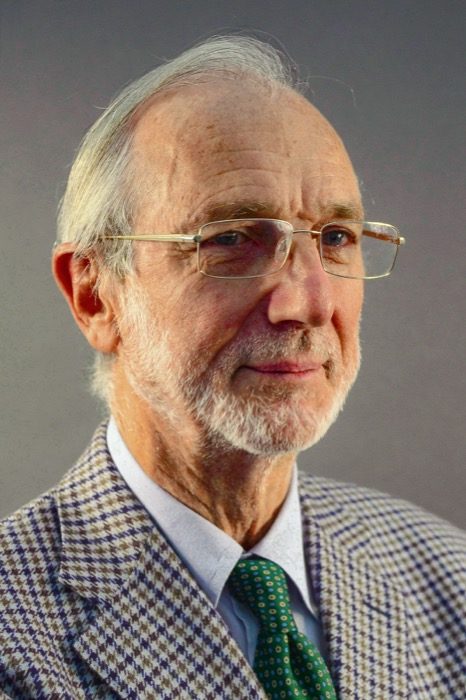
Photo: Cirone-Musi (Festival della Scienza), CC BY-SA 2.0, via Wikimedia Commons
Movements
Signature works
- Centre Pompidou, Paris (1977, with Richard Rogers)
- The Menil Collection, Houston (1987)
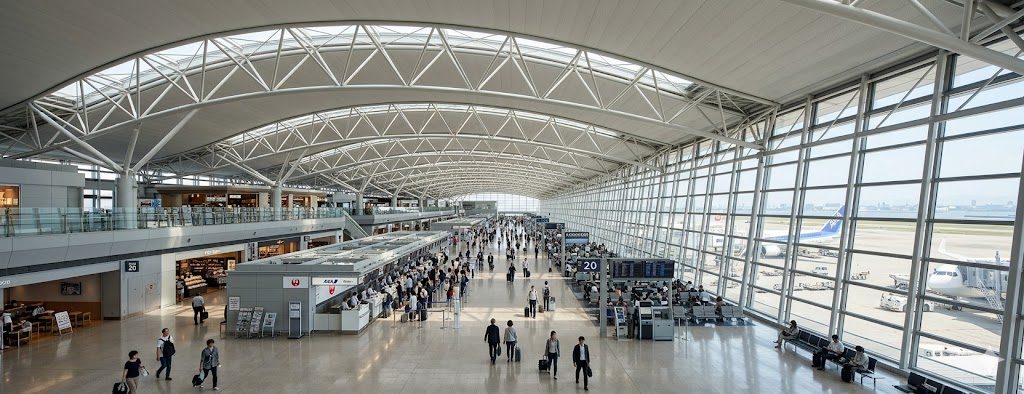
- Kansai International Airport, Osaka (1994)
- Jean-Marie Tjibaou Cultural Centre, Nouméa (1998)
- The New York Times Building, New York (2007)
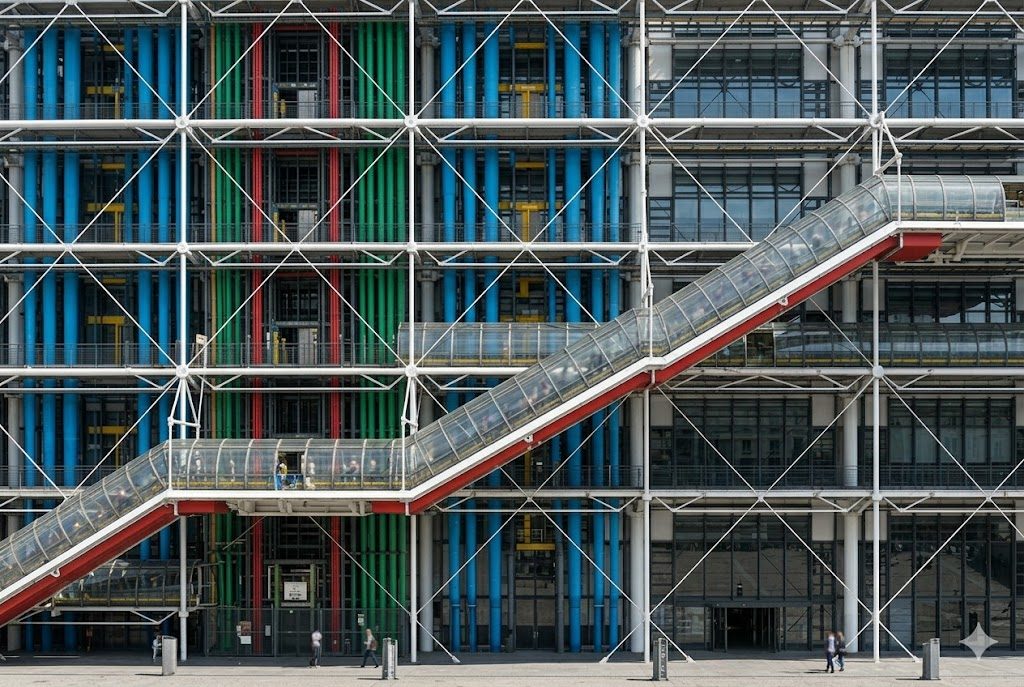
Stand in the great sloping square in front of the Centre Pompidou in Paris and look up. The building seems to have been turned inside out. Its steel skeleton is on the outside, exposed and painted white. Fat ducts run up its flank in bright colours — blue for air, green for water, yellow for electricity, red for the things that move people. A glass tube of escalators climbs diagonally across the whole face like a transparent caterpillar, carrying visitors up toward a view over the rooftops of Paris. Inside, behind the glass, there is almost nothing in the way: vast, open, column-free floors that can be rearranged at will. And in front of it all, half the site has simply been given back to the city as a sloping piazza where students sit and street performers gather. In 1977 this looked like an oil refinery had landed in the heart of historic Paris. Today it is one of the most loved buildings of the twentieth century.
The man who designed it, with his friend Richard Rogers, was a young Italian from Genoa named Renzo Piano — and the Pompidou was only the beginning. Over the next half-century he would build airports, museums, concert halls, skyscrapers and bridges across the world, and win architecture's highest honour, the Pritzker Prize.
Piano's contribution is a lifelong argument that buildings can be light. Light in two senses at once: physically light — slender, taut, made of steel and glass and craft rather than mass — and full of light, filled with daylight that has been caught, filtered and tamed until it glows. He came out of the radical "high-tech" generation, yet he spent his career quietly resisting that label, insisting that what he really cared about was not technology for its own sake but craft, place, and the people who would use the building. His machinery is always in the service of something human: a softer light, a public square, a lighter touch on the earth. (For a close reading of his building skins — the terracotta rainscreen, the daylight-filtering roof and the crafted detail — see our Renzo Piano facade signature guide.)
The idea: making heavy things feel light
Architecture, for most of its history, was an art of mass — stone piled on stone, walls thick enough to hold a building up and keep the weather out. Renzo Piano belongs to a different lineage, one that asks the opposite question: how little material can hold this up? How thin can a roof be? How much of a wall can become glass without the building falling down or cooking inside?
The answer, for Piano, always runs through the engineer. He has said repeatedly that architecture is a craft made with others, and the most important "other" in his life was the structural engineer Peter Rice of Ove Arup, with whom he worked from the Pompidou onward. Rice was a poet of structure who could make steel do delicate, surprising things, and the partnership let Piano chase a kind of lightness that a sculptor of concrete could never reach. The famous cast-steel brackets of the Pompidou — the "gerberettes" that let the structure float just off the glass — came out of that collaboration. So did the slender curved roofs of his airports and the timber shells of his Pacific cultural centre. For Piano, the engineer is not a technician who is handed a finished drawing; the engineer is a co-author, present from the first sketch.
But lightness of structure is only half of it. The other half is the lightness of light itself. Almost every Piano building is, at heart, a machine for catching daylight. He distrusts the harsh, flat, glaring sun and loves the soft, even, north-sky glow that painters and museum curators crave. So he builds elaborate, beautiful filters — louvres, fins, fabric, perforated metal, layered glass, the daylight "leaves" of his museums — whose only job is to take raw sunlight and turn it into something gentle enough to live and look at art under. The result is buildings that feel weightless and luminous at once: the structure barely there, the light everywhere.
Life and path: a builder's son from Genoa
Renzo Piano was born on 14 September 1937 in Genoa, the great port city on the Italian Riviera, into a family of builders. His father, his grandfather, his uncles and his brother were all in construction; building sites were his childhood landscape. This matters more than any biographical footnote, because it explains the deep, almost physical pleasure he takes in how things are actually made — the joint, the bracket, the way one material meets another. He once described the magic of watching a building rise out of nothing, and that wonder never left him. He is an architect who thinks like a maker, not only a designer.
He studied architecture at the Milan Polytechnic, graduating in the 1960s, and spent his early years experimenting with lightweight, demountable structures — tents, shells, things that were more like instruments than monuments. In this period he absorbed the spirit of the engineers and inventors he admired, and began the habit of working hand-in-hand with structural minds that would define his whole career.
His life changed in the early 1970s when he formed a partnership with the English architect Richard Rogers. Together, as near-unknowns, they entered the open international competition for a new cultural centre on the Plateau Beaubourg in Paris — and, astonishingly, won it against hundreds of established firms. The Centre Pompidou, completed in 1977, made them famous overnight and notorious in equal measure. After Paris, Piano worked for a time with Peter Rice, and then, in 1981, founded his own practice: the Renzo Piano Building Workshop, with studios in Genoa and Paris. The name was deliberate. Not a "studio," not "& Associates," but a workshop — a place of hands and craft, of models and mock-ups, of making.
From that base the Workshop grew into one of the most respected practices on earth, and Piano into one of its most honoured figures. He received the Pritzker Architecture Prize in 1998; in 2013 his own country named him a Senator for life. Yet through all of it he kept the same quiet, methodical manner — the builder's son who would rather talk about a detail than a theory.
The signature works
Piano's range is unusually wide for a single architect — he has built almost every kind of public building there is — but a clear thread of lightness and light runs through all of it.
| Work | Place & year | Why it matters |
|---|---|---|
| Centre Pompidou | Paris, 1977 (with Richard Rogers) | The building that turned a museum inside out. Structure and services pushed to the skin to free vast flexible floors; half the site given back as a public piazza. A radical, joyful machine. |
| Menil Collection | Houston, 1987 | A serene, low museum whose roof is lined with curved concrete daylight "leaves" that bounce and soften the Texan sun so paintings can be seen by gentle natural light. Lightness turned inward and calm. |
| Kansai International Airport | Osaka, 1994 | A terminal 1.7 km long built on an entirely artificial island in Osaka Bay. Its great curved roof was shaped to follow the path of the air moving through the building — engineering, lightness and daylight at colossal scale. |
| Jean-Marie Tjibaou Cultural Centre | Nouméa, New Caledonia, 1998 | A cluster of tall timber "cases," inspired by Kanak huts, whose curved wooden shells are tuned to catch and channel the Pacific trade winds for natural ventilation. Eco-tech and craft married to local culture. |
| The New York Times Building | New York, 2007 | A skyscraper sheathed in a screen of ceramic rods that veils the glass, controls glare and changes colour with the sky — a tall building trying to be light and luminous rather than mirrored and hard. |
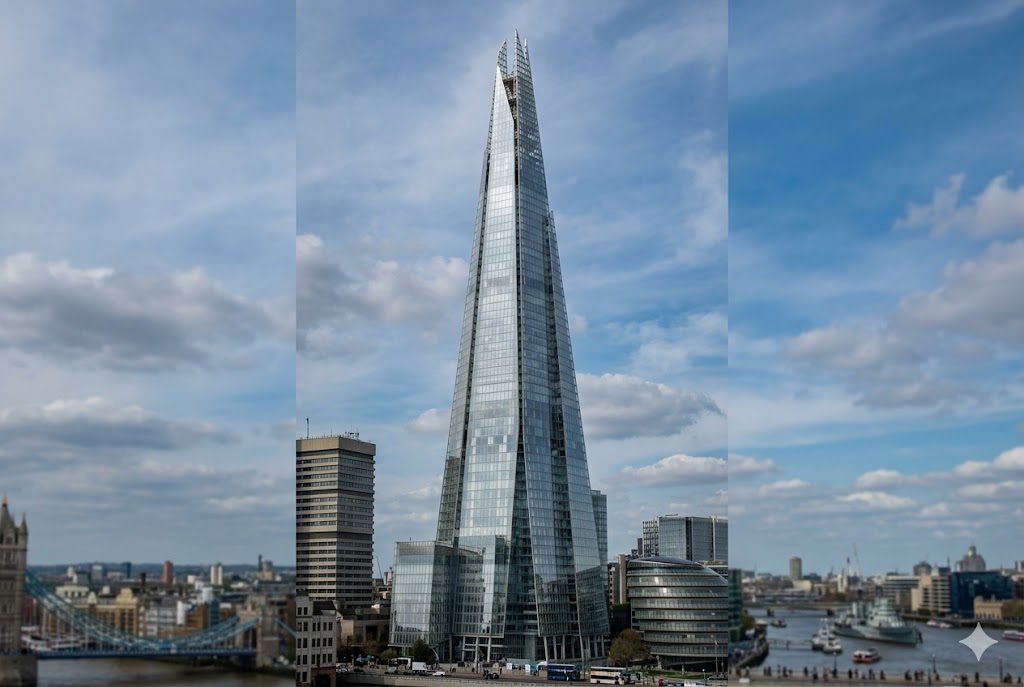
| The Shard | London, 2012 | Western Europe's tallest building, a tapering shard of glass that seems to dissolve into the sky at its splintered top. A skyscraper imagined as a sliver of light over the Thames. |
The list could be much longer. The Beyeler Foundation near Basel is another of his luminous, daylit galleries. The Auditorium Parco della Musica in Rome gathered three concert halls — likened to great lead-clad beetles — around an open-air amphitheatre that gives the city a public room. The California Academy of Sciences in San Francisco is famously capped by an undulating "living roof" of native plants that rolls like the hills around it. The Whitney Museum of American Art in New York (2015) stacked airy gallery floors and outdoor terraces over the High Line. The Centro Botín in Santander reaches out over the water on slender supports. And in 2020, after the terrible collapse of the Morandi viaduct, Piano gave his own home city the new Genoa San Giorgio Bridge — a calm, pale, ship-like structure built, in his words, as a gift to the place that made him.
What unites this enormous body of work is not a style — a Piano museum and a Piano airport look nothing alike — but a method and a temperament. Each building is solved from the inside out, around how light should fall and how people should move; each is realised through obsessive, loving detail and close partnership with engineers; and each tries, whatever its size, to feel lighter than it has any right to be.
The philosophy: high-tech, and beyond it
Renzo Piano is one of the founding figures of the movement the world came to call high-tech architecture — the strand of late-modern building that celebrates structure and services, that wears its steel, ducts and bolts on the outside, and that treats a building frankly as a sophisticated machine. The Pompidou is high-tech's loudest manifesto, and alongside Richard Rogers and Norman Foster, Piano helped define the whole language: the exposed frame, the celebrated joint, the flexible open floor, the idea that a building's working parts can be its beauty.
And yet Piano has spent decades politely refusing the title. He bristles at "high-tech" because, to him, it suggests a fascination with technology as an end in itself — gadgetry, machismo, the look of the machine. That was never his project. For Piano the exposed structure of the Pompidou was not about worshipping technology; it was about freeing space and giving the public a square. The point of the engineering was always something human on the other side of it.
So over his career the language softened and deepened. The raw industrial palette of the 1970s gave way to a craft-driven, tactile, place-sensitive architecture — what some have called "eco-tech." The timber shells of the Tjibaou Centre, tuned to the wind and rooted in Kanak building tradition, are a world away from the painted steel of Paris, yet the logic is the same: use intelligence and engineering to work with nature rather than against it. The "living roof" of the California Academy of Sciences, the wind-driven ventilation of his Pacific cases, the daylight leaves of his museums — all of this is technology bent toward sun, wind, climate and culture. Three commitments hold the whole career together: light, lightness, and the piazza. Almost every major Piano building hands part of itself back to the public as open ground — a square, a terrace, a garden, a place to gather. The machine, for him, was only ever a way to make a more generous, more luminous, more human room.
Piano has often said he sees himself less as an artist imposing a vision than as a builder and a craftsman — and that the deepest joy of architecture is the act of making, of putting things together so that a place comes into being where there was nothing before.
India: light, transport and the lessons of lightness
Renzo Piano has no famous building in India, and it would be wrong to invent one. But his preoccupations speak with unusual directness to the problems Indian architects are wrestling with right now — and his influence reaches the country through the institutions and infrastructure India is building at speed.
Start with the airports and stations. India is in the middle of the largest wave of transport-building in its history: vast new terminals, metro stations and interchanges in city after city. Kansai is the classic reference for that scale of work — a 1.7 km terminal whose enormous curved roof is shaped by the movement of air through the building, daylight pouring in along its length. The lesson Kansai teaches is the one Indian transport architecture most needs: that a building this big does not have to be a sealed, artificially lit, energy-hungry shed. It can be light in structure and full of daylight, its roof doing real environmental work. The best new Indian terminals, with their long-span lightweight roofs and daylit concourses, are working in exactly this tradition.
Then there is the museum and the gallery. Piano is, above all, the master of controlled daylight — the Menil's daylight "leaves," the soft north light of the Beyeler. For India, with its fierce, abundant sun, this is not an abstract European nicety but a precise technical inheritance. The instinct to never admit raw sunlight, but to bounce, filter and soften it, is the same instinct behind the jali screen, the deep verandah and the courtyard homes of our own climate-responsive tradition. Piano gives the contemporary institution a vocabulary for doing this at the scale of a great public building, and his approach sits squarely within serious passive design across India's climate zones: treat the sun as a resource to be shaped, not merely an enemy to be blocked.
His "eco-tech" turn matters here too. The Tjibaou Centre's timber cases, tuned to the trade winds for natural ventilation and rooted in local building culture, are a model for how a globally fluent architect can still build from place — a lesson at the heart of contemporary Indian architecture and what defines it. India does not need imported glass boxes that must be air-conditioned into submission; it needs intelligent, lightweight buildings that breathe, shade themselves and use local craft. Piano's career is a long demonstration that the most advanced engineering and the most climate-sensitive, culturally grounded building are not opposites but partners.
Finally, there is the idea of the piazza. Piano insists that a great public building must give something back to the city — a square, a terrace, a place to gather freely. In dense, fast-growing Indian cities desperately short of generous, shaded public space, that is perhaps his most valuable lesson of all. A new museum, airport or cultural centre should not just be an object; it should make a room for the public around itself.
Legacy and what we can learn
Renzo Piano's influence is so woven into contemporary architecture that it is easy to miss. The daylit, column-free, flexible museum; the airport conceived as a light-filled shed with an intelligent roof; the skyscraper trying to dissolve into the sky rather than mirror it; the cultural building that hands a piazza back to the city — these are now common ambitions, and a great deal of that consensus traces back to him and to the high-tech generation he helped lead. He proved, alongside Richard Rogers and Norman Foster, that a building's structure and services could be its poetry, and then he proved something subtler still: that you could outgrow your own movement without abandoning its rigour.
For anyone designing today, in India or anywhere, his work offers a handful of durable lessons. Work with your engineers from the first sketch, not the last; the best ideas come from that conversation, not from handing a finished form over to be propped up. Treat daylight as a material to be designed, filtered and aimed — decide where the sun should fall before you decide where the windows go. Pursue lightness, because a building that uses less material treads more lightly on the earth and very often looks more beautiful doing it. And remember that the most generous thing a building can do is give part of itself away — to the public, as a square; to the city, as a view; to the people inside, as light.
Perhaps the deepest lesson is the one his own life embodies. Piano never stopped being the builder's son from Genoa who loved watching things get made. In an age of architecture-as-spectacle, his quiet insistence on craft, on the joint and the detail, on technology as a servant rather than a master, is a model of how to be both radically inventive and deeply humane.
These principles — light treated as material, lightness as both structure and ethic, and the building that gives a public room back to the city — live on in how we approach space at DesignAI, where the aim is rooms that feel luminous, considered and generous rather than merely filled.
References
- The Pritzker Architecture Prize, 1998 Laureate citation and jury statement, Renzo Piano.
- Renzo Piano, "The Renzo Piano Logbook" — the architect's own account of his projects and working method.
- Renzo Piano Building Workshop, "Complete Works" (Phaidon, multiple volumes) — the projects in depth.
- Kenneth Frampton, "Modern Architecture: A Critical History" — on high-tech and Piano's place within late modernism.
- William J. R. Curtis, "Modern Architecture Since 1900" — broad context for the high-tech generation.
- Peter Buchanan, "Renzo Piano Building Workshop: Complete Works" — the standard critical survey of the practice.
To continue: read the philosophy Piano helped invent in high-tech architecture; meet his fellow pioneers Richard Rogers, his partner on the Pompidou, and Norman Foster; and see how his lightness and daylight thinking inform contemporary Indian architecture and what defines it.
Philosophies they championed