
 Lesson 7.4
Lesson 7.4 · The Bigger Picture
Equity & Access
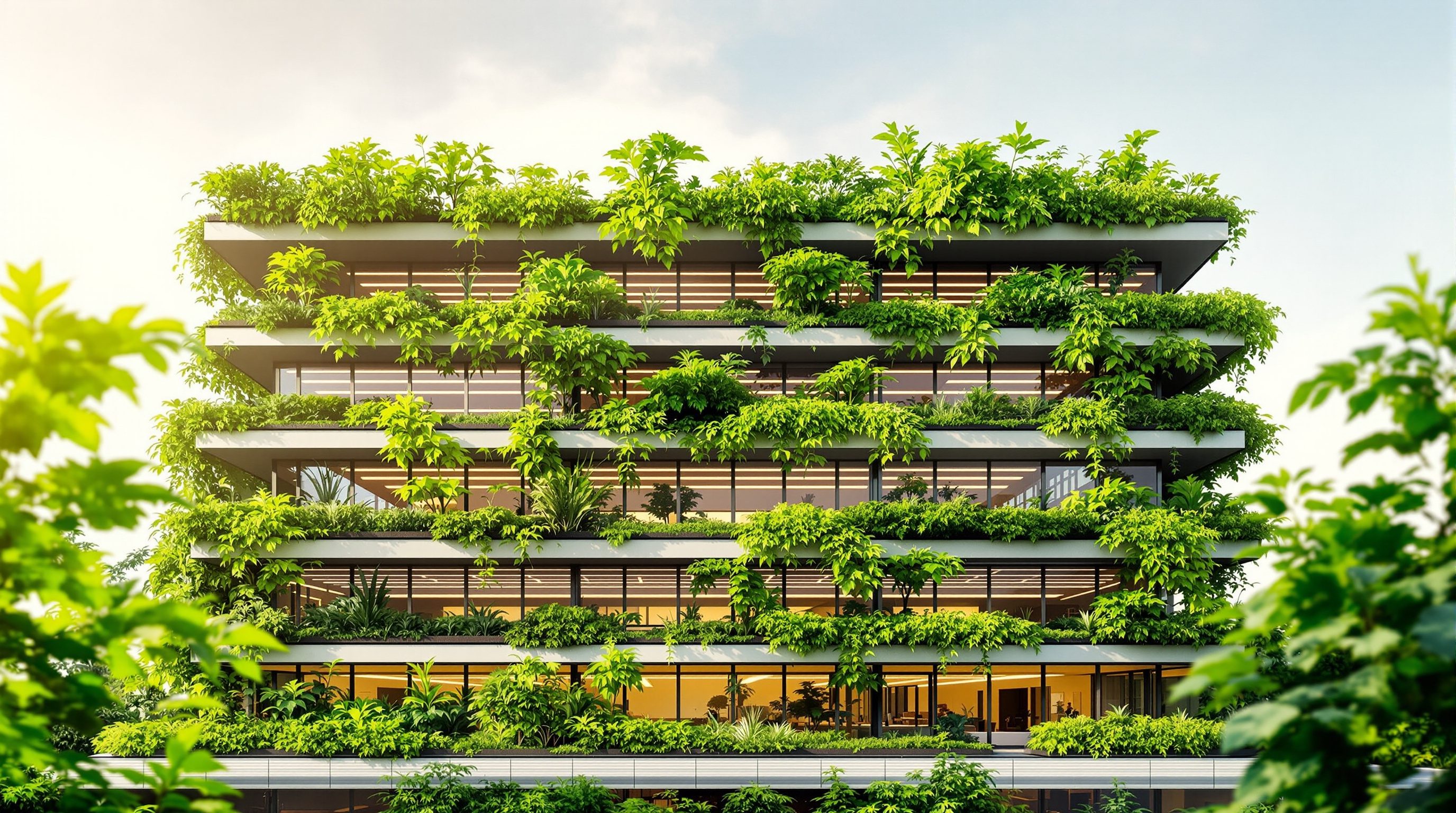
The same technology that grows boutique salad leaves for a five-star kitchen could, in another form, help a low-income neighbourhood grow its own vegetables - so the honest question is not only whether building agriculture works, but who it is for, and whether greening a place quietly prices out the very people it was meant to serve
Who is the food actually for? A wall of lettuce can serve a five-star kitchen or a struggling neighbourhood - and the difference is everything.
Two projects can look almost identical - the same greens, the same growing system, the same green credentials - and mean completely opposite things depending on one question the marketing rarely asks: who is this for? A high-tech indoor farm supplying rare micro-herbs to expensive restaurants and premium supermarkets is growing food, and calling itself local and sustainable, while doing nothing whatever for the people in the city who actually struggle to afford or reach fresh vegetables. A community rooftop or terrace where a low-income neighbourhood grows its own vegetables is also growing food - and doing something quite different, and arguably far more important.
This lesson faces the justice dimension of building agriculture honestly, because sustainability and equity are not the same thing, and a project can be green while being socially hollow or even harmful. We will ask who building agriculture actually serves - premium greens for the wealthy, or food access for those who need it; we will name the uncomfortable risk of green-gentrification, where greening a neighbourhood raises its rents and displaces the very people it was meant to help; and we will point to the more equitable role of simple, low-cost community and rooftop growing, which in a country like India - with its deep tradition of terrace and kitchen gardening and its real food-security concerns - is where much of the genuine promise lies. Growing food in buildings can serve justice or ignore it. Which one is a design choice.
Ask WHO is it for? Premium (boutique greens -> wealthy; not food access) vs access (community/terrace/rooftop -> people who need it). Green branding hides it. Beware green-gentrification: greening raises rents, displaces residents. Most equitable = affordable + accessible + sun-powered + community. India: sunlight + terrace tradition + food-access needs = clear, hopeful path.
Who does building agriculture serve?
The first honest question about any building-agriculture project is not whether it works, but who it is for - and the answers span a wide and revealing range. The same broad technology can sit at opposite ends of a justice spectrum.
At one end is the premium end. Much of the highest-profile, best-funded building agriculture, especially high-tech indoor vertical farming, grows high-value crops - rare salad leaves, micro-herbs, specialty greens - for a premium market: expensive restaurants, upmarket supermarkets, wealthy consumers who will pay for local, pesticide-free, novel produce. This is a legitimate business, and it is often how the difficult economics of indoor farming are made to work at all, because only a premium price covers the energy cost. But it is important to see it clearly: this kind of building agriculture does little or nothing for food access or food security for the people who actually struggle. It supplies garnish to those who can already afford anything; its 'local food' benefits the well-off; and dressing it in the language of feeding cities sustainably obscures who it really serves.
At the other end is the access end. Community gardens, shared rooftops, terrace and kitchen gardens, school plots and neighbourhood growing can put fresh vegetables directly into the hands of people who need them - improving diets, stretching food budgets, building skills, and giving agency over food to communities that usually have little. This kind of building agriculture serves food access and equity directly, and its value (as the earlier lessons showed) is largely social and human.
The point is not that the premium end is illegitimate and the access end virtuous - both exist, both have a place - but that who a project serves is a real and often-hidden variable that green and local branding tends to erase. A wall of lettuce tells you nothing about justice. You have to ask who eats the food, who can reach and afford it, who owns and runs the space, and who benefits. And once you ask, you often find that the most celebrated, capital-intensive projects serve the fewest and wealthiest, while the humblest community growing serves the many who need it most. Facing that honestly is the start of the equity dimension - and it should shape which projects a designer champions and how they are designed.
Same tech, two ends: PREMIUM (boutique greens -> rich restaurants/consumers; little to do with food access) vs ACCESS (community/rooftop/terrace/school -> fresh veg to people who need it). Green branding hides WHO it serves. Ask: who eats it?
Green-gentrification: when helping harms
There is an uncomfortable, well-documented risk that must be named: green-gentrification, the process by which adding green amenities to a neighbourhood - including community gardens, green roofs and urban farms - makes it more desirable, raises rents and property prices, and ends up displacing the lower-income residents it was often meant to serve. It is one of the sharpest paradoxes in urban design, and building agriculture is fully exposed to it.
The mechanism is simple and cruel. A neglected, lower-income area gets greened - a community garden here, a green roof there, an urban farm as a flagship. The area becomes more pleasant, more fashionable, more attractive to wealthier residents and developers. Demand rises, so rents and prices rise. The original residents - the ones for whom the greening was supposedly done - can no longer afford to stay, and are displaced by exactly the improvement meant to help them. The garden remains; the community it was for is gone, replaced by people who could have afforded fresh vegetables anywhere. The greening 'succeeded' and the equity goal failed.
This is not an argument against greening or against building agriculture - green space and local food are genuine goods, and the answer is never to keep poor neighbourhoods grey and food-poor. It is an argument for designing and delivering greening with equity built in, so the benefits reach the existing community rather than pricing them out. That means things largely beyond the designer's sole control - secure tenure, affordable housing protections, community ownership of the land and the project, involvement of existing residents in creating and running it, and policy that captures rising value for the community rather than for developers - but which the designer must understand, advocate for, and design to support rather than undermine.
For building agriculture specifically, the equity-protective forms tend to be the community-owned, resident-run, low-cost ones - a garden the neighbourhood makes and controls is far less an instrument of displacement than a developer's flagship green amenity marketed to attract the wealthy. The honest designer holds two truths together: greening and local food are good, and greening done carelessly can harm the very people it claims to help. Naming green-gentrification, and designing against it, is part of taking the equity dimension seriously rather than hiding behind the assumption that anything green must be good for everyone.
The more equitable path
If the premium end serves the few and greening can displace the many, where does building agriculture serve justice best? The honest answer points, once again, toward the simple, low-cost, sun-powered, community and rooftop forms - the humble end of the spectrum, which turns out to be the most equitable end.
Consider what makes building agriculture genuinely serve food access and equity. It should be affordable to create and run, so it does not depend on premium prices or wealthy backers - which favours low-tech sun-powered growing over capital- and energy-intensive indoor farms. It should be accessible to the people who need it, physically and socially - community gardens on public or shared land, terrace and kitchen gardens on ordinary homes, school and neighbourhood plots. It should build agency and skills, so communities gain control over part of their own food rather than depending on a business that serves them at a price. And it should be rooted in what people already know and do, so it spreads and endures rather than being an imported novelty.
By every one of these tests, the simplest forms win. A terrace kitchen garden costs little, uses free sunlight, feeds the household, needs no premium market, and builds real food skills. A community rooftop on social housing, owned and run by residents, puts fresh vegetables and agency directly into the hands of people who need them. School gardens teach food to the next generation regardless of income. These are not the glamorous, investable, headline-grabbing forms of building agriculture - but they are the ones that most reliably serve equity, food access and the many rather than the few.
This reframes the whole course's sun-powered preference once more, now through justice. Sun-powered community growing is not only cheaper, more sustainable and more socially rich than energy-hungry indoor farming - it is also more equitable, because its low cost and accessibility let it reach people that premium indoor farming never will. The most justice-serving building agriculture is usually the least technologically impressive. A designer who takes equity seriously will therefore often champion the modest rooftop, the community terrace and the school garden over the flagship indoor farm - not because technology is bad, but because the humble forms put fresh food, skills and agency where they are most needed, at a cost that keeps them within reach.
Most equitable = affordable + accessible + builds agency + rooted. Simplest sun-powered forms win: terrace/kitchen garden, community rooftop on social housing, school plots. Reach the many, not the few. Justice + sustainability + social all point the same way: sun-powered, community, humble.
Designing for justice, and India
Pulling the equity dimension together: growing food in buildings can serve justice or ignore it, and which it does is partly a design choice the designer must make consciously and honestly.
Designing for justice means asking the equity questions from the start and letting the answers shape the project. Who is this for? If a project's food serves only a premium market, be honest that it is a business, not a contribution to food access, and do not dress it in the language of feeding the city. Could this displace the people it claims to help? If greening a lower-income area, understand green-gentrification and design and advocate for the protections - community ownership, secure tenure, resident involvement - that let the existing community keep the benefit. Does this build agency, or dependence? Prefer forms that give people control over their own food and skills. Is it accessible and affordable to those who need it? Prefer the low-cost, sun-powered, community forms that reach the many. These questions do not have tidy answers, and much lies beyond the designer's sole power - in policy, tenure and ownership - but a designer who ignores them builds injustice by default, while one who faces them can tilt projects toward equity.
India makes the equity case especially clear and especially hopeful. India has real food-security and food-access concerns, deep inequality, and vast numbers of people for whom affordable fresh food genuinely matters - but it also has abundant free sunlight, a living, everyday tradition of terrace, courtyard and kitchen gardening across incomes, and huge areas of ordinary rooftop. This is a near-perfect fit for equitable, sun-powered building agriculture: low-cost terrace and rooftop growing that ordinary households and communities can actually do, that fits the climate and culture, and that improves food access and diets without depending on wealth or displacing anyone. By contrast, energy-hungry premium indoor farming - costly, serving the wealthy, high-carbon on India's grid - is close to the opposite of what equity in the Indian context needs. So the equitable path in India is clear: champion and design for the humble, sun-powered, community and household forms rooted in a living tradition, and treat premium indoor farming for what it is. As ever, the binding structural, water, drainage and food-safety design of any real growing system stays with qualified engineers, food-safety specialists and the codes (the National Building Code of India, the relevant IS standards, and food-safety regulation); the equity vision, and the honest question of who the food is for, are yours to own.
Who is it for?
The hidden equity variable
Green and local branding erases who a project actually serves. Premium indoor farming serves the wealthy few and does little for food access; community and household growing serves the many who need it. Always ask who eats, affords, reaches, owns. Module 7.4.
Green-gentrification
When greening displaces
Adding green amenities can raise rents and displace the lower-income residents it was meant to serve. Design equity in - community ownership, secure tenure, resident involvement - rather than assuming greening helps everyone. Module 7.4.
The equitable forms
What serves justice best
Affordable, accessible, sun-powered, community-owned and household growing (terrace and kitchen gardens, community rooftops, school plots) reach the many at low cost. Justice, sustainability and social value all favour the humble forms. Module 7.4.
Binding engineering deferred
Loads, water, safety
Structural loads, waterproofing, water, drainage and food safety of any real growing system belong to qualified engineers and food-safety specialists and the codes (NBC India, IS, food-safety regulation). Modules 5, 6.4.
Workshop -- ask who the food is for
Equity is a question green branding hides. In this workshop you will take building-agriculture projects and interrogate who they actually serve, test them against green-gentrification, and judge which serve justice best.
Just two projects you can picture and a notebook. No data to compute - the equity questions are qualitative and much lies in policy and tenure beyond the designer; this workshop builds the habit of asking who the food is for, and the binding engineering always stays with qualified specialists and the codes.
Goal: practise the equity questions and design toward justice
Inputs: two contrasting building-agriculture projects (a premium indoor farm and a community garden, real or imagined) + this lesson + a notebook
Time: ~45 minutes
- 1Ask who it is for: for each project, write down who actually eats the food, who can afford and reach it, and who owns and runs the space - and notice how green branding obscured this.
- 2Score food access: judge honestly which project genuinely improves food access and security for people who need it, and which mainly serves a premium market.
- 3Test for green-gentrification: for any project greening a lower-income area, ask whether it could raise rents and displace existing residents, and what would have to be true (ownership, tenure, involvement) to prevent that.
- 4Rank by equity: rank the projects, and the broader forms (premium indoor, commercial rooftop, community garden, terrace and kitchen garden), from least to most equitable, and note the pattern.
- 5Write a one-paragraph reflection: which forms you would champion for justice, how you would build equity into a greening project, the Indian context, and one binding matter (loads, water, safety) for a specialist - flagged as reasoning.
You’ll walk away with
A one-page equity read: two projects interrogated for who they serve, scored on food access, tested against green-gentrification, ranked by equity, with a clear stance on which forms serve justice and how to build equity in.
Three altitudes on the same idea
Read the band that fits you — or all three.
Ask who the food is actually for, and design so building agriculture serves justice rather than ignoring or harming it. The same technology can grow premium greens for wealthy restaurants (a legitimate business, but not food access, and it should not be dressed as feeding the city) or put fresh vegetables and agency into the hands of communities who need them. Name and design against green-gentrification: greening a lower-income area can raise rents and displace the very residents it was meant to help, so advocate for community ownership, secure tenure and resident involvement that keep the benefit with the existing community. The most equitable forms are the affordable, accessible, sun-powered, community-owned ones - modest rooftops, community terraces, school gardens - which reach the many rather than the few, so champion them over flagship indoor farms. In India especially, low-cost sun-powered household and community growing fits a living tradition and real food-access needs. Keep the binding loads, water, drainage and food-safety design with qualified engineers and the codes (NBC India, IS); own the equity vision and the question of who the food is for.
Even at interior scale, ask who benefits and keep growing accessible and honest rather than a luxury badge. Edible planting and herb walls in premium hospitality or corporate interiors are lovely, but be clear they serve those spaces and their users, not food access - do not let a boutique herb wall pose as a contribution to feeding the city. Where you can, design interior and small-scale growing that is genuinely accessible and educational: growing in schools, community spaces, workplaces and homes across incomes, using daylight and low-cost systems so it is not the preserve of the wealthy. Prefer simple, affordable, sun-assisted growing that ordinary people can maintain and learn from over costly high-tech installations that read as luxury. Understand that the most equitable and rooted forms - especially in India, with its living terrace and kitchen-garden tradition - are the humble, sunlit, low-cost ones. Coordinate binding water, drainage, weight, electrical and food-safety with the specialists and the codes; your domain is growing that connects people to food honestly and inclusively, not as a status symbol.
Learn to ask the equity question - who is this for? - because green and local branding hides it, and justice is not the same as sustainability. The same building-agriculture technology sits at opposite ends of a justice spectrum: PREMIUM (high-tech indoor farms growing boutique greens for wealthy restaurants and consumers - a business that does little for food access) and ACCESS (community, rooftop, terrace, school and kitchen gardens that put fresh vegetables and agency into the hands of people who need them). Name the risk of green-gentrification: greening a poor neighbourhood can raise rents and displace the very residents it was meant to serve, so equity must be built in through community ownership, secure tenure and resident involvement. The most equitable path is the simple, low-cost, sun-powered, community and household forms, which reach the many, not the few - and in India, with abundant sunlight, a living terrace-garden tradition and real food-access needs, that path is especially clear and hopeful. You are expected to see who building agriculture serves, and to favour the forms that serve justice.
“Any urban farming or greening project helps everyone - it brings fresh local food and green space to a neighbourhood, so it is automatically good for the community, especially poorer ones.”
Do it yourself
No tools needed -- reason it through.
- 1Explain why 'who is this for?' is the first honest question about a building-agriculture project.
- 2Contrast the premium end and the access end of building agriculture, with an example of each.
- 3Describe green-gentrification and how a project meant to help a neighbourhood can end up displacing it.
- 4Why are the simple, sun-powered, community and household forms usually the most equitable?
- 5Why is the equitable path especially clear and hopeful in the Indian context?
The one line to carry out
Peer-reviewed journals & authoritative standards
- 01Food security — Wikipedia -- Food security, 2026.
- 02Urban agriculture — Wikipedia -- Urban agriculture, 2026.
- 03Community gardening — Wikipedia -- Community gardening, 2026.
- 04Agriculture in India — Wikipedia -- Agriculture in India, 2026.
- 05Local food — Wikipedia -- Local food, 2026.
That completes the bigger picture - food systems, community, sustainability and equity, all pointing toward honest, sun-powered, people-serving growing. Next the course turns practical: taking a building-agriculture idea from concept to a working, running farm.
The author
Amogh N P
Architect, interior designer, and creative polymath. Studio Matrx began in his notebooks — his vision of design made honest, useful, and open to everyone. Its Academy is written and taught in his memory, and free, forever.
More about Amogh →