
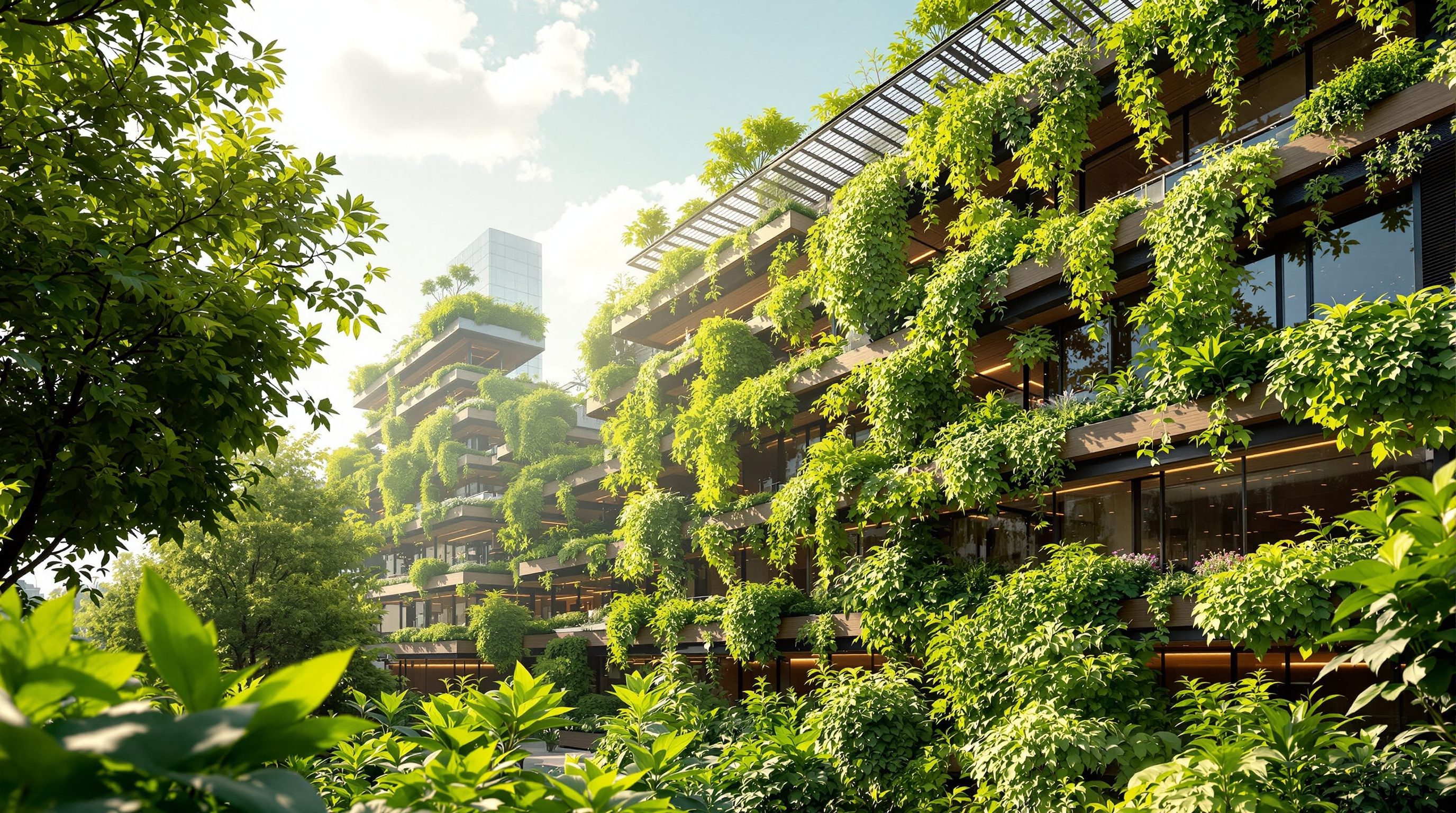
 Lesson 7.2
Lesson 7.2 · The Bigger Picture
Community & Social Food
Weigh a community garden only by its harvest and you will conclude it is not worth the effort - but the food is often the least of it; the real yield is people knowing each other, children learning where a tomato comes from, older hands staying busy, and a neighbourhood becoming a little more of a neighbourhood
Measured in kilograms of vegetables, a community garden barely registers. Measured in what it does to a neighbourhood, it can be transformative.
There is a way of looking at a community garden or a shared rooftop that makes it seem faintly ridiculous. Add up the vegetables it produces, divide by the hours of volunteer labour and the cost of the beds, water and soil, and the numbers look terrible - you could buy the same produce for a fraction of the effort. On calories and cost alone, most community growing is a poor deal. And yet these places persist, spread and are fought for by the people who use them, all over the world and all over India. Why?
Because the food is often the least of it. The real yield of growing food together is social and human: neighbours who were strangers now know each other; children discover, with genuine astonishment, that food grows from soil and effort; older people find purpose and company; stressed city-dwellers get their hands in the earth and their minds somewhere calmer; a patch of dead roof or waste ground becomes a green, living, shared place. This lesson takes that social value seriously - not as a soft add-on to the food story, but as, very often, the strongest case for building agriculture there is. When you design or advocate for growing in buildings, the argument that most often wins, and most often should, is not 'look how much food' but 'look what it does for people'.
Community garden: weigh by harvest = looks pointless. Weigh by PEOPLE = connection + wellbeing/biophilia + education + local economy = huge. Social case is usually the strongest case. Design for people, not just plants.
The value that is not in the harvest
Start by separating two kinds of value that building agriculture produces, because confusing them is the root of a lot of muddled thinking. There is calorie and cash value - the food itself, weighed and priced - and there is social and human value - everything growing food does for the people who grow it and the place around them. For large commercial farming the first dominates; that is the whole point. But for the community gardens, shared rooftops, school plots, allotments and terrace gardens that make up much of urban building agriculture, the second dominates, often by a wide margin.
This is not a consolation prize or a way of excusing low yields. It is a straightforward observation about where the value actually sits. A community rooftop garden might produce a few hundred kilograms of vegetables a year - modest, easily bought elsewhere - while giving dozens of families a place to meet, teaching children where food comes from, offering older residents purpose and exercise, improving mental health, greening and cooling a dead roof, and knitting a fragmented neighbourhood together. If you priced those effects - the healthcare not needed, the isolation prevented, the education delivered, the cohesion built - they would dwarf the value of the vegetables many times over. The harvest is real, and lovely, and often almost beside the point.
Recognising this changes how you argue for a project and how you design it. If you justify a community garden purely on food output, you invite exactly the demolishing arithmetic in this lesson's hook, and you will usually lose - because on food alone, it does not pay. If instead you make the social case honestly and centrally, you are arguing on the ground where these projects genuinely win. And if you *design* for the social value - for gathering, teaching, access, shared ownership, beauty - as much as for the growing, you get far more of what actually matters out of the same roof. The rest of this lesson unpacks that social harvest: connection, wellbeing and biophilia, education, and local economy. Keep the frame in mind throughout: for much building agriculture, the food is the medium, and people are the message.
Two kinds of value: calorie/cash (small for community growing) vs social/human (large). Community garden: few hundred kg of veg BUT connection + wellbeing + education + cohesion. Food is the medium; people are the point.
Growing together builds community
The oldest and clearest social benefit of shared growing is exactly what the name says: community. A community garden or shared rooftop is one of the very few places in a modern city where people of different ages, backgrounds and incomes meet regularly around a shared, unhurried, cooperative activity. You do not need to be introduced; you are both there, doing the same thing, and conversation follows from the work. Over a season, strangers become acquaintances and acquaintances become a network that reaches beyond the garden.
This matters more than it sounds, because social isolation is one of the quiet epidemics of urban life, with real consequences for health and happiness, and it is worst for exactly the groups a garden serves well: older people, newcomers to a city, people at home with young children, those without workplaces. Allotments and community plots have for more than a century given city-dwellers a patch of their own and a community around it. A shared rooftop in a dense apartment block can do the same today - turning a building full of people who nod in the lift into a building where people actually know each other.
There is a specific richness in intergenerational contact: children and grandparents, experienced growers and beginners, long-time residents and new arrivals, all with something to teach and learn. And there is ownership and agency - a community garden is a place people make and run themselves, which builds the skills, confidence and civic muscles of doing something together. In India, where courtyard, terrace and neighbourhood growing has deep roots, a shared building garden is not a foreign import but a modern form of a familiar social space.
Designing for this means designing for people, not just plants: somewhere to sit and gather, shade and water for humans as well as crops, a layout that invites lingering and conversation, clear shared ownership and simple rules, and access that includes rather than excludes. A row of efficient growing troughs with nowhere to stand and talk grows vegetables; a garden with a shaded table in the middle grows a community. The binding matters - loads, waterproofing, drainage, access and safety - still belong to the engineers and the codes; but the social design is yours, and it is where much of the value is won or lost.
Wellbeing, biophilia and learning
Alongside connection sit two more of the social harvest's richest strands: what growing does for the individual mind and body, and what it teaches.
The wellbeing case is strong and increasingly well evidenced. Contact with plants, soil, green and growing things - what biophilic design calls our innate affinity for nature - is measurably good for people: it reduces stress, lifts mood, encourages gentle physical activity, and gives a sense of purpose and rhythm through the seasons. For city-dwellers cut off from nature, a green rooftop or a plot to tend is a small but real antidote. Gardening is used therapeutically for exactly these reasons, and the simple daily acts of watering, weeding and watching things grow have a calming, grounding quality that a screen never will. A productive green space on a building is not only prettier and cooler than a bare roof; it is better for the people who use and even just see it.
The educational value is just as important, especially for children. Most urban children have little idea where food comes from - that a tomato grows on a plant, that it takes weeks and water and care, that food is not simply a thing that appears in a shop. A school garden or a community plot teaches that directly and unforgettably: children who grow a vegetable understand food, seasons, effort, patience and waste in a way no lesson can match, and they eat vegetables more readily when they have grown them. Adults learn too - growing skills, cooking, nutrition, ecology - and a garden becomes a place of quiet, practical education embedded in daily life.
There is also a broader reconnection to food at stake. The disconnection between people and their food that opened this whole course is not only physical (distance) but cultural (understanding, value, respect), and hands-on growing repairs the cultural side directly. Someone who has grown food treats food, farmers and land differently.
For the interior designer especially, this is fertile ground: a herb wall in a kitchen, edible planting in a workplace or cafe, a small growing system in a school - modest in yield, but rich in wellbeing, biophilia and daily learning, bringing a living connection to food into everyday interior space. The value is not the basil; it is what tending the basil does for the people in the room.
Individual + learning harvest: biophilia -> less stress, better mood; hands in soil = wellbeing; kids grow a tomato = understand food, seasons, effort. Value is what tending it does for people, not the yield.
Local economy and the strongest case
The social harvest has an economic strand too, and then a conclusion that ties the whole lesson together.
The local economy benefits are real if usually modest. Community and commercial urban growing can create local work and skills - growers, educators, market sellers - often for people who benefit most from accessible, meaningful jobs. It can support local food enterprises: a rooftop farm supplying a restaurant below, a garden feeding a market stall, a training programme that builds employable skills. It keeps some food spending circulating locally rather than flowing straight out to distant suppliers. And it can regenerate neglected space - a derelict roof or vacant lot becoming a productive, cared-for, value-adding place. None of this is transformative at city scale, but at neighbourhood scale it is genuine, and it compounds with the connection, wellbeing and education already described.
Now the conclusion this whole lesson has been building toward: for much of building agriculture, the social case is not a supporting argument - it is the strongest case, and often the decisive one. On food and cost alone, most community and small-scale growing does not pay, and if you argue for it only on those terms you will lose. But weigh in the wellbeing, the education, the connection, the biophilia, the local economy and the regenerated space, and the same project is often clearly worthwhile - sometimes overwhelmingly so. The mistake designers and advocates make is to lead with the weakest argument (look how much food) instead of the strongest (look what it does for people). Lead with the social case, make it seriously and specifically, and design the project to deliver it - and building agriculture stands on solid ground.
This reframes the energy honesty of the whole course in a useful way. Much sun-powered community growing is easy to justify precisely because its value is social and its energy cost is near zero - the sun does the growing, and the people get the benefit. Energy-hungry indoor farming, by contrast, rarely delivers this social harvest (it is usually a closed industrial box, not a shared green place) while carrying a heavy energy cost - which is another reason the sun-powered, community-facing forms so often win. As always, keep the binding loads, water, drainage and food-safety design with the specialists and the codes; but own the social vision, because it is where building agriculture most often earns its place.
Social value over yield
How to value community growing
For most community and small-scale growing the social and human value (connection, wellbeing, education, economy) far exceeds the calorie and cash value. Argue and design on that ground. Module 7.2.
Design for people, not just plants
What makes the social harvest
Gathering space, shade and water for humans, inclusive access, shared ownership and beauty turn a growing space into a community space. The social design is the designer's to own. Module 7.2.
Biophilia and wellbeing
Contact with growing things
Contact with plants and soil measurably reduces stress and supports wellbeing; growing spaces deliver biophilic value beyond any harvest. Module 7.2; biophilic design principles.
Binding engineering deferred
Loads, water, safety, access
Structural loads, waterproofing, drainage, safe access and food safety of any real growing space belong to qualified engineers and food-safety specialists and the codes (NBC India, IS). Modules 5, 6.4.
Workshop -- value a garden by its social harvest
The strongest case for much building agriculture is social, and it is easy to overlook. In this workshop you will take a shared growing space and value it properly - by what it does for people, not only by what it grows.
Just a growing space you can picture and a notebook. No yields to calculate - the point is to practise valuing and designing for the social harvest; the binding loads, water, access and food-safety design always stays with qualified engineers and specialists.
Goal: practise making and designing for the social case
Inputs: a real or imagined shared rooftop or community garden + this lesson + a notebook
Time: ~40 minutes
- 1Estimate the harvest: roughly guess the food such a space might produce in a year, and note honestly that on food and cost alone it looks like a poor deal.
- 2List the social harvest: write down every non-food benefit it could deliver - connection, reduced isolation, wellbeing, biophilia, children learning about food, skills, local jobs, regenerated space, cooling and greening.
- 3Weigh the two: judge honestly which column carries the real value for this space - almost always the social one - and write the one-sentence case you would actually use to advocate for it.
- 4Design for people: sketch three changes that would increase the SOCIAL value - a shaded gathering table, an inclusive path, a teaching corner, shared plots - not just the growing area.
- 5Write a one-paragraph reflection: the strongest honest case for this space, the social features you would prioritise, and one binding matter (loads, water, access, safety) you would ask a specialist to confirm - flagged as reasoning.
You’ll walk away with
A one-page social-harvest read: a shared growing space valued by its human benefits rather than its yield, a one-sentence advocacy case, three people-first design moves, and the binding matters flagged for specialists.
Three altitudes on the same idea
Read the band that fits you — or all three.
Justify and design community and shared growing on its strongest ground - the social harvest - not on food output, where it rarely pays. A shared rooftop or community garden delivers connection, wellbeing, education, biophilia, local economy and regenerated space whose combined value usually dwarfs the vegetables. So make the social case centrally and specifically when you advocate, and design for it: places to gather and sit, shade and water for people, a layout that invites lingering, clear shared ownership, inclusive access, beauty as well as productivity. A garden with a shaded table in the middle grows a community; a row of efficient troughs just grows vegetables. Note too that sun-powered community growing is easy to justify because its value is social and its energy cost near zero, while closed industrial indoor farms rarely deliver this social harvest at all. Keep the binding loads, waterproofing, drainage, access and food-safety design with qualified engineers and the codes (NBC India, IS); own the social design, where the real value is won.
Interiors are where the social and wellbeing harvest of growing meets people most intimately - and it is often the whole point. A herb wall in a kitchen, edible planting in a cafe or workplace, a small growing system in a school: measured in yield they are trivial, but measured in biophilia, wellbeing, daily learning and connection to food they can be genuinely valuable, bringing a living, tended, seasonal presence into everyday rooms. Design them for the human experience - reachable, visible, pleasant to tend, woven into how the space is used (the kitchen that harvests the herbs, the staff who share the care) - because the value is what tending the plants does for the people, not the basil itself. Understand that light, fast, fresh crops (herbs, salad, microgreens) suit interior growing, and that serious quantities are the energy-hungry specialist territory the course is honest about. Coordinate water, drainage, weight, electrical and food-safety with the specialists and the codes; your domain is the living, connected, wellbeing-rich interior.
Learn to make the social case for building agriculture, because it is usually the strongest case and the one most people miss. Weigh a community garden by its harvest and it looks inefficient; weigh it by what it does for people and it can be transformative. The social harvest has clear strands: CONNECTION and belonging (a rare place where a mixed neighbourhood meets around shared work, countering isolation); WELLBEING and biophilia (contact with plants and soil reduces stress and lifts mood); EDUCATION (children and adults learning where food comes from, eating vegetables they grew); and LOCAL ECONOMY (jobs, skills, enterprises, regenerated space). For much community and small-scale growing the food does not pay on its own, but the social value clearly justifies it - so lead with people, not kilograms. Note that sun-powered community growing is easy to justify because the value is social and the energy cost near zero. You are not expected to run a garden; you are expected to understand why the human case is so often the decisive one, and to argue and design for it.
“Community gardens and small urban growing are a nice hobby but basically pointless - you get a tiny amount of food for a huge amount of effort and money, so they cannot be justified seriously.”
Do it yourself
No tools needed -- reason it through.
- 1Explain why a community garden that looks like a poor deal on food can still be clearly worthwhile.
- 2Name four strands of the social harvest of growing food together, with a concrete example of each.
- 3Why is social isolation a problem that shared growing is especially well placed to address?
- 4What is biophilia, and how does a growing space deliver wellbeing beyond its harvest?
- 5Why should you lead with the social case, not food output, when advocating for community growing?
The one line to carry out
Peer-reviewed journals & authoritative standards
- 01Community gardening — Wikipedia -- Community gardening, 2026.
- 02Allotment (gardening) — Wikipedia -- Allotment (gardening), 2026.
- 03Biophilic design — Wikipedia -- Biophilic design, 2026.
- 04Urban agriculture — Wikipedia -- Urban agriculture, 2026.
- 05Terrace garden — Wikipedia -- Terrace garden, 2026.
The social case for sun-powered community growing is strong and its energy cost near zero - which raises the question the whole field is most often dishonest about: is building agriculture actually sustainable? Next we weigh that without illusion.
The author
Amogh N P
Architect, interior designer, and creative polymath. Studio Matrx began in his notebooks — his vision of design made honest, useful, and open to everyone. Its Academy is written and taught in his memory, and free, forever.
More about Amogh →