
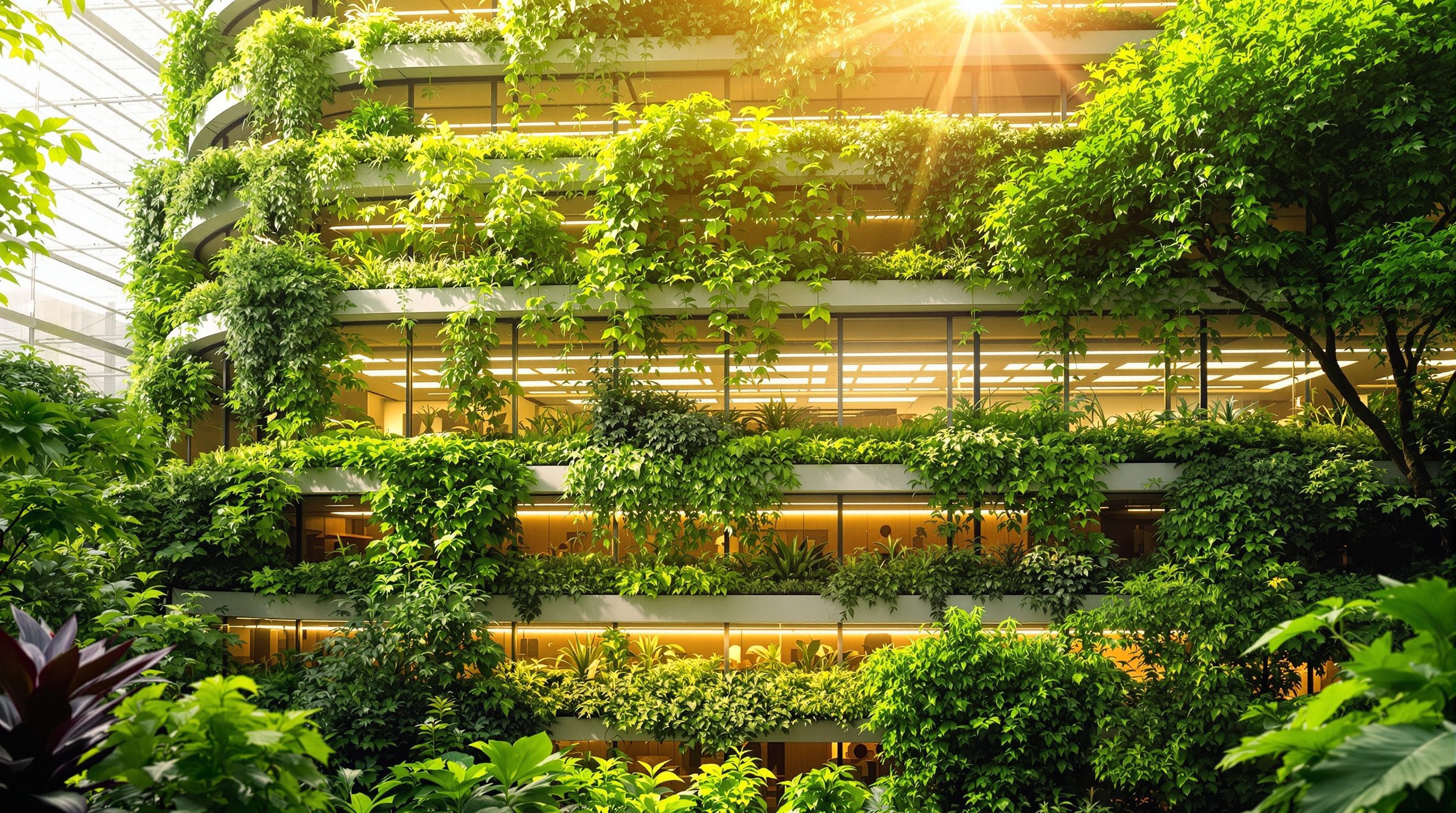
 Lesson 10.4
Lesson 10.4 · Practice & the Future
Becoming a Food-Literate Designer
The synthesis of the whole course - the enduring mindset a food-literate designer carries for life: see the sun-to-lit spectrum in every idea, face the energy elephant first, strongly prefer sun-powered growing, remember that indoor farming grows garnish not dinner and only for narrow cases, never forget that growing systems are heavy and food safety is real, keep learning by growing and by deferring to specialists, and answer the closing charge to bring food-growing into buildings where it genuinely delivers
You will not leave this course a farmer, an engineer or a horticulturist. You will leave it food-literate - and that is exactly what a designer should be.
Across ten modules this course has moved from the first hopeful idea - the building that grows its own food - through the methods, the systems, the economics, the honesty and the Indian context, and it ends where every good education ends: not with a pile of facts but with a mindset, an enduring way of seeing that will outlast every specific figure and technology.
That mindset is what it means to be a food-literate designer. Not an expert grower, not a structural engineer, not a food-safety officer - but a designer who understands, clearly and honestly, how buildings can grow food, where it genuinely makes sense and where it does not, and who can therefore bring food-growing into buildings where it truly delivers and resist it where it would fail. This final lesson gathers the whole course into that enduring mindset, shows how to keep learning once the course is over, and closes with a charge.
FOOD-LITERATE MINDSET: 1) see the sun-to-lit spectrum 2) face the energy elephant FIRST 3) prefer sun-powered 4) indoor = garnish not dinner, narrow cases 5) systems are HEAVY + food safety is REAL -> defer to specialists. Keep learning: GROW something. Charge: hope + honesty together.
The enduring mindset - the spectrum and the energy elephant first
If you forget every specific number in this course - every illustrative yield, every crop, every system name - and keep only the mindset, you will have kept the important part, because the mindset is what lets you judge any building-agriculture idea you will ever meet, including ones invented after this course was written. Two ideas sit at its heart, and they are the two the course has returned to from the very first page.
The first is the sun-to-lit spectrum. Every way of growing food in a building sits somewhere on a line from sun-powered - rooftop farms, edible facades, greenhouses, where the free sun does the light-energy work - to fully-lit indoor farming, where electricity supplies all the light. A food-literate designer sees this spectrum automatically, placing any proposal on it before anything else, because a design's position on that line predicts, more than any other single factor, its energy use, its cost, its sustainability and the crops it can grow. The glossy render, the bold claim, the exciting technology - all of it becomes legible the moment you ask where it sits on the spectrum.
The second is the energy elephant, and the discipline of facing it first. Because light is the energy that grows the plant, and because the sun supplies it free while electricity does not, the single decisive question about any growing proposal is where its light energy comes from - and a fully-indoor farm must buy all of it, plus cooling and pumping, which is enormously energy-intensive. The food-literate designer faces this question before the excitement, every time: not 'how impressive is this?' but 'where does the light energy come from, and at what cost?' That habit - see the spectrum, face the energy elephant first - is the core of the mindset. It is not anti-technology or cynical; it is simply honest, and it is the difference between a designer who can be dazzled by a wall of glowing lettuce and one who can quietly, competently tell whether it makes sense. Carry these two, and the rest of the mindset follows.
Prefer sun-powered; indoor grows garnish, not dinner
From the spectrum and the energy elephant flow the working preferences of a food-literate designer - the practical stances that turn the mindset into decisions. The first and strongest is to prefer sun-powered growing wherever it works. Because sun-powered approaches let the free sun do the expensive part, they start with an enormous advantage in cost, carbon and simplicity, and they deliver most of what makes building agriculture worthwhile - fresh local food, greener and cooler buildings, community, reconnection to food - without the crushing energy burden. So the food-literate designer reaches for the rooftop garden, the terrace, the greenhouse, the edible facade first, hard, and treats fully-indoor electric growing as the exception to be justified, never the default to be assumed.
The second stance is to remember, plainly, that indoor farming grows garnish, not dinner. Fully-indoor vertical farms can grow only high-value, fast, light, low-calorie crops - leafy greens, herbs, microgreens, some soft fruit - because those are the only crops whose price can cover the relentless electricity bill. They cannot grow the staple grains, pulses, roots and oilseeds that provide humanity's calories, because staples need vast areas of cheap sunlight that no stack of LEDs can economically supply. This single fact deflates the biggest over-promise in the field: indoor farms will never feed cities their staple food, and a designer who remembers 'garnish, not dinner' is inoculated against the hype.
The third stance is proportion, not dogma. Preferring sun-powered and remembering garnish-not-dinner does not make indoor farming worthless - for the right high-value crop, in the right context (cheap clean electricity, no land, an extreme climate, a genuine premium market), it can make real sense, and the technology is improving. The food-literate designer is neither the techno-utopian who thinks vertical farms will feed the world nor the cynic who calls it all a scam, but the clear-eyed professional who prefers sun-powered, reserves indoor for the narrow justified cases, and can tell, honestly and specifically, which is which. That balanced, honest preference - sun-powered first, indoor for the few cases it fits, garnish never mistaken for dinner - is the practical heart of food literacy.
Growing systems are heavy; food safety is real
Two more truths belong in the enduring mindset, because they are the ones a designer excited by the vision is most likely to forget, and both can turn a beautiful idea into a dangerous one. Neither is optional, and both point firmly toward the specialists.
The first is that growing systems are heavy. A growing system is not a decorative layer; it is soil or growing medium, containers, water, plants and structure, and when wet it is heavy - often far heavier than designers instinctively assume. A saturated soil-laden roof garden, a water-based hydroponic system, a green roof after rain - all impose real, substantial loads on the roof, terrace, floor or facade that carries them. This is why a structural engineer is not optional the moment a serious growing system meets a building: the structure must be confirmed, by a qualified engineer working to the codes, to carry the load safely. The food-literate designer never forgets the weight of water and soil, designs with it in mind from the start, and defers the binding structural, waterproofing and drainage results to specialists and the National Building Code of India and the relevant IS standards - because a growing system that a building cannot safely carry is not a garden, it is a hazard.
The second is that food safety is real. Building agriculture grows food that people will eat, and that carries genuine obligations that ornamental planting does not: water quality, contamination, safe growing materials, hygienic handling. Produce grown on a roof watered with the wrong water, or in contaminated medium, or handled carelessly, can make people ill. The food-literate designer treats food safety as a first-class concern, not an afterthought, and brings food-safety expertise and the governing regulation into any project that grows food for consumption, especially at any scale beyond the purely personal. Together these two realities - heavy systems, real food safety - are the sobering counterweight to the vision, and holding them is part of what separates a competent, food-literate designer from an enthusiast. The vision is genuine and worth pursuing; but it is pursued safely only by remembering the weight and the safety, and deferring the binding results to those qualified to be responsible for them.
Keep learning - and a closing charge
A course can hand you a mindset, but it cannot make you food-literate for life; only continued practice can, and the food-literate designer keeps learning in two complementary ways. The first is by growing. Nothing builds and refreshes real understanding like keeping something alive - a pot of herbs, a terrace bed, a rooftop plot - and observing, season after season, what thrives and what fails and why. A designer who grows carries a grounded realism into every building-agriculture project that no reading supplies, and it is the surest antidote to the field's glossy fantasies. Grow something, and keep growing.
The second is by deferring wisely and learning from the specialists. Because the binding results always belong to structural, services, food-safety and horticultural experts, the food-literate designer works alongside them continually - and each project is a chance to learn from them, to sharpen the judgement of when to bring them in and what they will need. Stay curious about the technology, too, which is genuinely improving; but filter every new claim through the enduring mindset - where does it sit on the spectrum, where does its light energy come from, does it grow garnish or dinner, how heavy is it, is the food safe - so that novelty never overrides honesty.
And so, the closing charge. Growing food in and on buildings is one of the most hopeful frontiers in the built environment - a genuine reconnection of architecture and food, of people and the things they eat, of buildings and life. It is also a field shadowed by hype, heavy with an energy truth that decides where it works. Your task, as a food-literate designer, is to hold both: to carry the hope and the honesty together, to bring food-growing into buildings wherever the sun does the work and it genuinely delivers - which is far more places than the cynics allow - and to resist it, kindly and clearly, wherever it would fail. Prefer where the sun does the work. Face the energy first. Defer the binding engineering to those qualified to sign it. And go and make buildings that grow food, honestly and well. That is the whole of it, and it is a fine thing to carry into practice.
See the spectrum, face energy first
The core habit
Place every proposal on the sun-to-lit spectrum, and ask first where its light energy comes from and at what cost. Position on the spectrum predicts energy, cost, sustainability and crops more than any other factor. Modules 0.1, 1.3, 9.2.
Prefer sun; garnish not dinner
The working preference
Strongly prefer sun-powered growing, which delivers most of the value without the energy burden; remember indoor farms grow high-value garnish, not staple dinner, and reserve fully-indoor growing for narrow justified cases. Modules 9.3, 10.2.
Heavy systems + real food safety - defer to specialists
The sobering realities
Wet growing systems are heavy (structural engineer, codes) and food to be eaten carries food-safety obligations (food-safety specialist, regulation). Defer these and all binding results to qualified specialists, verified data and the codes (NBC India, IS). Modules 5.1, 6.4.
Workshop - write your food-literate designer's creed
The course ends not with a calculation but with a synthesis you author yourself. In this final workshop you distil the enduring mindset into your own words - a short creed you can carry into practice and apply to any building-agriculture idea you meet.
The whole course, your workshop pages, and a notebook. No new system or calculation - this is synthesis in your own words; the binding structural, water, electrical and food-safety design always stays with qualified specialists and the codes.
Goal: your own enduring, honest mindset for building agriculture
Inputs: this lesson, the whole course, and everything you built across the workshops
Time: ~45 minutes
- 1Write the spectrum in your own words: what the sun-to-lit spectrum is, and why you will place every proposal on it first.
- 2Write your energy rule: the single question you will ask of any growing idea before the excitement, and why light energy is the decisive factor.
- 3Write your preferences: why you prefer sun-powered growing, why indoor grows garnish not dinner, and when indoor is nonetheless justified.
- 4Write your two sobering reminders: that growing systems are heavy and that food safety is real, and what each means you must defer to specialists and the codes.
- 5Write your closing line: how you will keep learning (by growing, and by working with specialists), and one sentence on the kind of food-growing buildings you want to help make.
You’ll walk away with
Your own one-page food-literate designer's creed - the spectrum, the energy rule, the sun-powered preference, the garnish-not-dinner honesty, the heavy-systems and food-safety realities, and how you will keep learning - written to carry into practice, with all binding results reserved for qualified specialists and the codes.
Three altitudes on the same idea
Read the band that fits you — or all three.
Leave this course food-literate: able to see the sun-to-lit spectrum in any proposal, to face the energy elephant first, to prefer sun-powered growing, to remember that indoor grows garnish not dinner and only for narrow cases, and never to forget that growing systems are heavy and food safety is real. That mindset lets you bring food-growing into buildings where it genuinely delivers - rooftop and terrace gardens, greenhouses, edible facades, food-growing green roofs that also cool - and resist it, kindly and clearly, where it would fail. Design with the weight of wet soil and water in mind from the start, and treat food safety as a first-class concern. Keep learning by growing something yourself and by working alongside the specialists. Defer every binding result - structural (roof and facade loads), waterproofing, water and drainage, electrical, food-safety and horticultural design - to qualified specialists, verified data and the codes (NBC India, IS, food-safety regulation). Carry the hope and the honesty together, and make buildings that grow food, well.
Food literacy at the interior scale is the same mindset in human-sized form: prefer daylight, know that a lovely herb wall is not an indoor farm, remember that even small growing systems carry weight and water, and that food to be eaten carries food-safety obligations. Bring edible, green, growing elements into kitchens, cafes and workplaces where daylight or a modest grow-light genuinely supports them, and where the client will sustain the upkeep - connecting people to food, wellbeing and biophilia at a human scale. Keep learning by growing your own herbs and observing what they need. Be the honest voice about where a delightful, achievable edible feature ends and an energy-hungry, specialist grow-room begins. Coordinate binding water, drainage, electrical, weight and food-safety matters with the specialists and the codes; own the green, edible, healthy interior, carried by the same enduring mindset - sun and daylight first, honesty always, binding results to the experts.
This is the payoff: leave the course food-literate - carrying an enduring mindset that will outlast every specific figure and technology. See the sun-to-lit spectrum in every idea; face the energy elephant first (where does the light energy come from, and at what cost?); prefer sun-powered growing, which delivers most of building agriculture's value without the crushing energy burden; remember that indoor farming grows garnish, not dinner, and cannot feed a city's staples, so it is the narrow exception, not the default; and never forget that growing systems are heavy and that food safety is real, both pointing firmly to the specialists. Keep learning by actually growing something and by working alongside engineers and growers, filtering every new claim through the mindset. You are not expected to be a farmer or an engineer; you are expected to be the clear, honest, food-literate designer who can tell where growing food in buildings genuinely makes sense. Carry the hope and the honesty together - a distinctive, hopeful thread for your whole career.
“Now that I have finished a whole course on vertical farming and building-integrated agriculture, I am basically qualified to design and specify food-growing systems in buildings - the crops, the hydroponics, the loads, the lighting, the food safety. I have learned the field.”
Do it yourself
No tools needed - reason it through, and make it your own.
- 1State the two ideas at the heart of the food-literate mindset, and why they let you judge any building-agriculture proposal.
- 2Explain 'garnish, not dinner' and how it inoculates a designer against the biggest over-promise in the field.
- 3Why are 'growing systems are heavy' and 'food safety is real' the truths an excited designer is most likely to forget?
- 4Describe the two complementary ways a food-literate designer keeps learning after the course.
- 5In your own words, give the closing charge: how should a food-literate designer hold the hope and the honesty together?
The one line to carry out
Peer-reviewed journals & authoritative standards
- 01Vertical farming — Wikipedia - Vertical farming, 2026.
- 02Controlled-environment agriculture — Wikipedia - Controlled-environment agriculture, 2026.
- 03Staple food — Wikipedia - Staple food, 2026.
- 04Sustainable agriculture — Wikipedia - Sustainable agriculture, 2026.
- 05Biophilic design — Wikipedia - Biophilic design, 2026.
This is the end of the course, and the beginning of the practice. Take the mindset - the spectrum, the energy honesty, the sun-powered preference, the deference to specialists - and go and bring food-growing into buildings where it genuinely delivers.
The author
Amogh N P
Architect, interior designer, and creative polymath. Studio Matrx began in his notebooks — his vision of design made honest, useful, and open to everyone. Its Academy is written and taught in his memory, and free, forever.
More about Amogh →