
Bio-based & Living MaterialsVolume 1 · Issue 4 · September 2026
Bio-based & Living Materials
Building with materials that are grown, farmed or alive — materials that grow (the extract-and-cook logic inverted by growing with sun and carbon), why bio-based materials matter (storing carbon, renewability, health and biophilia), timber and wood-based materials (mass timber, bamboo, cork, wood products), plant and agri-based materials (hemp/hempcrete, straw, agricultural residue, natural fibres), earth and mineral-bio materials (mud/cob/rammed earth, bio-based insulation, natural finishes), living and grown materials (mycelium, bacterial bio-cement, algae, bioplastics), living systems on buildings (green walls, green roofs, self-healing bio-materials), performance/durability/safety (structural, fire/moisture, pests/rot, health/air), sourcing/codes/economics (sustainable sourcing and land use, codes, cost and supply, carbon accounting), reality/limits/honesty (bio-washing, not-automatically-green, when bio-materials do not fit, the living-materials reality check), and practice and the future. Rigorous and honest — bio-based is NOT automatically green, and living materials are mostly early and hyped — for architects, interior designers and students. Defers structural, fire, moisture, durability, health and carbon performance to qualified engineers, verified test data/EPDs and the governing codes (NBC India, IS), treating strengths, carbon values and durability as illustrative. India-aware, honouring the rich tradition of bamboo, earth, thatch and lime and the huge agri-residue resource.
Course byAmogh N P· Architect & interior designer11 modules · 44 lessons · ~15 hrs · 44 of 44 lessons live

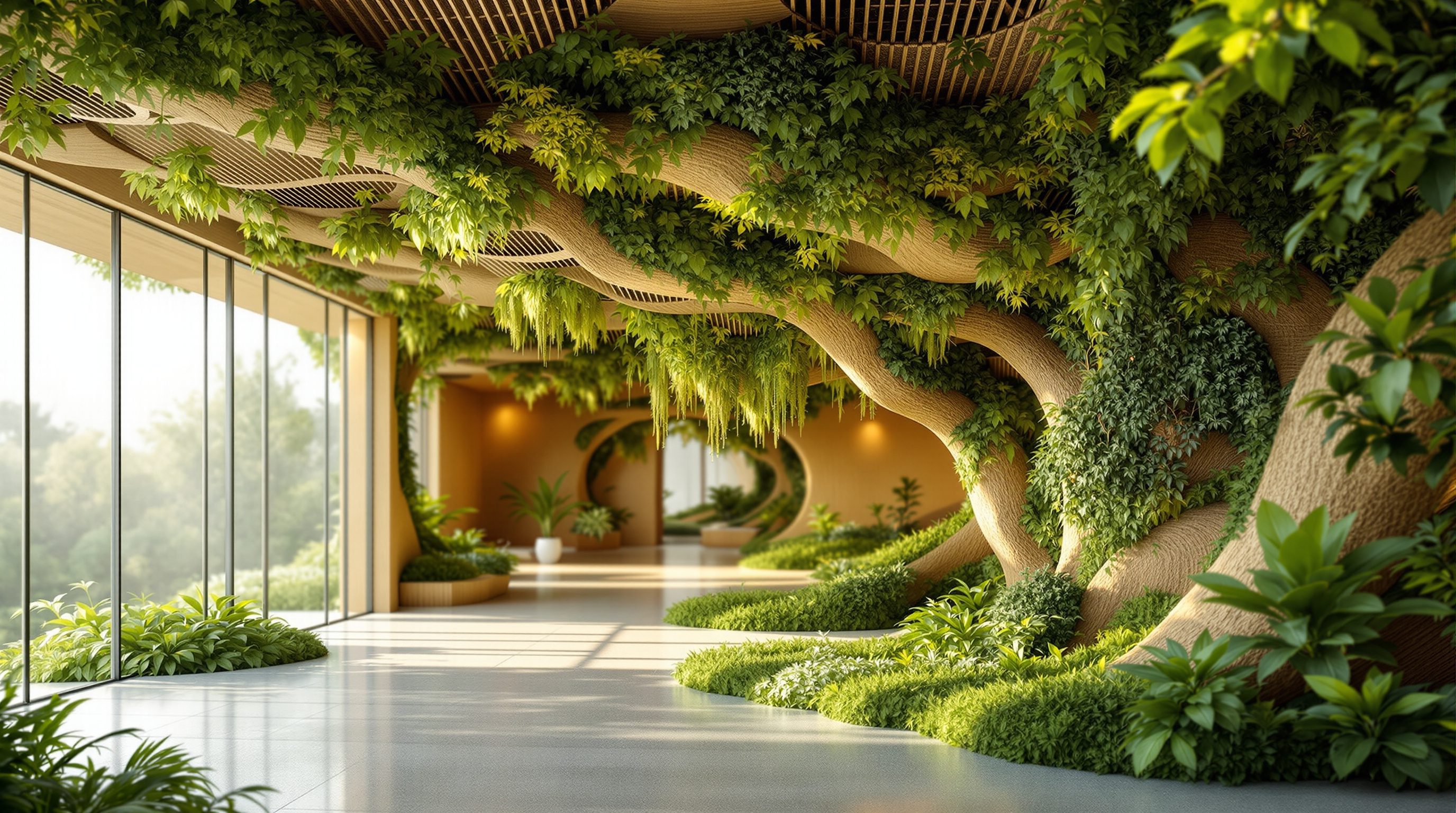 Module 0 · Materials That Grow
0.1 · Building With the Living World
Most building materials are dug up and processed with heat and carbon; bio-based materials are grown from renewable biological sources and can store carbon, and living materials are grown or even alive. This lesson frames the family, distinguishes bio-based from living, and is honest that bio-based is not automatically green.
Read itStart with Module 0 — Materials That Grow
Free · open0.1 · Building With the Living World
Open0.2 · Bio-based vs Living Materials
Open0.3 · The Bio-Materials Landscape
Open0.4 · The Promise & the Greenwash
Open0.✓ · Mastery check: Materials That Grow
OpenWhat this course covers
The through-line- 1Why Bio-based Materials Matter. The case, weighed honestly: the carbon case (storing carbon), renewability and the biological cycle, health, comfort and biophilia, and the honest caveats.
- 2Timber & Wood-based Materials. The best-known bio-materials: timber and mass timber, bamboo (the grass that builds), cork, wood-fibre and wood products, and wood in the building.
- 3Plant & Agri-based Materials. From field and farm: hemp and hempcrete, straw and straw-bale, agricultural waste and residue, and natural fibres and composites.
- 4Earth & Mineral-Bio Materials. The oldest and the blended: earth (mud, cob and rammed earth), bio-based insulation, natural finishes and paints, and combining bio and conventional materials.
The full course ahead
11 modules · 44 lessons11 modules and 44 lessons, from the foundations through to practice — each lesson with a three-tier read, a hands-on workshop, hand-drawn figures and a scored mastery check.
0Module 0 · Materials That Grow
LiveBefore any material: building with the living world; bio-based versus living materials; the bio-materials landscape; and the promise separated honestly from the greenwash.
Module 0 · Materials That Grow
LiveBefore any material: building with the living world; bio-based versus living materials; the bio-materials landscape; and the promise separated honestly from the greenwash.
1Module 1 · Why Bio-based Materials Matter
LiveThe case, weighed honestly: the carbon case (storing carbon), renewability and the biological cycle, health, comfort and biophilia, and the honest caveats.
Module 1 · Why Bio-based Materials Matter
LiveThe case, weighed honestly: the carbon case (storing carbon), renewability and the biological cycle, health, comfort and biophilia, and the honest caveats.
2Module 2 · Timber & Wood-based Materials
LiveThe best-known bio-materials: timber and mass timber, bamboo (the grass that builds), cork, wood-fibre and wood products, and wood in the building.
Module 2 · Timber & Wood-based Materials
LiveThe best-known bio-materials: timber and mass timber, bamboo (the grass that builds), cork, wood-fibre and wood products, and wood in the building.
3Module 3 · Plant & Agri-based Materials
LiveFrom field and farm: hemp and hempcrete, straw and straw-bale, agricultural waste and residue, and natural fibres and composites.
Module 3 · Plant & Agri-based Materials
LiveFrom field and farm: hemp and hempcrete, straw and straw-bale, agricultural waste and residue, and natural fibres and composites.
4Module 4 · Earth & Mineral-Bio Materials
LiveThe oldest and the blended: earth (mud, cob and rammed earth), bio-based insulation, natural finishes and paints, and combining bio and conventional materials.
Module 4 · Earth & Mineral-Bio Materials
LiveThe oldest and the blended: earth (mud, cob and rammed earth), bio-based insulation, natural finishes and paints, and combining bio and conventional materials.
5Module 5 · Living & Grown Materials
LiveThe frontier: what living materials are, mycelium (building with fungi), bio-cement and bacterial materials, and algae, bioplastics and the frontier.
Module 5 · Living & Grown Materials
LiveThe frontier: what living materials are, mycelium (building with fungi), bio-cement and bacterial materials, and algae, bioplastics and the frontier.
6Module 6 · Living Systems on Buildings
LiveLife on the building: green walls and living facades, green roofs, self-healing and responsive bio-materials, and bio-integrated design.
Module 6 · Living Systems on Buildings
LiveLife on the building: green walls and living facades, green roofs, self-healing and responsive bio-materials, and bio-integrated design.
7Module 7 · Performance, Durability & Safety
LiveThe hard questions: structural performance, fire, moisture and durability, pests, rot and protection, and health, air and life-cycle.
Module 7 · Performance, Durability & Safety
LiveThe hard questions: structural performance, fire, moisture and durability, pests, rot and protection, and health, air and life-cycle.
8Module 8 · Sourcing, Codes & Economics
LiveMaking it real and honest: sustainable sourcing and land use, codes, standards and approval, the cost and supply case, and carbon accounting for bio-materials.
Module 8 · Sourcing, Codes & Economics
LiveMaking it real and honest: sustainable sourcing and land use, codes, standards and approval, the cost and supply case, and carbon accounting for bio-materials.
9Module 9 · Reality, Limits & Honesty
LiveThe honest ledger: bio-washing (hype versus reality), bio-based is not automatically green, when bio-materials do not fit, and the living-materials reality check.
Module 9 · Reality, Limits & Honesty
LiveThe honest ledger: bio-washing (hype versus reality), bio-based is not automatically green, when bio-materials do not fit, and the living-materials reality check.
10Module 10 · Practice & the Future
LiveTurning bio-materials literacy into practice: the designer's role, getting started with bio-materials, bio-based and living materials in India, and becoming a bio-materials-literate designer.
Module 10 · Practice & the Future
LiveTurning bio-materials literacy into practice: the designer's role, getting started with bio-materials, bio-based and living materials in India, and becoming a bio-materials-literate designer.
The author
Amogh N P
Architect, interior designer, and creative polymath. Studio Matrx began in his notebooks — his vision of design made honest, useful, and open to everyone. Its Academy is written and taught in his memory, and free, forever.
More about Amogh →