
 Lesson 10.3
Lesson 10.3 · Practice & the Future
Building Agriculture in India
The Indian context in full - the strong, rooted fit of sun-powered building agriculture (abundant year-round sunlight, a living terrace and kitchen-garden tradition, vast flat roofs, real food-security and freshness value, hot roofs begging to be cooled) set honestly beside the serious scepticism energy-hungry indoor farming deserves here (costly, often carbon-heavy electricity, scarce and costly water, lower crop premiums than wealthy Western cities) - a hopeful path that honours the split
India has abundant sun, a living tradition of growing on the terrace, and millions of flat roofs baking unused. It may be the best place on earth for sun-powered building agriculture - and one of the hardest for the indoor kind.
Every general principle in this course meets a particular context, and few contexts illustrate the course's central argument as vividly as India. The sun-to-lit spectrum - sun-powered growing on one side, energy-hungry indoor farming on the other - is not an abstraction here; it is the difference between an idea that fits India like a glove and one that struggles against nearly everything the Indian context supplies.
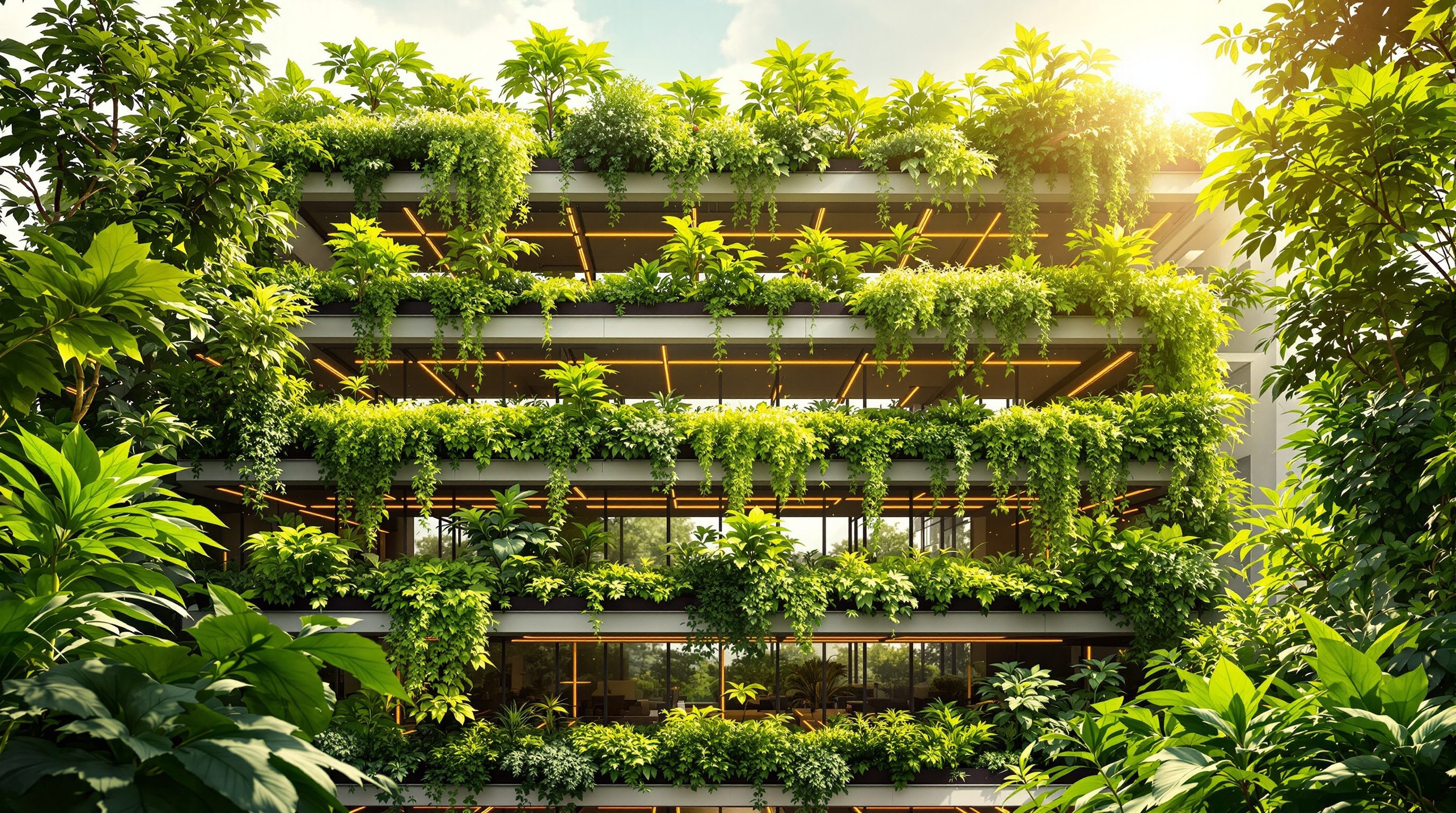
On the sun-powered side, India is close to ideal: abundant, year-round sunlight; a deep, living tradition of terrace, kitchen and courtyard growing; vast areas of flat urban roof lying unused and baking; genuine food-security and freshness concerns; and hot roofs that a layer of growing would help to cool. On the fully-lit indoor side, India is one of the harder places to make the numbers work: electricity is relatively costly and often carbon-heavy, water is frequently scarce and costly, and the leafy crops indoor farms grow command far lower premiums than in wealthy Western cities. This lesson sets out both sides honestly - a rooted, hopeful path that honours the split.
INDIA: sun-powered = STRONG FIT (abundant sun / terrace + kitchen-garden tradition / huge flat roofs / food security + freshness / hot roofs to cool). Indoor CEA = HARD (costly + carbon-heavy power / scarce water / low crop premiums). Path: prefer sun, be sceptical of indoor. Rooted + hopeful.
The strong fit of sun-powered building agriculture
Start with the good news, because it is genuinely strong: sun-powered building agriculture fits India about as well as it fits anywhere on earth, and for reasons that are structural rather than fashionable. The single most important is sunlight. India enjoys abundant, year-round solar radiation across almost all its territory - the free energy that decides the whole economics of growing food. Where the sun is generous, sun-powered growing starts with an enormous, permanent advantage, because the expensive part of growing - the light energy - is supplied for nothing. This is the foundation of the entire case, and it is a foundation most of the wealthy Western cities that chase high-tech indoor farming simply do not have.
On top of that sunlight sits a living cultural tradition. Growing vegetables, herbs and fruit on the terrace, in the kitchen garden and in the courtyard is not a novelty to be introduced to India but a familiar, continuing practice with deep roots - many households already grow something, and the knowledge, the habit and the cultural comfort are present. Sun-powered building agriculture in India is therefore a modern extension of something real, not an import, which makes it far more likely to take and to last.
Add the physical opportunity. Indian cities carry vast areas of flat roof - on homes, apartment blocks, institutions and commercial buildings - much of it unused, exposed and baking in the sun. This is an enormous latent growing surface, ideally oriented to the abundant light. And add the value that growing delivers: real food-security and freshness benefits in a country where food matters deeply and supply chains can be fragile; shorter distances between growing and eating; and greener, more liveable buildings. Taken together - abundant free sunlight, a living tradition, huge flat roofs, and genuine food and liveability value - the case for sun-powered building agriculture in India is not merely acceptable but compelling. It is affordable, rooted, well-suited to the climate and culture, and deserving of active encouragement. This is the hopeful heart of the Indian story, and a designer working in India should reach for it first, confidently, in almost every relevant project - always leaving the binding loads, waterproofing, water and food-safety design to qualified specialists and the codes.
Tradition, flat roofs, food security - and hot roofs to cool
The Indian case for sun-powered growing is worth drawing out further, because each of its strands carries value beyond the food itself. The terrace and kitchen-garden tradition means uptake does not depend on persuading people of an unfamiliar idea; it means building on habits, knowledge and cultural comfort that already exist. A rooftop or terrace garden in India connects to a lineage of courtyard and terrace cultivation, of growing curry leaves, chillies, tomatoes and greens close to the kitchen. That continuity is a quiet but powerful advantage: sun-powered building agriculture here is a revival and an extension, not a hard sell.
The vast flat roofs are a physical gift. In much of urban India the roof is already a used, semi-outdoor space - for drying, gathering, sleeping in the heat - so extending it to growing is culturally natural as well as physically available. Multiplied across a city, these roofs represent a latent productive surface of real scale, oriented to abundant light and currently doing little.
Food security and freshness give the practice weight beyond pleasure. In a country where food access and supply-chain fragility are live concerns, growing fresh vegetables and herbs where people live shortens the distance between production and plate, improves freshness and nutrition, and adds a modest layer of resilience. It is not a solution to national food security - staples still come from fields, as they must - but at the household and community scale it is genuine and valuable.
And there is a distinctively Indian bonus: hot roofs to cool. Across much of India the exposed concrete roof bakes in the sun and drives heat into the building below, worsening indoor comfort and cooling loads. A layer of growing - a green roof, a rooftop garden, shade from planting - shades and insulates that roof, reducing heat gain and helping cool the building, so the same intervention that grows food also improves thermal comfort. In a warming country with rising cooling demand, that dual benefit is significant. Growing food and cooling the building at once, using free sunlight, on a surface that was baking unused, drawing on a living tradition, in a place with real food-security value - this is why sun-powered building agriculture in India is such a strong, hopeful fit, with the binding structural, waterproofing and drainage design always confirmed by qualified engineers and the codes.
Real scepticism of energy-hungry indoor farming here
Now the honest other side, because the same context that makes sun-powered growing fit India so well makes energy-hungry indoor vertical farming especially hard to justify here - harder, in fact, than in the wealthy Western cities where such farms are usually promoted. The reasons follow directly from the energy elephant, sharpened by Indian conditions.
First, electricity. Indoor farming's defining cost is the electricity that must replace free sunlight, and in India that electricity is relatively expensive for the value produced and, critically, often carbon-heavy, drawn from a grid with a large fossil-fuel share. So an Indian indoor farm not only faces high running costs but is likely to be burning coal-heavy power to replace some of the most abundant free sunlight on earth - which is close to perverse environmentally, and often makes the food's carbon footprint worse than field-grown produce, not better. The 'local equals low-carbon' claim collapses hardest exactly here.
Second, water. Although indoor hydroponic systems use less water per plant than open-field growing, water in much of India is scarce, contested and costly, and the broader resource pressure makes energy- and infrastructure-intensive indoor systems a difficult proposition against a backdrop of genuine water stress.
Third, and often decisive, economics. Indoor farms can grow only high-value, low-calorie crops - leafy greens, herbs, microgreens - and their whole business model depends on those crops commanding a high enough price to cover the relentless electricity bill. In wealthy Western cities premium salad can fetch prices that occasionally make the sums work; in Indian markets those same crops command far lower premiums, so the economics that already sink many Western vertical farms are even harsher here. The electricity is dearer relative to the crop, the crop sells for less, and the margin that indoor farming needs simply is not there for most produce. None of this means indoor farming can never make sense in India - there are narrow exceptions for genuinely high-value produce, controlled conditions, research, and the technology may improve - but the honest default position for India is real scepticism: treat energy-hungry indoor farming as the exception that must prove itself against a very hard number, not the aspiration to chase.
A rooted, hopeful path
Put the two sides together and the Indian path is clear, and genuinely hopeful. It is not a rejection of building agriculture - far from it - nor an uncritical embrace of everything sold under the vertical-farming banner. It is a confident, rooted preference for the kind of building agriculture that fits India, and a clear-eyed scepticism about the kind that does not. Honour that split and India can lead on sun-powered building agriculture while avoiding the expensive mistakes that have littered the indoor-farming world elsewhere.
The rooted, hopeful path looks like this. Reach first, and confidently, for sun-powered growing in almost every relevant project: rooftop and terrace gardens and farms, kitchen and courtyard growing, edible planting, simple greenhouses, green roofs that grow food and cool the building at once - building on India's abundant sunlight, its living tradition, its vast flat roofs, and its real food and liveability value. Encourage households, communities, institutions and developers to bring growing back onto their roofs and terraces, because here it is affordable, culturally natural and genuinely beneficial. Treat this not as an experimental import but as a modern revival of something India already knows how to do.
At the same time, approach energy-hungry indoor vertical farming with honest scepticism, reserving it for the rare, specific cases where a genuinely high-value crop, a premium market, controlled conditions, or cheap clean power make it defensible - and even then facing the energy and economics squarely, with real figures and the right specialists, rather than importing a Western hype cycle that fits Indian conditions poorly. For the designer working in India, this is a hopeful and empowering position: the most valuable, most sustainable, most rooted form of building agriculture is also the most suited to India, and it aligns with a country that values fresh food, that already grows on its terraces, that has sun in abundance and roofs to spare, and that needs cooler buildings. Bring food-growing back into Indian buildings where the sun does the work - which is almost everywhere it is wanted - and defer the binding structural, waterproofing, water, electrical and food-safety design to qualified specialists and the codes (NBC India, IS, food-safety regulation). That is the rooted, hopeful path, and it is a fitting note on which to turn to the course's final synthesis.
The Indian sun-powered fit
Why it suits India
Abundant year-round sunlight (free energy), a living terrace and kitchen-garden tradition, vast flat roofs, food-security and freshness value, and hot roofs to cool make sun-powered rooftop and terrace growing affordable, rooted and well-suited to India.
The Indian indoor caution
Why indoor farming is harder here
Costly and often carbon-heavy electricity (burning coal to replace abundant free sun), scarce and costly water, and lower crop premiums than wealthy Western cities make energy-hungry indoor farming especially hard to justify in India. Reserve for rare cases.
NBC India + IS + food-safety regulation
The binding framework in India
Structural loads (a wet growing system is heavy), waterproofing, water and drainage, electrical, and food-safety for produce are governed by the National Building Code of India, the relevant IS standards and food-safety regulation - always confirmed by qualified specialists.
Workshop - the Indian case for one real roof
The Indian argument is best felt on a real Indian roof or terrace. In this workshop you take a building you know in India (or an Indian context you can picture) and reason out honestly how sun-powered building agriculture would fit it, and why indoor farming would not.
An Indian building, roof or terrace you know and a notebook. No growing system or calculations - this is the Indian context by reasoning; the binding structural, waterproofing, water, electrical and food-safety design always stays with qualified specialists and the codes.
Goal: apply the Indian sun-powered case, and the indoor scepticism, to a real place
Inputs: an Indian building/terrace/roof you know + this lesson + a notebook
Time: ~45 minutes
- 1Describe the roof or terrace: its size, its sun exposure through the day, whether it bakes unused, and any existing tradition of growing or terrace use.
- 2Make the sun-powered case: what could be grown here using free sunlight - a rooftop or terrace garden, kitchen herbs, a green roof - and how it would build on tradition, use the flat roof, and add food and freshness value.
- 3Add the cooling angle: describe how a layer of growing or a green roof would shade and cool this hot roof, and why that dual benefit matters in the Indian climate.
- 4Now test an indoor idea honestly: if someone proposed a windowless LED grow-room here instead, list why the Indian context makes it hard - costly and carbon-heavy power replacing abundant free sun, scarce water, low crop premiums.
- 5Write a short honest conclusion: which path fits this Indian building, and what you would need qualified specialists and the codes to confirm about loads, waterproofing, water and food safety.
You’ll walk away with
A one-page Indian case for a real roof or terrace - the sun-powered opportunity (tradition, flat roof, food value, cooling) set against an honest indoor-farming scepticism - framed as reasoning, with binding loads, waterproofing, water and food-safety design reserved for qualified specialists and the codes (NBC India, IS).
Three altitudes on the same idea
Read the band that fits you — or all three.
In India, reach first and confidently for sun-powered building agriculture - it fits the climate, culture and economics wonderfully - and treat energy-hungry indoor farming with honest scepticism. India offers abundant year-round sunlight (the free energy that decides everything), a living terrace and kitchen-garden tradition, vast unused flat roofs, real food-security and freshness value, and hot roofs a layer of growing would help cool - a compelling case for rooftop and terrace gardens, edible planting, greenhouses and food-growing green roofs. Design for it as a modern revival, not an import. Be equally honest that indoor vertical farming is especially hard to justify here: electricity is costly and often carbon-heavy, so you would burn coal-heavy power to replace some of the world's most abundant free sun; water is scarce and costly; and Indian crop premiums are lower than in the Western cities where such farms are promoted, making already-harsh economics harsher. Defer the binding structural (roof and facade loads), waterproofing, water and drainage, electrical, food-safety and horticultural results to qualified specialists and the codes (NBC India, IS, food-safety regulation); own the rooted, hopeful, sun-first Indian path.
The Indian interior and terrace tradition is a gift to work with: kitchen herbs, curry leaves and chillies close to the cooking, terrace and courtyard growing, greenery that connects people to food - all sun-lit, all rooted in habits Indian households already hold. Lean into that continuity: an edible herb wall or terrace planting in an Indian home or cafe is a revival of something familiar, not a novelty to be sold, and it thrives on India's abundant daylight. Design edible and green interior and terrace elements around the daylight available and the upkeep the household will genuinely sustain, and be honest that serious indoor growing under grow-lights faces the same energy-and-cost objections that make indoor farming hard to justify in India. Coordinate binding water, drainage, electrical, weight and food-safety matters with the specialists and the codes; own the sun-lit, edible, culturally rooted Indian interior and terrace, and the honesty about where a lovely, traditional herb garden ends and an energy-hungry grow-room begins.
India is a near-perfect illustration of the course's whole argument: sun-powered building agriculture fits it wonderfully, and energy-hungry indoor farming is especially hard to justify here - understand both sides and you understand the sun-to-lit spectrum deeply. On the sun-powered side, India has abundant year-round sunlight (free energy), a living terrace and kitchen-garden tradition, vast flat roofs, real food-security value, and hot roofs that growing would help cool - so rooftop and terrace gardens, edible planting and simple greenhouses are affordable, rooted and genuinely valuable. On the indoor side, the economics that already sink many Western vertical farms are harsher in India: costly and often carbon-heavy electricity (burning coal to replace abundant free sun is close to perverse), scarce and costly water, and lower crop premiums than wealthy Western markets. The honest Indian position is a confident preference for sun-powered growing and real scepticism of indoor farming, reserving the latter for rare justified cases. It is a hopeful, rooted stance and a distinctive one to carry into Indian practice.
“Vertical farming is the perfect answer for India: the country has a huge and growing urban population to feed, so high-tech indoor vertical farms should be built across Indian cities to grow food locally and solve food security. India should be racing to adopt the technology.”
Do it yourself
No tools needed - reason it through.
- 1Name the factors that make sun-powered building agriculture such a strong fit for India.
- 2Explain the 'hot roofs to cool' benefit and why it matters especially in the Indian climate.
- 3Why is energy-hungry indoor farming especially hard to justify in India compared with wealthy Western cities?
- 4Why is burning India's typical grid electricity to run an indoor farm often environmentally worse than field-grown food?
- 5Describe the rooted, hopeful Indian path in one or two sentences, honouring the split between sun-powered and indoor.
The one line to carry out
Peer-reviewed journals & authoritative standards
- 01Agriculture in India — Wikipedia - Agriculture in India, 2026.
- 02Terrace garden — Wikipedia - Terrace garden, 2026.
- 03Food security — Wikipedia - Food security, 2026.
- 04Water scarcity — Wikipedia - Water scarcity, 2026.
- 05National Building Code of India — Wikipedia - National Building Code of India, 2026.
The Indian case is really the whole course in one context: face energy first, prefer where the sun does the work. Next, the final lesson draws every thread together into the enduring mindset of a food-literate designer.
The author
Amogh N P
Architect, interior designer, and creative polymath. Studio Matrx began in his notebooks — his vision of design made honest, useful, and open to everyone. Its Academy is written and taught in his memory, and free, forever.
More about Amogh →